



ARTICLE CONTENTSOn this page 7 sections
Food Nutrients
Performance Objectives
By the end of the lesson, students should be able to:
- state the meaning and importance of nutrients in the body;
- explain specific classes and functions of each nutrient class in the body;
- analyze a given meal plan to determine if it is balanced and meets the body’s nutritional needs;
- compare the nutritional value of different foods within the same food group (e.g., whole grains vs. refined grains);
- identify the six main classes of nutrients and their sources in common foods;
- identify nutritional deficiencies or imbalances in a diet and develop solutions to correct them.
Meaning and Importance of Nutrients
Nutrients are chemical substances present in food that the body requires for growth, energy, repair of tissues, and the maintenance of vital life processes.
The food consumed by individuals contains these essential chemical compounds. When food is digested, the body absorbs these nutrients and transports them through the bloodstream to various organs and tissues where they perform specific physiological roles. Without a steady supply of these substances, the body cannot function optimally, leading to a decline in health and physical capacity.
The consumption of nutrients is essential for maintaining life and health. The primary reasons the body requires nutrients include:
- Providing energy for physical activities, work, and internal metabolic processes such as breathing and blood circulation.
- Promoting growth and the repair of worn-out body tissues, which is particularly critical during childhood, adolescence, and pregnancy.
- Protecting the body against infections and diseases by strengthening the immune system.
- Regulating body processes such as digestion, body temperature control, and fluid balance.
- Maintaining the chemical balance of body fluids and supporting the production of essential hormones and enzymes.
The Six Classes of Nutrients
Nutrients are classified into six major groups based on their chemical composition and the specific roles they perform in the body. These classes are carbohydrates, proteins, fats and oils (lipids), vitamins, minerals, and water.
Observe the chart below to see how common foods are categorized into these classes.
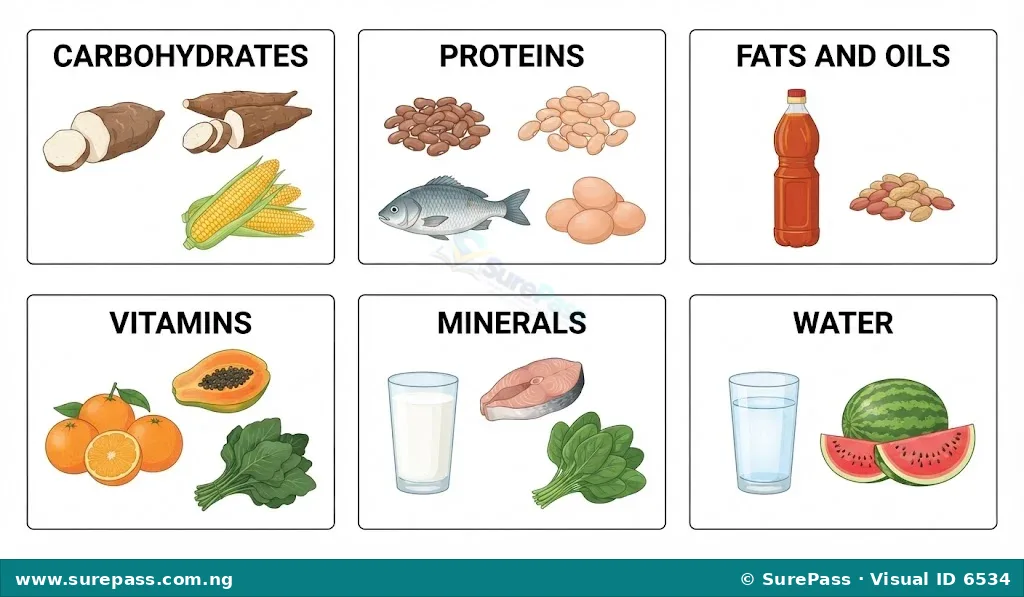
1. Carbohydrates
Carbohydrates are energy-giving nutrients composed of carbon, hydrogen, and oxygen. They serve as the primary fuel source for the body’s daily activities.
The main functions of carbohydrates include:
- Providing immediate energy for physical and mental activities.
- Sparing proteins from being broken down for energy, allowing proteins to be used solely for growth and tissue repair.
- Providing dietary fibre (roughage), which aids digestion and prevents constipation.
Common sources of carbohydrates include:
- Tubers such as yam, cassava, sweet potatoes, and cocoyam.
- Grains such as rice, maize, millet, guinea corn, and wheat.
- Processed foods such as garri, bread, semolina, and pasta.
2. Proteins
Proteins are body-building nutrients composed of smaller units called amino acids. They contain carbon, hydrogen, oxygen, nitrogen, and sometimes sulphur or phosphorus.
The main functions of proteins include:
- Building new tissues during growth, which is essential for infants, children, and teenagers.
- Repairing and replacing worn-out or damaged tissues in the body.
- Producing enzymes, hormones, antibodies, and haemoglobin, which regulate body functions and defend against infections.
Sources of proteins are divided into two main categories:
- Animal sources, which provide high-quality proteins containing all essential amino acids, including beef, fish, poultry, eggs, milk, and cheese.
- Plant sources, which are highly accessible and include cowpeas (beans), soybeans, groundnuts, bambara groundnuts, and melon seeds (egusi).
3. Fats and Oils (Lipids)
Fats and oils are concentrated sources of energy composed of fatty acids and glycerol. Fats are solid at room temperature (mostly animal fats), while oils remain liquid (mostly plant oils).
The main functions of fats and oils include:
- Providing a highly concentrated source of energy, yielding more than double the energy per gram compared to carbohydrates.
- Insulating the body under the skin to prevent heat loss and maintain a constant body temperature.
- Protecting delicate internal organs, such as the kidneys and heart, by acting as a shock-absorbing cushion.
- Acting as carriers for fat-soluble vitamins (Vitamins A, D, E, and K) to facilitate their absorption in the body.
Common sources of fats and oils include:
- Plant sources such as palm oil, groundnut oil, coconut oil, melon seed oil, and margarine.
- Animal sources such as butter, lard, fatty meats, fish oils, and egg yolk.
4. Vitamins
Vitamins are organic substances required by the body in very small quantities to regulate metabolic processes and protect against diseases.
Vitamins are divided into two main groups based on their solubility:
- Fat-soluble vitamins, which dissolve in fat and can be stored in the body, including Vitamins A, D, E, and K.
- Water-soluble vitamins, which dissolve in water and must be supplied daily because the body cannot store them, including Vitamin C and the Vitamin B-complex group.
The main functions of vitamins include:
- Promoting healthy skin, good vision, and strong bones.
- Enhancing the body’s immune system to fight off infections.
- Assisting enzymes in releasing energy from carbohydrates, proteins, and fats.
Common sources of vitamins include:
- Fresh fruits such as oranges, mangoes, pawpaw, pineapples, and guavas.
- Green leafy vegetables such as fluted pumpkin leaves (ugu), spinach, waterleaf, and bitter leaf.
- Animal products such as liver, kidney, milk, eggs, and fish liver oils.
5. Minerals
Minerals are inorganic elements needed by the body in small amounts to perform structural and regulatory functions.
The main functions of key minerals include:
- Calcium and Phosphorus: Essential for the formation and maintenance of strong bones and teeth.
- Iron: Required for the formation of haemoglobin in red blood cells, which transports oxygen throughout the body.
- Iodine: Necessary for the proper functioning of the thyroid gland, which regulates growth and metabolism.
- Sodium and Potassium: Important for maintaining fluid balance and ensuring proper nerve transmission and muscle contraction.
Common sources of minerals include:
- Milk, cheese, and yoghurt (rich in calcium and phosphorus).
- Green leafy vegetables, liver, kidney, and egg yolk (rich in iron).
- Seafood, sea fish, and iodised table salt (rich in iodine).
6. Water
Water is a vital inorganic compound that makes up about 60% to 70% of the total human body weight.
The main functions of water include:
- Acting as a medium for all chemical and metabolic reactions in the body.
- Regulating body temperature through perspiration (sweating).
- Transporting nutrients, oxygen, and hormones to cells, and carrying away waste products for excretion.
- Lubricating joints and protecting sensitive tissues like the brain and spinal cord.
Common sources of water include:
- Clean drinking water.
- Beverages, herbal infusions, and clear soups.
- Water-rich fruits and vegetables such as watermelon, cucumber, oranges, and tomatoes.
Deficiency Diseases of Food Nutrients
A deficiency disease occurs when the body lacks an adequate supply of a specific nutrient over a prolonged period.
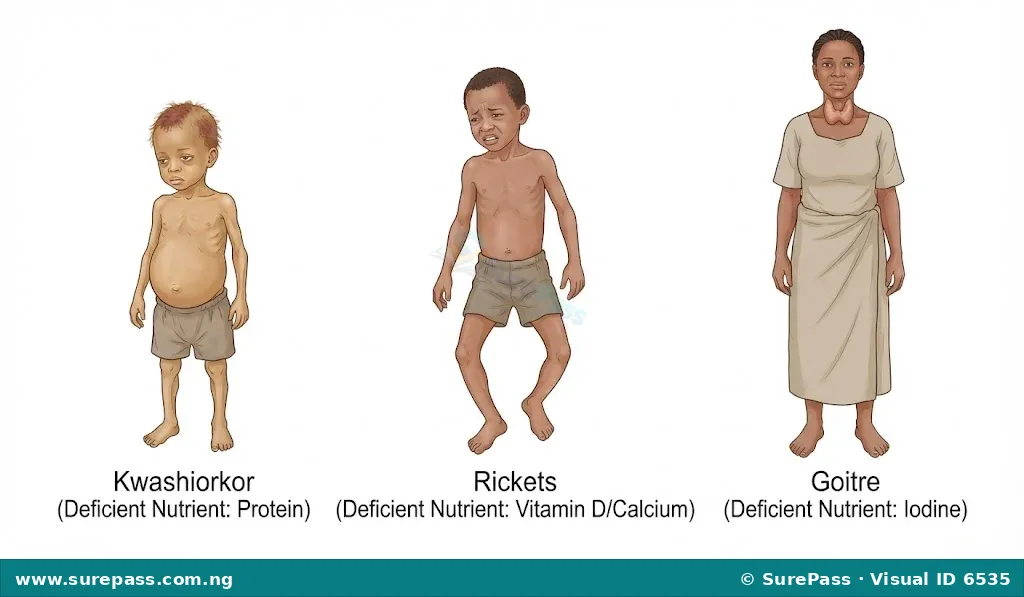
When a particular nutrient is missing or severely limited in the diet, specific physiological functions break down, resulting in observable physical symptoms. The table below outlines the major nutritional deficiencies, their associated nutrients, and common symptoms.
| Nutrient | Deficiency Disease | Common Symptoms |
|---|---|---|
| Protein | Kwashiorkor | Swollen abdomen (oedema), stunted growth, thin limbs, discoloured hair (reddish-brown), and flaky skin. |
| Carbohydrates / Energy | Marasmus | Severe wasting of muscles and fat, extreme thinness, “old man’s face” appearance, and constant hunger. |
| Vitamin A | Night Blindness | Inability to see clearly in dim light or at night, dry eyes, and rough skin. |
| Vitamin B1 (Thiamine) | Beriberi | Nerve damage, muscle weakness, loss of appetite, and swelling of the limbs (wet beriberi). |
| Vitamin C | Scurvy | Bleeding and swollen gums, loose teeth, slow healing of wounds, and pain in the joints. |
| Vitamin D / Calcium | Rickets (in children) / Osteomalacia (in adults) | Soft, weak bones leading to bow legs or knock knees, malformed chest bones, and weak teeth. |
| Iron | Anaemia | Pale skin, constant fatigue, weakness, dizziness, shortness of breath, and frequent headaches. |
| Iodine | Goitre | Abnormal swelling of the thyroid gland at the base of the neck, sluggishness, and slow mental development in children. |
Observe the physical symptoms of these deficiency diseases in the illustration below.
Methods of Retaining Food Nutrients
Nutrients can easily be lost during food preparation, processing, and cooking if proper care is not taken.
Water-soluble vitamins (Vitamins B and C) and minerals are highly susceptible to leaching into cooking water, while heat-sensitive vitamins can be destroyed by high temperatures. To ensure that the family receives the maximum nutritional value from meals, specific food handling practices must be observed.
The primary methods of retaining food nutrients include:
- Washing vegetables and fruits thoroughly before cutting them, rather than after, to prevent water-soluble vitamins and minerals from leaching into the wash water.
- Peeling tubers, such as yams, potatoes, and coco-yams, as thinly as possible because many vitamins and minerals lie directly beneath the skin.
- Cooking vegetables with minimal water and keeping the cooking pot covered with a tight-fitting lid to prevent the loss of volatile vitamins through steam.
- Avoiding overcooking of foods, especially vegetables and proteins, as excessive heat destroys heat-sensitive vitamins and hardens proteins, making them difficult to digest.
- Using cooking methods that preserve nutrients, such as steaming, baking, or quick stir-frying, instead of boiling foods in large volumes of water.
- Utilizing the cooking liquid (stock) in soups, stews, or sauces rather than discarding it, as it contains dissolved nutrients.
- Avoiding the use of food additives like limestone (kaun/kanwa) or baking soda when cooking vegetables and pulses (beans), as these alkaline substances rapidly destroy B-vitamins.
- Serving cooked vegetables immediately after preparation rather than keeping them warm for long periods, which causes further nutrient loss.
Practical Skills: Analyzing Meal Plans and Correcting Imbalances
An essential skill in home management is the ability to evaluate daily meals to ensure they are balanced and meet the nutritional requirements of family members.
Comparing Whole Grains and Refined Grains
To plan nutritious meals, it is important to understand how food processing affects nutritional value. Grains are a staple food group, but their nutritional value varies significantly depending on whether they are whole or refined.
The table below compares the nutritional differences between whole grains and refined grains.
| Nutritional Feature | Whole Grains (e.g., Ofada Rice, Whole Wheat, Brown Rice) | Refined Grains (e.g., White Rice, White Flour, Semolina) |
|---|---|---|
| Structure | Contains all three parts of the grain: the outer bran, the nutrient-rich germ, and the starchy endosperm. | The outer bran and germ are removed during milling, leaving only the starchy endosperm. |
| Dietary Fibre | High in dietary fibre, which promotes healthy digestion and prevents constipation. | Very low in fibre, which can lead to sluggish digestion and constipation. |
| Vitamin Content | Rich in B-vitamins (thiamine, riboflavin, niacin) found in the bran and germ. | Most B-vitamins are lost during processing, though some may be artificially added back (enriched). |
| Mineral Content | High in essential minerals such as iron, magnesium, zinc, and selenium. | Most minerals are stripped away during the milling process. |
| Energy Release | Provides slow, steady energy release (low glycemic index), keeping the body full for longer. | Provides rapid energy release (high glycemic index), causing quick spikes and drops in blood sugar. |
How to Analyze a Meal Plan for Balance
Analyzing a meal plan involves evaluating whether the meals served throughout the day contain all six classes of nutrients in the correct proportions to meet the body’s needs. The steps for analyzing a meal plan include:
- Identify all the food items present in the meal plan for breakfast, lunch, and dinner.
- Classify each food item under its primary nutrient group.
- Check for the presence of all six classes of nutrients across the daily meals.
- Assess the balance of the meals, noting any excess of carbohydrates or fats, or a lack of proteins, vitamins, and minerals.
- Identify potential nutritional deficiencies that could arise from consuming such a diet over time.
- Formulate practical solutions by substituting or adding specific foods to balance the diet.
Worked Example: Meal Plan Analysis and Correction
The following example demonstrates how to identify nutritional imbalances in a daily diet and develop solutions to correct them.
An Unbalanced Daily Meal Plan
The daily meals consist of the following items:
- Breakfast: White bread and tea sweetened with white sugar.
- Lunch: Garri (eba) served with a watery tomato and pepper stew (no meat or fish).
- Dinner: White rice served with fried plantain (dodo).
Analysis of the Unbalanced Meal Plan
An evaluation of the meal plan reveals several nutritional issues:
- Excesses: The diet is heavily dominated by refined carbohydrates (white bread, garri, white rice) and fats (fried plantain).
- Deficiencies: There is a severe lack of protein (no meat, fish, eggs, milk, or beans), vitamins, and minerals (no green leafy vegetables or fresh fruits).
- Health Risks: If consumed over a long period, this diet can lead to protein-energy malnutrition (such as kwashiorkor or marasmus), muscle wasting, constant fatigue, and a weakened immune system due to vitamin deficiencies.
The Corrected Balanced Meal Plan (Solution)
To correct the imbalances, specific nutrient-dense foods must be introduced to replace refined items and add missing nutrients:
- Breakfast Solution: Replace white bread with whole wheat bread. Add a boiled egg for high-quality protein, and use milk in the tea to provide calcium and vitamins.
- Lunch Solution: Serve the garri (eba) with vegetable soup (such as efo riro or ewedu) containing fluted pumpkin leaves to provide vitamins and minerals. Add mackerel fish or beef to supply essential proteins.
- Dinner Solution: Replace white rice with local unpolished rice (Ofada rice) cooked with beans to increase dietary fibre and plant protein. Serve with a side of fresh fruit, such as an orange, to provide Vitamin C.




0 comments
Open the discussion when you need it. Comments stay collapsed until requested so the initial article remains light.