



ARTICLE CONTENTSOn this page 7 sections
Conflicts Resolution in the Family
Performance Objectives
By the end of the lesson, students should be able to:
- explain the meaning of family conflicts;
- outline the causes of family conflicts;
- suggest ways of solving conflicts in the family.
Meaning of Family Conflicts
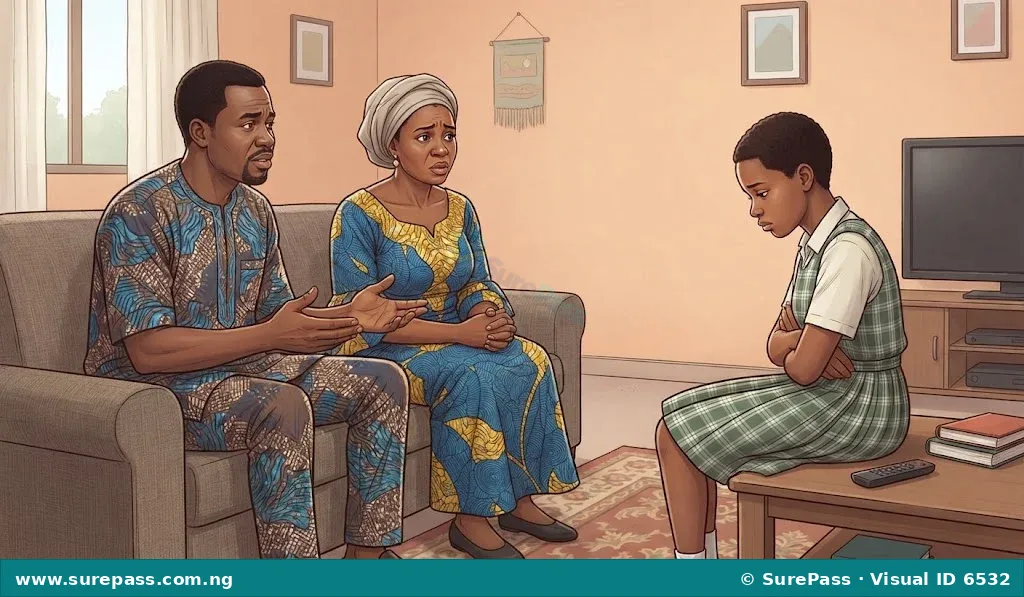
A family conflict is a state of disagreement, clash, or opposition between family members due to differing opinions, needs, values, or interests.
Conflict is a natural and inevitable part of human relationships because family members have different personalities, desires, and perspectives. While some conflicts are minor and resolved quickly, others can be deep-rooted and long-lasting, affecting the peace, stability, and emotional well-being of the entire household. In Home Management, understanding conflict is essential because a peaceful home environment is necessary for the efficient running of the household and the healthy development of its members.
Family conflicts can occur in various dimensions, such as between spouses (marital conflict), between parents and children (intergenerational conflict), or among children (sibling rivalry). The way a family manages these disagreements determines whether the conflict will lead to positive growth or destructive outcomes.
Causes of Family Conflicts
Family conflicts do not occur in a vacuum; they are triggered by specific issues, behaviors, or environmental pressures. Identifying the root causes of these disagreements is the first step toward finding lasting solutions.
The primary causes of family conflicts include:
- Financial Difficulties and Poor Money Management: Disagreements over how family income is spent, inadequate funds to meet basic household needs, or lack of transparency regarding financial resources can create severe tension between spouses and among family members.
- Lack of or Poor Communication: When family members fail to express their feelings clearly, misinterpret messages, or use harsh and disrespectful language, misunderstandings easily escalate into major disputes.
- Differences in Values and Beliefs: Conflicts can arise when family members hold contrasting views on religion, cultural practices, moral standards, or lifestyle choices.
- Power Struggles and Decision-Making: Disputes often occur when there is a lack of agreement on who holds authority in the home, or when one partner dominates decision-making without consulting other family members.
- Sibling Rivalry and Favoritism: When parents show preference for one child over another, or when children compete for parental attention, affection, and resources, it breeds resentment and conflict among siblings.
- External Interference: Intrusions from extended family members, in-laws, neighbors, or friends into the private affairs of the nuclear family can disrupt peace and cause friction between spouses.
- Unequal Distribution of Household Chores: When domestic responsibilities, such as cooking, cleaning, and fetching water, are not shared fairly among family members, those bearing the heavier burden may feel exploited and angry.
- Parenting Styles and Child Discipline: Disagreements between parents on the best methods to raise and discipline children can lead to inconsistent parenting and marital conflict.
Ways of Solving Conflicts in the Family
Conflict resolution refers to the methods and processes involved in facilitating the peaceful ending of conflict and retribution. Resolving family conflicts requires patience, maturity, and a willingness to understand the perspectives of others.
The main ways of solving conflicts in the family are:
- Effective Communication and Dialogue: Family members should express their grievances calmly, honestly, and respectfully without resorting to insults, shouting, or physical violence.
- Active Listening: This involves paying close attention to the speaker, seeking to understand their feelings and viewpoint, and refraining from interrupting them before they finish speaking.
- Compromise and Negotiation: Resolving conflicts often requires a middle ground where each party gives up something to reach an agreement that satisfies everyone involved.
- Mediation: When direct discussion fails, a respected, neutral third party—such as a family elder, religious leader, or professional counselor—can be invited to help guide the family toward a peaceful resolution.
- Forgiveness and Reconciliation: Holding onto grudges prolongs conflict. Family members must learn to let go of past hurts, apologize sincerely when wrong, and accept apologies from others.
- Setting Clear Boundaries and Rules: Establishing clear household rules regarding chores, privacy, and behavior helps prevent misunderstandings and reduces the occurrence of future conflicts.
- Family Meetings: Holding regular, structured family meetings provides a safe platform for members to discuss issues, share updates, and resolve grievances before they escalate.
Applying Conflict Resolution Strategies in Everyday Scenarios
To build a harmonious home, family members must be able to apply theoretical conflict resolution strategies to real-life situations. The following scenarios demonstrate how these skills are put into practice.
Scenario 1: Sibling Conflict Over Household Chores
In a household, two siblings, Chidi and Amaka, constantly argue over who should wash the dishes after dinner. Chidi claims he is too tired from schoolwork, while Amaka argues that she washed the dishes the previous night and it is Chidi’s turn.
The application of conflict resolution strategies in this scenario involves the following steps:
- Dialogue: The parents call both siblings together to discuss the issue calmly without shouting.
- Active Listening: Each sibling is allowed to state their case without interruption. Chidi explains his heavy academic workload, and Amaka explains her feeling of unfairness.
- Compromise: The family agrees to create a written weekly chore roster. Chidi agrees to wash the dishes on weekends and lighter school days, while Amaka takes the other days.
- Setting Rules: The roster is posted on the kitchen wall, and consequences are set for failing to perform assigned duties. This resolves the immediate conflict and prevents future disputes.
Scenario 2: Parent-Teenager Conflict Over Career Choices
A father wants his teenage daughter, Tolani, to study Medicine at the university, but Tolani is passionate about Graphic Design and Home Management. This difference in aspirations leads to silent treatment and tension in the home.
The application of conflict resolution strategies in this scenario involves the following steps:
- Initiating Dialogue: Tolani approaches her father respectfully during a quiet evening to discuss her career interests.
- Presentation of Facts: Tolani presents her portfolio of designs and explains the career opportunities in her chosen field, showing that she has thought deeply about her future.
- Mediation: Seeing the deadlock, the mother acts as a mediator, helping the father see Tolani’s unique talents and encouraging Tolani to listen to her father’s concerns about financial stability.
- Reconciliation and Support: The father agrees to support Tolani’s choice on the condition that she maintains high academic standards and pursues professional certifications in her field. Both parties feel heard and respected.
Summary of Conflict Resolution Skills
Developing conflict resolution skills is a continuous process that enhances emotional intelligence and strengthens family bonds. The key skills required for effective conflict resolution include:
- Self-Control: The ability to manage anger and strong emotions during a disagreement.
- Empathy: The capacity to put oneself in another family member’s position to understand their feelings.
- Problem-Solving: The cognitive skill to look beyond the anger and focus on finding practical solutions to the issue at hand.
- Assertiveness: Expressing one’s needs and boundaries clearly and firmly without being aggressive or disrespectful.




0 comments
Open the discussion when you need it. Comments stay collapsed until requested so the initial article remains light.