


ARTICLE CONTENTSOn this page 8 sections
Marketing Textile Products (Goods and Services)
Performance Objectives
By the end of the lesson, students should be able to:
- state the meaning of market and marketing;
- explain the basic characteristics of markets;
- discuss the importance of marketing;
- identify factors that determine the choice of target markets;
- explain marketing strategies;
- identify different means of marketing.
Marketing textile products involves understanding how to connect what you produce with the people who want to buy it. This unit explores the essential concepts of markets, marketing, and the strategies and channels used to successfully sell textile goods and services.
Meaning of Market and Marketing
Meaning of Market
A market is any place or system where buyers and sellers meet to exchange goods and services.
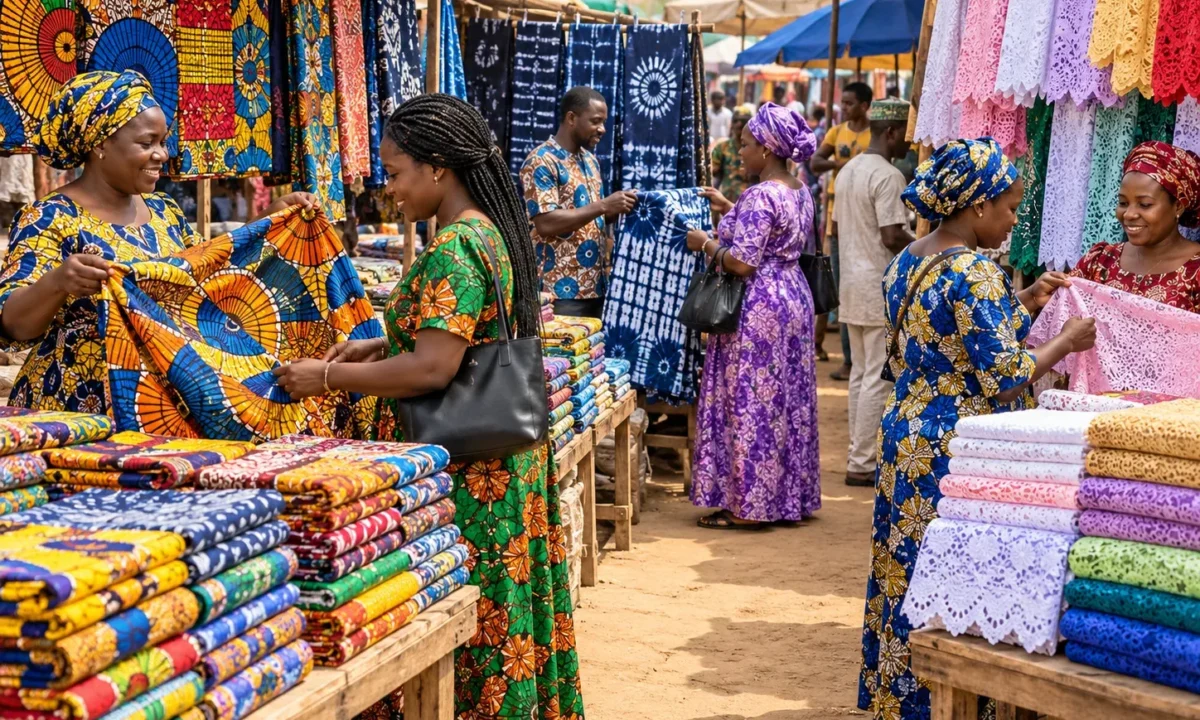
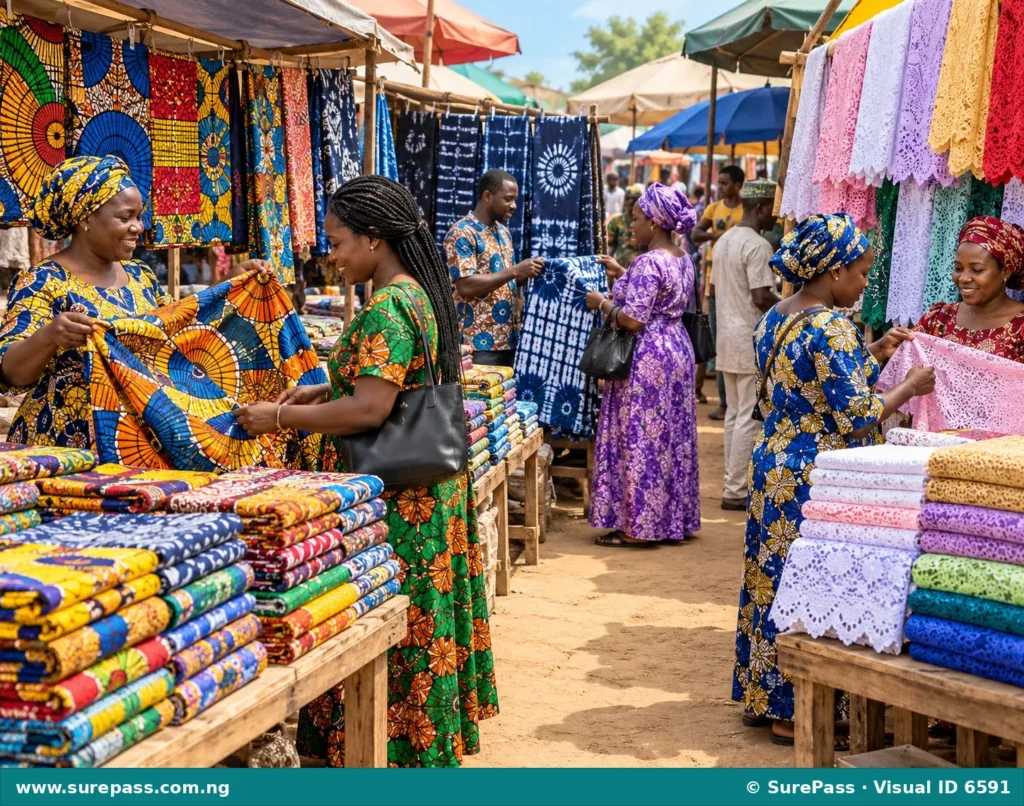
This exchange can happen physically, like in a local fabric store or a bustling market square, or virtually, through online shops and social media platforms. In a market, buyers offer money for products, and sellers offer products for money.
Meaning of Marketing
Marketing is the process of planning and executing the conception, pricing, promotion, and distribution of ideas, goods, and services to create exchanges that satisfy individual and organisational objectives.
For textile products, marketing involves everything from designing clothes that customers will love, setting a fair price, deciding where to sell them, and letting people know about the products through various advertisements and promotions.
Basic Characteristics of a Market
For a place or system to be considered a market, it typically has several key characteristics:
- Buyers: These are individuals or businesses who have a need or desire for a product or service and are willing and able to purchase it. In the textile market, buyers could be individuals looking for new clothes, tailors needing fabric, or fashion designers sourcing materials.
- Sellers: These are individuals or businesses who offer goods or services for sale. Textile sellers include fabric retailers, garment manufacturers, fashion designers, and tailors offering sewing services.
- Goods or Services: There must be something tangible (goods) or intangible (services) being offered for exchange. For textile products, goods include fabrics, ready-made garments, and accessories, while services include tailoring, embroidery, and textile design.
- Exchange: This is the act of trading something of value (usually money) for the goods or services offered. Buyers give money, and sellers give products or services.
- Interaction: Buyers and sellers must be able to communicate and negotiate, whether directly face-to-face or indirectly through online platforms, advertisements, or agents.
- Location (Physical or Virtual): A market can exist in a specific physical location (e.g., Balogun Market in Lagos) or in a virtual space (e.g., an online store or social media marketplace).
Importance of Marketing
Marketing plays a crucial role in the success of any business, especially for those dealing with textile products. Its importance can be seen in several ways:
- Creates Awareness: Marketing helps to inform potential customers about the existence of textile products and services. Without marketing, people would not know about new fabric designs, clothing lines, or tailoring services.
- Increases Sales: Effective marketing strategies attract more customers, leading to higher sales volumes for textile businesses. This helps businesses grow and become profitable.
- Meets Customer Needs: Marketing involves understanding what customers want and need. By researching market trends and customer preferences, textile businesses can produce products that truly satisfy their target audience.
- Builds Brand Loyalty: Consistent and positive marketing helps to build a strong brand image. When customers have a good experience with a textile brand, they are more likely to become loyal and make repeat purchases.
- Facilitates Competition: Marketing allows businesses to differentiate their textile products from competitors. Through unique branding and promotional messages, businesses can highlight what makes their products special.
- Drives Innovation: By constantly monitoring market feedback and trends, marketing encourages textile businesses to innovate and introduce new designs, fabrics, and services to stay relevant and competitive.
- Supports Economic Growth: Successful textile businesses, driven by effective marketing, contribute to job creation, income generation, and overall economic development within the community and country.
Factors in Selecting a Market
Choosing the right market for textile products is essential for business success. Several factors influence this decision:
- Target Audience: The most important factor is understanding who the potential customers are. This includes their age, gender, income level, lifestyle, cultural background, and fashion preferences. For example, a business selling high-end lace fabrics would target a different market than one selling affordable school uniforms.
- Product Type: The nature of the textile product itself dictates the suitable market. Ready-to-wear garments might be sold in boutiques or online, while raw fabrics might be sold in wholesale markets or directly to tailors.
- Competition: It is important to assess the level of competition in a potential market. A market with too many similar textile businesses might be difficult to enter, while a market with unmet demand could offer good opportunities.
- Accessibility: Consider how easily customers can access the products. This involves physical location (e.g., proximity to residential areas, transport links) and digital accessibility (e.g., internet penetration, ease of online shopping).
- Purchasing Power: The income level of the target customers in a market determines their ability to buy textile products. A business must ensure its pricing aligns with the purchasing power of its chosen market.
- Cultural and Social Factors: Textile preferences are often influenced by culture and social norms. For example, certain fabrics or styles may be popular for traditional ceremonies in specific regions.
- Market Size and Growth Potential: A larger market offers more potential customers, while a growing market indicates future opportunities for expansion.
Strategies for Marketing
Marketing strategies are the plans and approaches businesses use to achieve their marketing goals. Two key elements of marketing strategy are identifying target markets and developing a marketing mix.
Target Markets
A target market is a specific group of consumers or businesses that a company aims to sell its products or services to.
Instead of trying to sell to everyone, businesses focus their efforts on a particular group of people who are most likely to buy their textile products. For example, a business specialising in children’s clothing targets parents, while a business selling corporate uniforms targets companies.
Identifying target markets involves:
- Market Segmentation: Dividing the entire market into smaller groups based on shared characteristics. This can be done by:
- Demographics: Age, gender, income, education, occupation, family size.
- Geographics: Location (city, state, region), climate.
- Psychographics: Lifestyle, interests, values, personality traits.
- Behavioural: Purchasing habits, brand loyalty, usage rate.
- Targeting: Selecting one or more segments to focus marketing efforts on. A textile business might decide to target young, fashion-conscious women in urban areas who are interested in trendy Ankara designs.
- Positioning: Creating a unique image and identity for the textile product in the minds of the target customers, differentiating it from competitors.
Marketing Mix (4 Ps)
The marketing mix refers to the set of controllable tactical marketing tools that a company blends to produce the response it wants in the target market.
These tools are often categorised into four main elements, known as the 4 Ps:
- Product: This refers to the actual textile goods or services offered to the market.
For textile products, this includes:
- Quality: The durability, feel, and finish of the fabric or garment.
- Design: The style, pattern, colour, and aesthetic appeal of the clothing or fabric.
- Features: Specific characteristics like being wrinkle-free, stain-resistant, or having unique embellishments.
- Variety: The range of sizes, colours, and types of textile products available.
- Branding: The name, logo, and overall image associated with the textile item.
- Price: This is the amount of money customers pay to obtain the textile product or service.
Pricing decisions for textile products consider:
- Cost of Production: The expenses involved in making the fabric or garment.
- Competitor Pricing: What similar textile products are sold for by rivals.
- Customer Value: How much customers perceive the product to be worth.
- Profit Margins: The desired profit for the business.
- Discounts and Offers: Strategies like sales, bulk discounts, or seasonal promotions.
- Place (Distribution): This refers to how the textile products are made available to the target customers.
Distribution channels for textile products include:
- Physical Stores: Boutiques, department stores, local markets, and fabric shops.
- Online Stores: E-commerce websites, social media shops.
- Direct Sales: Selling directly to customers through personal networks or at events.
- Wholesalers: Selling in bulk to other businesses that then sell to consumers.
- Logistics: How products are transported, stored, and delivered to customers.
- Promotion: This involves all the activities used to communicate the value of the textile product to the target market and persuade them to buy.
Promotional activities for textile products include:
- Advertising: Paid messages through TV, radio, newspapers, magazines, billboards, or online platforms.
- Public Relations: Building a positive image through media coverage, sponsorships, or community involvement.
- Sales Promotion: Short-term incentives like discounts, coupons, loyalty programs, or free samples.
- Personal Selling: Direct interaction between a salesperson and a potential customer, common in boutiques or for custom tailoring services.
- Social Media Marketing: Using platforms like Instagram, Facebook, and TikTok to showcase products and engage with customers.
Means of Marketing
Businesses use various channels and methods to implement their marketing strategies. These can broadly be categorised into traditional and digital marketing.
Traditional Marketing
Traditional marketing refers to conventional methods of advertising and promotion that have been used for a long time, often involving physical media or direct interaction.
These methods are still effective, especially for reaching local communities or specific demographics. Examples for textile products include:
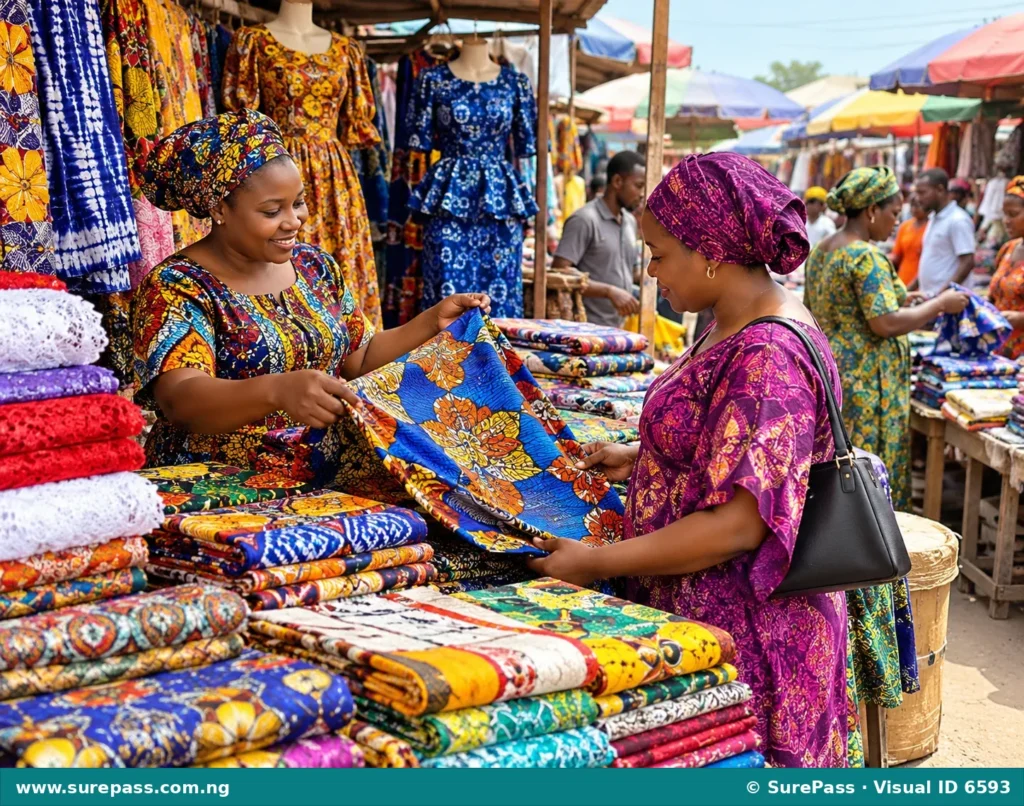
- Local Markets and Fairs: Setting up stalls in community markets, trade fairs, or exhibitions to display and sell textile products directly to customers.
- Word-of-Mouth: Satisfied customers recommending textile products or services to their friends and family. This is a powerful, organic form of promotion.
- Print Media: Advertising in newspapers, magazines, flyers, brochures, or posters to showcase new designs, sales, or services.
- Radio and Television: Broadcasting advertisements on local radio stations or television channels to reach a wider audience.
- Billboards and Signage: Placing large advertisements in strategic locations to capture public attention.
- Direct Mail: Sending physical letters, catalogues, or postcards to potential customers.
Digital Marketing
Digital marketing involves using electronic devices and the internet to promote products and services.
This approach leverages technology to reach a global audience and offers more precise targeting and measurable results. Examples for textile products include:
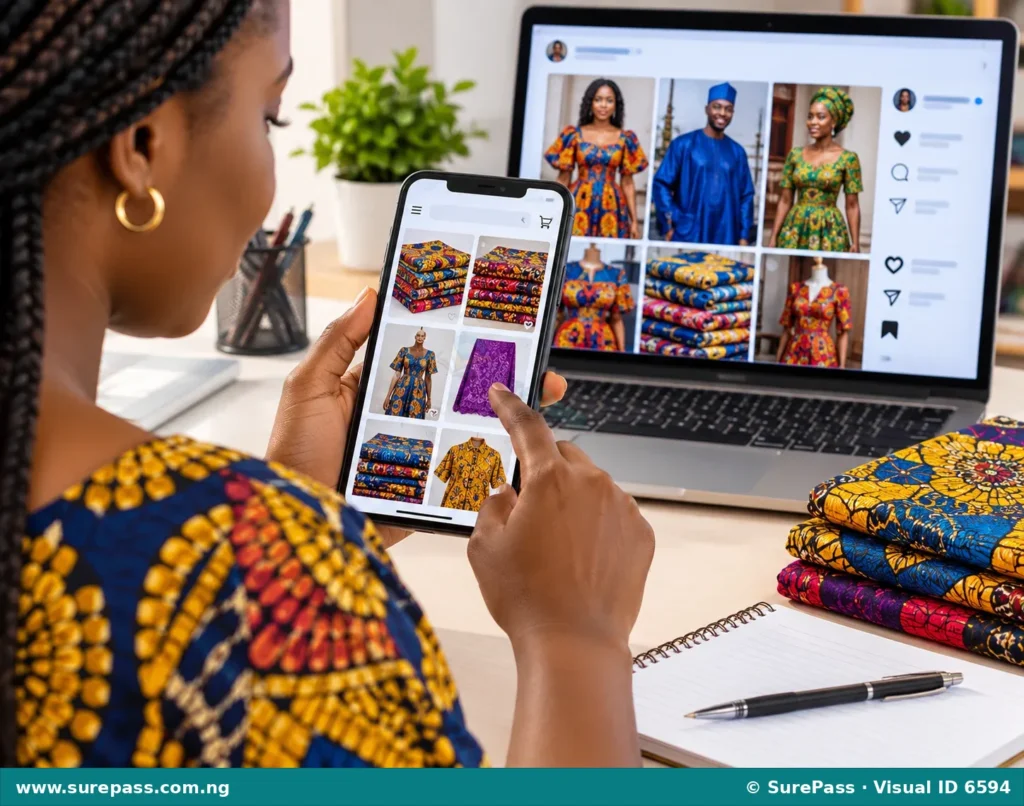
- Social Media Marketing: Using platforms like Instagram, Facebook, TikTok, and Pinterest to display textile products, run ads, engage with customers, and build a brand community. Visual content is particularly effective for fashion and textiles.
- E-commerce Websites: Creating online stores where customers can browse, select, and purchase textile products directly from their computers or mobile devices.
- Email Marketing: Sending newsletters, promotional offers, and updates about new textile collections directly to customers’ email inboxes.
- Search Engine Optimisation (SEO): Optimising website content so that textile products appear higher in search engine results (like Google) when people search for relevant terms (e.g., “Ankara fabrics in Lagos”).
- Content Marketing: Creating valuable and relevant content, such as blog posts about fashion trends, fabric care tips, or styling guides, to attract and engage potential customers.
- Influencer Marketing: Collaborating with social media influencers who have a large following to promote textile products to their audience.
- Online Advertising: Running paid advertisements on websites, social media platforms, and search engines to reach specific target audiences.




0 comments
Open the discussion when you need it. Comments stay collapsed until requested so the initial article remains light.