



ARTICLE CONTENTSOn this page 9 sections
Cooking terms and techniques/ methods
Performance Objectives
By the end of the lesson, students should be able to:
- explain the meaning of cooking terms, techniques/ methods;
- state the advantages and disadvantages of each method of cooking;
- describe the guidelines for using various techniques/methods of cooking;
- prepare a simple dish.
Meaning of Cooking, Cooking Terms, and Techniques
Cooking is the process of applying heat to food variables to make them digestible, safe, palatable and chemically altered for human consumption.
Raw food materials undergo physical and chemical changes when exposed to heat. These changes improve the texture, flavour, appearance and nutritional availability of the food.
Cooking terms are specialised vocabulary words used in culinary arts to describe specific actions, preparation steps or states of food during the cooking process.
Understanding these terms ensures that recipes are followed accurately and food is prepared to the correct standard.
Cooking techniques or methods are the systematic procedures and heat-transfer systems used to prepare food for eating.
These methods are generally classified based on the medium through which heat is transferred from the heat source to the food. The three primary mediums of heat transfer are moisture (liquid or steam), dry air (or radiation), and fat (oil).
Classification of Cooking Methods
Cooking methods are broadly grouped into three main categories based on the medium of heat transfer. These categories are:
- Moist heat methods, which use water, stock, milk or steam as the medium of heat transfer.
- Dry heat methods, which use hot air, metal surfaces or direct radiation without liquids or fats.
- Frying methods, which use hot oil or fat as the medium of heat transfer.
Moist Heat Methods of Cooking
Moist heat methods rely on the presence of liquid or steam to cook the food. These methods are highly effective for softening tough fibres and starch grains.
1. Boiling
Boiling is the process of cooking food in a liquid that has reached its boiling point, which is 100°C at sea level, characterised by rapidly bubbling water.
Examples of foods cooked by boiling include yams, potatoes, rice, beans and eggs.
Important guidelines for boiling food include:
- Ensure the liquid completely covers the food to promote even cooking.
- Keep the cooking pot covered with a tight lid to conserve heat and reduce cooking time.
- Avoid using excessive water for vegetables to prevent the loss of water-soluble nutrients.
- Regulate the heat source so that the liquid maintains a steady, gentle boil rather than a violent boil that can break delicate foods.
The advantages of boiling include:
- It is a simple and safe method of cooking that requires minimal supervision.
- It makes tough foods tender and highly digestible.
- The cooking liquid can be retained and used as stock for soups and sauces.
The disadvantages of boiling include:
- Water-soluble vitamins, such as Vitamin B and Vitamin C, are easily leached into the cooking water and lost if the water is discarded.
- Over-boiling can make food soggy, tasteless and visually unappealing.
- It can be a slow method for certain foods like tough beans or hard meats.
2. Steaming
Steaming is the process of cooking food using the moist heat generated by boiling water, where the food does not come into direct contact with the liquid.
This can be done using a steamer, placing food in a bowl inside a pot of boiling water, or wrapping food in leaves (such as in the preparation of moin-moin).
Important guidelines for steaming food include:
- Ensure the water in the lower vessel boils continuously to generate a steady supply of steam.
- Keep the steamer lid tightly sealed to prevent steam from escaping.
- Maintain the water level in the boiling pot, replenishing it with boiling water if it runs low.
- Arrange food items in a single layer or with sufficient space between them to allow steam to circulate freely.
The advantages of steaming include:
- It preserves the maximum amount of nutrients, as water-soluble vitamins are not dissolved in cooking water.
- It retains the natural shape, colour, texture and flavour of the food.
- Steamed food is light, easily digestible and highly suitable for convalescents and young children.
The disadvantages of steaming include:
- It is a relatively slow cooking method compared to boiling.
- It requires specialised equipment, such as steamers or heatproof bowls.
- Steamed food can sometimes look pale and unappetising if not garnished properly.
3. Stewing
Stewing is a slow, gentle method of cooking food in a small, controlled amount of liquid in a covered pot over low heat for a prolonged period.
This method is commonly used for tough cuts of meat, poultry, and hard vegetables.
Important guidelines for stewing food include:
- Cut food items into uniform, bite-sized pieces to ensure even cooking.
- Use a pot with a very tight-fitting lid to prevent the evaporation of the cooking liquid.
- Maintain a low, simmering temperature throughout the cooking process; the liquid should never boil rapidly.
- Use only enough liquid to partially cover the ingredients.
The advantages of stewing include:
- It tenderises tough cuts of meat and fibrous vegetables through slow chemical breakdown.
- All nutrients are conserved because the cooking liquid is served as part of the dish.
- It allows flavours to blend thoroughly, producing rich and savoury dishes.
The disadvantages of stewing include:
- It is a very slow method that requires several hours of cooking and high fuel consumption.
- It requires occasional monitoring to ensure the liquid does not dry up and burn the food.
Dry Heat Methods of Cooking
Dry heat methods transfer heat to food through hot air, metal conduction, or radiation. These methods dry the surface of the food, causing browning and caramelisation which enhance flavour.
1. Baking
Baking is the process of cooking food using dry, convective heat in an enclosed space, typically an oven.
Examples of baked foods include bread, cakes, pastries, meat pies and biscuits.
Important guidelines for baking food include:
- Preheat the oven to the required temperature before placing the food inside.
- Avoid opening the oven door frequently, especially during the first half of baking, to prevent heat loss and the collapse of rising mixtures.
- Arrange baking pans carefully to allow hot air to circulate freely inside the oven.
- Accurately weigh and measure all ingredients according to the recipe.
The advantages of baking include:
- It produces foods with unique, pleasant textures, golden-brown crusts and rich aromas.
- Large quantities of food can be cooked simultaneously in a standard oven.
- It requires minimal active supervision once the food is placed in the preheated oven.
The disadvantages of baking include:
- It requires expensive equipment, such as gas or electric ovens, and baking pans.
- Food can easily dry out or burn if the oven temperature is not carefully regulated.
- It is a relatively slow process that requires precise timing and measurements.
2. Roasting
Roasting is the process of cooking food using dry heat in an oven or over an open fire, usually with the application of fat or oil to baste the surface.
Examples of roasted foods include whole chicken, beef, plantains (boli), yams and maize.
Important guidelines for roasting food include:
- Baste the food periodically with melted fat or oil to prevent the surface from drying out.
- Turn the food item occasionally to ensure even browning and cooking on all sides.
- Use a roasting rack to elevate meat, allowing hot air to circulate underneath and preventing the meat from boiling in its own juices.
- Ensure the heat source is moderate and steady to prevent the outside from burning before the inside is cooked.
The advantages of roasting include:
- It produces a highly attractive brown appearance and a rich, concentrated flavour.
- It is an excellent method for cooking large joints of meat and whole poultry.
- The rendered fat and juices can be used to make rich gravies.
The disadvantages of roasting include:
- Roasting causes significant shrinkage of meat due to moisture loss.
- It requires constant attention for basting and turning.
- Tough cuts of meat are not suitable for roasting as they will remain tough.
3. Grilling
Grilling is a rapid method of cooking food using intense radiant heat from directly below or above a metal grate or grill bars.
Examples of grilled foods include suya, fish, kebabs and pork chops.
Important guidelines for grilling food include:
- Preheat the grill bars and grease them lightly with oil to prevent the food from sticking.
- Cut meat or fish into relatively thin, uniform slices to ensure rapid heat penetration.
- Turn the food items only once or twice during cooking to retain internal juices.
- Brush the food surface with oil or marinade during grilling to keep it moist.
The advantages of grilling include:
- It is a very fast method of cooking.
- Excess fat drains away from the food during cooking, making it a healthier option.
- It imparts a distinctive smoky flavour and charred texture to the food.
The disadvantages of grilling include:
- Food can easily char or burn on the outside while remaining raw and unsafe on the inside.
- It is only suitable for tender, high-quality cuts of meat or fish.
- It produces significant smoke, requiring outdoor setups or efficient kitchen extraction systems.
Frying Methods of Cooking
Frying is the process of cooking food in hot fat or oil. Because oil can be heated to temperatures much higher than water, frying is a very rapid cooking method.
1. Shallow Frying
Shallow frying is the process of cooking food in a small quantity of fat or oil in a shallow pan, where the oil covers only a portion of the food height.
Examples of shallow-fried foods include pancakes, eggs, fish and sausages.
Important guidelines for shallow frying include:
- Ensure the pan and oil are sufficiently hot before adding the food to prevent the food from absorbing excess oil.
- Turn the food carefully using a spatula to brown both sides evenly.
- Do not overcrowd the pan, as this lowers the oil temperature and causes the food to stew rather than fry.
The advantages of shallow frying include:
- It is a very quick method of cooking.
- It requires less oil than deep frying, making it more economical.
- It gives food a pleasant, crispy exterior.
The disadvantages of shallow frying include:
- It requires constant attention to prevent burning.
- It is not suitable for thick or dense food items, which may remain raw in the centre.
2. Deep Frying
Deep frying is the process of cooking food by completely immersing it in a deep bath of hot oil or fat.
Examples of deep-fried foods include puff-puff, chin-chin, akara, yam chips and plantain chips (dodo).
Important guidelines for deep frying include:
- Use a deep, heavy-bottomed pan filled with enough oil to completely submerge the food.
- Maintain the oil at the correct temperature; if the oil is too cold, the food becomes greasy, and if it is too hot, the food burns on the outside while remaining raw inside.
- Dry the food surface thoroughly before placing it in the hot oil to prevent dangerous oil splattering.
- Drain the fried food on clean, absorbent paper towels immediately after removal from the oil.
The advantages of deep frying include:
- It cooks food extremely fast and evenly on all sides.
- It produces a highly desirable, uniform golden-brown colour and crispy texture.
- It seals in the moisture and natural juices of the food.
The disadvantages of deep frying include:
- Fried foods absorb a significant amount of fat, making them high in calories and more difficult to digest.
- It requires a large quantity of oil, which can be expensive.
- It carries a high risk of kitchen accidents, including severe burns and grease fires.
Glossary of Common Cooking Terms
The following terms are frequently used in recipes and food preparation:
- Simmering: Cooking food in a liquid kept just below the boiling point (about 85°C to 95°C), where small bubbles break the surface gently.
- Poaching: Cooking delicate foods, such as eggs or fish, gently in a liquid kept just below the boiling point.
- Blanching: Plunging food briefly into boiling water and then immediately transferring it into ice-cold water to stop the cooking process and preserve colour.
- Sautéing: Frying food quickly in a minimal amount of hot fat in a shallow pan while tossing or stirring constantly.
- Basting: Pouring melted fat, pan juices, or marinade over food during cooking to keep it moist and enhance flavour.
- Creaming: Mixing butter and sugar together vigorously until the mixture becomes light, fluffy, and pale in colour.
- Whisking: Beating ingredients rapidly with a whisk or fork to incorporate air, such as when beating egg whites or cream.
- Kneading: Working dough with the hands by pressing, folding, and stretching to develop gluten in flour mixtures.
Practical Application: Preparing a Simple Dish
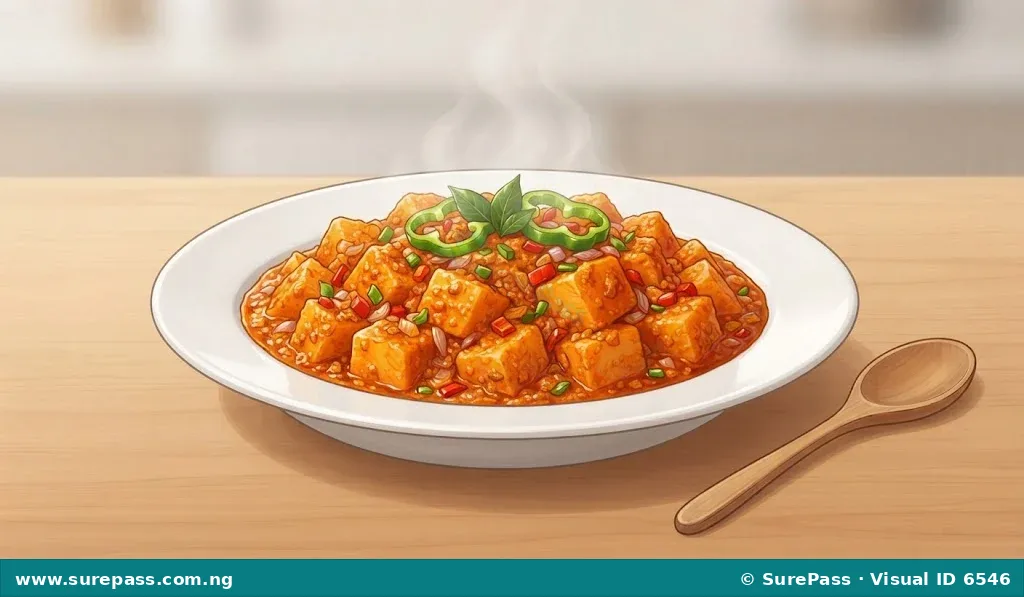
This practical section describes the preparation of Yam Porridge (Asaro), a simple, nutritious Nigerian dish that demonstrates the techniques of peeling, washing, boiling, simmering, and mashing.
Required Cooking Utensils and Equipment
The required utensils and equipment are:
- A sharp kitchen knife
- A peeling board or chopping board
- A medium-sized cooking pot with a tight-fitting lid
- A wooden stirring spoon
- A clean bowl for washing
- A measuring cup
- A serving plate
Required Ingredients
The required ingredients are:
- 1 medium tuber of yam
- 2 tablespoons of palm oil
- 1 medium onion (chopped)
- 2 fresh tomatoes and 2 fresh peppers (ground or finely chopped)
- 2 tablespoons of ground crayfish
- 1 seasoning cube
- Salt to taste
- Water (as required)
Step-by-Step Preparation Procedure
The procedure involves the following steps:
- Place the yam tuber on the chopping board and cut it into round slices.
- Peel the skin off each slice carefully using the kitchen knife, then cut the peeled slices into uniform, bite-sized cubes.
- Wash the yam cubes thoroughly in clean water to remove dirt and excess starch, then place them into the cooking pot.
- Add enough water to the pot to just cover the yam cubes.
- Place the pot on the heat source, cover it with the lid, and bring the water to a boil.
- Allow the yams to boil for approximately 10 to 15 minutes until they begin to soften.
- Add the chopped onions, ground tomatoes, peppers, crayfish, seasoning cube, and palm oil into the pot.
- Reduce the heat to a simmer, cover the pot tightly, and allow the ingredients to cook together for another 10 minutes until the yam cubes are completely tender.
- Add salt to taste and stir gently.
- Use the wooden stirring spoon to mash some of the yam cubes against the side of the pot to thicken the porridge liquid.
- Stir the entire mixture thoroughly to blend the mashed yam with the remaining cubes and sauce.
- Simmer on very low heat for 2 minutes, then remove the pot from the heat source.
- Portion the hot Yam Porridge onto a clean serving plate.
Safety and Hygiene Rules during the Practical
Important safety and hygiene rules include:
- Wash hands thoroughly with soap and clean water before handling any food items or utensils.
- Handle the kitchen knife with extreme care when peeling and cutting the yam to prevent cuts.
- Keep the cooking environment clean and wipe up any water or oil spills on the floor immediately to prevent slipping.
- Use dry oven gloves or thick kitchen cloths to lift hot pot lids and handle the hot pot.
- Ensure the gas cylinder or heat source is turned off completely immediately after cooking is finished.





0 comments
Open the discussion when you need it. Comments stay collapsed until requested so the initial article remains light.