



ARTICLE CONTENTSOn this page 9 sections
Choosing a Family House
Performance Objectives
By the end of the lesson, students should be able to:
- identify factors influencing the choice of family house;
- enumerate and describe and discuss factors influencing the design of family house;
- explain ways of choosing a house for family house;
- discuss the guidelines for choosing a family house.
Meaning of a Family House
A family house is a physical structure that provides shelter, security, privacy, and comfort for members of a family.
It serves as the central environment where family relationships are nurtured, daily household activities are performed, and individual members find rest and protection from external elements.
Factors Influencing the Choice of a Family House
Choosing a house is one of the most significant decisions a family can make. Several critical factors influence this decision, as the selected house must meet the physical, social, and economic needs of the household.
The primary factors influencing the choice of a family house include:
- Income and Financial Resources: The financial capability of the family determines the type, size, and location of the house they can afford. Families must balance the cost of acquiring the house with other essential household expenses such as food, education, and healthcare.
- Family Size and Composition: The number of family members and their characteristics (such as age, gender, and relationships) directly affect the choice of house. A large family requires more bedrooms and bathrooms than a newly married couple. Similarly, families with elderly members or infants have specific space requirements.
- Stage of the Family Life Cycle: The housing needs of a family change as they move through different stages. A beginning family (newlyweds) may require a small apartment, an expanding family with growing children needs more space and play areas, while a contracting family (empty nesters whose children have moved out) may prefer to downsize to a smaller, easily managed home.
- Location and Proximity: The geographical location of the house is vital. Families generally prefer houses that are close to workplaces, good schools, markets, hospitals, and transport hubs to reduce commuting time and transport costs.
- Security and Safety: A safe neighborhood with low crime rates, secure fencing, street lighting, and reliable security personnel is highly preferred. The physical site must also be safe from natural hazards such as flooding, erosion, or landslides.
- Availability of Basic Amenities: The presence of essential infrastructure such as a reliable water supply (borehole or public mains), electricity, good road networks, and efficient waste disposal systems heavily influences housing choices.
- Personal Preferences and Taste: Individual values, lifestyle, and aesthetic desires play a role. Some families prefer modern architectural designs, while others prefer traditional styles. Preferences for garden space, balcony views, or interior finishes also guide the choice.
- Health and Environmental Conditions: The environment surrounding the house should be clean, quiet, and free from industrial pollution, excessive noise, and offensive odors. Good drainage systems around the property are essential to prevent stagnant water, which breeds mosquitoes.
Factors Influencing the Design of a Family House
The design of a house refers to its architectural plan, layout, structural arrangement, and aesthetic appearance. A well-designed house ensures that space is utilized efficiently and that the building is functional for its occupants.
The main factors that influence the design of a family house are:
- Family Size and Activities: The design must accommodate the daily routines of the family. It determines the number of bedrooms, the size of the living room, and the layout of the kitchen. Families that entertain guests frequently may design larger living areas, while those with students may incorporate quiet study rooms.
- Financial Budget: The amount of money available dictates the complexity of the architectural design, the size of the building, and the quality of finishing materials. A limited budget leads to simple, compact designs, while a larger budget allows for elaborate, multi-storey structures.
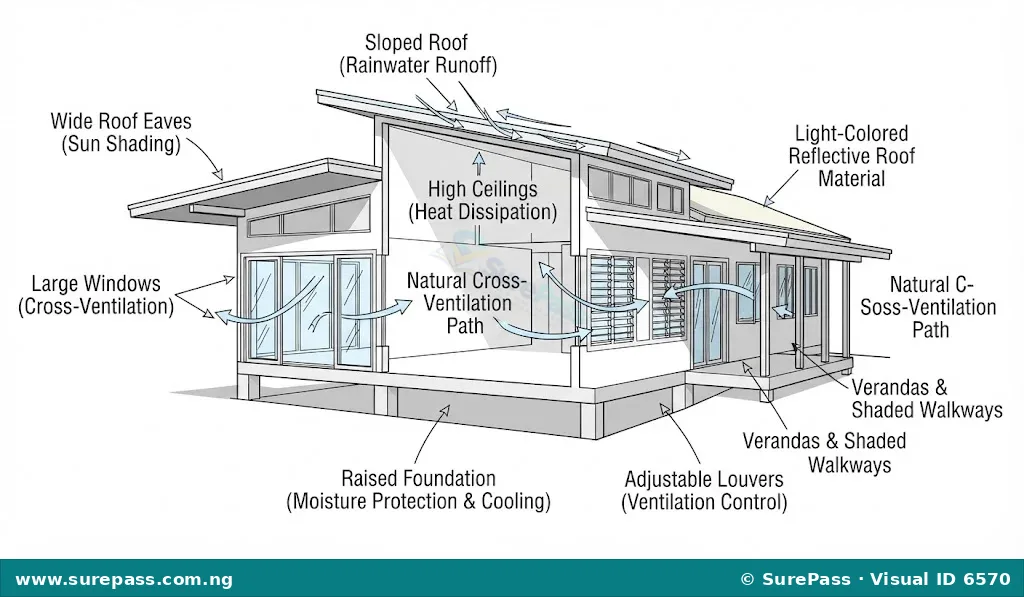
- Climate and Weather Conditions: In tropical regions like Nigeria, house designs must respond to high temperatures and heavy rainfall. Features such as high ceilings, large windows for cross-ventilation, wide roof overhangs to shade walls, and proper roof slopes to drain rainwater are essential design considerations.
- Site Topography and Soil Type: The physical nature of the land influences the structural design. Sloping land may require a split-level design, while swampy or loose soil requires specialized, reinforced foundations (such as raft or pile foundations) to ensure structural stability.
- Availability of Building Materials: The choice of design is often influenced by the types of building materials locally available and affordable. For example, designs may be adapted to use sandcrete blocks, clay bricks, timber, or stone depending on regional availability.
- Cultural and Religious Beliefs: Cultural practices often dictate how spaces are arranged. Some cultures require a clear separation between public reception areas and private family quarters, or require specific orientations for entrances and outdoor cooking spaces.
- Zoning Laws and Building Regulations: Government regulations and town planning laws set standards for building heights, setbacks from the road, drainage alignments, and the percentage of the plot that can be covered by the building. Architects must design within these legal boundaries.
- Future Expansion Plans: A good design anticipates the future growth of the family. Load-bearing walls and foundations can be designed to support future vertical expansion (adding another floor), or the layout can leave space on the plot for horizontal extensions.
Ways of Choosing a House for the Family
Families can acquire and choose their housing through different legal, financial, and physical methods. Each method has its own advantages and financial implications.
The primary ways of choosing and acquiring a family house are:
- Renting: This involves paying a specified sum of money (rent) at regular intervals (monthly or annually) to a landlord in exchange for the right to occupy the house. The tenant does not own the property, and the landlord remains responsible for major structural repairs.
- Leasing: A lease is a long-term rental agreement, usually spanning several years (e.g., 5 to 99 years). It gives the lessee more stability than a standard tenancy and often allows them to make minor modifications to the property, subject to the lease agreement.
- Buying: This is the outright purchase of an already completed house. The family pays the purchase price, either through personal savings or a mortgage loan from a bank, and gains full ownership of the property and the land.
- Building: This involves purchasing a plot of land and constructing a custom house from the foundation up. The family hires architects, engineers, and builders to execute a design that meets their exact specifications.
The table below compares the different ways of choosing a family house:
| Method of Acquisition | Description | Advantages | Disadvantages |
|---|---|---|---|
| Renting | Paying periodic rent to occupy a landlord’s property. | Low initial financial commitment; flexibility to move easily; landlord handles major repairs. | No ownership equity; rent can increase; limited freedom to modify the house. |
| Leasing | Long-term rental contract for a specified number of years. | High stability over many years; terms are fixed for the duration of the lease. | Requires significant upfront payment; the property eventually reverts to the owner. |
| Buying | Purchasing a completed house outright or via mortgage. | Immediate ownership; freedom to renovate; builds long-term family wealth. | High initial cost; buyer is responsible for all maintenance and property taxes. |
| Building | Constructing a new house on purchased land. | Customized to exact family needs; control over material quality; can be built in stages. | Takes a long time to complete; requires supervision; risk of rising material costs. |
Guidelines for Choosing a Family House
To avoid costly mistakes, families must follow systematic guidelines when inspecting and selecting a house. These guidelines serve as a practical checklist to ensure the house is safe, functional, and financially viable.
Important guidelines for choosing a family house include:
- Establish a Clear Budget: Determine the maximum amount the family can afford to spend on housing without straining other essential needs. Factor in hidden costs such as agency fees, legal fees, security dues, and immediate repair costs.
- Inspect the Structural Soundness: Examine the physical condition of the building. Look for deep cracks in the walls, sagging ceilings, dampness on walls (which indicates water seepage), leaking roofs, and the quality of doors, windows, and locks.
- Check Ventilation and Natural Lighting: Ensure that the rooms have adequate and well-positioned windows to allow the free flow of fresh air and sufficient natural sunlight. Good ventilation prevents dampness, mold growth, and excessive indoor heat.
- Examine the Drainage and Waste Disposal System: Inspect the gutters and drainage channels around the house to ensure they are clear and free-flowing. Verify that the compound is not prone to flooding during heavy rains and that there is a proper system for sewage and household waste disposal.
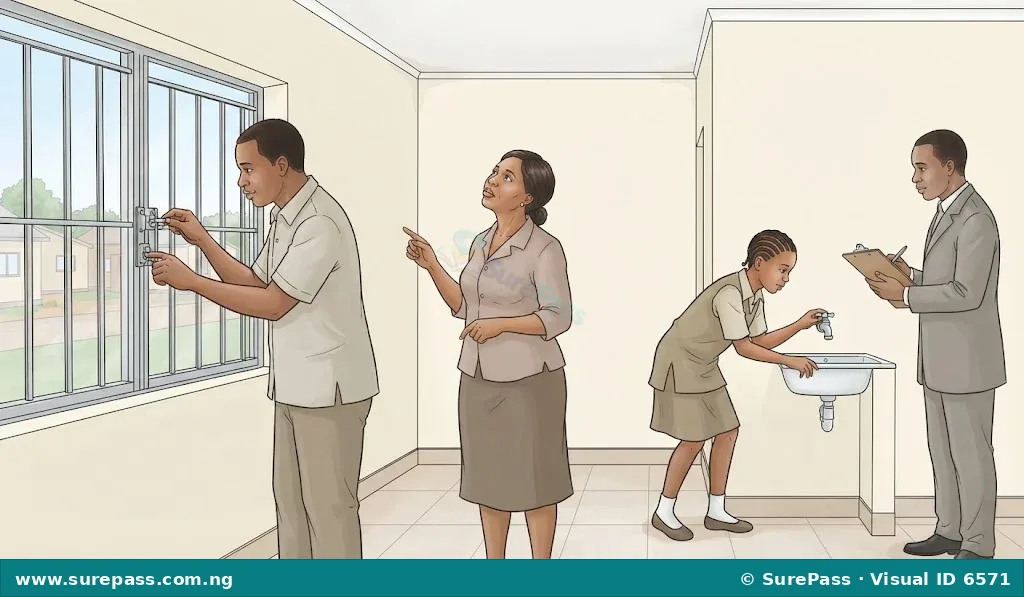
- Assess the Security of the Property and Neighborhood: Check if the house has secure perimeter fencing, burglar-proof bars on windows, and sturdy external doors. Research the safety of the neighborhood by observing the presence of security gates, street guards, and asking local residents about crime rates.
- Verify Water and Electricity Supply: Confirm the source of water (such as a functional borehole, well, or public water connection) and test its quality. Check the electrical fittings, prepaid meter installation, and the history of power supply in the area.
- Evaluate Accessibility and Road Networks: Ensure that the roads leading to the house are motorable, especially during the rainy season. The house should be easily accessible by public transport if family members do not own private vehicles.
- Conduct a Legal Search: Before making any payments, verify the ownership of the property. For rented properties, ensure the landlord or agent is genuine. For purchased properties, verify the land title documents (such as a Certificate of Occupancy) at the state land registry to avoid land disputes.
Identifying Guidelines for Choosing a Family House
Developing the skill to identify and apply these guidelines during a physical house inspection is essential for effective home management. A practical inspection checklist helps families systematically evaluate a property before making a commitment.
The following checklist outlines the key areas to observe and verify during a physical house inspection:
- Exterior Inspection: Observe the condition of the roof tiles, external wall paint, gutters, perimeter fence, gate, and the slope of the compound ground relative to the drainage system.
- Interior Inspection: Walk through every room to check for ceiling water stains, wall cracks, functioning window hinges, and the condition of the floor tiles or carpets.
- Utility Testing: Turn on water taps to check pressure and water color. Switch on light sockets and test the distribution board to ensure the electrical wiring is safe and functional.
- Neighborhood Observation: Visit the area at different times of the day (morning, afternoon, and night) to observe noise levels, traffic congestion, and security patterns.
Consider the following scenario to understand how ignoring these guidelines can affect a family:
A family of six hastily rented a beautifully painted five-bedroom apartment during the dry season because the rent was unusually low. They did not inspect the drainage system, test the borehole water, or verify the neighborhood security. Three months later, during the rainy season, the compound flooded, destroying their car. The borehole water turned brown and foul-smelling, forcing them to buy expensive sachet water daily. Additionally, the lack of burglar-proofing on the back windows led to a burglary incident. This scenario demonstrates how failing to identify and follow proper housing guidelines can lead to financial loss, health hazards, and insecurity.
Summary of Housing Decisions
Choosing and designing a family house requires a careful balance of financial resources, family needs, environmental conditions, and structural safety. By understanding the factors that influence housing choices and designs, and by strictly applying inspection guidelines, families can secure a home that promotes health, happiness, and long-term stability.




0 comments
Open the discussion when you need it. Comments stay collapsed until requested so the initial article remains light.