



ARTICLE CONTENTSOn this page 10 sections
Household Linen
Performance Objectives
By the end of the lesson, students should be able to:
- explain the meaning and importance of household linen;
- identify the different types and uses of household linen;
- discuss the factors to consider when selecting household linen;
- practice sewing skills to mend tears and sew on buttons to extend the life of linens;
- demonstrate proper laundry techniques/procedures like washing, drying, and ironing different types of household linen including stain removal for different types of stains.
Meaning and Importance of Household Linen
Household linen refers to all textile articles used in the home for functional, decorative, or protective purposes.
Historically, these items were made primarily from linen fibers derived from the flax plant. In modern times, the term encompasses articles made from a wide variety of natural and synthetic fibers, including cotton, polyester, wool, nylon, and blended fabrics.
The importance of household linen includes:
- Protection of Home Furnishings: Linens shield expensive furniture, mattresses, and pillows from sweat, body oils, dust, and physical wear.
- Provision of Comfort and Warmth: Bed sheets, blankets, and duvets provide physical comfort, regulate body temperature, and promote restful sleep.
- Promotion of Hygiene and Cleanliness: Towels, dishcloths, and napkins are essential for drying the body, wiping surfaces, and maintaining sanitary conditions during meals.
- Enhancement of Aesthetic Appeal: Well-chosen linens add colour, texture, and style to different rooms, improving the overall interior decoration of the home.
- Definition of Functional Areas: Tablecloths and place mats define dining spaces and prepare the table for meals, establishing order and structure in the household.
Types and Uses of Household Linen
Household linens are classified according to the specific rooms or functional areas where they are used. These categories include bedroom linen, bathroom linen, dining room and kitchen linen, and living room linen.
Bedroom Linen
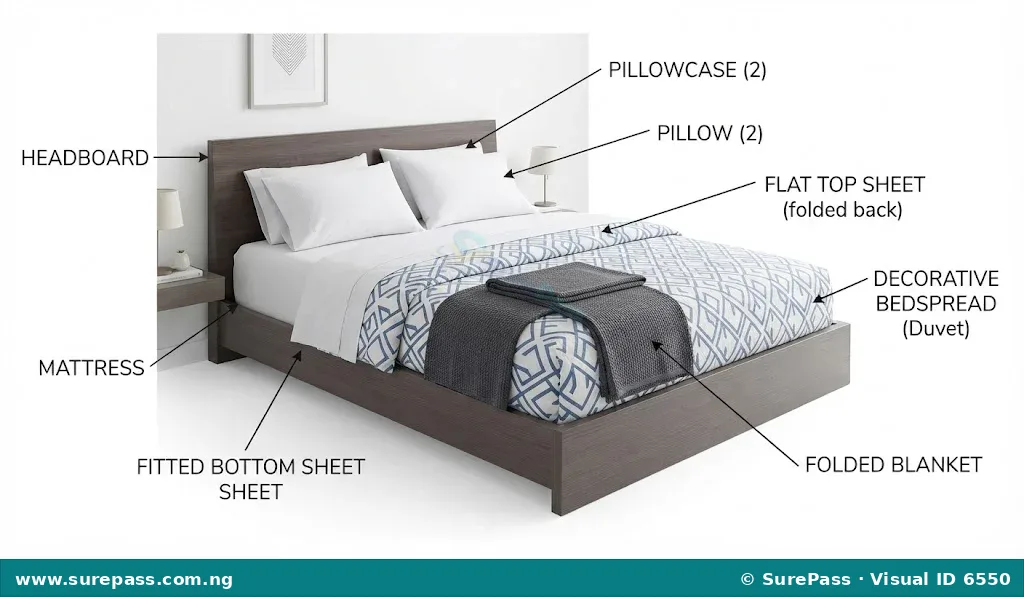
Bedroom linen consists of textile items used to dress the bed and provide comfort during rest.
Common types of bedroom linen include:
- Bed Sheets: Large rectangular pieces of fabric used to cover the mattress. The bottom sheet covers the mattress directly, while the top sheet is placed under the blanket.
- Pillowcases: Fabric covers designed to protect pillows from dirt, hair oils, and sweat.
- Blankets: Thick, warm covers made of wool, cotton, or synthetic fibers, used to provide warmth during cold weather.
- Bedspreads: Decorative top covers that cover the entire bed, including the pillows, during the day.
- Mattress Covers: Protective layers fitted directly over the mattress to prevent stains, dust mites, and moisture damage.
Bathroom Linen
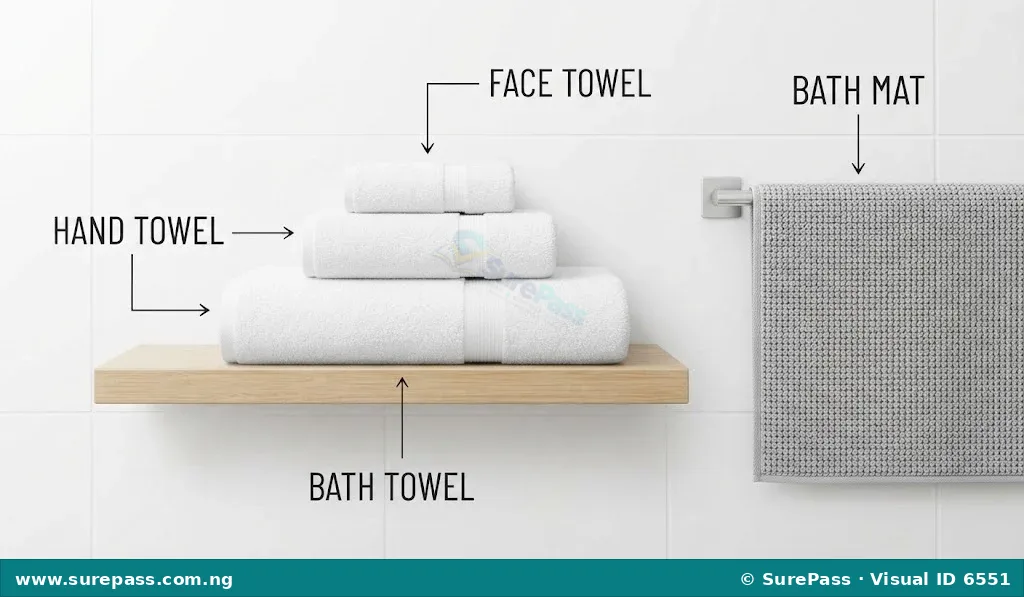
Bathroom linen includes absorbent textile items used for drying the body and maintaining hygiene in the bathroom.
Common types of bathroom linen include:
- Bath Towels: Large, highly absorbent towels used for drying the body after a bath or shower.
- Hand Towels: Medium-sized towels hung near the washbasin for drying the hands.
- Face Towels: Small, soft towels used specifically for washing and drying the face.
- Bath Mats: Thick, absorbent mats placed on the bathroom floor to absorb water and prevent slipping when stepping out of the tub or shower.
Dining Room and Kitchen Linen
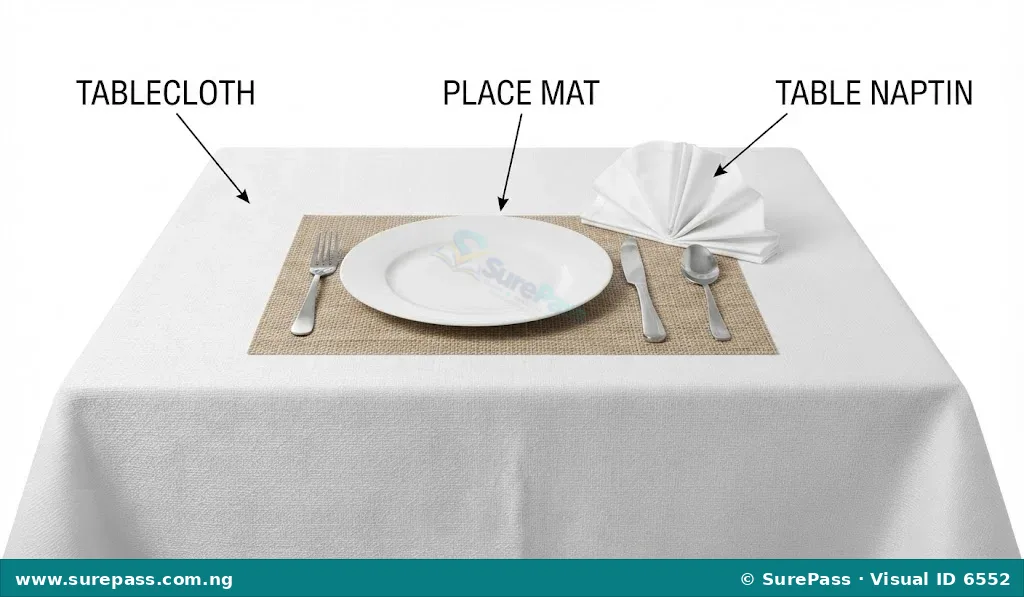
These linens are used for food preparation, table setting, and cleaning tasks in the kitchen and dining areas.
Common types of dining room and kitchen linen include:
- Tablecloths: Large fabric covers spread over the dining table to protect the wood or glass surface and provide a clean dining area.
- Table Napkins: Square pieces of fabric used during meals to wipe the mouth and hands, and to protect clothing from spills.
- Place Mats: Small mats placed under individual plates to protect the tablecloth or table surface from heat and spills.
- Tray Cloths: Small linens used to line serving trays to prevent plates and cups from sliding.
- Kitchen Towels: Absorbent cloths used for drying washed dishes, cutlery, and glassware.
- Oven Gloves: Thick, padded fabric gloves used to handle hot pots, pans, and baking trays safely.
- Dishcloths: Small, durable cloths used for washing dishes and wiping kitchen countertops.
Living Room Linen
Living room linen consists of decorative and functional fabrics used to enhance the comfort and appearance of the main living area.
Common types of living room linen include:
- Curtains and Draperies: Fabric panels hung over windows to control light, provide privacy, and decorate the room.
- Cushion Covers: Removable fabric covers for throw pillows used on sofas and armchairs.
- Chair Backs (Antimacassars): Small cloths placed over the backs and arms of chairs to protect the upholstery from hair oils and dirt.
Selection of Household Linen
Selecting the right household linen requires careful consideration of several factors to ensure durability, functionality, and value for money.
The factors to consider when selecting household linen include:
- Fiber Content and Fabric Type: Cotton is highly recommended for bed sheets and towels due to its high absorbency, softness, and durability. Polyester-cotton blends are suitable for bed sheets because they resist wrinkling and dry quickly. Linen fabric is durable and elegant but wrinkles easily.
- Durability: The fabric should have a tight, strong weave to withstand frequent washing and daily wear.
- Colourfastness: The dyes used in the fabric must be resistant to fading, bleeding, or running during laundry. This is especially important for multi-coloured linens.
- Ease of Care and Maintenance: Linens should be easy to wash, dry, and iron. Fabrics that require specialized dry cleaning should be avoided for everyday household use.
- Size and Measurements: Accurate measurements of beds, pillows, tables, and windows must be taken before purchasing linens to ensure a proper fit.
- Aesthetic Appeal: The colours, patterns, and designs of the linens should complement the existing interior decor, wall paint, and furniture of the home.
- Cost and Budget: The price of the linen should align with the household budget while maintaining a reasonable standard of quality. High-quality linens often cost more initially but save money over time due to their longevity.
Care and Storage of Household Linen
Proper care and storage extend the lifespan of household linens, maintain their appearance, and ensure hygienic use.
General care guidelines for household linen include:
- Prompt Stain Removal: Stains should be treated immediately before they set into the fabric fibers.
- Regular Washing: Linens should be washed regularly to prevent dirt, sweat, and body oils from weakening the fabric.
- Gentle Handling: Delicate linens, such as lace tablecloths or embroidered items, should be washed gently to prevent damage.
- Thorough Drying: Linens must be dried completely to prevent the growth of mildew and unpleasant damp odours.
- Careful Ironing: Ironing removes creases, restores the shape of the linen, and helps kill bacteria and insect eggs.
Proper storage practices for household linen include:
- Dry Storage Environment: Linens must be stored in a clean, dry, and well-ventilated cupboard or wardrobe to prevent dampness and mold.
- Systematic Arrangement: Linens should be grouped by type (e.g., bed sheets together, towels together). Heavier items like blankets should be placed at the bottom of the stack, with lighter items on top.
- Pest Control: Camphor balls, mothballs, or dried lavender sachets should be placed in the storage cupboard to repel insects such as moths and silverfish.
- Rotation of Use: Freshly laundered linens should be placed at the bottom of the stack so that all items are used and washed evenly, preventing some pieces from wearing out faster than others.
Repairs of Household Linen
Mending minor damages promptly prevents them from becoming larger, irreparable tears, thereby extending the life of the linen.
How to Mend a Straight Tear
A straight tear in a bed sheet or tablecloth can be repaired using simple darning or running stitches.
The materials required for mending a tear include:
- A sewing needle
- Matching sewing thread
- A pair of scissors
- A thimble (optional, to protect the finger)
The procedure for mending a straight tear involves the following steps:
- Thread the needle with a matching thread and tie a small knot at the end.
- Bring the needle up from the underside of the fabric, starting about 5 millimeters before the tear begins, to secure the stitch.
- Align the torn edges of the fabric neatly.
- Make small, even running stitches back and forth across the tear, pulling the edges together gently without puckering the fabric.
- Extend the stitches about 5 millimeters beyond the end of the tear to ensure the repair is secure.
- Pass the needle to the underside of the fabric, make a secure knot, and cut the excess thread with scissors.
How to Sew on a Button
Buttons on pillowcases, duvet covers, or mattress protectors must be replaced immediately when they fall off.
The materials required for sewing on a button include:
- A replacement button
- A sewing needle
- Matching sewing thread
- A pair of scissors
- A pin or toothpick (to create a thread shank)
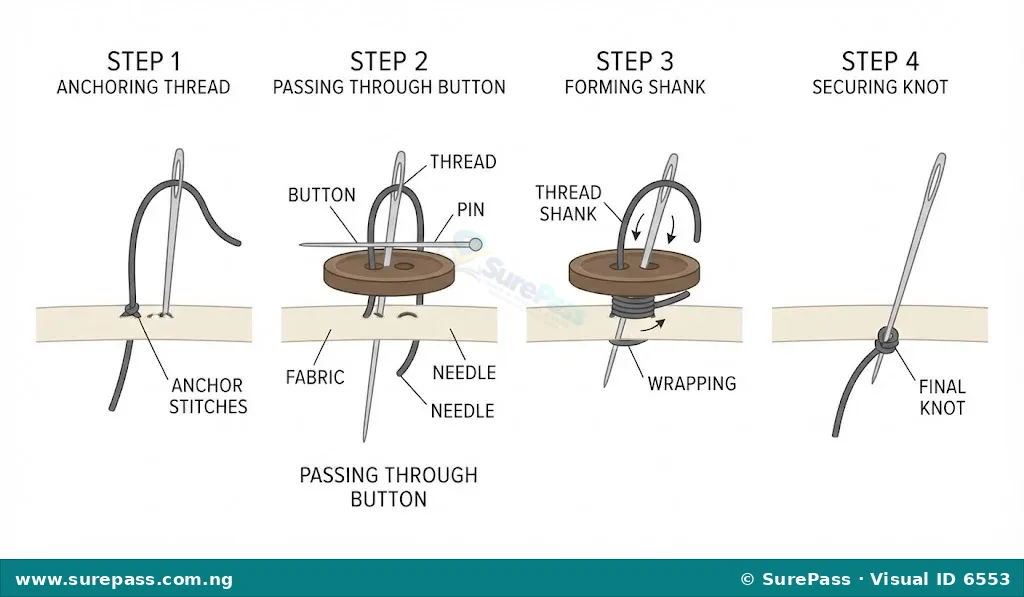
The procedure for sewing on a flat button involves the following steps:
- Mark the exact position where the button needs to be attached on the fabric.
- Thread the needle, double the thread, and make a small stitch on the right side of the fabric at the marked spot to anchor the thread.
- Pass the needle up through one of the holes in the button.
- Place a pin or toothpick across the top of the button, between the holes, and pass the needle down through the opposite hole into the fabric. The pin ensures the button is not sewn too tightly against the fabric.
- Repeat this stitching process through the holes four to five times to secure the button.
- Remove the pin or toothpick, and pull the button slightly away from the fabric.
- Bring the needle up between the button and the fabric, and wind the thread tightly around the stitches three to four times to form a strong thread shank. This shank allows space for the buttonhole fabric to fit under the button.
- Pass the needle to the underside of the fabric, make a secure knot, and cut the thread.
Laundry Procedures and Stain Removal
Proper laundry procedures maintain the hygiene, colour, and strength of household linens.
Standard Laundry Procedure
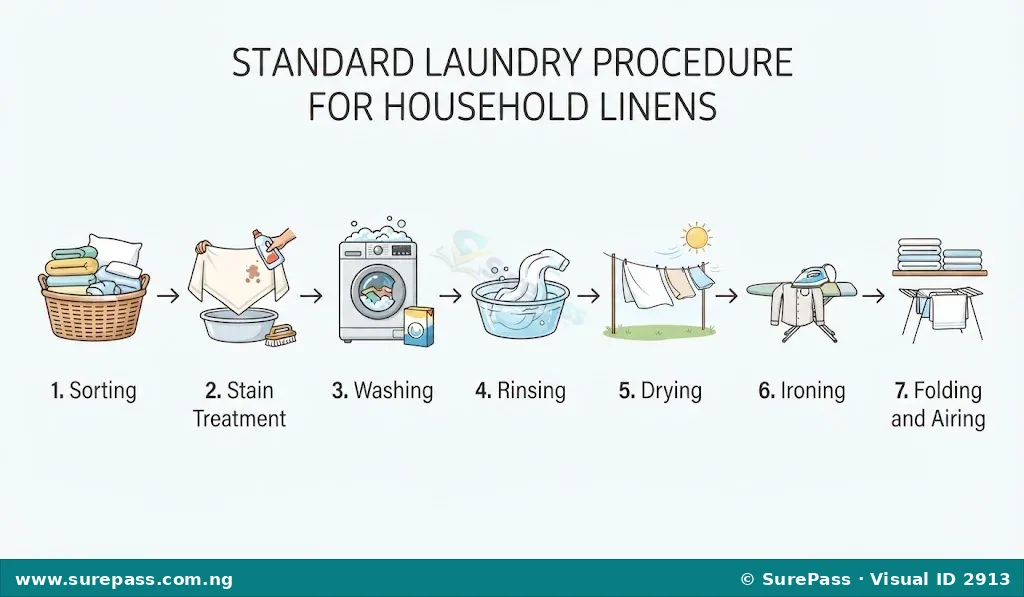
The standard laundry procedure for household linen involves the following steps:
- Sorting: Group linens by fabric type (e.g., cotton, synthetic), colour (separate white linens from coloured ones), and level of dirtiness.
- Mending and Stain Treatment: Inspect linens for tears and repair them before washing to prevent the damage from expanding. Treat any visible stains before the main wash.
- Soaking: Soak heavily soiled white cotton linens in soapy water for 15 to 30 minutes to loosen dirt.
- Washing: Wash the linens using a suitable detergent. Rub gently, paying close attention to heavily soiled areas like the hems of sheets or the centers of towels.
- Rinsing: Rinse the linens thoroughly in clean water several times until all soap residues are completely removed. Residual soap can damage fabric fibers and cause skin irritation.
- Boiling (Optional): White cotton bed sheets and towels can be boiled in soapy water for 10 to 15 minutes to disinfect them and maintain brightness.
- Drying: Hang white linens in direct sunlight, as the sun acts as a natural bleaching agent. Hang coloured linens in the shade to prevent fading.
- Ironing: Iron the linens while they are slightly damp, or use a steam iron, to remove all wrinkles. Ironing also sterilizes the fabric.
- Airing and Folding: Fold the ironed linens neatly and allow them to air for a few hours to ensure all moisture has evaporated before storage.
Stain Removal Methods
Stains should be treated as soon as they occur. The method of removal depends on the type of stain and the fabric involved.
Common stain removal methods include:
| Stain Type | Fabric Type | Removal Method / Procedure |
|---|---|---|
| Tea or Coffee | White Cotton / Linen | Pour boiling water through the stain from a height, then wash with warm soapy water. For stubborn stains, apply a mild bleaching agent. |
| Tea or Coffee | Coloured / Synthetic | Soak in warm water with a mild detergent, rub gently, and rinse thoroughly. Avoid strong bleach. |
| Grease or Oil | All Fabrics | Apply talcum powder, chalk, or starch to absorb the wet grease. Scrape off, then wash in hot soapy water (for cottons) or warm soapy water (for synthetics). |
| Ink (Ballpoint) | All Fabrics | Sponge the stain with methylated spirit or rubbing alcohol to dissolve the ink, blot with clean paper towels, then wash normally. |
| Blood | All Fabrics | Soak immediately in cold salted water. Never use hot water, as heat sets the protein in blood stains. Wash normally once the stain loosens. |
| Mildew (Mold) | White Cotton / Linen | Moisten the stain with lemon juice and salt, expose it to direct sunlight, then wash with detergent and bleach if necessary. |
Summary
Household linens are essential textile items used throughout the home to provide comfort, protection, hygiene, and beauty. Selecting high-quality linens requires evaluating fabric durability, colourfastness, and ease of maintenance. Regular care, prompt repairs of tears and loose buttons, systematic storage, and correct laundry procedures ensure that household linens remain clean, hygienic, and durable for many years.
Evaluation Guide
Answer the following questions to review the lesson:
- State the meaning of household linen and outline four reasons why it is important in the home.
- List four different rooms in the home and name two types of linen used in each room.
- Enumerate five factors that must be considered when selecting household linen.
- Describe the step-by-step procedure for sewing on a flat button to ensure it has a proper thread shank.
- Highlight the standard laundry procedure for washing, drying, and ironing a white cotton bed sheet.
- Explain how to remove a fresh blood stain and a grease stain from a cotton tablecloth.



0 comments
Open the discussion when you need it. Comments stay collapsed until requested so the initial article remains light.