



ARTICLE CONTENTSOn this page 10 sections
Wardrobe Planning
Performance Objectives
By the end of the lesson, students should be able to:
- explain the meaning and importance of wardrobe planning;
- identify the various factors that influence wardrobe needs;
- discuss how to build a versatile wardrobe that meets both daily and special occasion needs;
- search the internet using ICT gadgets for articles, videos, and interactive guides on wardrobe planning and maintenance;
- justify the selection of specific garments for a particular function or event;
- describe the appropriate care and maintenance required for different types of clothing.
Meaning of Wardrobe Planning
Wardrobe planning is the systematic process of selecting, organizing and maintaining clothing items and accessories to meet a person’s lifestyle, activities and budget.
A wardrobe includes all the clothes, shoes, undergarments, and accessories that a person owns. Planning ensures that these items are functional, coordinated, and sufficient for all daily and occasional activities without causing financial strain.
Importance of Wardrobe Planning
Proper wardrobe planning is essential for individuals and families. The main reasons for planning a wardrobe include:
- Financial Economy: It prevents impulse buying and ensures that money is spent only on necessary garments that complement existing clothes.
- Time Saving: An organized wardrobe makes it easy to select outfits quickly, reducing the time spent preparing for school, work, or events.
- Maximum Utility: It ensures that every clothing item is worn regularly and coordinates with other pieces, preventing garments from sitting unused.
- Confidence and Self-Esteem: Wearing appropriate, well-fitting, and clean clothes enhances a person’s appearance and boosts self-confidence in social and professional settings.
- Longer Garment Lifespan: Planning includes care and maintenance schedules, which preserve the quality of fabrics and keep clothes looking new for longer.
Factors to Consider When Planning a Wardrobe
Several personal and environmental factors influence the types of clothing an individual needs. These factors must be carefully analyzed before purchasing new garments.
Age
The age of an individual determines their physical growth rate, activity level, and clothing preferences. Children grow rapidly and require durable, easy-to-wash garments with room for growth. Teenagers and young adults often prefer trendy, active, and expressive styles. Older adults generally prioritize comfort, ease of wearing, and classic designs.
Profession
A person’s occupation dictates their daily dress code. Professionals such as bankers, lawyers, and teachers require formal corporate attire or smart-casual wear. Manual laborers, farmers, and factory workers need protective, heavy-duty clothing. Healthcare workers and security personnel require specific uniforms that must be kept clean and sterile.
Social Status
Social roles, community expectations, and economic standing influence wardrobe choices. Public figures, community leaders, and business executives often require high-quality, formal garments that reflect their positions. Social status also determines the frequency of attending formal gatherings, which increases the need for ceremonial or traditional attire.
Climate
Weather conditions dictate fabric selection and garment design. In tropical regions like Nigeria, lightweight, breathable fabrics such as cotton are essential for hot and humid seasons. During the rainy season or the cold harmattan period, heavier garments, sweaters, cardigans, and jackets are required to keep the body warm.
Steps Involved in Wardrobe Planning
Building an efficient wardrobe requires a step-by-step approach to avoid waste and ensure all clothing needs are met.
The systematic steps involved in wardrobe planning are:
- Take an Inventory: Examine all existing clothing items in the wardrobe. Group them into categories such as shirts, trousers, dresses, undergarments, and shoes.
- Evaluate and Sort: Assess the condition of each item. Divide them into clothes to keep, clothes that need repair or alteration, clothes to donate, and worn-out clothes to discard.
- Identify Gaps and Needs: Compare the kept items against daily activities, profession, and upcoming events. Identify what essential items are missing.
- Set a Budget: Determine the amount of money available for purchasing new clothes. A budget prevents overspending and ensures priority needs are met first.
- Create a Shopping List: Write down the specific items needed to supplement the existing wardrobe. Stick to this list during shopping.
- Select Versatile Items: Choose garments in neutral colors and classic styles that can be easily mixed and matched with existing clothes.
Building a Versatile Wardrobe
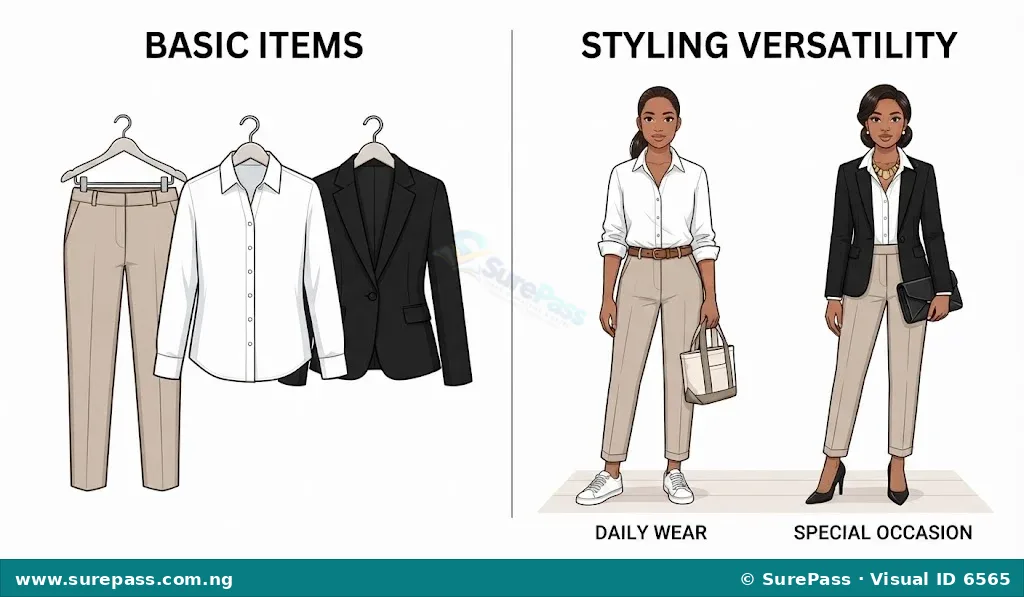
A versatile wardrobe is one that contains a balanced mix of garments that can be combined in different ways to suit various occasions. This concept is often referred to as a capsule wardrobe.
To build a versatile wardrobe that meets both daily and special occasion needs, the following guidelines should be followed:
- Invest in Basic Pieces: Acquire high-quality basic garments in neutral colors such as black, white, navy blue, grey, or brown. Examples include plain t-shirts, white button-down shirts, dark trousers, and simple skirts.
- Use the Mix-and-Match Principle: Ensure that any new top purchased can be worn with at least three different bottoms already in the wardrobe.
- Incorporate Layering Pieces: Use jackets, blazers, cardigans, or kimonos to transform a casual daily outfit into a formal or semi-formal look.
- Select Adaptable Accessories: Use shoes, belts, jewelry, and scarves to change the appearance of an outfit from day wear to evening wear.
Selecting Garments for Specific Functions or Events
Selecting the right clothing for an event is a key aspect of home management and personal grooming. Garments must be chosen based on the nature of the activity.
The justification for selecting specific garments for particular functions includes:
- School or Work: Uniforms or formal corporate wear are selected to project professionalism, discipline, and identity. These clothes should be neat, modest, and comfortable for long hours of sitting or moving.
- Sports and Physical Activities: Lightweight, stretchable, and moisture-absorbing fabrics like polyester or nylon blends are selected. These allow free movement and help cool the body during exercise.
- Religious Services and Traditional Ceremonies: Modest, respectful, and culturally appropriate garments, such as lace, Ankara, or formal suits, are selected to honor the sanctity of the venue or the cultural significance of the event.
- Casual Outings: Relaxed, comfortable clothing such as jeans, t-shirts, and sneakers are selected for informal gatherings, picnics, or running errands.
- Bedtime: Loose, soft, and highly breathable fabrics like cotton pajamas or nightgowns are selected to promote comfortable sleep and skin health.
Care and Maintenance of Different Types of Clothing
Proper care preserves the texture, color, and strength of clothing fibers. Different fabrics require specific cleaning and storage methods.
Cotton
Cotton is a strong, natural fiber that absorbs moisture well and can withstand high temperatures.
The care guidelines for cotton garments are:
- Wash with warm or cold water using a good laundry detergent.
- White cottons can be bleached if necessary to remove stains, but colored cottons should be washed with color-safe detergents.
- Dry in direct sunlight to naturally sanitize the fabric, though bright colors should be dried in the shade to prevent fading.
- Iron at a high temperature setting while the garment is slightly damp to remove stubborn wrinkles.
Silk
Silk is a delicate, luxurious natural protein fiber that can be easily damaged by heat, friction, and strong chemicals.
The care guidelines for silk garments are:
- Hand-wash gently in cool water using a mild, pH-neutral liquid detergent. Do not wring or twist the fabric.
- Avoid using chlorine bleach, which dissolves silk fibers.
- Squeeze out excess water gently between clean towels and dry flat in the shade, away from direct sunlight.
- Iron on the wrong side of the fabric using a low heat setting, preferably with a pressing cloth between the iron and the silk.
Denim
Denim is a sturdy, tightly woven cotton twill fabric commonly used for jeans and jackets.
The care guidelines for denim garments are:
- Wash denim items inside out to preserve the dye and prevent uneven fading.
- Wash in cold water to prevent shrinkage and color bleeding.
- Air-dry by hanging the garments in a shaded, well-ventilated area. Avoid excessive machine drying, which weakens the fibers.
- Iron on a medium-to-high heat setting if necessary, though hanging denim properly often eliminates the need for ironing.
Practical Skills in Wardrobe Planning and Care
Applying practical skills in budgeting and digital research helps in maintaining an efficient wardrobe.
How to Plan a Budget to Supplement an Existing Wardrobe
This activity helps individuals identify clothing gaps and allocate financial resources wisely to purchase new items that complement what they already own.
The required materials are:
- A pen and a notebook
- A calculator
- An inventory list of existing clothes
The procedure involves the following steps:
- Conduct a physical check of the wardrobe and write down all usable clothing items.
- Identify specific gaps based on upcoming needs (for example, a pair of black school shoes or a white formal shirt).
- List the missing items in order of priority, placing essential items at the top and luxury items at the bottom.
- Research the current market prices of the prioritized items by visiting local markets or checking online stores.
- Write down the total amount of money available for the wardrobe supplement.
- Allocate funds to the highest-priority items first. If the total cost exceeds the available money, remove lower-priority items from the list.
- Keep a record of the final budget and stick to it during purchases.
How to Search the Internet for Wardrobe Planning and Maintenance Resources
Using Information and Communication Technology (ICT) tools allows individuals to access modern guides, video tutorials, and articles on clothing care.
The required materials are:
- An ICT gadget (such as a smartphone, tablet, or computer)
- An active internet connection
The procedure involves the following steps:
- Turn on the ICT gadget and ensure it is connected to a secure internet network.
- Open a web browser or a search engine application.
- Type specific search terms into the search bar, such as “how to organize a small wardrobe”, “stain removal techniques for cotton”, or “capsule wardrobe guide”.
- Browse through the search results and select reputable educational websites, home management blogs, or video platforms.
- Watch video demonstrations on folding techniques, garment repairs, or fabric care.
- Bookmark or save useful articles and interactive guides for future reference.





0 comments
Open the discussion when you need it. Comments stay collapsed until requested so the initial article remains light.