


ARTICLE CONTENTSOn this page 7 sections
Setting up a Home
Performance Objectives
By the end of the lesson, students should be able to:
- differentiate between a house and home;
- describe types of furniture and fixture for different functional areas of a home;
- explain guidelines for arranging furniture and fixtures in different functional areas of the home;
- How can furniture and fixtures be arranged in different functional areas of the home.
Difference Between a House and a Home
The terms “house” and “home” are often used interchangeably, but they have distinct meanings. Understanding this difference is important when considering how to set up a living space.
What is a House?
A house is a physical structure, a building made of materials like bricks, cement, wood, and roofing sheets. It provides shelter from the weather and a place to keep belongings.
A house can be empty, under construction, or simply a building without occupants. Its primary characteristic is its physical form and function as a shelter.
What is a Home?
A home is more than just a physical structure; it is a place where people live, feel a sense of belonging, security, and comfort. It is filled with personal experiences, memories, and the presence of family members.
A home is created by the people who live in it, their relationships, and the activities they share. It is a place where one feels safe, loved, and at peace.
Key Differences Between a House and a Home
The main differences between a house and a home are:
- Physical vs. Emotional: A house is a physical building, while a home is an emotional and psychological space.
- Structure vs. Feeling: A house is defined by its structure and materials, whereas a home is defined by the feelings, relationships, and memories created within it.
- Empty vs. Occupied: A house can be empty, but a home implies the presence of people and their lives.
- Tangible vs. Intangible: A house is tangible (can be touched and seen), while a home includes intangible aspects like warmth, love, and security.
- Building vs. Living: A house is built, but a home is lived in and made.
Furniture and Fixtures in the Home
To create a comfortable and functional home, various items are needed. These items are generally categorised as furniture or fixtures.
What is Furniture?
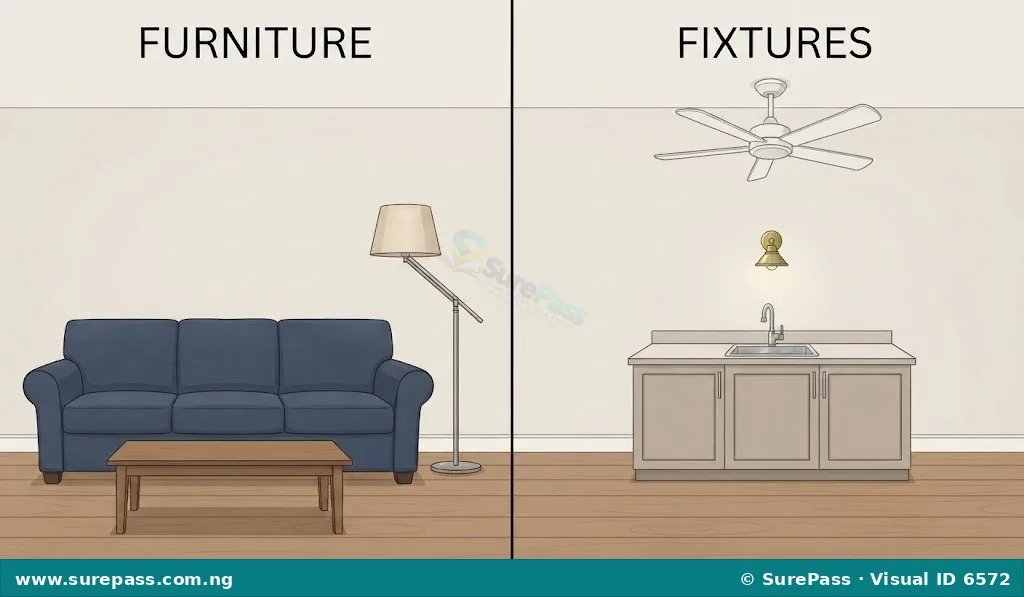
Furniture refers to movable objects that support human activities such as seating, eating, sleeping, and storage. These items can be easily moved from one place to another within a room or house.
Examples of furniture include chairs, tables, beds, wardrobes, sofas, and bookshelves.
What are Fixtures?
Fixtures are items that are permanently attached to the house structure and cannot be easily removed without causing damage to the building. They are considered part of the building itself.
Examples of fixtures include built-in cabinets, sinks, bathtubs, light fittings, ceiling fans, and curtain rods.
Types of Furniture and Fixtures for Different Functional Areas
Different areas of a home serve different purposes, and therefore require specific types of furniture and fixtures to support those functions. These areas are often called functional areas.
1. Living Room (Sitting Room)
The living room is typically used for relaxation, entertaining guests, and family gatherings.
Furniture and fixtures for the living room include:
- Furniture:
- Sofas and armchairs: For seating and comfort.
- Coffee table: For placing drinks, books, or decorative items.
- Side tables: For lamps or small items.
- TV stand or entertainment unit: For holding the television and other media devices.
- Bookshelves: For storing books and display items.
- Rugs or carpets: For adding warmth and defining the space.
- Fixtures:
- Curtain rods or blinds: For hanging curtains and controlling light.
- Light fittings (ceiling lights, wall sconces): For illumination.
- Ceiling fan: For air circulation.
- Wall-mounted shelves (if built-in): For display or storage.
2. Bedroom
The bedroom is primarily for sleeping, resting, and personal privacy.
Furniture and fixtures for the bedroom include:
- Furniture:
- Bed (with mattress): For sleeping.
- Wardrobe or closet: For storing clothes and personal items.
- Dressing table with mirror: For grooming.
- Bedside tables: For lamps, alarm clocks, or personal items.
- Chair or stool: For seating.
- Fixtures:
- Curtain rods or blinds: For window coverings.
- Light fittings (ceiling lights, bedside wall lamps): For illumination.
- Ceiling fan or air conditioner: For temperature control.
- Built-in shelves or cabinets: For additional storage.
3. Dining Room
The dining room is used for family meals and entertaining guests during mealtimes.
Furniture and fixtures for the dining room include:
- Furniture:
- Dining table: The central piece for meals.
- Dining chairs: Seating around the table.
- Sideboard or buffet cabinet: For storing dinnerware, cutlery, and serving dishes.
- Fixtures:
- Light fitting (often a chandelier or pendant light above the table): For focused illumination.
- Curtain rods or blinds: For window coverings.
4. Kitchen
The kitchen is used for preparing and cooking food, and sometimes for casual eating.
Furniture and fixtures for the kitchen include:
- Furniture:
- Kitchen table and chairs (for eat-in kitchens): For casual dining.
- Movable kitchen island or trolley: For extra workspace or storage.
- Refrigerator: For food storage.
- Cooker/Oven: For cooking.
- Fixtures:
- Built-in cabinets and drawers: For storing cookware, utensils, and food items.
- Sink with faucet: For washing dishes and food.
- Countertops: For food preparation.
- Light fittings (ceiling lights, under-cabinet lights): For bright illumination.
- Extractor fan or hood: For ventilation and removing cooking fumes.
- Wall tiles: For easy cleaning and protection.
5. Bathroom/Toilet
The bathroom is used for personal hygiene and sanitation.
Furniture and fixtures for the bathroom include:
- Furniture:
- Small storage unit or shelving: For toiletries and towels.
- Laundry basket: For dirty clothes.
- Fixtures:
- Toilet bowl and cistern: For sanitation.
- Wash basin with faucet: For handwashing and face washing.
- Shower or bathtub: For bathing.
- Mirror (often wall-mounted): For grooming.
- Towel rails or hooks: For hanging towels.
- Light fittings: For illumination.
- Extractor fan: For ventilation and moisture control.
- Water heater (if installed): For hot water supply.
Guidelines for Arranging Furniture and Fixtures
Arranging furniture and fixtures effectively makes a home comfortable, functional, and visually appealing. Several guidelines should be considered when planning the layout of any room.
1. Consider the Function of the Room
Each room has a primary purpose. The arrangement should support this purpose. For example, in a living room, the seating should be arranged to facilitate conversation and viewing the television. In a bedroom, the bed should be the focal point and easily accessible.
2. Plan for Traffic Flow
Ensure there are clear pathways for movement within the room and between different areas of the home. Avoid placing furniture in a way that blocks doorways, hallways, or creates awkward routes. A good traffic flow allows people to move freely and safely.
3. Utilise Space Effectively
Avoid overcrowding a room with too much furniture. Leave enough space between items for comfort and ease of use. Consider the size of the room and choose furniture that fits its scale. In smaller rooms, multi-functional furniture can be very useful.
4. Consider Light and Ventilation
Position furniture in a way that does not block natural light from windows or obstruct airflow from windows and doors. Heavy curtains or tall furniture placed directly in front of windows can make a room feel dark and stuffy.
5. Create Focal Points
A focal point is the main feature of a room that draws attention. This could be a television, a fireplace, a large window with a view, or a piece of art. Arrange furniture to highlight this focal point, creating a sense of balance and direction in the room.
6. Ensure Balance and Harmony
Distribute the visual weight of furniture evenly throughout the room. Avoid grouping all large or heavy items on one side. Use a mix of shapes, sizes, and textures to create visual interest while maintaining a harmonious look.
7. Prioritise Comfort and Safety
Arrange seating to be comfortable for conversation and relaxation. Ensure that electrical cords are tucked away to prevent tripping hazards. Heavy furniture should be stable and, if necessary, secured to the wall to prevent tipping, especially in homes with children.
8. Consider Electrical Outlets and Connections
Plan the placement of furniture that requires electricity (e.g., lamps, television, refrigerator) near available electrical outlets. This avoids the need for long extension cords, which can be unsightly and a safety hazard.
Arranging Furniture and Fixtures in Different Functional Areas of the Home
The practical application of these guidelines involves a systematic approach to arranging items in each room. This skill helps create a functional and pleasant living environment.
How to Arrange Furniture and Fixtures
The procedure for arranging furniture and fixtures involves the following steps:
- Assess the Room and its Function:
- Identify the primary purpose of the room (e.g., sleeping, eating, relaxing).
- Note the size and shape of the room, including the location of windows, doors, and electrical outlets.
- Measure the Room and Furniture:
- Measure the dimensions of the room (length and width).
- Measure the dimensions of all furniture items that will be placed in the room. This helps in planning the layout.
- Draw a Floor Plan (Optional but Recommended):
- Sketch the room on paper, marking doors, windows, and outlets.
- Cut out paper templates representing the furniture items to scale.
- Experiment with different arrangements on the paper plan to find the best layout before moving actual furniture.
- Identify the Focal Point:
- Determine the main feature of the room. For example, the bed in a bedroom, the TV in a living room, or the dining table in a dining room.
- Position the most important furniture item first, usually facing or highlighting the focal point.
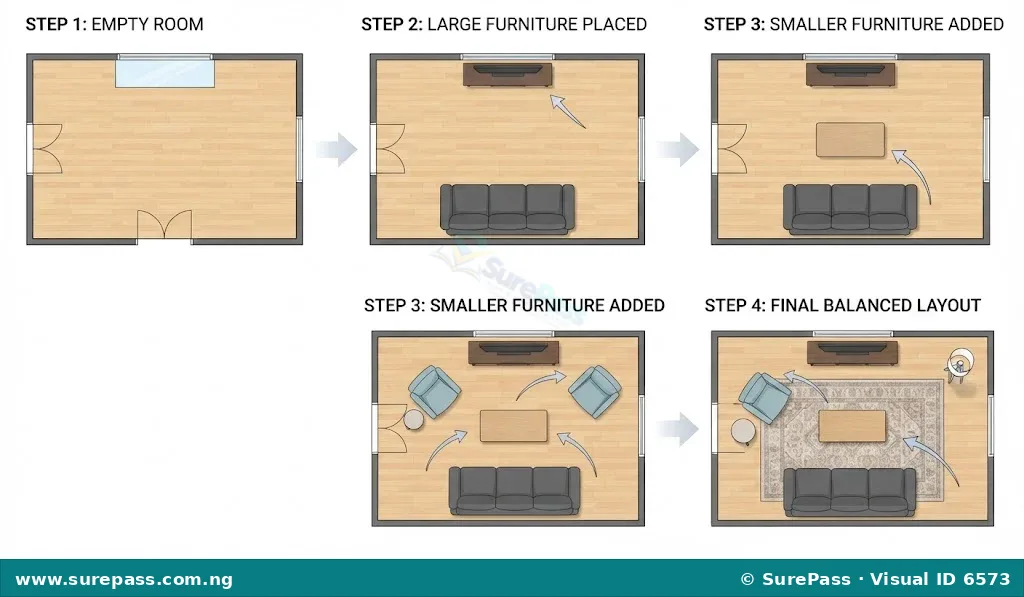
- Arrange Large Furniture First:
- Place the largest pieces of furniture (e.g., bed, sofa, dining table, wardrobe) according to the chosen floor plan. These items define the main areas of the room.
- Ensure these large items do not block pathways or windows.
- Add Smaller Furniture:
- Once the large items are in place, add smaller furniture such as coffee tables, side tables, and chairs.
- Ensure these items are easily accessible and do not clutter the space.
- Install Fixtures:
- Ensure fixtures like curtain rods, light fittings, and wall-mounted mirrors are installed in appropriate and functional locations.
- For example, curtain rods should be above windows, and light fittings should provide adequate illumination for the room’s purpose.
- Consider Traffic Flow and Pathways:
- Walk through the room to check if there are clear paths for movement.
- Adjust furniture if any pathways are blocked or feel too narrow.
- Add Accessories and Decorations:
- Once the main furniture and fixtures are arranged, add decorative items like rugs, cushions, plants, and artwork to enhance the room’s appearance and personal touch.
- Evaluate and Adjust:
- Step back and observe the room. Does it feel balanced, comfortable, and functional?
- Make small adjustments as needed to improve the layout, comfort, or aesthetics.




0 comments
Open the discussion when you need it. Comments stay collapsed until requested so the initial article remains light.