


ARTICLE CONTENTSOn this page 9 sections
Motivation for Home management II
Performance Objectives
By the end of the lesson, students should be able to:
- identify factors/strategies affecting motivation in Home Management;
- differentiate between internal and external motivators in home management tasks;
- create bingo cards (physical or digital vision boards) with motivational strategies/factors.
Meaning of Motivation in Home Management
Motivation in home management is the inner drive, energy, or external encouragement that influences how family members plan, organize, direct, and control resources to achieve family goals.
Without motivation, household tasks can become burdensome, leading to inefficiency, conflict, and a disorganized living environment. Understanding what drives individuals to participate in home management helps in creating a harmonious and productive household.
Factors and Strategies Affecting Motivation in Home Management
Several factors influence the level of motivation family members have toward performing household responsibilities. These factors can either boost or reduce the willingness to participate in home management activities.
The factors that affect motivation in home management include:
- Values and Goals: Clear family values and well-defined goals keep members focused and driven. When family members understand that their efforts contribute to a larger, meaningful goal, such as maintaining a healthy family, they are more motivated to work.
- Availability of Resources: Having the necessary tools, time, money, and skills makes tasks easier and increases the willingness to perform them. For example, having a functional washing machine or a good broom makes laundry or sweeping less tedious.
- Family Size and Composition: The age, number, and health of family members affect the workload and the level of cooperation. A home with young children or elderly relatives requires more management effort, which can either challenge or inspire family cooperation.
- Communication Patterns: Open, respectful communication and appreciation boost morale. Conversely, poor communication, constant criticism, or lack of appreciation causes discouragement and lowers motivation.
- Physical Environment: A clean, well-organized, and comfortable home environment naturally encourages productivity and positive attitudes. A cluttered or dirty environment can cause mental fatigue and resistance to work.
- Socio-economic Status: Financial stability can reduce stress and provide resources that make home management tasks less demanding. It allows the family to purchase labor-saving devices or hire external help when necessary.
- Health and Energy Levels: Physical and mental well-being directly impact a person’s capacity and desire to manage household responsibilities. Fatigue, illness, or stress significantly reduce motivation.
Ways of Maintaining Motivation: Internal and External Motivators
Maintaining motivation over a long period requires a balance of different types of motivators. These are broadly classified into internal and external motivators.
Internal Motivators
Internal motivators are personal, inner forces such as values, personal satisfaction, sense of duty, and pride that drive an individual to perform household tasks without needing outside rewards.
These motivators are self-sustaining because they come from within the individual. Examples of internal motivators in home management include:
- Personal Satisfaction: The feeling of peace and happiness that comes from seeing a clean, orderly, and beautiful living space.
- Sense of Responsibility: A deep-seated feeling of duty and love toward family members, driving a person to contribute to the well-being of the household.
- Personal Values: Strong personal beliefs regarding hygiene, orderliness, hospitality, and self-discipline.
- Sense of Achievement: The pride felt after successfully completing a difficult household task, such as cooking a complex meal or organizing a cluttered storeroom.
External Motivators
External motivators are outside influences, rewards, or pressures such as praise, financial incentives, recognition, or avoiding negative consequences that encourage a person to perform home management tasks.
These motivators depend on the environment and the actions of other people. Examples of external motivators in home management include:
- Praise and Appreciation: Verbal encouragement, thank-you notes, or public recognition from parents, siblings, or spouses for a job well done.
- Financial or Material Rewards: Allowances, gifts, special treats, or privileges granted to family members for completing their chores.
- Social Approval: Positive feedback and admiration from visitors, neighbors, or community members who observe a well-managed home.
- Avoidance of Negative Consequences: Performing tasks to avoid punishments, scolding, family conflicts, or the physical discomfort of a dirty environment.
Differentiating Between Internal and External Motivators
While both types of motivators help in achieving household goals, they differ in their source, durability, and impact on personal development.
The differences between internal and external motivators are outlined below:
| Feature | Internal Motivators | External Motivators |
|---|---|---|
| Source | Comes from within the individual (inner values, feelings, and beliefs). | Comes from the outside environment (other people, rewards, or rules). |
| Durability | Long-lasting and self-sustaining, as it does not depend on external praise. | Temporary; motivation may drop if the rewards or praise stop. |
| Primary Focus | Personal growth, satisfaction, and the joy of doing the task well. | Obtaining a reward or avoiding a negative consequence. |
| Examples | Pride in a clean room, love for family, personal hygiene values. | Receiving pocket money, praise from parents, avoiding punishment. |
Developing Adaptability in Home Management
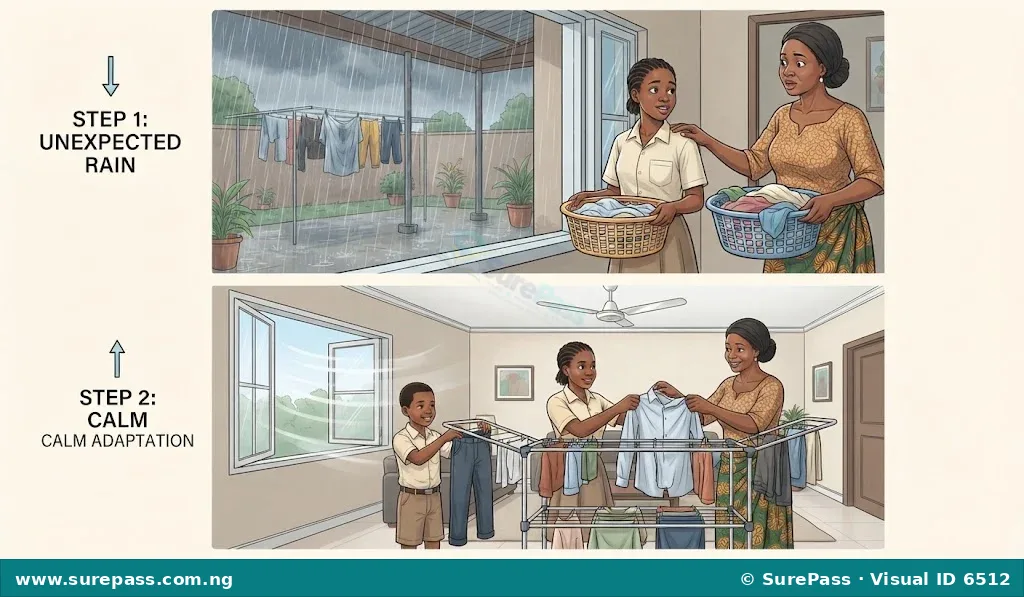
An essential skill in home management is the ability to adjust to unexpected changes in plans or household needs without getting discouraged. Household routines can be disrupted by sudden events such as power outages, water scarcity, unexpected guests, illness of a family member, or sudden financial constraints.
Strategies for developing adaptability and maintaining motivation during unexpected changes include:
- Prioritization: Identifying which tasks are urgent and essential, and which ones can be postponed. For instance, if there is a sudden power outage, cooking perishable food takes priority over ironing clothes.
- Maintaining a Flexible Attitude: Accepting that disruptions are a normal part of life. Remaining calm prevents frustration and helps in finding quick solutions.
- Developing Backup Plans (Plan B): Having alternative methods ready for key household operations. This includes keeping alternative cooking fuels (like charcoal or cooking gas backups) or storing water in large containers in case of public water supply failure.
- Task Delegation: Sharing the workload among family members to handle sudden increases in household demands, such as preparing for unexpected visitors.
How to Create Motivational Bingo Cards and Vision Boards
A motivational bingo card or vision board is a visual tool containing motivational strategies, goals, and positive reminders designed to keep household members inspired and focused on their tasks.
How to Make a Physical Motivational Bingo Card
The required materials are:
- A sheet of cardboard
- A ruler and pencil
- Colored markers or pens
- Scissors
- Old magazines or printed pictures
- Glue
The procedure involves the following steps:
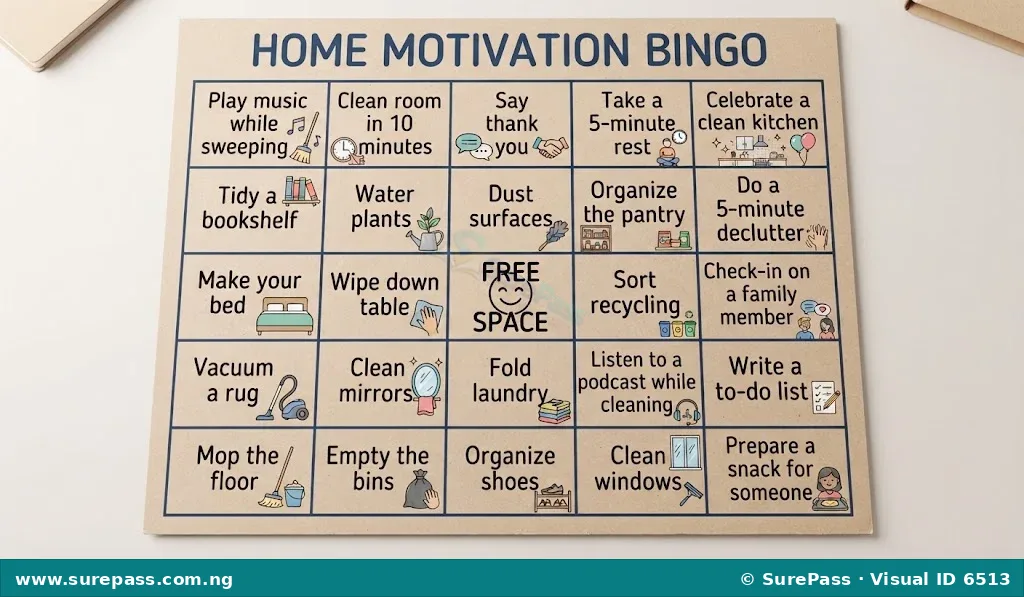
- Cut the cardboard into a square shape, measuring approximately 30 centimeters by 30 centimeters.
- Use a ruler and pencil to draw a grid of five rows and five columns, creating twenty-five equal squares.
- Write “HOME MOTIVATION BINGO” at the top of the card.
- In the center square, write “FREE SPACE” or draw a happy face.
- In the remaining twenty-four squares, write down specific motivational strategies, positive affirmations, or household tasks. Examples include: “Clean room in 10 minutes,” “Play music while sweeping,” “Say thank you to helper,” “Take a 5-minute rest,” or “Celebrate a clean kitchen.”
- Decorate the squares by pasting small pictures or drawing symbols that represent each task or motivator.
- Hang the completed bingo card on a wall or refrigerator where family members can see it and mark off completed motivational activities.
How to Create a Digital Vision Board
The required materials are:
- A digital device such as a mobile phone, tablet, or computer
- A graphic design or collage-making application
- Downloaded images representing clean spaces, happy families, and motivational quotes
The procedure involves the following steps:
- Open the graphic design application on the digital device and select a blank canvas or a grid template.
- Set the background color to a bright, encouraging tone.
- Import images that represent household goals, such as an organized wardrobe, a beautifully set dining table, or family members cooperating.
- Add text boxes to insert motivational quotes, personal values, or positive affirmations like “Order brings peace” or “Every small effort counts.”
- Arrange the images and text boxes creatively, ensuring the most important motivators are placed in the center.
- Save the completed digital vision board as an image file.
- Set the image as the wallpaper on family mobile devices or print it out to display in the home.
Evaluation Guide
Answer the following questions to review the lesson:
- Describe four factors that affect motivation in home management.
- Explain the difference between internal and external motivators, giving two examples of each.
- Outline the steps required to create a physical motivational bingo card.
- State three strategies a family can use to adapt to unexpected changes in household needs without getting discouraged.



0 comments
Open the discussion when you need it. Comments stay collapsed until requested so the initial article remains light.