



ARTICLE CONTENTSOn this page 9 sections
Crime and Insecurity
Performance Objectives
By the end of the lesson, students should be able to:
- explain the meaning and types of crime and insecurity;
- discuss the relationship between crime and insecurity;
- discuss the consequences of crime and insecurity on individuals, the local communities and the nation;
- discuss personal safety measures against crime and insecurity;
- discuss community safety measures against crime and insecurity;
- Communicate threats and report incidents to authorities or trusted adults.
Meaning and Types of Crime and Insecurity
Understanding the concepts of crime and insecurity is fundamental to addressing the challenges of national security and public safety. These two concepts are closely linked, yet they represent distinct phenomena within society.
Meaning of Crime
Crime is any act or omission that violates the written laws of a state or nation and is punishable by the state through legal sanctions.
Laws are established by governing authorities to maintain order, protect lives and safeguard property. When an individual or group breaks these laws, the action is classified as a crime, and the offender may face penalties such as fines, imprisonment or community service.
Types of Crime
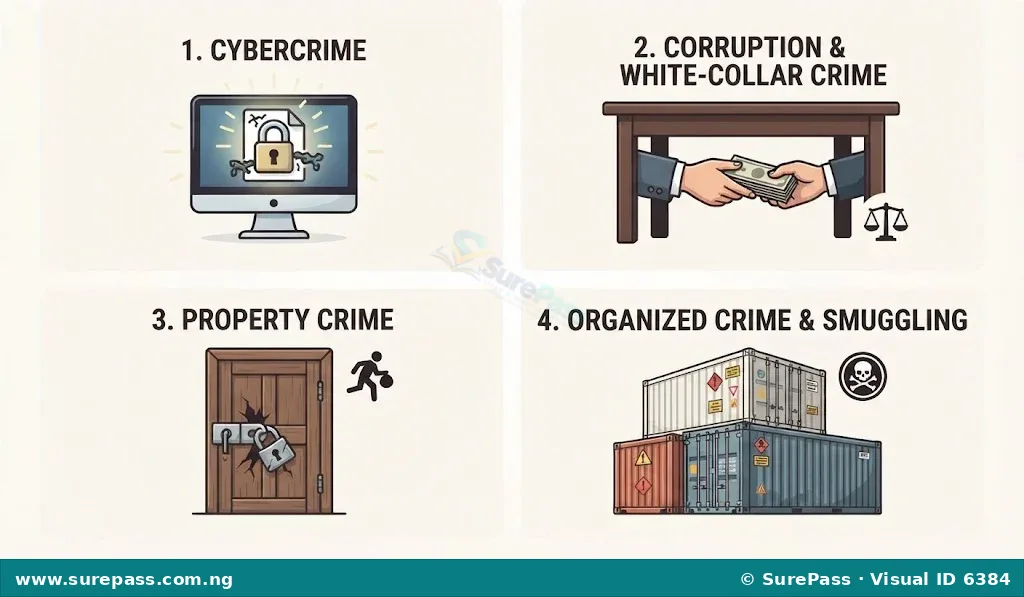
Crimes can be classified into several categories based on the nature of the act, the target of the offense and the severity of the violation. The major types of crime include:
- Violent Crimes: These are offenses that involve the use of physical force, threat of force or bodily harm against another person. Examples include homicide, armed robbery, assault, kidnapping and sexual violence.
- Property Crimes: These are offenses that involve the theft, destruction or damage of property without force or threat of force against a person. Examples include burglary, theft, arson, vandalism and shoplifting.
- Financial and White-Collar Crimes: These are non-violent, financially motivated crimes committed by individuals, businesses or government officials in the course of their occupations. Examples include embezzlement, bribery, money laundering, tax evasion and public corruption.
- Cybercrimes: These are criminal activities carried out using computers, networks or digital devices. Examples include internet fraud, identity theft, hacking, phishing and cyberstalking.
- Organised Crimes: These are highly structured, coordinated criminal activities carried out by groups operating on a large scale, often across borders. Examples include human trafficking, drug trafficking, arms smuggling and illegal oil bunkering.
Meaning of Insecurity
Insecurity is a state of vulnerability, fear, anxiety or lack of protection against physical, social, economic or environmental threats.
Insecurity exists when individuals, communities or an entire nation feel unsafe, unprotected and constantly exposed to danger, harm or loss. It is not just the occurrence of violence, but also the psychological state of living in fear of potential threats.
Types of Insecurity
Insecurity manifests in various dimensions within a society. The primary types of insecurity include:
- Physical Insecurity: The direct threat to human life and bodily integrity caused by violence, armed conflict, terrorism, banditry and violent crime.
- Economic Insecurity: The lack of stable income, employment opportunities or resources necessary to sustain a basic standard of living, which often drives individuals toward desperate survival measures.
- Food Insecurity: The lack of consistent access to sufficient, safe and nutritious food required for an active and healthy life.
- Social Insecurity: The breakdown of social order, marginalisation of minority groups, lack of social safety nets and the absence of trust among members of a community.
- Environmental Insecurity: Threats posed by natural disasters, environmental degradation, pollution and climate change, which displace populations and destroy livelihoods.
Relationship Between Crime and Insecurity
Crime and insecurity share a cyclical, cause-and-effect relationship. They reinforce each other, creating a continuous loop that undermines societal peace and development.
The relationship between crime and insecurity can be understood through the following dynamics:
- Crime Breeds Insecurity: When criminal activities such as armed robbery, kidnapping and cyber fraud increase, they generate fear and anxiety among citizens. People lose confidence in their safety, restrict their movements and live in constant apprehension, which is the very definition of insecurity.
- Insecurity Fosters Crime: An environment characterised by insecurity often suffers from a breakdown of law and order. When state security agencies are overwhelmed or absent, a security vacuum is created. Criminals exploit this vacuum to operate with impunity, leading to an increase in criminal activities.
- Economic Decline as a Common Link: High levels of crime discourage local and foreign investments, leading to business closures and unemployment. This economic decline increases poverty, which in turn drives more individuals into criminal activities to survive, further worsening insecurity.
- Erosion of Trust: Insecurity destroys trust between citizens and law enforcement agencies. When citizens feel the state cannot protect them, they may resort to self-help, jungle justice or forming unregulated armed groups, which often leads to further criminal acts and lawlessness.
- Public Fear and Anxiety -> 3. Breakdown of Law and Order -> 4. Weakened Security Systems -> 5. Opportunities for More Crime -> back to 1. The arrows are bold and clear, with concise text labels for each stage.
Consequences of Crime and Insecurity
The effects of crime and insecurity are devastating and far-reaching. They impact individuals, local communities and the nation as a whole.
Consequences on Individuals
The direct impacts of crime and insecurity on individual citizens include:
- Loss of Lives and Physical Injury: Victims of violent crimes often suffer severe physical trauma, permanent disability or death.
- Psychological Trauma: Living in insecure environments or surviving a criminal attack causes long-term mental health challenges, including anxiety, depression, panic attacks and Post-Traumatic Stress Disorder (PTSD).
- Financial and Material Loss: Individuals lose hard-earned money, properties, vehicles and other valuable assets to thieves, fraudsters and extortionists.
- Restriction of Freedom: Fear of crime forces individuals to limit their movements, avoid certain areas, stay indoors at night and live under self-imposed restrictions.
Consequences on Local Communities
The impacts of crime and insecurity on community life include:
- Breakdown of Social Cohesion: Insecurity breeds suspicion and distrust among neighbors. Community members become wary of one another, destroying the spirit of communal unity and mutual assistance.
- Economic Stagnation: Local businesses, markets and shops close down early or relocate to safer areas. This reduces local economic activities, lowers property values and increases unemployment within the community.
- Displacement of Populations: Severe insecurity, such as communal clashes or banditry, forces community members to flee their homes, leading to internally displaced persons (IDPs) who rely on humanitarian aid.
- Destruction of Infrastructure: Criminal acts such as vandalism and arson lead to the destruction of community facilities, including schools, healthcare centres, electricity transformers and communication masts.
Consequences on the Nation
The macro-level impacts of crime and insecurity on the country include:
- Reduced Foreign Direct Investment (FDI): Foreign investors avoid countries with high crime rates and unstable security situations. This deprives the nation of capital, technology and employment opportunities.
- Diversion of Public Funds: The government is forced to allocate a significant portion of the national budget to security, defense and law enforcement. This diverts scarce resources away from critical sectors like education, healthcare and infrastructure development.
- Brain Drain: High levels of insecurity prompt highly skilled professionals, such as doctors, engineers, academics and tech experts, to emigrate to safer countries, depriving the nation of essential human capital.
- Threat to National Sovereignty and Unity: Severe insecurity, such as terrorism, insurgency and secessionist violence, challenges the authority of the state, weakens national unity and can lead to political instability.
Personal Safety Measures Against Crime and Insecurity
While the state has the primary responsibility to protect citizens, individuals must take proactive steps to safeguard themselves and their immediate families. Personal safety awareness reduces vulnerability to criminal attacks.
Important personal safety measures include:
- Situational Awareness: Individuals should remain alert and conscious of their surroundings at all times. Paying attention to unusual movements, suspicious persons or strange vehicles can help prevent attacks.
- Securing the Home: Residential premises should be secured with sturdy doors, strong locks, perimeter fences and adequate lighting. Where affordable, security cameras, alarm systems and security guards can be employed.
- Digital and Cyber Security: Citizens should protect their personal information online. This includes using strong passwords, avoiding the sharing of sensitive financial details (such as bank verification numbers or PINs) and verifying the identity of online contacts before making transactions.
- Avoiding Risky Areas and Late-Night Movements: Walking alone in dark, isolated or unfamiliar areas should be avoided. Travel plans should be made during daylight hours, especially when using public transport or traveling long distances.
- Keeping a Low Profile: Displaying excessive wealth, expensive jewelry or large sums of cash in public attracts the attention of criminals. Discretion in speech and lifestyle reduces the likelihood of becoming a target.
- Sharing Travel Itineraries: Individuals should always inform trusted family members or friends of their destination, route and expected time of return when traveling.
Community Safety Measures Against Crime and Insecurity
Security is a collective responsibility. Communities must organize themselves to support formal law enforcement agencies and create a hostile environment for criminals.
Effective community safety measures include:
- Establishment of Neighborhood Watch Groups: Communities can set up voluntary, non-violent neighborhood watch or vigilante groups. These groups patrol the community, monitor entry points and report suspicious activities to the police.
- Community Policing Collaboration: Local communities should maintain a close, cooperative relationship with formal security agencies, such as the Nigeria Police Force. Sharing timely intelligence helps law enforcement prevent crimes before they occur.
- Installation of Street Lighting: Well-lit streets and public spaces discourage criminal activities, as criminals prefer to operate under the cover of darkness. Communities can pool resources to install and maintain streetlights.
- Clearing of Overgrown Bush and Abandoned Buildings: Overgrown vegetation and abandoned structures serve as hideouts for criminals. Communities should organize regular sanitation exercises to clear these areas.
- Maintaining a Community Register: Keeping track of residents, tenants and visitors helps the community identify strangers and monitor unusual influxes of people into the neighborhood.
- Organising Security Town Hall Meetings: Regular meetings allow residents to discuss security challenges, share safety tips, review community defense strategies and sensitise youths against criminal influences.

Communicating Threats and Reporting Incidents
An essential skill in combating crime and insecurity is the ability to communicate threats and report incidents appropriately, quickly and effectively. Prompt reporting can save lives, prevent property loss and assist law enforcement in apprehending offenders.
Who to Report To
Depending on the nature and urgency of the threat, incidents should be reported to:
- Formal Security Agencies: The Nigeria Police Force (NPF), the Civil Defence Corps (NSCDC) or other specialized security agencies.
- Trusted Adults: Parents, guardians, teachers, school principals or religious leaders (especially for children and teenagers).
- Community Leaders: Traditional rulers, village heads, youth leaders or chairmen of Landlord/Resident Associations.
- Emergency Toll-Free Numbers: National emergency response numbers (such as 112 in Nigeria) where available.
How to Report an Incident Safely and Effectively
When reporting a crime, threat or suspicious activity, the reporter must provide clear, accurate and actionable information while ensuring their own safety.
The procedure involves the following steps:
- Ensure Personal Safety First: Do not put yourself in danger to gather information. Move to a safe location before making a phone call or sending a message.
- Identify the Nature of the Incident: Clearly state what is happening or what has happened (e.g., robbery, kidnapping, suspicious gathering, vandalism).
- Provide the Exact Location: Give precise details of the location, including street names, landmarks, building descriptions or prominent features nearby.
- Describe the Suspects: Note key physical characteristics of the individuals involved, such as their estimated height, build, clothing, language spoken, scars, tattoos or weapons carried.
- Describe Vehicles Involved: If vehicles are used, note the make, model, color, license plate number and the direction they headed when leaving the scene.
- Remain Calm and Concise: Speak clearly and avoid panic. Answer the questions asked by the authority figure or emergency operator directly.
- Maintain Confidentiality: Do not discuss the report publicly or on social media if doing so could compromise the investigation or put your safety at risk. Use anonymous tip lines if there is a fear of reprisal.
Summary
Crime and insecurity are major obstacles to individual well-being, community development and national progress. While crime refers to unlawful acts punishable by law, insecurity is the state of fear and vulnerability arising from various threats. The two are linked in a vicious cycle where crime creates insecurity, and insecurity allows crime to flourish. Addressing these challenges requires a combination of personal vigilance, community cooperation, effective communication and robust state action to ensure a safe and prosperous society.





0 comments
Open the discussion when you need it. Comments stay collapsed until requested so the initial article remains light.