


ARTICLE CONTENTSOn this page 7 sections
Concept of Savings
Performance Objectives
By the end of the lesson, students should be able to:
- explain the meaning of savings;
- discuss the types of savings;
- explain the reasons for savings;
- discuss the benefits of savings;
- identify the difficulties experienced without savings.
Meaning of Savings
Savings is the portion of disposable income that is not spent on current consumption of goods and services but is kept aside for future use.
In economics and citizenship studies, disposable income refers to the total amount of money an individual, household or business has available for spending and saving after income taxes have been deducted. When income is received, it is typically allocated between immediate consumption—such as food, clothing, housing, transportation and utilities—and savings. The portion that is deliberately withheld from immediate consumption constitutes savings.
Savings represent deferred consumption. By choosing not to spend money today, an individual preserves purchasing power for the future. This practice requires financial discipline, planning and a clear understanding of future needs. Savings can be kept in various forms, ranging from simple physical storage at home to formal financial instruments in banking institutions.
Types of Savings
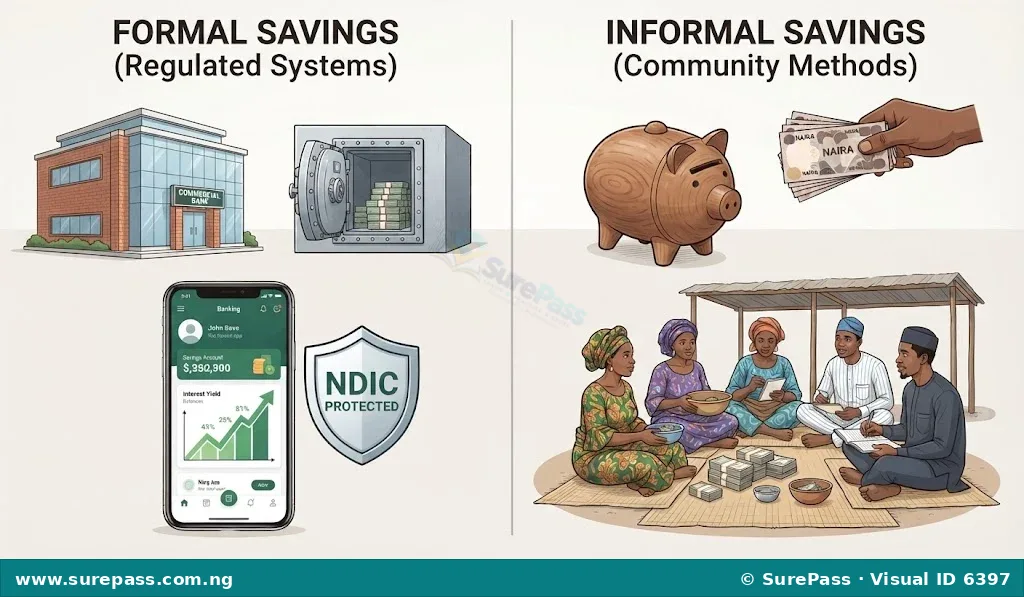
Savings methods are generally classified into two main categories based on the structure, regulation and institutions involved. These categories are:
- Formal savings
- Informal savings
Formal Savings
Formal savings involve keeping money in registered, regulated financial institutions that operate under government guidelines and banking laws. In Nigeria, these institutions are regulated by the Central Bank of Nigeria (CBN) and deposits are protected up to a legal limit by the Nigeria Deposit Insurance Corporation (NDIC).
Common channels for formal savings include:
- Savings Accounts: These are basic bank accounts opened with commercial or microfinance banks where depositors earn a modest interest rate on their deposits while maintaining easy access to their funds.
- Fixed Deposit Accounts: These are investment accounts where money is kept for a specific, predetermined period, such as three months, six months or one year, at a higher interest rate. Early withdrawal may attract a penalty.
- Government Securities: These include Treasury Bills and Federal Government of Nigeria Savings Bonds, which are low-risk debt instruments issued by the government to raise funds, offering periodic interest payments to savers.
- Pension Funds: These are long-term savings schemes regulated by the National Pension Commission, where a portion of an employee’s monthly salary is saved and invested to provide financial security after retirement.
Informal Savings
Informal savings refer to traditional, unregulated methods of keeping money outside the formal banking system. These methods rely heavily on social trust, community relationships and personal discipline rather than legal frameworks.
Common channels for informal savings in Nigeria include:
- Esusu, Ajo or Adashi: This is a traditional rotating savings association common among traders, artisans and community members. Participants contribute a fixed amount of money at regular intervals, such as daily, weekly or monthly, and the total pool is given to one member at a time in a rotating sequence.
- Thrift Cooperatives: These are member-owned associations where individuals pool their savings regularly. Members can access low-interest loans from the accumulated pool based on their savings history.
- Home Savings: This involves keeping physical cash in a secured container, wooden box, locally called “kolo”, or a personal safe at home. It provides immediate access to cash but does not yield interest and is highly vulnerable to theft, fire or physical damage.
Reasons for Savings
Individuals, households and organizations save money for several critical reasons. The primary reasons for saving include:
- Emergency Preparedness: Life is unpredictable, and unexpected events such as sudden illness, accidents, family emergencies or urgent home repairs require immediate financial attention. Savings provide a buffer to handle these emergencies without financial distress.
- Future Planning and Goal Achievement: Savings enable individuals to fund long-term goals such as purchasing land, building a house, buying a vehicle or planning a wedding without relying entirely on loans.
- Education: Acquiring quality secondary or tertiary education requires significant financial resources. Saving ahead ensures that tuition fees, textbooks and accommodation costs can be paid when due.
- Retirement Security: Active working years are limited. Saving during productive years ensures that individuals maintain a comfortable standard of living when they retire and no longer receive a regular salary.
- Investment and Wealth Creation: Savings serve as the foundation for investment. Accumulated funds can be used to start a business, purchase shares or invest in real estate, which generates additional income over time.
Benefits of Savings
Cultivating a consistent savings habit yields numerous advantages for both the individual and the wider society. The key benefits of savings include:
- Financial Independence and Security: Having savings reduces reliance on family, friends or employers during difficult times. It grants individuals the freedom to make life choices without being constrained by immediate financial lack.
- Peace of Mind: Financial anxiety is a major source of stress. Knowing that there is a financial reserve reduces worry and promotes mental and emotional well-being.
- Access to Credit and Loans: Formal financial institutions often require borrowers to have a savings history or a certain amount of deposit as collateral. A healthy savings record improves creditworthiness and makes it easier to secure business loans.
- Capital Accumulation: Savings allow small amounts of money to grow into substantial capital over time. Through the power of compound interest in formal savings, money earns interest on previously earned interest, accelerating wealth growth.
- National Economic Growth: When citizens save money in banks, these institutions lend the funds to entrepreneurs and businesses to expand operations, build infrastructure and create jobs. Therefore, individual savings drive national capital formation and economic development.
Difficulties Experienced Without Savings
Failing to save money exposes individuals to severe financial vulnerabilities and social challenges. The major difficulties experienced due to a lack of savings include:
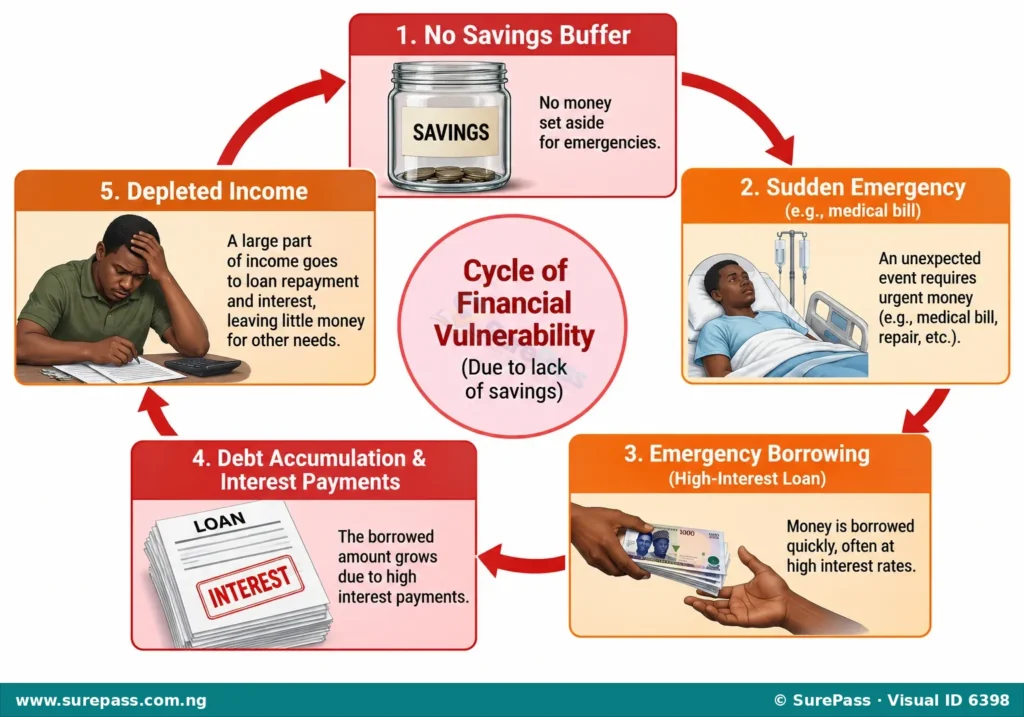
- High Risk of Borrowing: In the absence of savings, any sudden financial demand forces an individual to borrow money. This often leads to borrowing from informal lenders, loan sharks or commercial lenders under unfavorable terms.
- Chronic Indebtedness: Borrowing without a savings buffer often leads to a debt trap. Individuals are forced to take new loans to pay off old debts, leading to a cycle of continuous indebtedness that drains future income through high-interest payments.
- Inability to Achieve Higher Education and Meet Personal Needs: Higher education in Nigeria requires substantial funding. Without savings, brilliant students may be unable to pay university tuition fees, leading to deferred admission or complete dropouts. Similarly, basic personal needs such as quality healthcare, balanced nutrition and decent housing become difficult to secure.
- Lack of Capital for Investment: Starting a business or expanding an existing enterprise requires capital. Without personal savings, individuals cannot fund business ideas, purchase necessary equipment or seize profitable investment opportunities.
- Poverty and Economic Vulnerability: A lack of savings leaves individuals one financial shock away from poverty. A sudden job loss, business failure or health crisis can instantly deplete immediate resources, leading to a decline in living standards and long-term economic hardship.


0 comments
Open the discussion when you need it. Comments stay collapsed until requested so the initial article remains light.