


ARTICLE CONTENTSOn this page 7 sections
Introduction to the use of Information and communication Technology (ICT)
Performance Objectives
By the end of the lesson, students should be able to:
- explain the meaning of ICT;
- identify the role of ICT in economic activities;
- Discuss the merits and demerits of ICT in economic activities;
- interpret the behaviour of a given set of data.
Meaning of Information and Communication Technology (ICT)
Information and Communication Technology (ICT) refers to all the tools, equipment, and applications used to process, store, retrieve, transmit, and share information.
ICT combines two main areas: Information Technology (IT) and Communication Technology. Information Technology deals with the use of computers and software to manage information. Communication Technology focuses on the transmission of information over distances, using devices like telephones, radio, television, and the internet.
In economics, ICT is crucial because it helps individuals, businesses, and governments manage and use information effectively to make decisions and carry out economic activities.
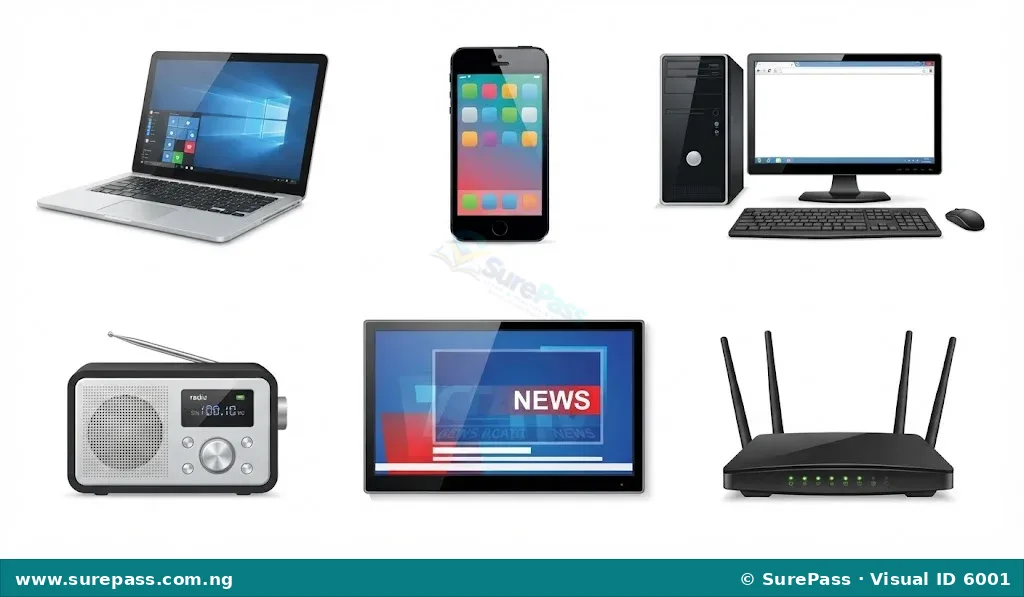
Examples of ICT Tools
Common examples of ICT tools include:
- Computers (desktops, laptops, tablets)
- Mobile phones and smartphones
- Internet and World Wide Web
- Radio and television
- Telephones (landlines)
- Fax machines
- Email services
- Software applications (e.g., word processors, spreadsheets, databases)
- Networking equipment (e.g., routers, modems)
Roles of ICT in Economic Activities
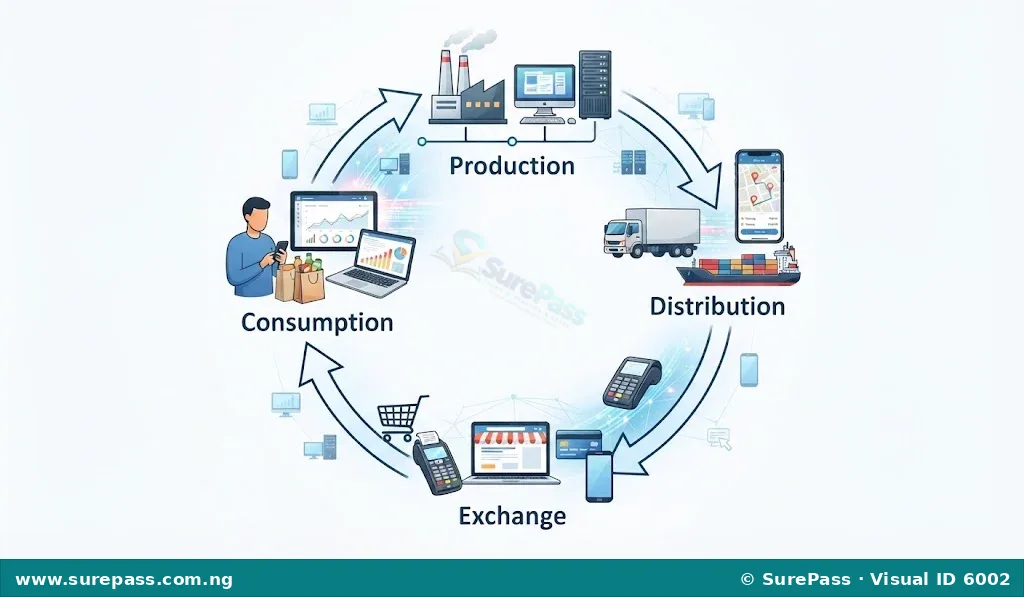
Information and Communication Technology plays a vital role in various economic activities, transforming how goods and services are produced, distributed, exchanged, and consumed. Its influence extends across all sectors of an economy, from agriculture to manufacturing and services.
1. Enhancing Production
ICT improves the efficiency and effectiveness of production processes. Businesses use ICT for:
- Automation: Robots and automated machinery, controlled by ICT systems, perform tasks faster and more accurately, reducing labour costs and increasing output.
- Design and Planning: Computer-Aided Design (CAD) and Computer-Aided Manufacturing (CAM) software help engineers and designers create products more efficiently and simulate production processes.
- Inventory Management: ICT systems track raw materials and finished goods, ensuring optimal stock levels and reducing waste.
- Data Analysis: Businesses collect and analyse data on production performance, allowing them to identify bottlenecks and improve processes.
2. Improving Distribution
ICT streamlines the movement of goods and services from producers to consumers. Key roles include:
- Logistics and Supply Chain Management: Software systems track goods in transit, manage warehousing, and optimise delivery routes, ensuring timely and cost-effective distribution.
- E-commerce Platforms: Online marketplaces allow businesses to sell products directly to customers globally, bypassing traditional retail channels.
- Communication with Distributors: ICT tools like email and video conferencing facilitate quick and efficient communication between manufacturers, wholesalers, and retailers.
3. Facilitating Exchange
ICT has revolutionised how goods, services, and money are exchanged in an economy.
- Online Banking and Digital Payments: Customers can perform transactions, pay bills, and transfer money electronically, making financial exchanges faster and more convenient.
- Stock Markets and Trading: ICT systems enable real-time trading of stocks, bonds, and other financial instruments, connecting investors and markets globally.
- E-commerce Transactions: Websites and mobile apps allow consumers to browse, select, and purchase products from anywhere, at any time.
- Market Information: ICT provides real-time information on prices, demand, and supply, helping buyers and sellers make informed decisions.
4. Influencing Consumption
ICT empowers consumers and changes their consumption patterns.
- Access to Information: Consumers can research products, compare prices, and read reviews online before making purchasing decisions.
- Online Shopping: The convenience of shopping from home or on the go has increased consumer access to a wider range of products.
- Personalised Services: Businesses use ICT to collect data on consumer preferences, allowing them to offer personalised products and services.
- Entertainment and Education: Digital platforms provide access to movies, music, games, and educational content, influencing how people spend their leisure time and acquire knowledge.
Merits of ICT in Economic Activities
The adoption of Information and Communication Technology brings numerous advantages to economic activities, leading to growth, efficiency, and innovation.
- Increased Efficiency and Productivity: ICT tools automate tasks, speed up processes, and improve data management, allowing businesses to produce more goods and services with fewer resources.
- Improved Communication: Instant communication through email, video conferencing, and messaging apps facilitates collaboration within businesses and with external partners, regardless of geographical location.
- Enhanced Access to Information: ICT provides quick access to vast amounts of data and market intelligence, enabling better decision-making for businesses, consumers, and governments.
- Global Market Access: E-commerce platforms and digital marketing allow businesses to reach customers worldwide, expanding their market size and increasing sales opportunities.
- Job Creation: While some jobs may be displaced, ICT also creates new job opportunities in areas like software development, data analysis, cybersecurity, and digital marketing.
- Innovation and New Products/Services: ICT drives innovation, leading to the development of new technologies, products, and services that improve quality of life and create new industries.
- Reduced Costs: In many cases, ICT can reduce operational costs through automation, efficient resource allocation, and reduced need for physical infrastructure.
- Better Customer Service: ICT tools like customer relationship management (CRM) systems and chatbots help businesses manage customer interactions, provide faster support, and personalise services.
- Economic Growth: By boosting productivity, facilitating trade, and fostering innovation, ICT contributes significantly to overall economic growth and development.
Demerits of ICT in Economic Activities
Despite its many benefits, the widespread use of ICT in economic activities also presents several challenges and disadvantages.
- Job Displacement: Automation and artificial intelligence, driven by ICT, can replace human labour in certain tasks, leading to job losses in some sectors.
- Digital Divide: Unequal access to ICT resources and skills between different regions, income groups, or countries can widen economic inequalities. Those without access may be left behind.
- Cybersecurity Risks: Increased reliance on digital systems makes businesses and individuals vulnerable to cyber-attacks, data breaches, fraud, and other security threats.
- High Initial Costs: Implementing and maintaining ICT infrastructure, software, and training can be very expensive, especially for small businesses or developing economies.
- Over-reliance on Technology: Excessive dependence on ICT systems can lead to significant disruptions if there are technical failures, power outages, or system crashes.
- Privacy Concerns: The collection and analysis of large amounts of personal and business data through ICT raise concerns about privacy and how this information is used.
- Skills Gap: The rapid evolution of ICT requires a workforce with up-to-date digital skills. A lack of such skills can hinder economic progress and lead to unemployment.
- Misinformation and Disinformation: The ease of information sharing through ICT can also facilitate the spread of false or misleading information, which can negatively impact economic decisions and market stability.
- Increased Competition: Global market access through ICT means businesses face more intense competition from international players, which can be challenging for local industries.
Data Interpretation in Economics
Data interpretation is the process of reviewing data through some predefined processes, which will help assign meaning to the data and arrive at a relevant conclusion. In economics, data interpretation involves examining economic data to understand trends, patterns, and relationships, and to draw conclusions that can inform economic decisions and policies.
Why Data Interpretation is Important in Economics
Economists, businesses, and governments rely on data interpretation to:
- Understand Economic Performance: By interpreting data on Gross Domestic Product (GDP), inflation, unemployment rates, and trade balances, they can assess the health of an economy.
- Forecast Future Trends: Analysing historical data helps in predicting future economic conditions, such as consumer spending or market demand.
- Make Informed Decisions: Businesses use sales data, customer feedback, and market research to make decisions about production, pricing, and marketing strategies.
- Formulate Policies: Governments interpret economic data to design effective fiscal and monetary policies, such as tax changes or interest rate adjustments.
- Identify Problems and Opportunities: Data can reveal economic challenges (e.g., declining exports) or new opportunities (e.g., growing demand for a certain product).
Steps to Interpret Data
The process of interpreting data generally involves the following steps:
- Collect Data: Gather relevant economic data from reliable sources (e.g., National Bureau of Statistics, Central Bank, company reports).
- Organise and Present Data: Arrange the data in a clear format, such as tables, charts, or graphs, to make it easier to visualise and understand.
- Analyse Data: Look for patterns, trends, relationships, and significant changes within the data. This might involve calculating averages, percentages, or growth rates.
- Draw Conclusions: Based on the analysis, formulate logical conclusions about what the data indicates.
- Communicate Findings: Present the interpretations and conclusions clearly to others, often with recommendations.
Using Digital Technology to Enhance Data Interpretation
Digital technology, particularly spreadsheet software like Microsoft Excel or Google Sheets, greatly enhances the ability to interpret data. These tools allow users to:
- Store and Organise Large Datasets: Digital spreadsheets can handle vast amounts of numerical and textual data efficiently.
- Perform Calculations Quickly: Formulas can be used to calculate sums, averages, percentages, and other statistical measures instantly.
- Create Visualisations: Spreadsheets can automatically generate various types of charts and graphs (e.g., bar charts, line graphs, pie charts) from data, making trends and patterns easier to spot.
- Filter and Sort Data: Users can quickly filter data to focus on specific information or sort it to identify highest/lowest values or chronological order.
Worked Example: Interpreting Sales Data
Imagine a small business that sells soft drinks. The owner wants to understand how sales have performed over the last five months to plan for the future. The sales data (in cartons) is as follows:
- January: 120 cartons
- February: 110 cartons
- March: 135 cartons
- April: 140 cartons
- May: 155 cartons
To interpret this data:
- Organise Data: The data is already organised by month.
- Visualise Data: A simple line graph can show the trend.
- Analyse Data:
- Sales were 120 cartons in January.
- They dropped slightly in February to 110 cartons.
- From March to May, sales consistently increased: 135 in March, 140 in April, and 155 in May.
- The highest sales occurred in May (155 cartons), and the lowest in February (110 cartons).
- Overall, there is an upward trend in sales from February to May.
- Draw Conclusions:
- The business experienced a slight dip in sales in February but has shown strong growth in the subsequent months.
- The increasing trend from March to May suggests growing demand for soft drinks, possibly due to warmer weather or effective marketing.
- Communicate Findings: The business owner can use this interpretation to decide on increasing stock for the coming months, planning marketing campaigns, or investigating why sales dipped in February.


0 comments
Open the discussion when you need it. Comments stay collapsed until requested so the initial article remains light.