


ARTICLE CONTENTSOn this page 9 sections
Agriculture
Performance Objectives
By the end of the lesson, students should be able to:
- define agriculture;
- identify the components of agriculture;
- explain the method of agricultural practices;
- state the importance of agriculture;
- discuss the contributions and challenges confronting agriculture in Nigeria.
Meaning of Agriculture
Agriculture is the science and art of cultivating plants and rearing animals for food, fibre, fuel, and other products useful to humans.
It involves a wide range of activities, from preparing the soil and planting seeds to harvesting crops and raising livestock. Agriculture is fundamental to human survival and economic development, providing the basic necessities of life.
Components of Agriculture
Agriculture is a broad field that includes several key components. These components work together to provide various products and services.
The main components of agriculture include:
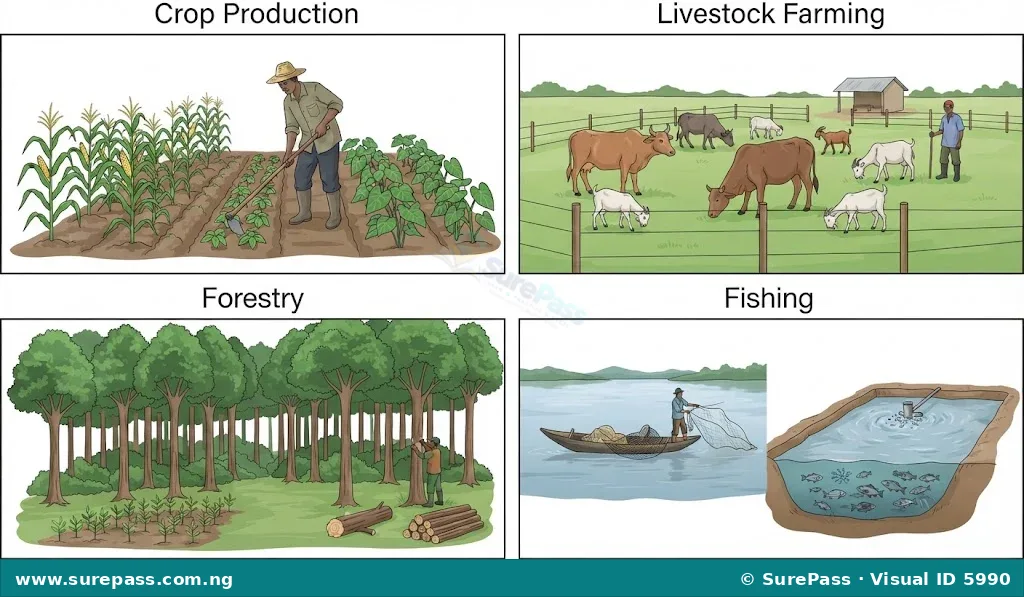
- Crop Production: This involves cultivating various plants for food, such as grains (e.g., maize, rice, millet), tubers (e.g., yam, cassava, potato), vegetables (e.g., tomatoes, okra, spinach), fruits (e.g., oranges, mangoes, bananas), and cash crops (e.g., cocoa, rubber, oil palm).
- Livestock Farming: This component focuses on rearing animals for various purposes. Animals like cattle, goats, sheep, pigs, and poultry (chickens, ducks) are raised for meat, milk, eggs, hides, and other products.
- Forestry: Forestry involves the management, cultivation, and conservation of forests and forest resources. It includes planting trees, harvesting timber for wood products, and protecting forest ecosystems for environmental benefits and non-timber products like medicinal plants and fruits.
- Fishing (Aquaculture and Capture Fisheries): This component deals with the harvesting of aquatic animals and plants from both freshwater and marine environments. It includes capture fisheries (catching fish from natural waters) and aquaculture (farming fish, prawns, and other aquatic organisms in controlled environments).
Methods of Agricultural Practices
Agricultural practices refer to the specific techniques and systems farmers use to cultivate crops and raise livestock. These methods vary depending on factors like land availability, climate, technology, and economic goals.
Common methods of agricultural practices include:
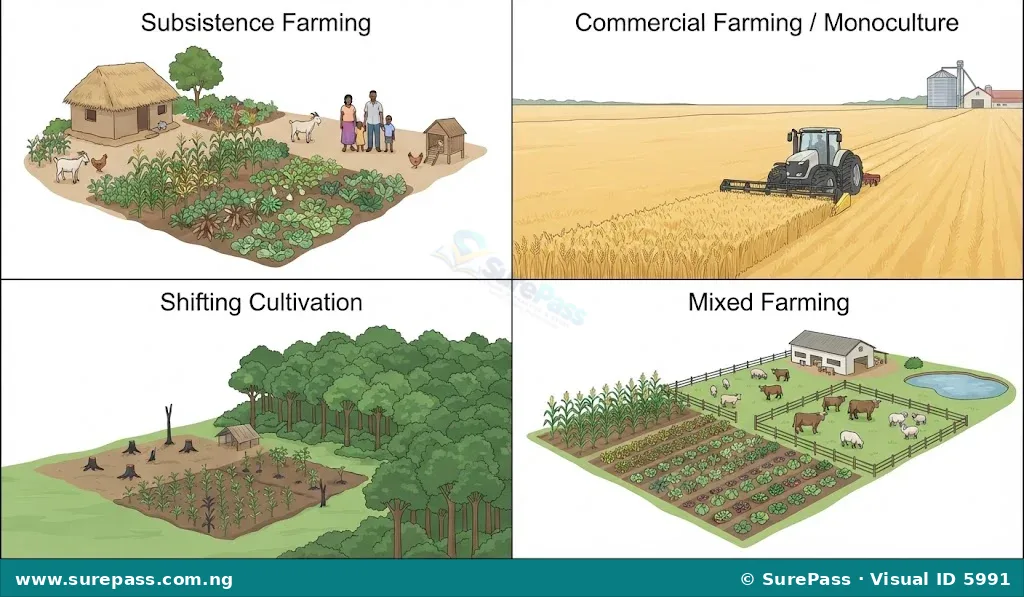
- Subsistence Farming: This is a traditional method where farmers produce just enough food to feed themselves and their families, with little or no surplus for sale. It often involves small plots of land and simple tools.
- Commercial Farming: In contrast to subsistence farming, commercial farming is carried out on a large scale with the primary aim of producing crops and livestock for sale in the market to generate profit. It often involves modern machinery, improved seeds, fertilisers, and advanced techniques.
- Shifting Cultivation: This practice involves clearing a piece of land, cultivating it for a few years until its fertility declines, and then abandoning it to allow the soil to regain its fertility naturally. Farmers then move to a new plot of land. This method is common in areas with abundant land.
- Sedentary Farming: This method involves cultivating the same piece of land permanently, year after year. Farmers use techniques like crop rotation, fertilisation, and irrigation to maintain soil fertility and productivity over time.
- Mixed Farming: Mixed farming combines both crop cultivation and livestock rearing on the same farm. This method offers several benefits, such as using crop residues to feed animals and using animal manure to fertilise crops, creating a more sustainable system.
- Monoculture: This practice involves growing a single type of crop over a large area, year after year. While it can be efficient for large-scale production of a specific crop, it can also lead to soil nutrient depletion and increased vulnerability to pests and diseases.
- Polyculture (Intercropping): Polyculture involves growing multiple types of crops together on the same land. This method can improve soil health, reduce pest problems, and increase overall yield by making efficient use of resources.
Importance of Agriculture
Agriculture plays a vital role in the economy and well-being of any nation, especially Nigeria. Its importance can be seen in several areas:
- Food Supply: Agriculture is the primary source of food for the entire population, providing essential grains, tubers, fruits, vegetables, meat, and fish. Without a stable agricultural sector, a nation cannot feed its people.
- Source of Raw Materials: Many industries rely on agriculture for their raw materials. For example, cotton for textile factories, rubber for tyre manufacturing, cocoa for chocolate production, and timber for furniture and paper industries.
- Employment Generation: Agriculture is a major employer, especially in rural areas. It provides jobs for farmers, farm labourers, processors, transporters, and marketers of agricultural products.
- Foreign Exchange Earnings: Exporting agricultural products like cocoa, rubber, palm oil, and cashew nuts generates foreign currency, which is crucial for importing goods and services that the country cannot produce.
- Market for Industrial Goods: The agricultural sector creates a market for goods produced by other industries, such as fertilisers, pesticides, farm machinery, and processing equipment.
- Rural Development: Agricultural activities often lead to the development of rural areas by creating economic opportunities, improving infrastructure like roads and markets, and raising the living standards of rural communities.
- Source of Government Revenue: Through taxes, levies, and export duties on agricultural products, the government generates revenue that can be used to fund public services and development projects.
Challenges of Agriculture in Nigeria
Despite its importance, agriculture in Nigeria faces numerous challenges that hinder its full potential. Addressing these challenges is crucial for the sector’s growth and national development.
Some of the major challenges confronting agriculture in Nigeria include:
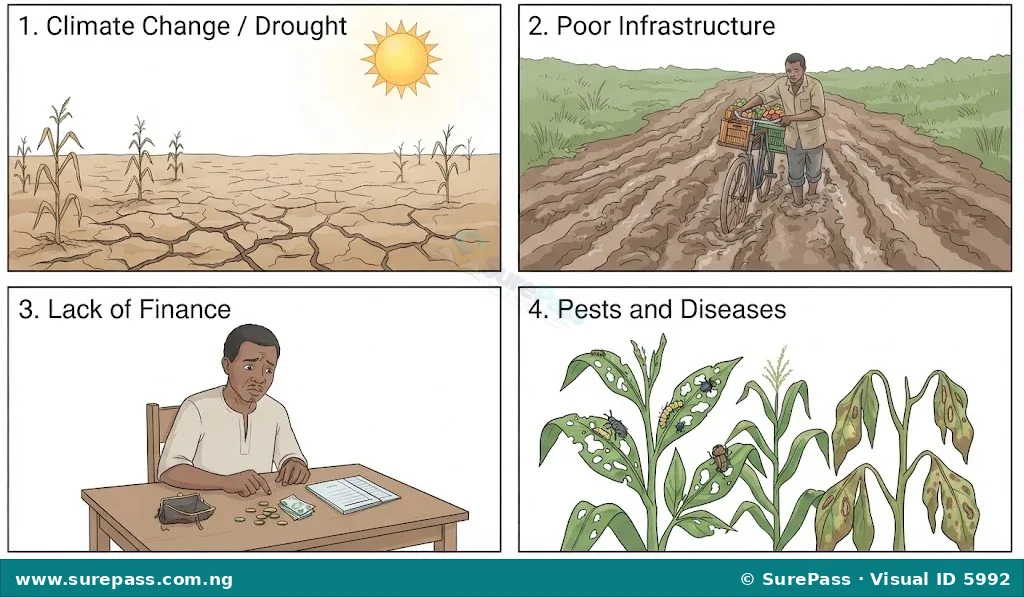
- Climate Change and Unfavourable Weather: Irregular rainfall patterns, prolonged droughts, and severe floods due to climate change negatively impact crop yields and livestock production.
- Poor Infrastructure: Lack of good roads makes it difficult for farmers to transport their produce from farms to markets, leading to post-harvest losses. Inadequate storage facilities also contribute to spoilage.
- Limited Access to Finance: Many smallholder farmers struggle to access loans and credit facilities from banks, making it difficult to purchase improved seeds, fertilisers, modern equipment, or expand their farms.
- Land Tenure System: Traditional land ownership systems can make it difficult for farmers to acquire large plots of land for commercial farming or to use land as collateral for loans.
- Pests and Diseases: Crops and livestock are constantly threatened by various pests (e.g., insects, rodents) and diseases, which can cause significant losses if not properly managed.
- Lack of Modern Technology: Many Nigerian farmers still rely on traditional farming methods and crude tools, leading to low productivity compared to countries using modern agricultural technologies.
- Insecurity: Conflicts, banditry, and kidnapping in some farming communities disrupt agricultural activities, displace farmers, and reduce food production.
- Inadequate Extension Services: Farmers often lack access to agricultural extension workers who can provide training, advice on modern farming techniques, and information on improved varieties.
Contributions of Agriculture to National Development
The contributions of agriculture extend beyond providing food; they are fundamental to the overall development and stability of a nation.
Key contributions of agriculture to national development include:
- Food Security: A strong agricultural sector ensures that a nation can produce enough food to feed its population, reducing reliance on food imports and enhancing national security.
- Poverty Alleviation: By providing employment and income opportunities, especially in rural areas, agriculture helps to reduce poverty and improve the living standards of many citizens.
- Industrial Growth: Agriculture supplies raw materials to agro-allied industries (e.g., food processing, textile, leather, brewing), stimulating industrial development and creating more jobs.
- Foreign Exchange Generation: Exporting agricultural products earns foreign currency, which can be used to finance imports of essential goods and services, thus strengthening the national economy.
- Gross Domestic Product (GDP) Contribution: Agriculture is a significant contributor to a nation’s GDP, reflecting its economic output and overall economic health.
- Rural-Urban Migration Reduction: By creating viable economic opportunities in rural areas, agriculture can help slow down the rate of rural-urban migration, reducing pressure on urban infrastructure.
- Market for Industrial Products: Farmers purchase industrial goods like fertilisers, machinery, and chemicals, thereby creating demand and supporting the growth of other sectors of the economy.
- Source of Capital Formation: Profits from agriculture can be reinvested into other sectors of the economy, contributing to capital formation and overall economic expansion.
Analyzing Agricultural Challenges and Proposing Solutions
Understanding the different farming practices and the challenges faced by agriculture is the first step towards developing effective solutions for successful farming. This analytical skill is crucial for improving the agricultural sector.
To analyze agricultural problems and propose solutions, consider the following:
- Identify the Specific Problem: Clearly define the challenge. Is it low yield, pest infestation, lack of market access, or poor soil fertility?
- Understand the Farming Practice: How does the current farming method contribute to or exacerbate the problem? For example, shifting cultivation might lead to deforestation if not properly managed, while monoculture might increase pest vulnerability.
- Research Potential Solutions: Explore various approaches to address the problem. This could involve adopting new technologies, changing farming methods, or seeking external support.
- Consider Local Context: Solutions must be appropriate for the local environment, available resources, and cultural practices of the farmers. A solution that works in one region might not be suitable for another.
- Propose Practical Solutions: Develop actionable steps. For instance, if the problem is poor soil fertility in sedentary farming, solutions could include crop rotation, use of organic manure, or application of appropriate fertilisers. If it’s lack of finance, advocating for microfinance schemes or cooperative farming could be a solution.
- Evaluate Impact: Consider the potential positive and negative impacts of the proposed solutions on farmers, the environment, and the economy.
For example, if farmers are experiencing significant post-harvest losses due to poor storage facilities, a solution could be to introduce improved, affordable storage technologies like hermetic bags or community-level cold storage units. If the challenge is low productivity due to traditional tools, promoting access to modern, small-scale machinery and training farmers on their use could be an effective solution.



0 comments
Open the discussion when you need it. Comments stay collapsed until requested so the initial article remains light.