



ARTICLE CONTENTSOn this page 5 sections
Population Census, Reasons and Challenges
Performance Objectives
By the end of the lesson, students should be able to:
- explain the meaning of population census;
- discuss the reasons for conducting population census;
- identify the challenges of conducting population census.
Understanding the population of a country is crucial for its development. Just like a household needs to know how many people live in it to plan for food and other needs, a country needs to know its population to plan for its citizens. This is where a population census becomes very important.
Meaning of Population Census
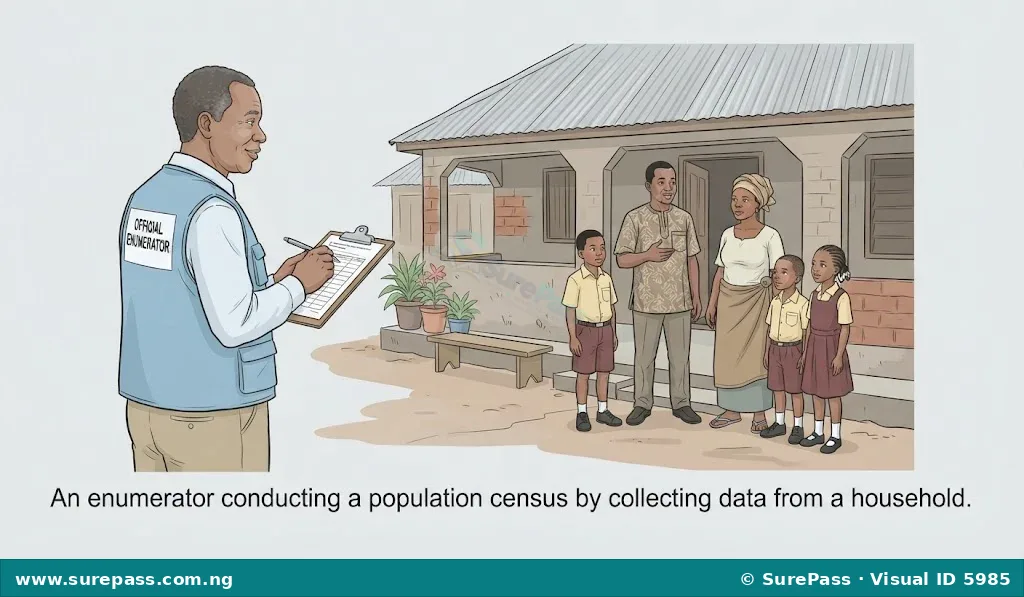
A population census is the official process of counting all the people living in a country or a defined territory at a specific time.
It involves systematically collecting, compiling, evaluating, analysing, and publishing demographic, economic, and social data pertaining to all persons in a country or a well-delimited part of a country. A census aims to count every person, household, and structure within the country’s borders. The information collected typically includes details such as age, gender, marital status, occupation, education level, place of residence, and household composition. This comprehensive data provides a snapshot of the population at a particular moment, which is essential for various planning and administrative purposes.
Reasons for Conducting Population Census
Population census data is vital for national development and effective governance. Governments and organisations rely on this information for various planning and decision-making processes. The main reasons for conducting a population census include:
- Economic Planning and Development: Census data helps governments understand the size and characteristics of the labour force, consumer markets, and overall economic structure. This information is used to formulate economic policies, plan for job creation, allocate resources for industries, and develop infrastructure projects like roads, power supply, and communication networks.
- Social Planning and Provision of Amenities: The census provides data on age distribution, gender, education levels, and health status. This information is crucial for planning social services such as schools, hospitals, housing, water supply, and sanitation facilities. For example, knowing the number of children of school age in a particular area helps in planning for new schools and recruiting teachers.
- Resource Allocation: Governments use census figures to distribute financial resources and grants to different states, local government areas, and communities. Areas with larger populations or specific demographic needs may receive more funding for development projects.
- Electoral Demarcation and Planning: Census data is fundamental for defining electoral constituencies and wards, ensuring fair representation in government. It helps in determining the number of representatives each area should have and in planning for voter registration and election logistics.
- Administrative Purposes: Census data assists in various administrative functions, including urban planning, disaster management, and public safety. It helps authorities understand population distribution to better manage emergencies, allocate security personnel, and plan for urban expansion.
- Research and Academic Studies: Researchers, academics, and non-governmental organisations use census data to study population trends, migration patterns, social changes, and their impact on society. This research contributes to a deeper understanding of societal issues and informs policy recommendations.
- Business and Investment Decisions: Businesses use census data to identify potential markets, determine locations for new stores or factories, and understand consumer behaviour. Investors also rely on this information to assess the economic viability of different regions.
Challenges of Conducting Population Census
Conducting a population census, especially in a large and diverse country like Nigeria, is a complex and challenging undertaking. Several obstacles can hinder the accuracy and effectiveness of the process. Some of these challenges include:
- Inadequate Funding: A census requires substantial financial resources for personnel, training, logistics, equipment, and data processing. Insufficient or delayed funding can compromise the quality and timeliness of the exercise.
- Logistical Difficulties: Nigeria’s vast land area, diverse terrain (including dense forests, deserts, and riverine areas), and poor road networks make it difficult to reach all communities. Transporting enumerators and materials to remote areas is a major logistical challenge.
- Illiteracy and Lack of Awareness: A significant portion of the population may be illiterate or unaware of the importance of the census. This can lead to difficulties in understanding questions, providing accurate information, or even a reluctance to participate.
- Cultural and Religious Beliefs: Certain cultural or religious beliefs may lead some individuals or communities to resist being counted, or to provide inaccurate information, such as underreporting the number of females or children.
- Political Interference and Manipulation: There is often a tendency for political entities to manipulate census figures for political gain, such as increasing representation in government or attracting more federal allocations. This can lead to distrust and disputes over the accuracy of the results.
- Security Challenges: In areas affected by insecurity, insurgency, or communal conflicts, it can be extremely dangerous for enumerators to carry out their duties, leading to incomplete coverage or delays.
- Inadequate Mapping and Demarcation: Accurate mapping of enumeration areas is crucial for ensuring complete coverage and avoiding double-counting or omission. Poorly defined boundaries or outdated maps can lead to significant errors.
- Shortage of Trained Personnel: A census requires a large number of well-trained enumerators and supervisors. Recruiting, training, and deploying such a workforce across the entire country can be challenging, especially in terms of quality control.
- Public Distrust and Suspicion: Past experiences with census exercises, or general distrust of government initiatives, can make some citizens suspicious of the census’s true intentions, leading to non-cooperation.
- Data Processing and Technology Issues: Handling and processing the enormous volume of data collected during a census requires advanced technology and skilled personnel. Technical glitches, power outages, or lack of expertise can delay or compromise data analysis.




0 comments
Open the discussion when you need it. Comments stay collapsed until requested so the initial article remains light.