



ARTICLE CONTENTSOn this page 7 sections
Structure of Nigerian Economy
Performance Objectives
By the end of the lesson, students should be able to:
- explain the structure of the Nigerian economy;
- describe the sectors of the Nigerian economy;
- identify the contributions of the Nigerian economic sectors;
- discuss the challenges facing each economic sector and suggest possible solutions.
Understanding the Structure of an Economy
The structure of an economy refers to the way its various parts are organised and how they contribute to the overall economic activity. It describes the relative importance of different sectors, industries, and activities within a country’s economy.
For example, an economy might be heavily reliant on agriculture, or it might be dominated by manufacturing or services. The structure can change over time as a country develops.
The Structure of the Nigerian Economy
The Nigerian economy is largely characterised by its reliance on crude oil, which has historically been the dominant source of government revenue and foreign exchange. However, efforts are being made to diversify the economy and strengthen other sectors.
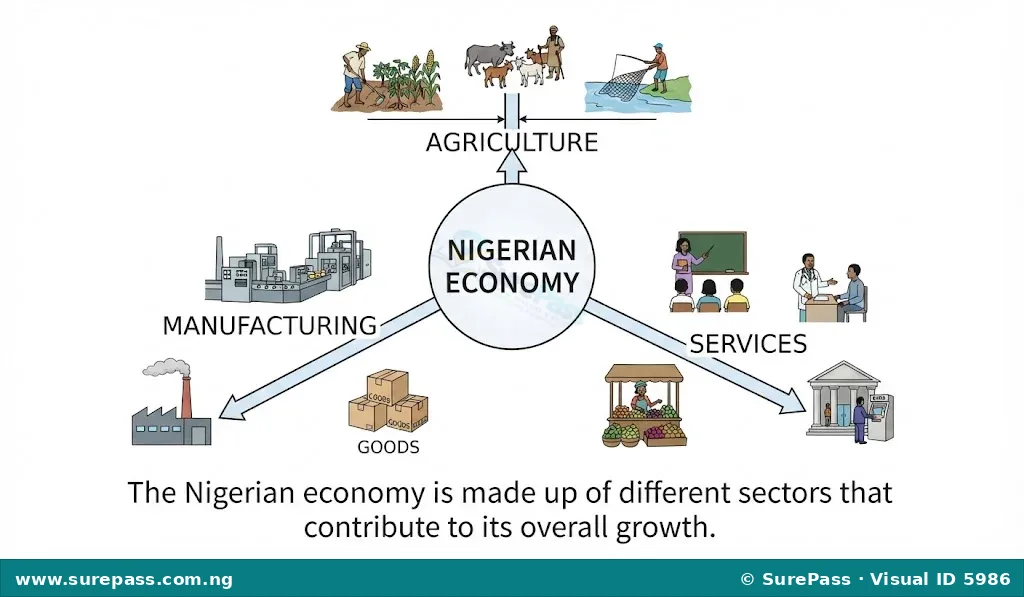
The structure of the Nigerian economy can be understood by examining the contributions of its major sectors to the Gross Domestic Product (GDP), employment, and overall national income. These sectors include agriculture, manufacturing, and services.
Sectors of the Nigerian Economy
Economic sectors are broad divisions of an economy based on the type of economic activity carried out. They help in understanding how different parts of the economy function and contribute to national development.
The Nigerian economy is commonly divided into three main sectors:
- Agriculture (Primary Sector)
- Manufacturing (Secondary Sector)
- Services (Tertiary Sector)
1. Agriculture (Primary Sector)
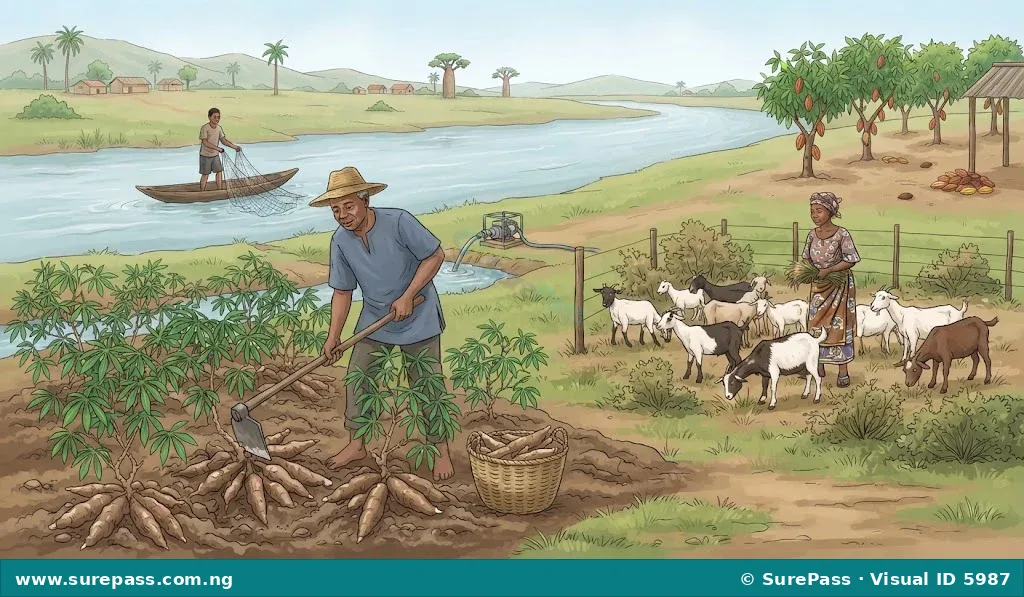
The agricultural sector involves the direct extraction of raw materials from the natural environment. This includes farming, fishing, forestry, and mining.
In Nigeria, agriculture is a significant sector, employing a large portion of the population, especially in rural areas. It provides food for the population and raw materials for industries.
Examples of activities in the Nigerian agricultural sector include:
- Crop farming (e.g., cassava, maize, yam, rice, cocoa, groundnut, palm oil)
- Livestock farming (e.g., cattle, goats, sheep, poultry)
- Fishing (e.g., inland fishing in rivers and lakes, marine fishing)
- Forestry (e.g., timber production, non-timber forest products)
2. Manufacturing (Secondary Sector)
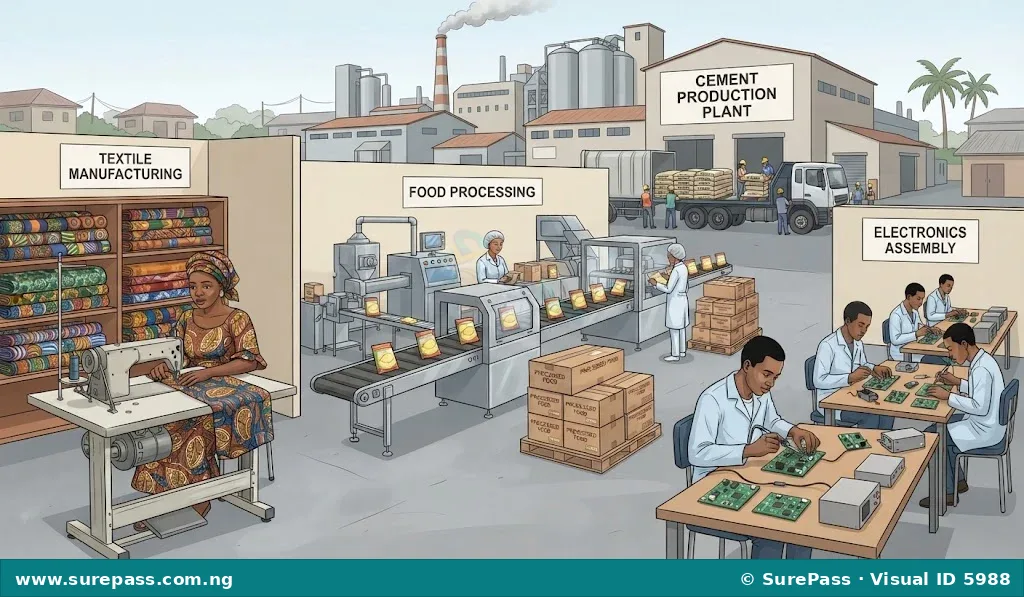
The manufacturing sector, also known as the industrial or secondary sector, involves processing raw materials obtained from the primary sector into finished goods. This includes factories, construction, and energy production.
In Nigeria, this sector includes a range of industries that transform agricultural products or minerals into usable items.
Examples of activities in the Nigerian manufacturing sector include:
- Food and beverage production (e.g., flour mills, breweries, soft drink companies)
- Textile and garment manufacturing
- Cement and construction materials production
- Petroleum refining
- Chemical and pharmaceutical production
- Assembly of vehicles and electronics
3. Services (Tertiary Sector)
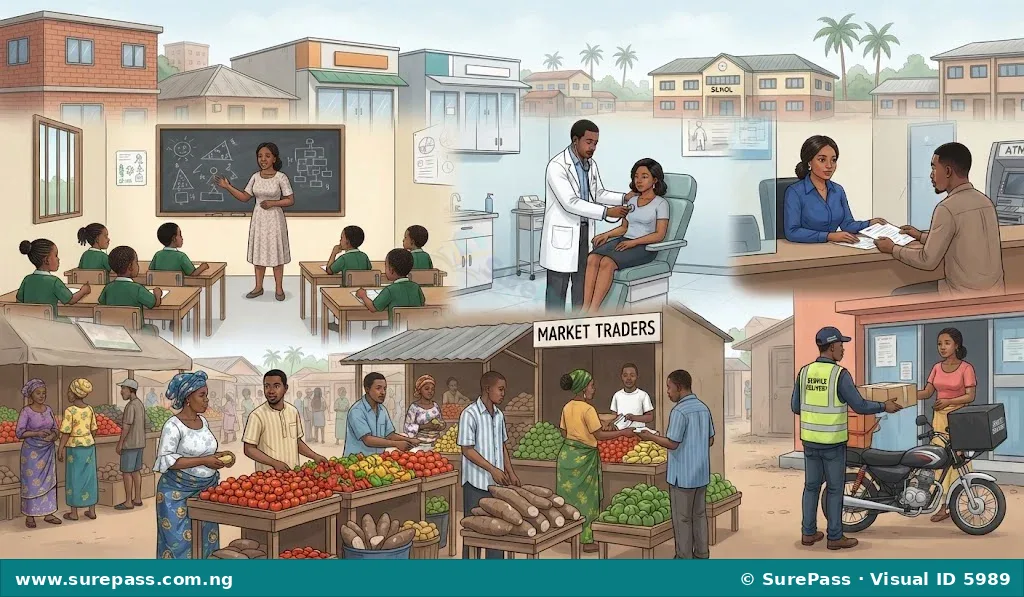
The services sector, also known as the tertiary sector, provides intangible goods or services rather than physical products. This sector supports both the primary and secondary sectors and directly serves consumers.
It is a rapidly growing sector in Nigeria, contributing significantly to employment and national income.
Examples of activities in the Nigerian services sector include:
- Education (e.g., schools, universities, private tutors)
- Healthcare (e.g., hospitals, clinics, pharmacies)
- Financial services (e.g., banks, insurance companies, stock brokerage)
- Trade and commerce (e.g., retail shops, wholesale markets, e-commerce)
- Transportation and logistics (e.g., road, rail, air, and water transport services)
- Telecommunications (e.g., mobile network providers, internet services)
- Tourism and hospitality (e.g., hotels, restaurants, travel agencies)
- Government services (e.g., public administration, security forces)
Contributions of the Nigerian Economic Sectors
Each sector plays a crucial role in the overall development and stability of the Nigerian economy. Their contributions are varied and interconnected.
Contributions of the Agricultural Sector
The agricultural sector contributes to the Nigerian economy in several ways:
- Food Security: It provides food for the growing population, reducing reliance on imported food items.
- Employment: It is a major employer, especially in rural areas, providing livelihoods for millions of Nigerians.
- Raw Materials: It supplies raw materials (e.g., cocoa, cotton, palm oil, groundnuts) to local manufacturing industries.
- Foreign Exchange Earnings: Export of cash crops like cocoa, rubber, and palm oil generates foreign currency for the country.
- Poverty Reduction: By providing income and employment, it helps to reduce poverty levels, particularly among rural dwellers.
Contributions of the Manufacturing Sector
The manufacturing sector contributes to the Nigerian economy through:
- Value Addition: It transforms raw materials into finished goods, adding value to primary products and increasing their market worth.
- Employment Generation: Factories and industries create jobs for skilled and unskilled labour.
- Economic Diversification: A strong manufacturing base reduces over-reliance on oil, making the economy more resilient.
- Import Substitution: Local production of goods reduces the need for imports, saving foreign exchange.
- Technological Advancement: The sector encourages the adoption of new technologies and skills development.
Contributions of the Services Sector
The services sector contributes significantly to the Nigerian economy by:
- Employment: It is a major source of employment, particularly for educated individuals, in areas like banking, education, and telecommunications.
- Economic Growth: It contributes a large share to the Gross Domestic Product (GDP) and drives overall economic expansion.
- Facilitating Other Sectors: Services like transportation, finance, and communication are essential for the smooth operation and growth of the agricultural and manufacturing sectors.
- Revenue Generation: Taxes from service providers and income from various service activities contribute to government revenue.
- Improved Quality of Life: Services like healthcare, education, and entertainment improve the living standards of the population.
Challenges Facing the Nigerian Economic Sectors and Possible Solutions
Despite their contributions, each sector in Nigeria faces unique challenges that hinder its full potential. Addressing these challenges is crucial for sustainable economic development.
Challenges and Solutions for the Agricultural Sector
The agricultural sector in Nigeria faces several obstacles:
- Poor Infrastructure: Lack of good roads, storage facilities, and processing plants leads to post-harvest losses and difficulty in transporting produce to markets.
- Climate Change and Environmental Degradation: Unpredictable weather patterns, droughts, floods, and soil erosion affect crop yields and livestock.
- Limited Access to Finance: Farmers often struggle to get loans or credit to buy improved seeds, fertilisers, or modern equipment.
- Insecurity: Conflicts, banditry, and kidnapping in farming communities disrupt agricultural activities and displace farmers.
- Outdated Farming Methods: Many farmers still use traditional, inefficient farming techniques, leading to low productivity.
Possible solutions for the agricultural sector include:
- Infrastructure Development: Investing in rural roads, modern storage facilities, and processing centres to reduce waste and improve market access.
- Climate-Smart Agriculture: Promoting irrigation systems, drought-resistant crops, and sustainable land management practices.
- Improved Access to Credit: Providing accessible and affordable loans, grants, and agricultural insurance to farmers.
- Enhanced Security: Strengthening security in rural areas to protect farmers and their farmlands.
- Modernisation of Farming: Educating farmers on modern farming techniques, providing improved seeds, and encouraging mechanisation.
Challenges and Solutions for the Manufacturing Sector
The manufacturing sector in Nigeria faces significant hurdles:
- Inadequate Power Supply: Irregular and insufficient electricity supply increases production costs and reduces efficiency for manufacturers.
- High Cost of Raw Materials: Manufacturers often rely on imported raw materials, which are expensive due to exchange rate fluctuations and import duties.
- Competition from Imported Goods: Cheap imported goods sometimes make it difficult for local manufacturers to compete effectively.
- Limited Access to Finance: High interest rates and difficulty in obtaining long-term loans hinder investment and expansion.
- Poor Infrastructure: Bad roads and inefficient ports increase the cost and time of transporting raw materials and finished products.
Possible solutions for the manufacturing sector include:
- Stable Power Supply: Investing in reliable and affordable power generation and distribution, including renewable energy sources.
- Local Raw Material Sourcing: Encouraging local production of raw materials and providing incentives for manufacturers to source locally.
- Support for Local Industries: Implementing policies that protect local industries from unfair competition and promote the patronage of Made-in-Nigeria goods.
- Access to Affordable Finance: Providing single-digit interest loans and grants specifically for manufacturers.
- Infrastructure Upgrade: Improving transportation networks, including roads, railways, and ports, to reduce logistics costs.
Challenges and Solutions for the Services Sector
The services sector in Nigeria also encounters challenges:
- Skill Gap: A shortage of skilled personnel in certain areas (e.g., technology, specialised healthcare) affects the quality and availability of services.
- Inadequate Technology Infrastructure: Limited access to reliable internet and modern technology, especially in rural areas, hinders digital service delivery.
- Regulatory Issues: Inconsistent or unclear government policies and regulations can create uncertainty for service providers.
- Security Concerns: Insecurity can deter tourism and affect the operation of businesses, especially those requiring physical presence.
- Competition: Intense competition, sometimes from international service providers, can make it challenging for local businesses to thrive.
Possible solutions for the services sector include:
- Human Capital Development: Investing in education and vocational training to develop skills relevant to the modern service economy.
- Digital Infrastructure Investment: Expanding access to affordable and reliable internet and promoting digital literacy.
- Clear Regulatory Frameworks: Developing consistent and transparent policies that support business growth and innovation.
- Improved Security: Enhancing national security to create a safe environment for businesses and tourists.
- Promoting Innovation: Encouraging innovation and entrepreneurship in the service sector through incubators and funding.





0 comments
Open the discussion when you need it. Comments stay collapsed until requested so the initial article remains light.