



ARTICLE CONTENTSOn this page 8 sections
Food Preparation
Performance Objectives
By the end of the lesson, students should be able to:
- state the meaning and importance of food preparation;
- explain the importance of personal hygiene in food handling;
- discuss safe food handling, hygiene, and practices;
- identify the basic steps in food preparation.
Meaning of Food Preparation
Food preparation is the process of planning, selecting, cleaning, processing, and combining ingredients to make them edible, safe, and palatable for consumption.
This process serves as the foundation of culinary arts and nutrition. It transforms raw agricultural products into nourishing meals through various physical and chemical changes.
Importance of Food Preparation
The importance of food preparation includes the following points:
- Enhancing Digestibility: Raw foods, especially complex carbohydrates and tough meats, are difficult for the human digestive system to break down. Cooking and preparation break down complex structures, making nutrients easier for the body to absorb.
- Ensuring Food Safety: Proper preparation, including washing and cooking, destroys harmful microorganisms, parasites, and natural toxins present in raw food items.
- Improving Palatability and Flavour: Combining ingredients, seasoning, and applying heat enhance the taste, aroma, texture, and overall appeal of food, making it more enjoyable to eat.
- Preserving and Enhancing Nutritional Value: Correct preparation methods help retain essential vitamins and minerals, while some processes make certain nutrients more bioavailable.
- Extending Shelf Life: Preparation techniques such as cooking, drying, or marinating help preserve food, preventing rapid spoilage and reducing waste.
- Aesthetic Appeal and Variety: Creative preparation allows a single raw ingredient to be presented in various forms, textures, and colours, which stimulates appetite.
Basic Hygiene and Safety in Food Handling
Food hygiene refers to the practical measures and conditions necessary to ensure the safety and suitability of food at all stages of the food chain, from primary production to final consumption.
Maintaining high standards of hygiene and safety prevents food contamination, foodborne illnesses, and kitchen accidents.
Personal Hygiene
Personal hygiene is the practice of maintaining cleanliness of the body and clothing to prevent the transfer of harmful microorganisms from the food handler to the food.
The importance of personal hygiene in food handling cannot be overstated, as human beings are a primary source of food contamination. Proper personal hygiene practices include:
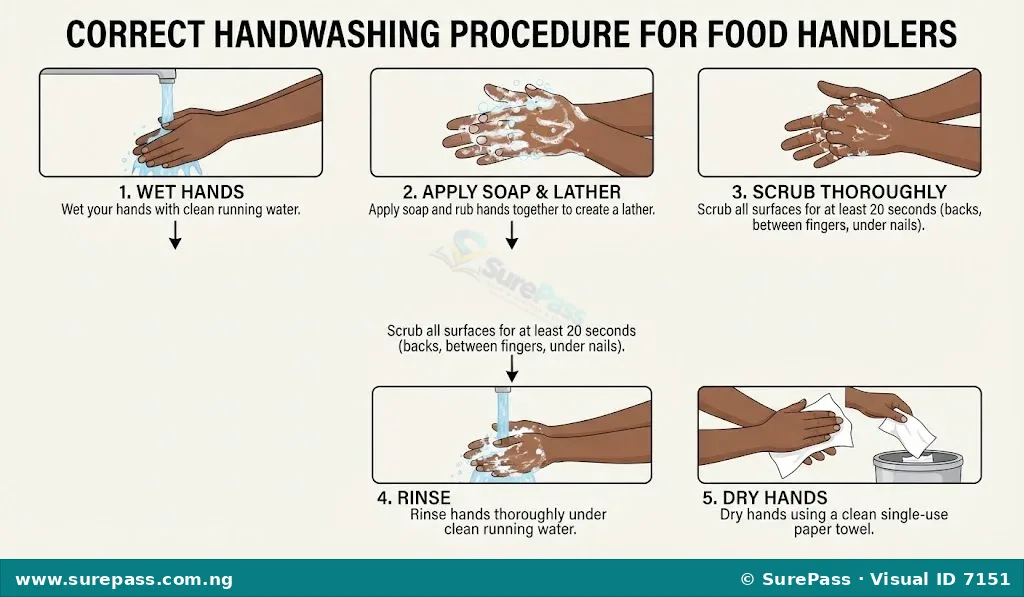
- Thorough Handwashing: Hands must be washed with clean running water and soap before handling food, after using the toilet, after touching raw meat, and after handling waste.
- Appropriate Kitchen Attire: Food handlers must wear clean aprons or chef coats, hairnets or caps to prevent hair from falling into food, and closed-toe shoes to protect feet from spills or dropped utensils.
- Nail and Hand Care: Fingernails must be kept short, clean, and free of nail polish, which can chip and contaminate food. Cuts or wounds on the hands must be covered with waterproof dressings.
- Avoiding Unhealthy Habits: Coughing, sneezing, spitting, or chewing gum near food preparation areas must be strictly avoided to prevent droplet contamination.
- Exclusion of Sick Handlers: Individuals suffering from communicable diseases, skin infections, diarrhoea, or vomiting must not handle food until they are fully recovered.
Cleanliness of Equipment and Surfaces
Kitchen surfaces, worktops, and utensils can easily harbor bacteria if not cleaned and sanitized regularly. Cross-contamination occurs when bacteria are transferred from a contaminated surface or utensil to uncontaminated food.
Key practices for maintaining clean equipment and surfaces include:
- The “Clean-as-You-Go” Principle: Spills must be wiped up immediately, and work surfaces must be cleaned throughout the preparation process rather than waiting until the end.
- Washing and Sanitizing: Utensils, cutting boards, and countertops must be washed with hot, soapy water and then sanitized using a food-safe chemical sanitizer or extremely hot water.
- Separation of Cutting Boards: Distinct cutting boards should be used for raw meats and ready-to-eat foods (such as vegetables or bread) to prevent cross-contamination.
- Proper Storage of Cleaning Tools: Dishcloths, sponges, and mops must be washed, disinfected, and dried thoroughly after use, as damp cleaning tools can breed bacteria.
Safe Food Handling Practices
Safe food handling involves implementing specific procedures during the preparation and cooking stages to prevent the growth and spread of pathogens.
Essential safe food handling practices include:
- Avoiding the Temperature Danger Zone: The temperature range between 4°C and 60°C is known as the danger zone, where bacteria multiply rapidly. Food should not be left in this temperature range for more than two hours.
- Thorough Cooking: Food, especially poultry, minced meat, and seafood, must be cooked to safe internal temperatures to destroy harmful bacteria.
- Thawing Safely: Frozen foods should never be thawed at room temperature on the kitchen counter. Safe thawing methods include defrosting in the refrigerator, under cold running water, or in a microwave oven immediately before cooking.
- Preventing Cross-Contamination during Handling: Raw foods must be kept physically separate from cooked or ready-to-eat foods at all times.
Storage and Preservation
Proper storage maintains food quality and prevents spoilage caused by micro-organisms, enzymes, pests, and environmental factors.
Guidelines for safe food storage and preservation include:
- Dry Storage: Non-perishable items such as grains, flour, tubers, and canned goods should be stored in a cool, dry, well-ventilated pantry. Items should be kept off the floor on shelves to prevent pest infestation.
- Cold Storage: Perishable foods such as fresh milk, meat, fish, and cooked leftovers must be stored in a refrigerator (at or below 4°C) or a freezer (at or below -18°C).
- The First-In, First-Out (FIFO) Rule: Older stock should be placed at the front of shelves or storage units so it is used before newly purchased items, preventing food waste due to expiration.
- Proper Packaging: Food items should be stored in airtight containers or tightly wrapped in food-grade plastic wrap or foil to prevent moisture loss, absorption of odors, and exposure to pests.
Safety Precautions
The kitchen contains various hazards, including sharp tools, hot surfaces, open flames, and electrical appliances. Preventing accidents requires strict adherence to safety rules.
Important safety precautions in the kitchen include:
- Preventing Cuts: Knives must be kept sharp, as dull knives require more force and are more likely to slip. Knives should be washed individually and never left submerged in soapy dishwater where they cannot be seen.
- Preventing Burns and Scalds: Pot handles must be turned inward, away from the edge of the stove, to prevent them from being knocked over. Dry oven mitts or pot holders must be used when handling hot cookware.
- Preventing Falls: Spilled liquids, grease, or food on the floor must be wiped up immediately to prevent slipping. The kitchen floor should be kept free of clutter.
- Electrical Safety: Electrical appliances must be operated with dry hands. Power cords should be kept away from water sources and hot surfaces, and appliances must be unplugged before cleaning.
- Fire Safety: A fire extinguisher or a fire blanket should be kept in or near the kitchen. Water must never be poured onto a grease fire; instead, the flame should be smothered with a metal lid or baking soda.
Basic Steps in Food Preparation
Before food is cooked or served, it undergoes several preliminary preparation steps. These steps ensure that the food is clean, safe, uniform in size, and properly seasoned.
The basic steps in food preparation include:
- Sorting: This is the initial step where food items are inspected and grouped. Damaged, decayed, or unripe parts are separated from healthy ones. For grains and pulses (such as beans or rice), sorting involves removing stones, dirt, chaff, and insect-damaged seeds.
- Washing: Food items are cleaned using clean, running water to remove dirt, chemical residues (such as pesticides), insects, and surface bacteria. Vegetables, fruits, and raw meats must be washed thoroughly before cutting to prevent transferring surface dirt to the interior of the food.
- Peeling: This involves removing the outer skin, rind, or peel of fruits, vegetables, and tubers (such as yams, potatoes, and cassava). Peeling can be done using a kitchen knife or a specialized vegetable peeler. Care should be taken to peel thinly to avoid wasting the nutritious parts of the food lying just beneath the skin.
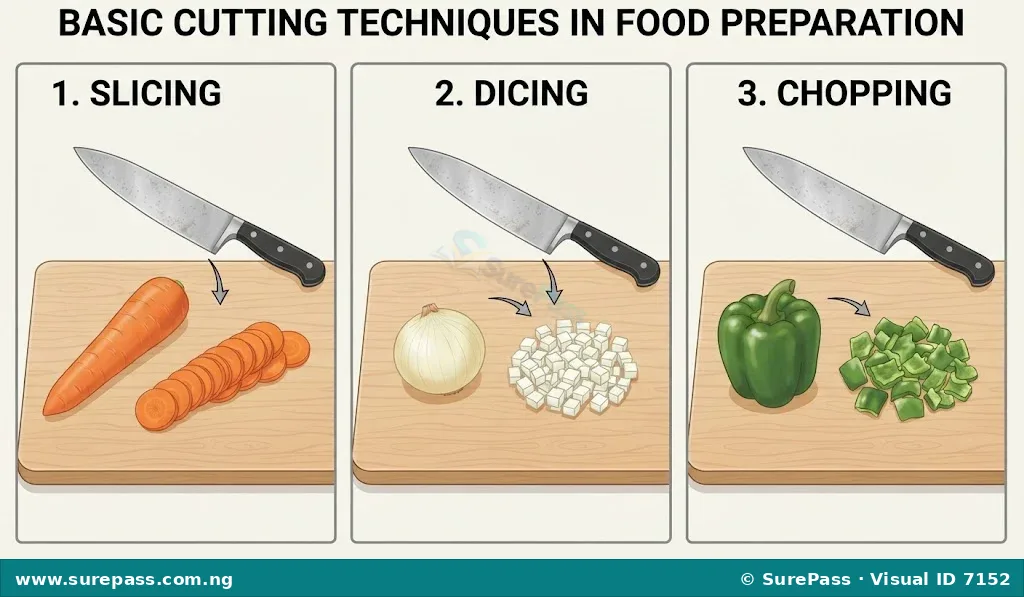
- Cutting: Cutting reduces food items to smaller, uniform sizes to ensure even cooking and aesthetic presentation. Common cutting techniques include slicing (cutting into thin, flat pieces), dicing (cutting into small cubes), and chopping (cutting into irregular, bite-sized pieces).
- Mixing: This is the process of combining two or more ingredients together thoroughly to form a uniform mixture. Mixing can be done using tools such as wooden spoons, whisks, spatulas, or electric mixers.
- Seasoning: Seasoning involves adding salt, pepper, herbs, spices, or acidic ingredients (like lemon juice) to food to enhance its natural flavours without drastically changing them. Seasoning can be done before, during, or after the cooking process.
- Marinating: Marinating is the process of soaking food items (typically meat, fish, or poultry) in a seasoned liquid called a marinade before cooking. The marinade often contains an acid (such as vinegar, citrus juice, or yogurt), oil, and various herbs and spices. This process tenderizes tough muscle fibers and infuses deep flavour into the food.
- Preheating: Preheating is the process of heating an oven, grill, pan, or cooking medium (such as oil or water) to a specific target temperature before introducing the food. This ensures that cooking begins immediately at the correct temperature, which is crucial for proper texture, rising (in baking), and preventing food from absorbing excess grease.
How to Prepare Ingredients for a Simple Stir-Fry
This practical activity demonstrates the basic steps of food preparation, including sorting, washing, peeling, cutting, marinating, and preheating, using a simulated kitchen setup.
The required ingredients and tools are:
- Fresh beef or chicken breast (200 grams)
- Carrots (2 medium-sized)
- Onions (1 medium-sized)
- Seasoning ingredients: salt, pepper, soy sauce, garlic, and ginger
- Vegetable oil (2 tablespoons)
- Sharp chef’s knife and vegetable peeler
- Two separate cutting boards (one for meat, one for vegetables)
- Mixing bowls and a frying pan
The procedure involves the following steps:
- Sort the Ingredients: Inspect the carrots and onions. Remove any decayed parts or dry outer skins. Ensure the meat is fresh and free of unwanted connective tissue.
- Wash the Food Items: Wash the carrots and onions thoroughly under clean running water. Wash the raw meat separately in a designated sink area, taking care not to splash water onto other kitchen surfaces.
- Peel the Vegetables: Use a vegetable peeler to remove the thin outer skin of the carrots. Peel the dry, papery outer layers of the onion using your hands or a knife.
- Cut the Ingredients: On the vegetable cutting board, slice the carrots into thin rounds and dice the onion into neat cubes. Switch to the meat cutting board and cut the beef or chicken into thin, uniform strips.
- Marinate the Meat: Place the cut meat into a clean mixing bowl. Add a pinch of salt, pepper, minced garlic, ginger, and a tablespoon of soy sauce. Mix the ingredients thoroughly using a spoon. Cover the bowl and let it sit in the refrigerator for 15 to 20 minutes to allow the flavours to penetrate.
- Preheat the Cooking Pan: Place the frying pan on the stove over medium heat. Add two tablespoons of vegetable oil. Allow the pan and oil to preheat for 2 to 3 minutes until the oil is hot but not smoking, ensuring the food cooks quickly and evenly when added.
- Clean Up: Wash all cutting boards, knives, and bowls immediately with hot, soapy water. Wipe down the countertops to maintain kitchen hygiene.
Review Questions
Answer the following questions to test your understanding of the lesson:
- Define food preparation and state four reasons why it is important.
- Explain the importance of personal hygiene in food handling and list three essential personal hygiene practices.
- Discuss how cross-contamination can be prevented during food preparation and storage.
- Identify and explain five basic steps involved in preparing food ingredients before cooking.
- Why is preheating an essential step in food preparation?



0 comments
Open the discussion when you need it. Comments stay collapsed until requested so the initial article remains light.