



ARTICLE CONTENTSOn this page 8 sections
Food Nutrients, Classes, Sources, Functions and Deficiencies for SS 1
Performance Objectives
By the end of the lesson, students should be able to:
- explain food and food nutrients;
- identify the various classes of food nutrients;
- discuss sources of food nutrients;
- explain the functions of food nutrients in the body;
- distinguish between nutrient deficiency and excess disorders.
- select appropriate food base on their nutrients
- identify diet related disease and their prevention
Meaning of Food and Food Nutrients
Food is any edible substance, usually of plant or animal origin, that provides nourishment to the body. It is consumed by living organisms to provide energy, promote growth, and maintain life.
Food nutrients are the chemical substances present in food that are essential for the body’s growth, repair, maintenance, and energy production. These nutrients are absorbed by the body after food has been digested.
Every food item contains one or more nutrients. For example, rice is rich in carbohydrates, while beans are a good source of protein. A balanced diet includes a variety of foods to ensure the body receives all necessary nutrients.
Classes of Food Nutrients
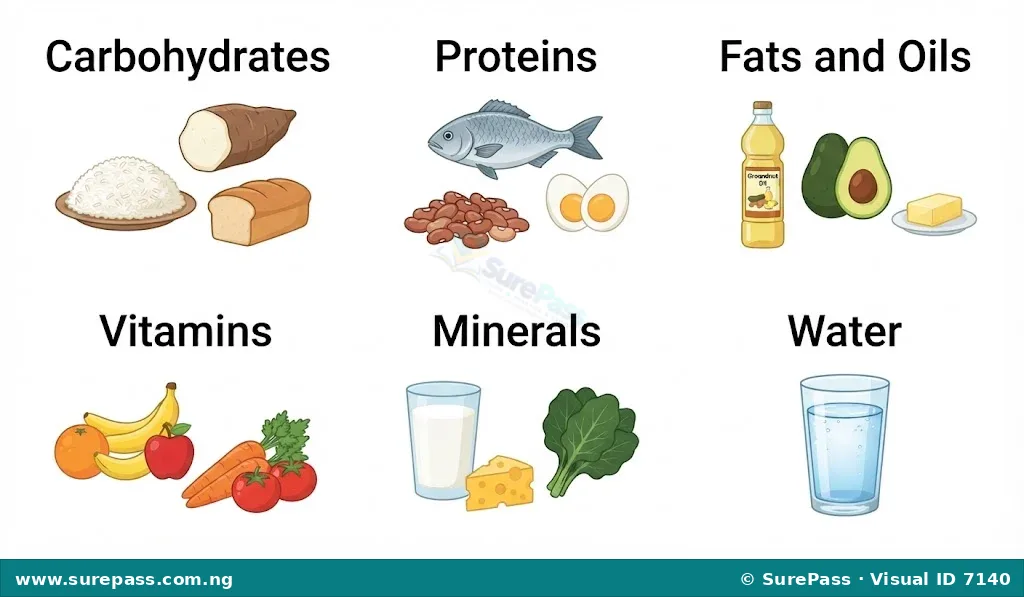
Food nutrients are broadly classified into six main classes. These classes are carbohydrates, proteins, fats and oils, vitamins, minerals, and water. Each class plays a unique and vital role in the body.
Carbohydrates
Carbohydrates are the body’s primary source of energy. They are broken down into glucose, which is used by cells for fuel.
Common sources of carbohydrates include:
- Cereals: such as rice, maize, millet, wheat, and sorghum.
- Root and Tuber crops: such as yam, cassava, potato, and cocoyam.
- Sugars: such as honey, table sugar, and fruits.
The main function of carbohydrates is to provide energy for daily activities and bodily functions.
Proteins
Proteins are essential for the growth and repair of body tissues. They are also involved in making enzymes, hormones, and other body chemicals.
Sources of proteins include:
- Animal sources: such as meat, fish, eggs, milk, and poultry.
- Plant sources (legumes): such as beans, groundnuts, soybeans, and lentils.
The primary functions of proteins are building and repairing body tissues, and producing enzymes and hormones.
Fats and Oils
Fats and oils provide a concentrated source of energy and help the body absorb fat-soluble vitamins (A, D, E, K). They also protect organs and help maintain body temperature.
Sources of fats and oils include:
- Animal fats: such as butter, lard, and fat from meat.
- Plant oils: such as palm oil, groundnut oil, coconut oil, and avocado.
- Nuts and seeds: such as groundnuts, cashew nuts, and sunflower seeds.
The functions of fats and oils include providing energy, protecting organs, insulating the body, and aiding in vitamin absorption.
Vitamins
Vitamins are organic compounds that the body needs in small amounts to function properly. They help regulate many body processes, including growth, digestion, and nerve function.
Sources of vitamins are diverse and include:
- Fruits: such as oranges, mangoes, pawpaw, and pineapples.
- Vegetables: such as leafy greens (ugu, spinach), carrots, and tomatoes.
- Dairy products: such as milk and cheese.
- Meat and fish.
Vitamins are crucial for maintaining good health, boosting immunity, and ensuring proper body function.
Minerals
Minerals are inorganic substances that the body needs for various functions, such as building strong bones and teeth, maintaining fluid balance, and nerve function.
Sources of minerals include:
- Dairy products: such as milk and yogurt (for calcium).
- Leafy green vegetables: such as spinach and kale (for iron and calcium).
- Meat and fish (for iron and zinc).
- Salt (for sodium and iodine).
- Legumes and nuts.
Minerals support bone health, blood formation, nerve function, and many other essential bodily processes.
Water
Water is essential for life. It makes up a large percentage of body weight and is involved in almost all bodily functions, including nutrient transport, waste removal, and temperature regulation.
Sources of water include:
- Drinking water.
- Fruits and vegetables: such as watermelon, cucumber, and oranges.
- Soups and beverages.
The functions of water include transporting nutrients, regulating body temperature, lubricating joints, and removing waste products.
Functions of Food Nutrients in the Body
Each class of food nutrient performs specific roles that are vital for maintaining health and proper body function. These functions can be broadly categorised as:
-
Energy Production: Carbohydrates, fats, and proteins provide the energy needed for all bodily activities, from breathing and thinking to running and working. Carbohydrates are the quickest source of energy, while fats provide a more concentrated and long-lasting supply.
-
Growth and Repair: Proteins are the primary building blocks for new cells and tissues, essential for growth in children and for repairing damaged tissues in adults. Minerals like calcium are crucial for bone and teeth development.
-
Regulation of Body Processes: Vitamins and minerals act as regulators, helping various body systems function correctly. They are involved in enzyme activity, hormone production, nerve function, and maintaining fluid balance. Water also plays a critical role in regulating body temperature and transporting substances.
-
Protection Against Diseases: Vitamins and some minerals strengthen the immune system, helping the body fight off infections and diseases. Antioxidant vitamins protect cells from damage. Fats also provide a protective layer around vital organs.
Nutrient Deficiency and Excess Disorders
Both a lack (deficiency) and an excessive intake (excess) of nutrients can lead to health problems, known as disorders. Maintaining a balanced diet is crucial to prevent these conditions.
Nutrient Deficiency Disorders
A nutrient deficiency disorder occurs when the body does not get enough of a particular nutrient. This can happen due to insufficient intake, poor absorption, or increased nutrient needs.
Examples of deficiency disorders include:
-
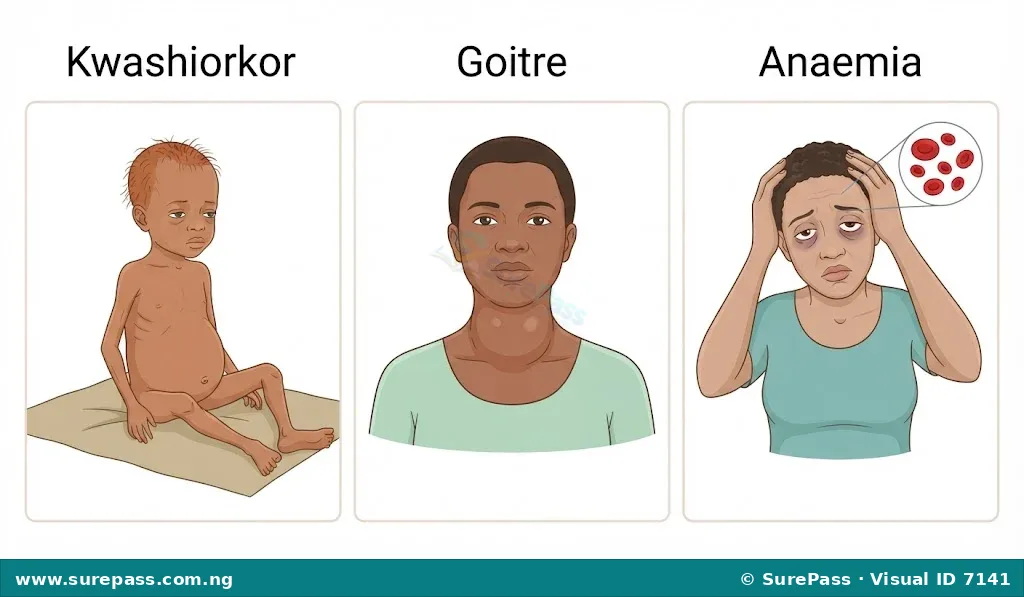
Protein Deficiency (e.g., Kwashiorkor): This is common in children who do not consume enough protein. Symptoms include swollen belly (oedema), stunted growth, changes in hair and skin colour, and a weakened immune system.
-
Iron Deficiency (Anaemia): A lack of iron leads to a reduced number of red blood cells, causing fatigue, weakness, pale skin, and shortness of breath. It is common among women and children.
-
Vitamin A Deficiency: Can lead to night blindness and, in severe cases, permanent blindness. It also weakens the immune system.
-
Iodine Deficiency (Goitre): Insufficient iodine intake can cause the thyroid gland in the neck to swell, a condition known as goitre. It can also lead to developmental problems in children.
-
Vitamin C Deficiency (Scurvy): Although rare today, severe lack of Vitamin C can cause bleeding gums, joint pain, and poor wound healing.
-
Vitamin D Deficiency (Rickets in children, Osteomalacia in adults): A lack of Vitamin D, often combined with insufficient calcium, can lead to soft and weak bones, causing bone deformities in children and bone pain in adults.
Nutrient Excess Disorders
A nutrient excess disorder occurs when the body receives too much of a particular nutrient. This is often due to over-supplementation or consuming very large quantities of certain foods.
Examples of excess disorders include:
-
Excess Carbohydrates/Fats (Obesity): Consuming more carbohydrates and fats than the body needs for energy leads to the storage of excess energy as fat, resulting in weight gain and obesity. Obesity increases the risk of heart disease, diabetes, and high blood pressure.
-
Excess Sodium: High intake of sodium (from salt) can lead to high blood pressure (hypertension), which is a major risk factor for heart disease and stroke.
-
Excess Iron: While iron is essential, too much can be toxic and damage organs like the liver and heart.
-
Excess Fat-soluble Vitamins (e.g., Vitamin A, D): Unlike water-soluble vitamins, fat-soluble vitamins can be stored in the body, and excessive intake can lead to toxicity. For example, too much Vitamin A can cause liver damage and bone pain.
Selecting Appropriate Foods Based on Nutrient Content
To maintain good health and prevent both deficiency and excess disorders, it is important to select foods wisely. This involves understanding the nutrient content of different food groups.
The following steps can guide food selection:
-
Identify Energy Needs: People with active lifestyles need more energy-giving foods (carbohydrates and fats). Sedentary individuals need less to avoid excess.
-
Prioritise Growth and Repair: Growing children, pregnant women, and individuals recovering from illness need more protein-rich foods (meat, fish, beans, eggs) for tissue building and repair.
-
Ensure Micronutrient Intake: Include a wide variety of fruits and vegetables daily to ensure adequate intake of vitamins and minerals. Different colours of fruits and vegetables often indicate different nutrient profiles.
-
Choose Healthy Fats: Opt for unsaturated fats found in plant oils (groundnut oil, olive oil), nuts, and seeds, rather than excessive saturated and trans fats found in processed foods and some animal products.
-
Stay Hydrated: Drink plenty of clean water throughout the day, even if not feeling thirsty, to support all bodily functions.
-
Read Food Labels: When buying packaged foods, check the nutrient information to understand the amounts of carbohydrates, proteins, fats, vitamins, and minerals present, as well as sugar and sodium content.
Identifying and Preventing Diet-Related Diseases
Diet-related diseases are health conditions that are either caused or significantly influenced by a person’s dietary habits. These include both deficiency and excess disorders.
Identifying Diet-Related Diseases
Identifying diet-related diseases involves recognising their symptoms and understanding their links to dietary patterns. For example:
-
Kwashiorkor: Recognised by a swollen belly, thin limbs, and changes in hair colour in children, often linked to diets very low in protein.
-
Anaemia: Identified by paleness, fatigue, and weakness, often due to insufficient iron intake.
-
Goitre: A visible swelling in the neck, indicating iodine deficiency.
-
Obesity: Characterised by excessive body fat, often a result of consuming too many calories from carbohydrates and fats without enough physical activity.
-
High Blood Pressure (Hypertension): Often has no obvious symptoms but can be linked to high sodium intake and obesity. Regular check-ups are important for identification.
Prevention of Diet-Related Diseases
Most diet-related diseases can be prevented through a balanced diet and healthy lifestyle choices. Key prevention strategies include:
-
Eat a Balanced Diet: Consume a variety of foods from all nutrient classes in appropriate proportions. This ensures the body gets all necessary nutrients without excess.
-
Increase Fruit and Vegetable Intake: These are rich in vitamins, minerals, and fibre, which are crucial for immunity and digestion, and help prevent many deficiencies.
-
Choose Whole Grains: Opt for whole grains like brown rice, whole wheat bread, and oats over refined grains, as they provide more fibre and nutrients.
-
Limit Processed Foods, Sugars, and Salt: These often contain high levels of unhealthy fats, added sugars, and sodium, contributing to obesity, diabetes, and high blood pressure.
-
Ensure Adequate Protein: Include lean protein sources (fish, chicken, beans, eggs) in meals to support growth, repair, and satiety.
-
Stay Hydrated: Drink sufficient water daily to support metabolism and overall health.
-
Engage in Regular Physical Activity: Exercise helps burn excess calories, maintain a healthy weight, and improve overall body function, complementing a healthy diet.
-
Practise Food Hygiene: Proper washing, cooking, and storage of food prevent foodborne illnesses that can interfere with nutrient absorption.



0 comments
Open the discussion when you need it. Comments stay collapsed until requested so the initial article remains light.