



ARTICLE CONTENTSOn this page 9 sections
Agrochemicals
Performance Objectives
By the end of the lesson, students should be able to:
- explain the meaning and uses of agrochemicals;
- discuss how to practice safety in handling agrochemicals.
Meaning of Agrochemicals
An agrochemical is any chemical substance, whether synthetic or naturally derived, that is used in agriculture to improve crop growth, protect crops from pests and diseases, and enhance soil fertility.
The term is a contraction of “agricultural chemical.” In crop production and horticulture, these chemicals play a vital role in managing crop health and maximizing yields. They are formulated to target specific agricultural challenges, such as nutrient deficiencies, weed competition, insect infestations, and microbial diseases.
Types and Uses of Agrochemicals
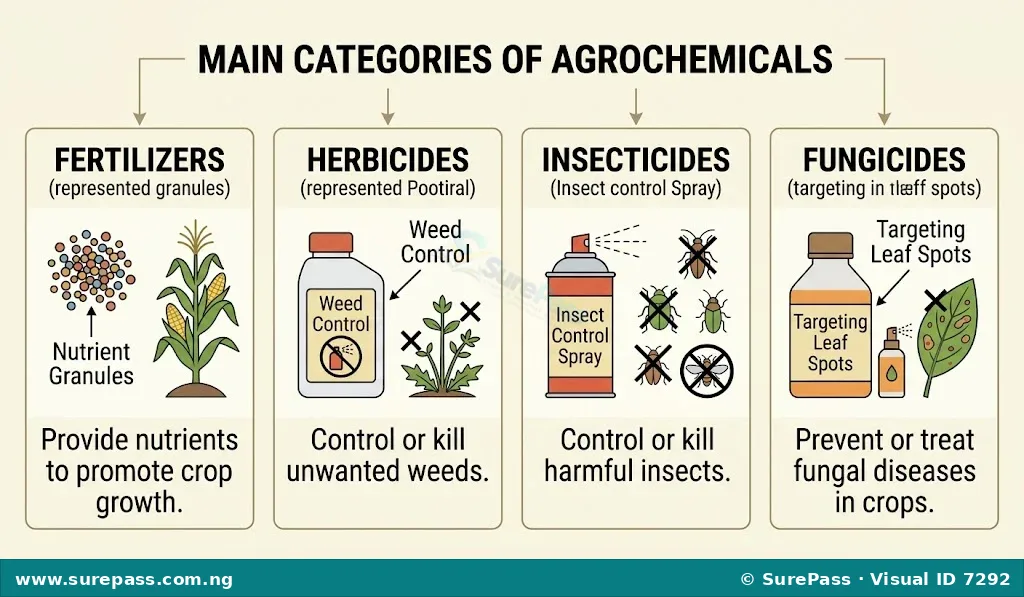
Agrochemicals are classified based on their target function in the field. Understanding these classifications helps farmers select the correct chemical for specific crop management needs.
The main types of agrochemicals and their specific uses include:
- Fertilizers: These are substances applied to the soil or directly to plant tissues to supply essential plant nutrients. They promote vigorous vegetative growth, strong root development, and high crop yields. Examples include Urea, NPK (Nitrogen, Phosphorus, and Potassium) formulations, and single superphosphate.
- Herbicides: These are chemicals used to control or destroy unwanted plants, commonly known as weeds. By eliminating weeds, herbicides reduce competition for sunlight, water, and soil nutrients, allowing the cultivated crops to thrive. Examples include glyphosate and paraquat.
- Insecticides: These are chemical agents formulated to kill or control insect pests that damage crops by chewing leaves, boring into stems, or sucking plant sap. Examples include carbofuran and permethrin.
- Fungicides: These are chemicals used to prevent or cure fungal infections in crops. Fungal diseases can cause leaf spots, root rot, and fruit decay, severely reducing crop quality and yield. Examples include copper oxychloride and mancozeb.
- Rodenticides: These are toxic chemicals designed to control rodents, such as rats and mice, which destroy crops in the field or consume stored agricultural produce.
- Nematicides: These are specialized chemicals used to control parasitic nematodes (microscopic roundworms) that attack plant roots and disrupt nutrient uptake.
Importance of Agrochemicals in Crop Production
The strategic use of agrochemicals has revolutionized modern crop production and horticulture. When applied correctly, these chemicals provide significant benefits to agricultural systems.
The importance of agrochemicals in crop production includes:
- Increased Crop Yields: Fertilizers replenish depleted soil nutrients, enabling crops to grow faster and produce more abundant fruits, grains, and vegetables.
- Crop Protection: Pesticides, fungicides, and herbicides protect crops from devastating losses caused by pests, diseases, and weed competition.
- Improved Food Quality: By preventing insect damage and fungal infections, agrochemicals help produce clean, healthy, and visually appealing crops that meet market standards.
- Reduction of Manual Labor: The use of herbicides for weed control significantly reduces the time and physical labor required for manual weeding with hoes or cutlasses.
- Prevention of Post-Harvest Losses: Applying appropriate preservatives and rodenticides in storage facilities protects harvested crops from spoilage and pest damage before they reach consumers.
Handling Agrochemicals and Farm Safety
While agrochemicals are highly beneficial, they are toxic substances that pose significant health risks to humans, animals, and the environment if handled improperly. Adherence to strict safety protocols is essential during transport, storage, preparation, application, and disposal.
Understanding Agrochemical Labels
Every commercial agrochemical container features a manufacturer’s label. This label is a legal and instructional document that must be read and understood before the chemical is opened.
Important information found on agrochemical labels includes:
- The Active Ingredient: The specific chemical compound responsible for the product’s pest-control or fertilizing effect.
- Target Crops and Pests: A list of specific plants the chemical can be safely applied to, and the pests it is designed to control.
- Application Rate and Dosage: The exact quantity of chemical to mix with water or apply per unit of land area.
- Pre-Harvest Interval (PHI): The minimum number of days that must pass between the last chemical application and the harvesting of the crop for consumption.
- Hazard Symbols and Color Codes: Visual warning signs indicating the toxicity level of the chemical, ranging from caution (green or blue) to poison (yellow or red).
- First Aid Instructions: Emergency procedures to follow in case of accidental swallowing, inhalation, or skin contact.
Personal Protective Equipment (PPE)
Personal Protective Equipment consists of specialized clothing and gear designed to shield the body from exposure to toxic chemicals during handling and application.
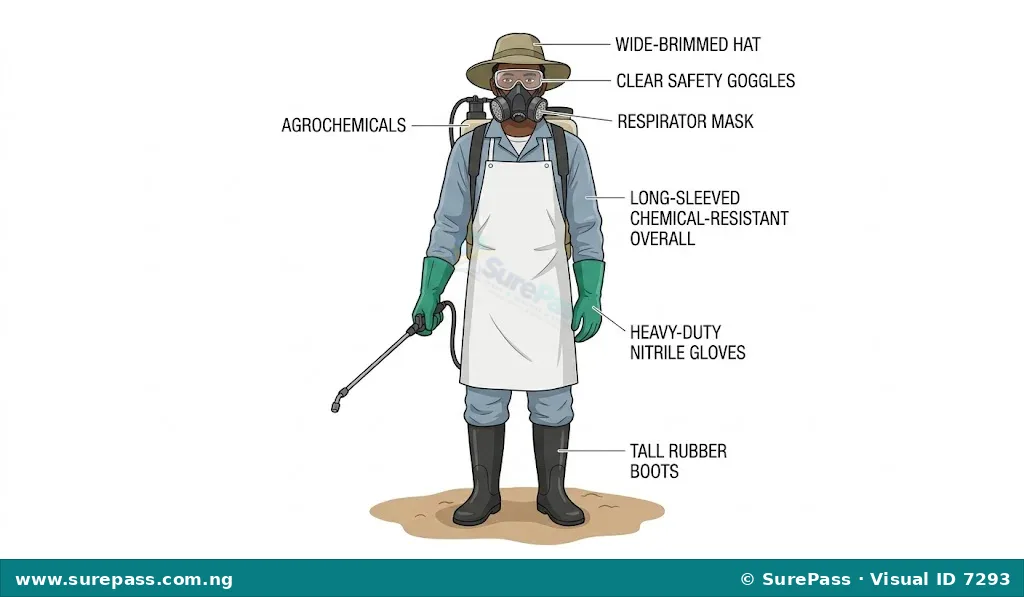
Essential personal protective equipment for handling agrochemicals includes:
- Chemical-Resistant Gloves: Heavy-duty rubber or nitrile gloves that protect the hands from direct chemical contact during mixing and spraying.
- Face Mask or Respirator: Protective gear worn over the nose and mouth to prevent the inhalation of toxic chemical fumes, dust, or fine spray droplets.
- Safety Goggles: Clear plastic eyewear that shields the eyes from accidental chemical splashes or drifting spray mist.
- Protective Overalls: Long-sleeved, water-resistant garments that cover the entire body to prevent skin absorption.
- Rubber Boots: Waterproof boots that protect the feet and lower legs from chemical spills and wet, treated foliage.
How to Handle and Apply Agrochemicals Safely
This practical guide outlines the correct procedures for preparing, applying, and cleaning up after using agricultural chemicals to ensure maximum safety for the operator and the environment.
The procedure for safe handling and application of agrochemicals involves the following steps:
- Read the manufacturer’s instructions on the label carefully before opening the container to determine the correct dosage and safety requirements.
- Put on the complete set of Personal Protective Equipment (PPE), including gloves, goggles, mask, overalls, and rubber boots.
- Inspect the application equipment, such as a knapsack sprayer, for leaks, damaged hoses, or blocked nozzles using clean water before adding any chemical.
- Measure and mix the chemical in a well-ventilated outdoor area, using dedicated measuring cylinders or cups. Never use bare hands or domestic utensils to stir the mixture.
- Pour the mixed chemical carefully into the sprayer tank, using a funnel with a strainer to prevent spills and blockages.
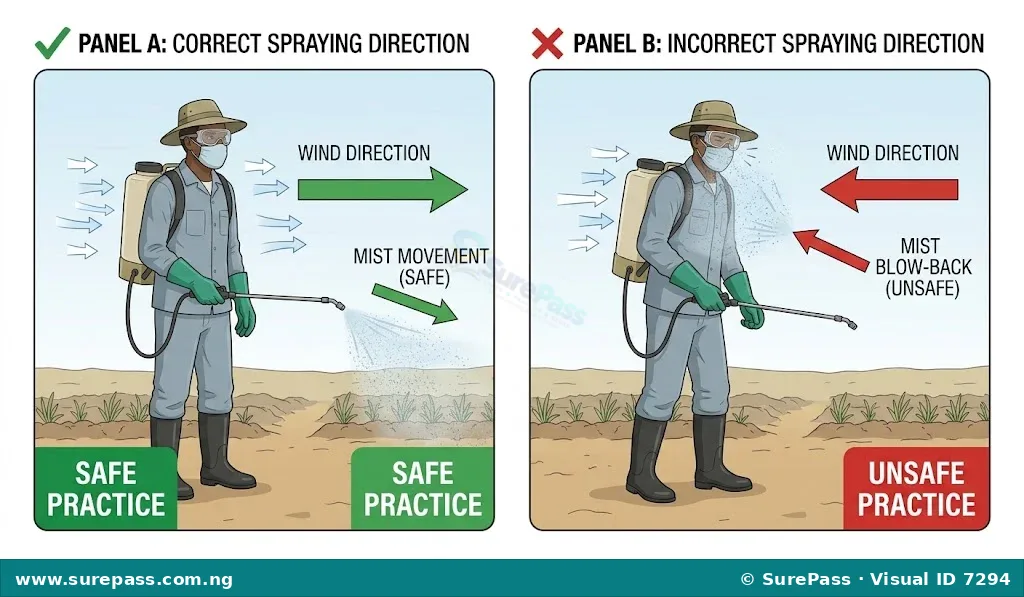
- Spray the chemical during calm weather, preferably in the early morning or late afternoon when wind speeds are low and temperatures are cool.
- Walk in the direction of the wind (with the wind blowing from behind or to the side) to prevent the chemical mist from drifting onto the face and body.
- Stop spraying immediately if the nozzle becomes blocked. Do not blow into the nozzle with the mouth; use a soft wire or brush to clear the blockage while wearing gloves.
- Wash the spraying equipment thoroughly with clean water in a designated area away from domestic water sources, streams, or ponds.
- Remove the PPE carefully, wash the protective gear, and wash hands, face, and body thoroughly with soap and clean water before eating, drinking, or resting.
Safe Storage and Disposal of Agrochemicals
Proper storage and disposal prevent accidental poisoning of children, livestock, and wildlife, and protect water bodies from chemical contamination.
Safe Storage Practices
Agrochemicals must be stored in a secure, dedicated location. This prevents accidental exposure and maintains the chemical stability of the products.
Important storage guidelines include:
- Keep all chemicals in their original containers with the labels intact. Never decant chemicals into food or beverage bottles.
- Store chemicals in a locked cabinet or dedicated store room that is dry, cool, well-ventilated, and completely out of reach of children and farm animals.
- Keep agrochemicals away from food items, animal feed, seeds, and domestic water sources to prevent cross-contamination.
Safe Disposal of Empty Containers
Empty agrochemical containers retain toxic residues and must never be repurposed for domestic use, especially for storing water or food.
Safe methods for disposing of empty agrochemical containers include:
- Triple Rinsing: Rinse the empty container with clean water three times, pouring the rinse-water back into the sprayer tank during the mixing process.
- Puncturing and Crushing: Punch holes in plastic or metal containers and crush them flat to ensure they cannot be reused for any other purpose.
- Burying: Bury the crushed containers in a deep pit located far away from water sources, residential areas, and water tables.
- Authorized Collection: Return empty containers to designated agrochemical collection centers or disposal facilities where available.
Summary of Farm Safety Rules
Adhering to a set of core safety rules minimizes the risks associated with agrochemical use on the farm.
Key farm safety rules for agrochemical management include:
- Never eat, drink, smoke, or chew gum while handling or applying agrochemicals.
- Do not spray chemicals near open water sources, streams, or domestic wells.
- Never use the mouth to blow out blocked sprayer nozzles or siphon liquid chemicals.
- Avoid spraying during rainy weather to prevent the chemical from being washed into the soil and nearby water bodies (chemical runoff).
- Keep a first aid kit nearby and know the emergency contact numbers for medical assistance.




0 comments
Open the discussion when you need it. Comments stay collapsed until requested so the initial article remains light.