



ARTICLE CONTENTSOn this page 9 sections
Basic Agricultural Practices
Performance Objectives
By the end of the lesson, students should be able to:
- prepare land for agricultural purposes;
- sow seeds;
- identify various animal husbandry practices;
- apply appropriate animal husbandry practices;
- identify irrigation methods;
- apply appropriate irrigation methods;
- identify agricultural pests;
- apply pest control strategies.
Introduction to Basic Agricultural Practices
Agriculture is the science and art of cultivating plants and livestock. It is a fundamental activity that provides food, fibre, and other essential products for human survival. To achieve successful agricultural production, certain basic practices must be followed. These practices ensure that crops grow well and animals are healthy and productive.
Basic agricultural practices include preparing the land, planting seeds, caring for animals, providing water, and protecting crops and animals from pests. Understanding these practices is crucial for anyone involved in farming, whether on a small scale or a large commercial farm.
Land Preparation
Land preparation refers to all the activities carried out on the farm land before planting. These activities aim to create a suitable environment for seeds to germinate and for crops to grow vigorously.
Importance of Land Preparation
Proper land preparation is important for several reasons:
- It removes weeds and unwanted vegetation that compete with crops for nutrients, water, and sunlight.
- It loosens the soil, making it easier for roots to penetrate and for water and air to circulate.
- It incorporates organic matter and fertilisers into the soil, improving its fertility.
- It creates a fine seedbed, which is essential for good seed-to-soil contact and uniform germination.
- It helps to control some soil-borne pests and diseases by exposing them to the sun.
Methods of Land Preparation
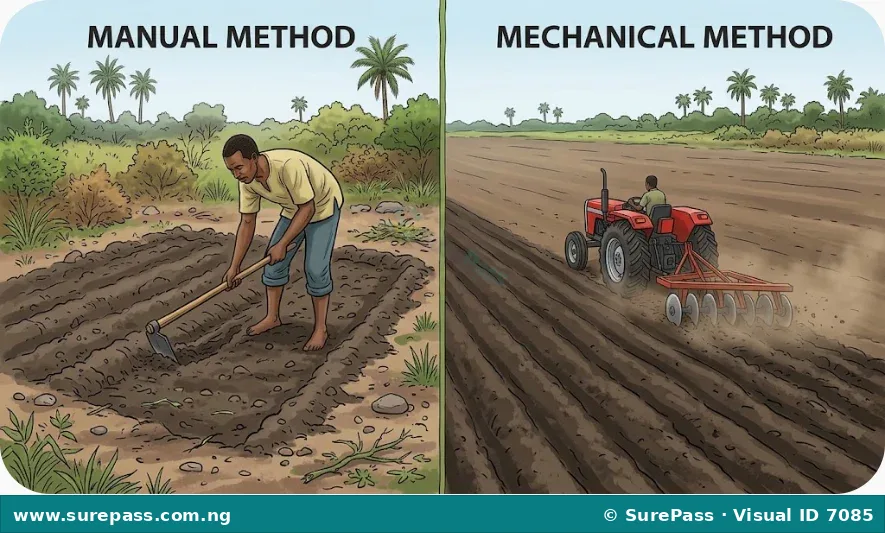
Land preparation can be done manually or mechanically, depending on the size of the farm and available resources.
-
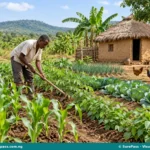
Manual Method: This involves using simple hand tools. It is common for small-scale farming.
Tools used in the manual method include:
- Cutlass: Used for clearing bushes and cutting down small trees.
- Hoe: Used for digging, tilling the soil, and making ridges or mounds.
- Rake: Used for levelling the soil and gathering debris.
-
Mechanical Method: This involves using machines, typically tractors with various implements. It is suitable for large-scale farming.
Implements used in the mechanical method include:
- Plough: Used for primary tillage, turning over the soil to bury weeds and crop residues.
- Harrow: Used for secondary tillage, breaking up soil clods and levelling the seedbed after ploughing.
- Ridger: Used for making ridges for planting.
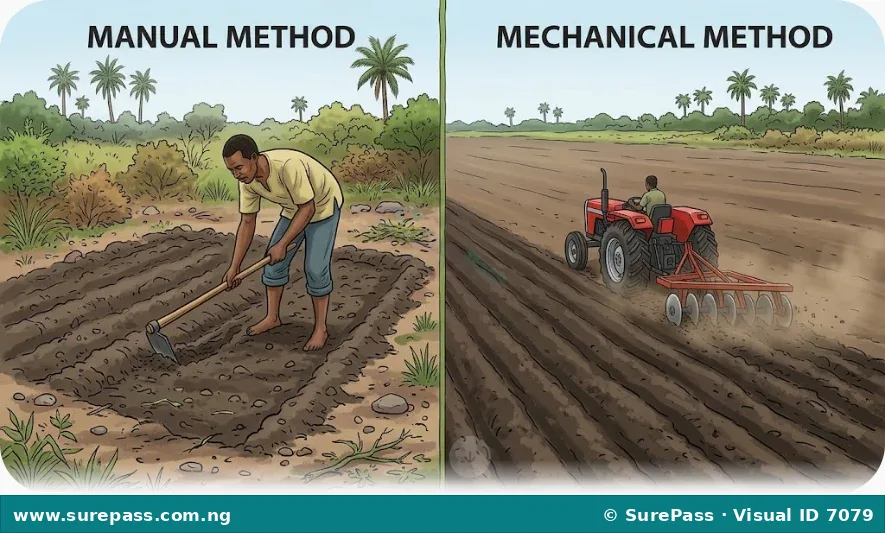
How to Prepare Land for Agricultural Purposes (Manual Method)
The procedure for preparing land manually involves the following steps:
- Bush Clearing: Remove all unwanted vegetation, including bushes, grasses, and small trees, using a cutlass. Gather and dispose of the cleared vegetation by burning or composting.
- Stumping: Remove tree stumps and roots from the cleared land to prevent regrowth and to allow for easy cultivation.
- Tillage: Break up the soil using a hoe to loosen it. This can involve digging and turning over the soil to a depth of about 15-30 cm.
- Harrowing/Levelling: Break down large soil clods into finer particles using a hoe or rake. Level the land to create a uniform surface for planting.
- Ridging/Mounding (if required): For some crops like yam or cassava, create ridges or mounds using a hoe. Ridges are raised rows of soil, while mounds are individual raised heaps.
Sowing and Planting
Sowing and planting are crucial steps in crop production, involving placing seeds or seedlings into the prepared soil to grow.
Meaning of Sowing and Planting
Sowing is the process of placing seeds directly into the soil. Planting is the process of placing seedlings or other plant parts (like cuttings or tubers) into the soil.
Methods of Sowing and Planting
There are several methods used for sowing seeds and planting seedlings:
-
Broadcasting: This involves scattering seeds randomly over the prepared land. It is a quick method but often results in uneven spacing and germination. It is suitable for crops like rice and some pasture grasses.
-
Drilling: Seeds are dropped in continuous rows at a uniform depth and spacing using a seed drill or by hand. This method allows for better spacing and easier weeding. It is suitable for crops like maize, beans, and groundnuts.
-
Dibbling: This involves making small holes in the soil at specific intervals and placing one or two seeds in each hole. It ensures precise spacing and seed depth. It is commonly used for larger seeds like maize, cowpea, and melon.
-
Transplanting: Seeds are first sown in a nursery bed or trays, and the young seedlings are later moved and planted in the main field. This method allows for better care of young plants and selection of healthy seedlings. It is common for crops like tomatoes, peppers, cabbage, and rice.
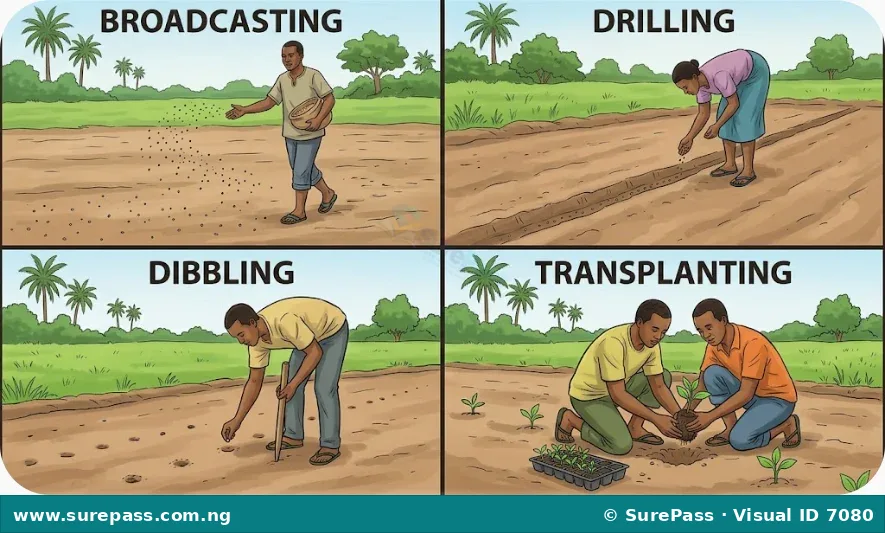
How to Sow Seeds (Dibbling Method)
The procedure for sowing seeds using the dibbling method involves the following steps:
- Prepare the Seedbed: Ensure the land is well-prepared, cleared, and levelled.
- Mark Spacing: Use a string and pegs to mark straight rows and desired spacing between plants within the rows.
- Make Holes: Use a dibbler (a pointed stick or tool) to make small holes in the soil at the marked spots. The depth of the hole should be appropriate for the seed size (usually 2-3 times the seed diameter).
- Place Seeds: Place one or two seeds carefully into each hole.
- Cover Seeds: Gently cover the seeds with loose soil and lightly press down to ensure good seed-to-soil contact.
- Water: Lightly water the sown area to provide moisture for germination.
Animal Husbandry
Animal husbandry is the branch of agriculture concerned with the care, breeding, and management of farm animals. It involves raising animals for various purposes, including meat, milk, eggs, wool, and labour.
Practices in Animal Husbandry
Various practices are involved in successful animal husbandry:
-
Raising Animals: This involves providing suitable housing, feeding, and general care for animals from birth to maturity.
Key aspects of raising animals include:
- Housing: Providing shelter that protects animals from harsh weather, predators, and diseases. Examples include pens for pigs, coops for chickens, and kraals for cattle.
- Feeding: Supplying balanced diets that meet the nutritional needs of the animals for growth, production, and reproduction. This includes providing adequate feed and clean water.
- Health Management: Regular vaccination, deworming, and prompt treatment of sick animals to prevent the spread of diseases.
-
Breeding Animals: This involves selecting suitable male and female animals for mating to produce offspring with desired characteristics, such as high milk yield, fast growth rate, or disease resistance.
Breeding practices include:
- Selection: Choosing healthy and productive animals for breeding.
- Mating: Allowing selected male and female animals to reproduce naturally or through artificial insemination.
-
Managing Domestic Animals: This involves the day-to-day supervision and organisation of farm animals to ensure their well-being and productivity.
Management practices include:
- Record Keeping: Maintaining records of births, deaths, feed consumption, production (e.g., milk, eggs), and health treatments.
- Hygiene: Regular cleaning of animal shelters and equipment to prevent disease outbreaks.
- Waste Management: Proper disposal of animal waste to maintain a clean environment and prevent pollution.
-
Production of Animal Products: This focuses on obtaining and processing products from farm animals.
Examples of animal products include:
- Meat: From cattle, goats, sheep, pigs, and poultry.
- Milk: From cattle, goats, and sheep.
- Eggs: From poultry, especially chickens and ducks.
- Wool/Hides: From sheep and cattle.
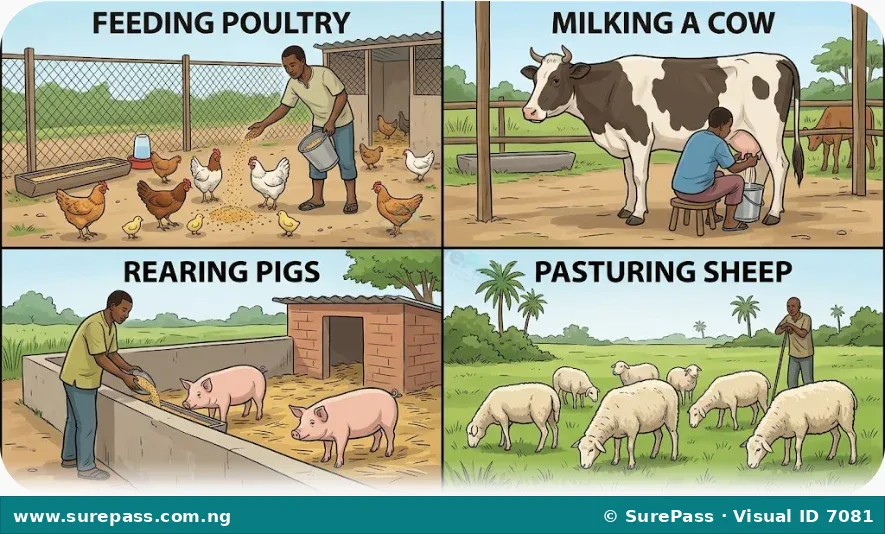
Applying Appropriate Animal Husbandry Practices
Applying appropriate animal husbandry practices means choosing and implementing the right methods for the specific animals being raised. For example, for poultry, providing a well-ventilated coop, balanced feed, and regular vaccinations are crucial. For cattle, ensuring access to pasture, supplementary feed, clean water, and routine veterinary checks are important. Proper application of these practices leads to healthy animals and high productivity.
Irrigation Methods
Irrigation is the artificial application of water to land to assist in the production of crops. It is essential in areas where rainfall is insufficient or irregular, ensuring that plants receive adequate moisture for growth.
Importance of Irrigation
Irrigation is important for:
- Ensuring consistent water supply for crops, especially during dry seasons.
- Increasing crop yields and quality.
- Allowing cultivation of crops in arid or semi-arid regions.
- Protecting crops from frost by maintaining soil moisture.
Types of Irrigation Methods
Various methods are used to irrigate crops, each with its advantages and disadvantages:
-
Sprinkler Irrigation: This method involves applying water through a system of pipes and sprinklers that spray water into the air, mimicking rainfall. Water is distributed over the crop canopy and soil surface.
It is suitable for most crops and uneven terrains. It can be efficient in water use if managed properly.
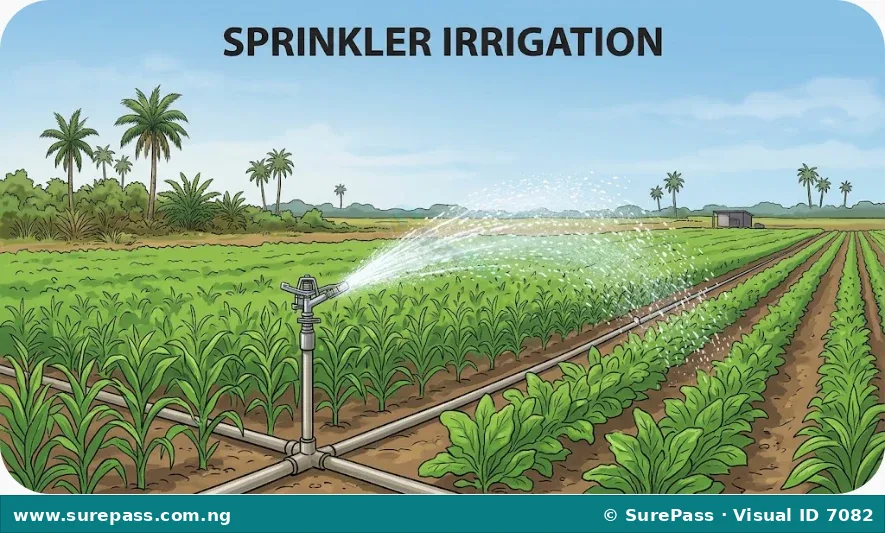
Sprinkler irrigation method. -
Surface Irrigation: In this method, water flows over the surface of the land by gravity to wet the soil. It is one of the oldest and most common methods.
Common types of surface irrigation include:
- Furrow Irrigation: Water is applied in small channels (furrows) between crop rows. It is suitable for row crops like maize, potatoes, and vegetables.
- Basin Irrigation: The land is divided into small, level plots (basins) surrounded by bunds (small earth walls). Water is flooded into these basins and allowed to soak into the soil. It is suitable for crops like rice and orchards.
Surface irrigation is generally less efficient in water use compared to other methods due to evaporation and runoff, but it is often less expensive to set up.
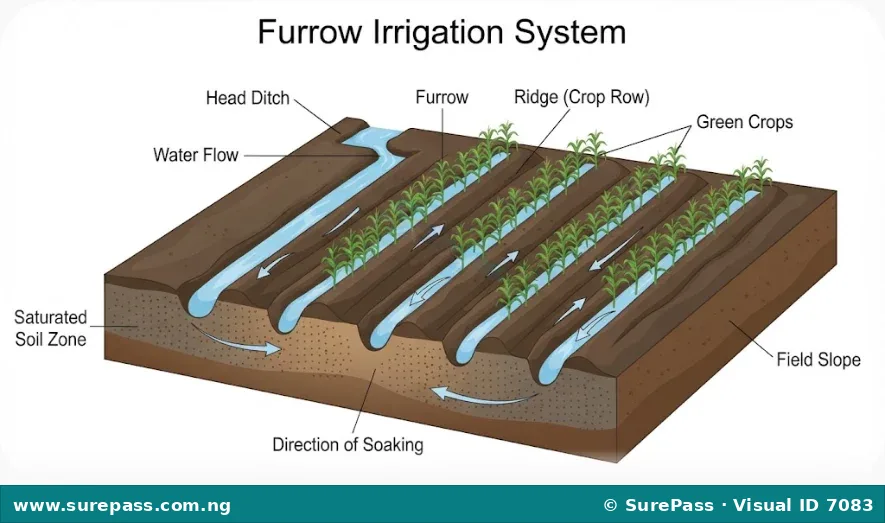
Surface irrigation (furrow method). -
Drip Irrigation: Also known as trickle irrigation, this method involves applying water slowly and directly to the root zone of plants using a network of pipes, emitters, and drippers. Water drips out slowly, minimising evaporation and runoff.
Drip irrigation is highly efficient in water use and reduces weed growth because only the plant’s root zone is watered. It is suitable for a wide range of crops, especially high-value crops and in areas with scarce water resources.
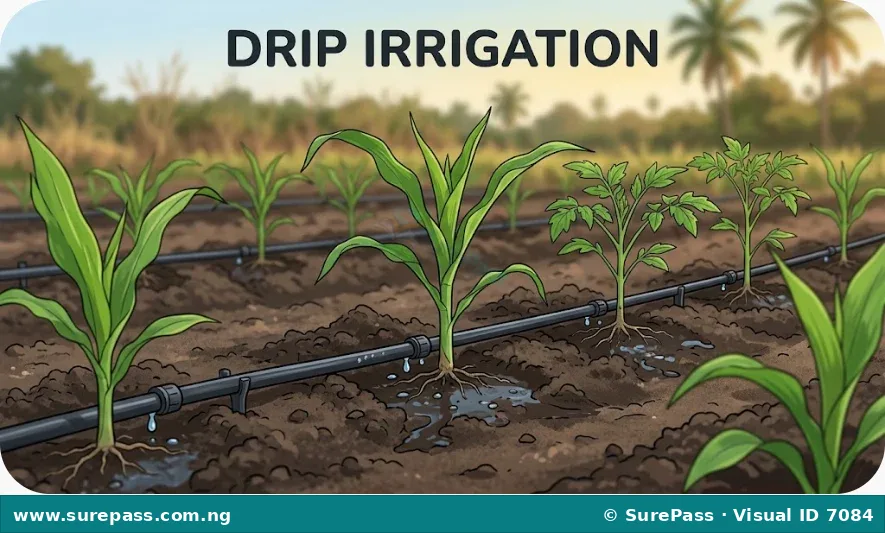
Drip irrigation method.
Applying Appropriate Irrigation Methods
The choice of irrigation method depends on factors such as the type of crop, soil type, water availability, topography of the land, and cost. For example, drip irrigation is excellent for water conservation and high-value crops on any terrain, while surface irrigation is simpler and cheaper for flat lands with abundant water. Sprinkler irrigation is versatile and good for many crops and varied terrains.
Agricultural Pests
Agricultural pests are organisms that cause damage to crops or livestock, leading to economic losses for farmers. They can reduce crop yields, spoil harvested products, or transmit diseases to animals.
Types of Agricultural Pests
Agricultural pests can be broadly categorised into several groups:
-
Insects: These are common pests that feed on various parts of plants or animals. Examples include:
- Grasshoppers: Eat leaves and stems of crops like maize and vegetables.
- Aphids: Suck sap from plants, causing stunted growth and transmitting plant diseases.
- Weevils: Damage stored grains like maize, rice, and beans.
-
Rodents: Mammals that gnaw on crops, stored produce, and can also transmit diseases. Examples include:
- Rats: Damage crops in the field and consume stored grains.
- Mice: Similar to rats, they infest farms and storage facilities.
-
Birds: Some bird species feed on seeds, fruits, and grains, causing significant losses. Examples include:
- Weaver birds: Consume ripening grains like rice and millet.
- Quelea birds: Known for devastating cereal crops in large flocks.
-
Weeds: Unwanted plants that grow among cultivated crops. They compete with crops for sunlight, water, nutrients, and space, reducing crop yields. Examples include:
- Spear grass (Imperata cylindrica): A persistent weed in many crops.
- Water hyacinth (Eichhornia crassipes): A major aquatic weed affecting water bodies and rice fields.
Identifying Agricultural Pests
Identifying agricultural pests involves observing the farm for signs of their presence and the damage they cause. For instance, chewed leaves indicate insect pests like grasshoppers. Holes in stored grains suggest weevils or rodents. Patches of unwanted plants growing among crops are weeds. Recognising these signs helps in choosing the right control method.
Pest Control Strategies
Pest control strategies are methods used to manage and reduce pest populations to an acceptable level, preventing them from causing significant economic damage to crops and livestock.
Types of Pest Control Strategies
Various strategies are employed to control agricultural pests:
-
Chemical Control: This involves the use of pesticides (chemicals) to kill or repel pests. Pesticides can be insecticides (for insects), herbicides (for weeds), rodenticides (for rodents), or fungicides (for fungi).
Application: Pesticides are applied by spraying, dusting, or fumigation. They are effective for quick control of large pest outbreaks.
Safety Precautions: When using chemical pesticides, it is crucial to:
- Read and follow all instructions on the product label.
- Wear protective clothing (gloves, masks, long sleeves) to avoid direct contact.
- Avoid spraying during windy conditions to prevent drift.
- Store pesticides safely, away from children and food.
- Dispose of empty containers properly.
-
Biological Control: This strategy involves using natural enemies of pests to control their populations. These natural enemies can be predators, parasites, or disease-causing microorganisms.
Application: For example, ladybirds are introduced to feed on aphids, or specific bacteria are used to infect and kill insect larvae. This method is environmentally friendly and reduces reliance on chemicals.
-
Physical Control: This involves using physical methods or barriers to prevent or remove pests.
Application: Examples include:
- Hand Picking: Manually removing large insect pests or weeds from plants.
- Trapping: Using traps to catch rodents or insects.
- Netting: Covering crops with nets to protect them from birds or large insects.
- Cultural Practices: Methods like crop rotation (planting different crops in sequence to break pest cycles), timely weeding, and proper sanitation (removing crop residues that harbour pests).
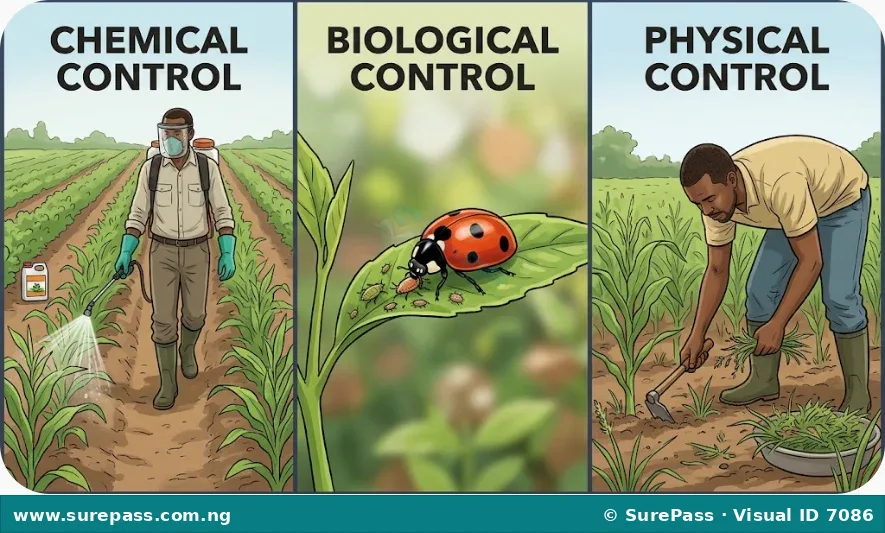
Different strategies for pest control.
Applying Pest Control Strategies
Applying pest control strategies effectively requires identifying the pest, understanding its life cycle, and choosing the most appropriate method or combination of methods. For instance, for a small weed infestation, hand-weeding (physical control) might be sufficient. For a widespread insect outbreak, chemical control might be necessary, followed by biological or cultural methods to prevent future infestations. Integrated Pest Management (IPM) combines various strategies for sustainable pest control.




0 comments
Open the discussion when you need it. Comments stay collapsed until requested so the initial article remains light.