



ARTICLE CONTENTSOn this page 4 sections
Forms of Farming, Features, Advantages and Disadvantages for SS 1
Performance Objectives
By the end of the lesson, students should be able to:
- explain farming;
- explain different forms of farming;
- discuss the advantages and disadvantages of forms of farming.
Meaning of Farming
Farming is the practice of cultivating the soil, growing crops, and raising livestock for food, fibre, and other products.
It involves a range of activities from preparing the land to harvesting crops and caring for animals. Farming is essential for providing the food that people eat and the raw materials used in many industries.
Forms of Farming
Farming practices vary widely depending on factors such as the scale of operation, the types of crops grown, the animals raised, and the purpose of production. The main forms of farming include subsistence farming, commercial farming, mixed farming, and arable farming.
Subsistence Farming
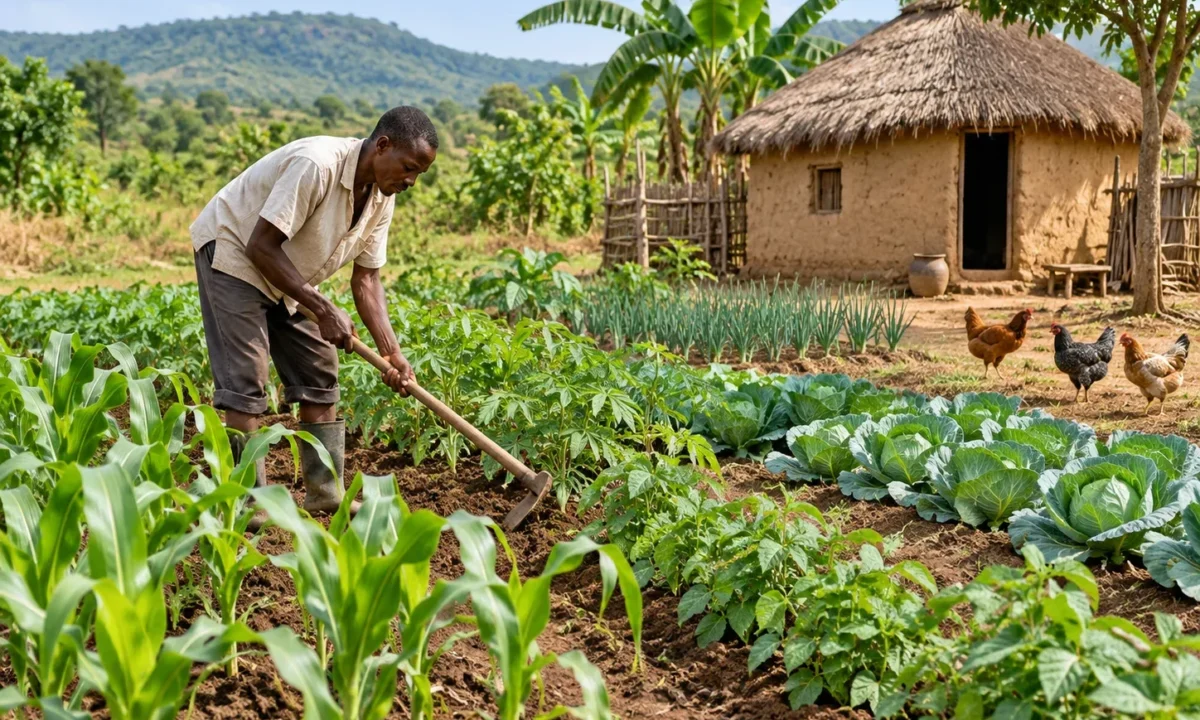
Subsistence farming is a form of agriculture where farmers grow crops and raise animals primarily to meet the food needs of their own families.
The produce is mainly for consumption by the farmer and their household, with little or no surplus left to sell in the market. This type of farming is common in rural areas, especially in developing countries, where farmers rely directly on their land for survival. Tools used are often simple, and traditional methods are common.
Advantages of Subsistence Farming
The advantages of subsistence farming include:
- Food Security for the Family: It ensures that the farmer’s family has a direct and reliable source of food, reducing dependence on external markets.
- Low Capital Investment: It typically requires minimal money for tools, seeds, and other inputs, making it accessible to farmers with limited financial resources.
- Environmental Sustainability: Traditional methods often involve less use of chemical fertilisers and pesticides, which can be better for the environment.
- Preservation of Traditional Knowledge: It helps in passing down traditional farming techniques and crop varieties from one generation to another.
- Reduced Risk of Market Fluctuations: Farmers are less affected by changes in market prices for crops, as they are not primarily selling their produce.
Disadvantages of Subsistence Farming
The disadvantages of subsistence farming include:
- Low Yields: Production is often low due to limited technology, poor soil fertility, and lack of modern farming practices, which can lead to food shortages.
- Vulnerability to Weather: Farmers are highly dependent on rainfall and favourable weather conditions, making them very vulnerable to droughts or floods.
- Limited Income: Since most produce is consumed by the family, there is little or no surplus to sell, resulting in very low or no income for the farmer.
- Lack of Modern Technology: Farmers often lack access to improved seeds, machinery, and irrigation systems, which limits their productivity.
- Hard Labour: It often involves significant manual labour, which can be physically demanding and time-consuming.
Commercial Farming
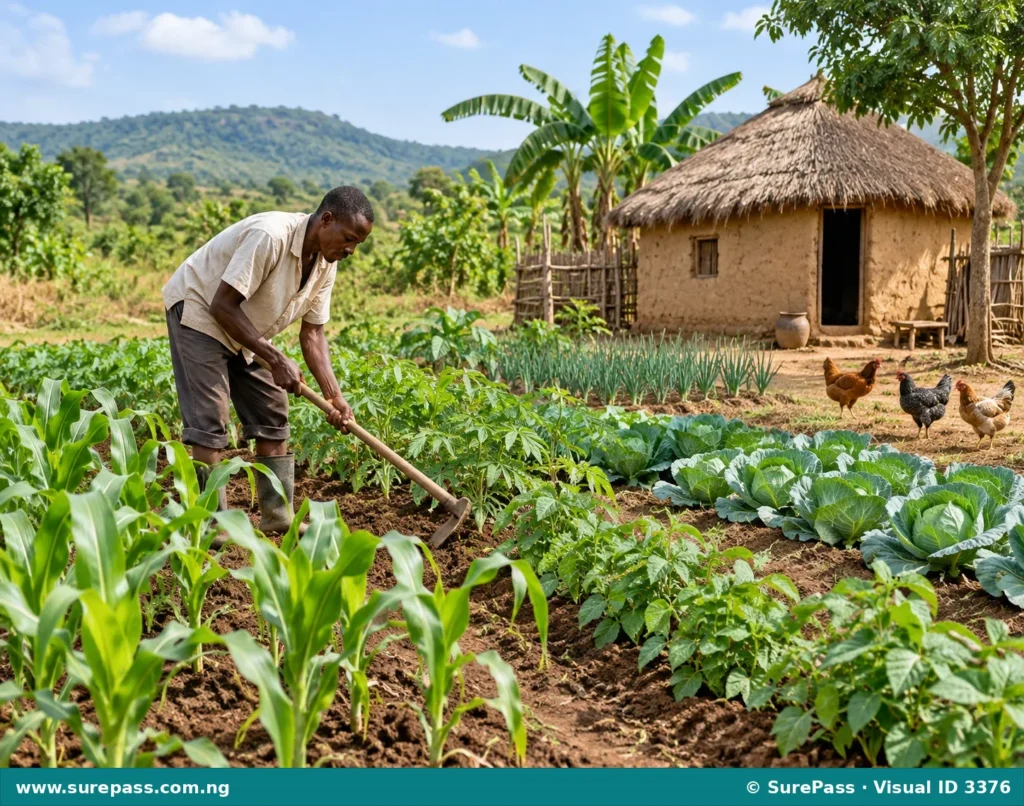
Commercial farming is a large-scale agricultural practice where crops and livestock are produced primarily for sale in the market to generate profit.
This form of farming often involves modern machinery, advanced technology, improved seeds, and scientific methods to maximise production. Commercial farms can specialise in a single crop or livestock type, or produce a variety of products for sale both locally and internationally.
Advantages of Commercial Farming
The advantages of commercial farming include:
- High Yields and Production: It uses modern technology, improved seeds, and scientific methods to produce large quantities of crops and livestock.
- Higher Income for Farmers: Selling large volumes of produce in the market generates significant income and profit for farmers.
- Economic Growth: Commercial farming contributes to the national economy through exports, job creation, and providing raw materials for industries.
- Food Security for the Nation: It ensures a steady supply of food for the general population, reducing the need for food imports.
- Technological Advancement: It encourages research and development in agriculture, leading to innovations in farming techniques and equipment.
Disadvantages of Commercial Farming
The disadvantages of commercial farming include:
- High Capital Investment: It requires significant money for land, machinery, improved seeds, fertilisers, and labour, making it inaccessible to small farmers.
- Environmental Impact: Extensive use of chemical fertilisers, pesticides, and large-scale land clearing can lead to soil degradation, water pollution, and loss of biodiversity.
- Market Price Fluctuations: Farmers are highly dependent on market prices, and a drop in prices can lead to significant financial losses.
- Risk of Monoculture: Specialising in a single crop (monoculture) can deplete soil nutrients and make the farm more vulnerable to pests and diseases.
- Dependence on External Inputs: Farmers often rely on external suppliers for seeds, fertilisers, and machinery, which can be costly and sometimes unavailable.
Mixed Farming
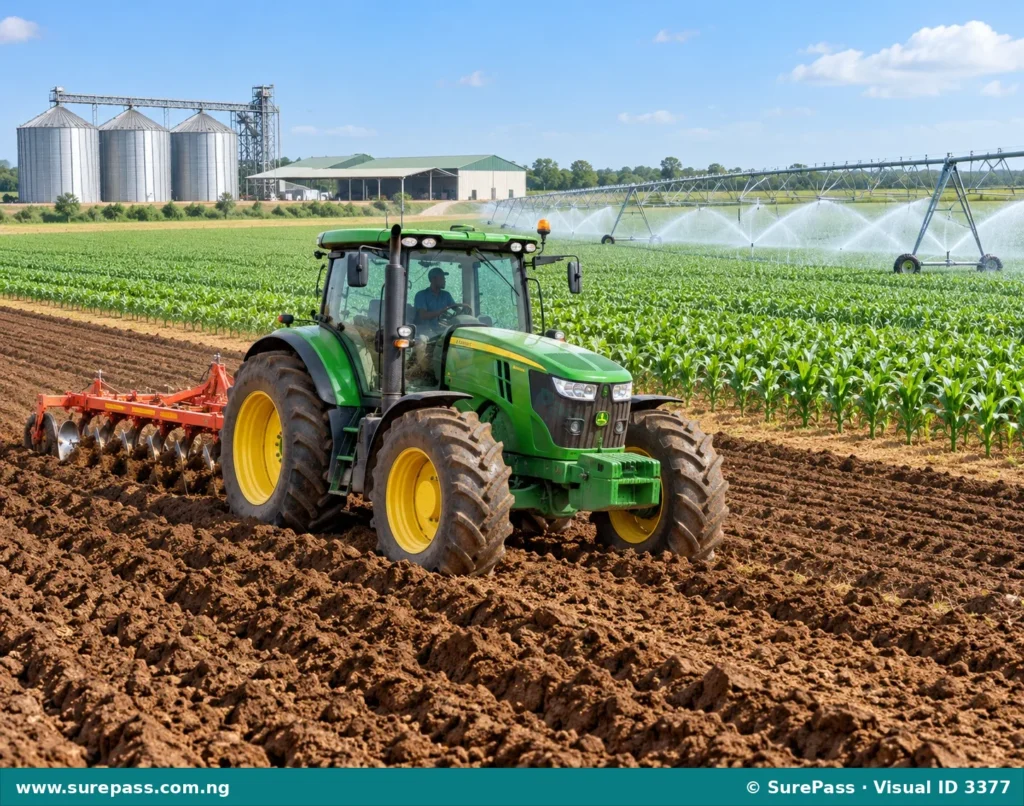
Mixed farming is an agricultural system where a farmer combines both crop cultivation and livestock rearing on the same farm.
This approach allows farmers to diversify their production and often creates a symbiotic relationship between the crops and animals. For example, animal manure can be used to fertilise crops, and crop residues can be fed to livestock.
Advantages of Mixed Farming
The advantages of mixed farming include:
- Risk Diversification: If one enterprise (crops or livestock) fails due to disease or market fluctuations, the other can still provide income or food, reducing overall risk.
- Efficient Resource Utilisation: Animal waste can be used as organic fertiliser for crops, reducing the need for chemical fertilisers. Crop residues can also be used as animal feed.
- Increased Income Streams: Farmers have multiple sources of income from both crop sales and livestock products (meat, milk, eggs), making their income more stable.
- Improved Soil Fertility: The integration of livestock helps in maintaining and improving soil fertility through the application of manure.
- Reduced Pest and Disease Problems: Crop rotation and the presence of different enterprises can help break pest and disease cycles.
Disadvantages of Mixed Farming
The disadvantages of mixed farming include:
- Requires Diverse Knowledge: Farmers need to have knowledge and skills in both crop production and animal husbandry, which can be challenging.
- Higher Labour Requirements: Managing both crops and livestock can be more labour-intensive than specialising in just one.
- Increased Capital Investment: It may require investment in equipment and facilities for both crop cultivation and animal rearing.
- Potential for Conflict: There can be conflicts between crop and livestock needs, such as animals damaging crops if not properly managed.
- Disease Transmission: Diseases can potentially spread between animals and crops, or from animals to humans, if proper hygiene and management are not maintained.
Arable Farming
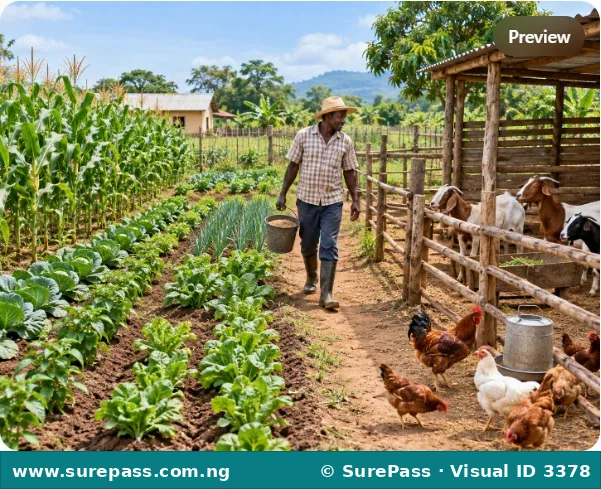
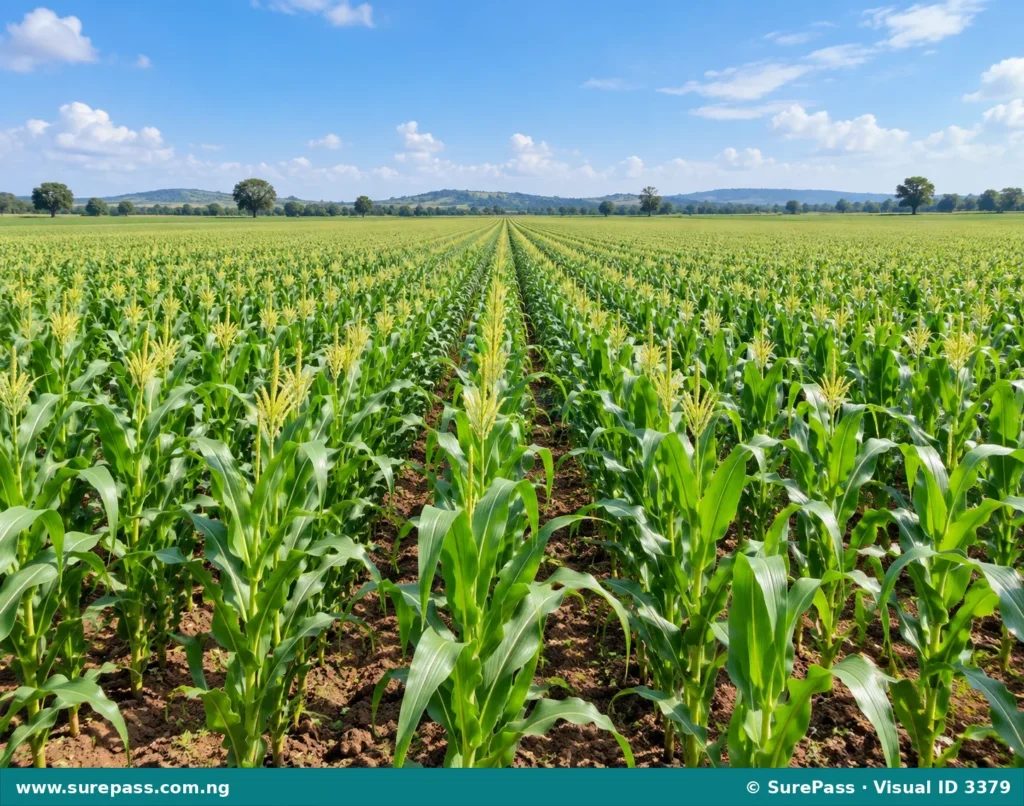
Arable farming is a type of agriculture that focuses exclusively on the cultivation of crops, typically grains, vegetables, and fruits, without involving the rearing of livestock.
The term “arable” refers to land that is suitable for growing crops. Farmers in arable farming systems concentrate all their efforts on optimising crop production, often using mechanisation and modern techniques to achieve high yields.
Advantages of Arable Farming
The advantages of arable farming include:
- Specialisation and Efficiency: Farmers can focus entirely on crop production, developing expertise and using specialised machinery to maximise efficiency and yields.
- Lower Labour Requirements: Compared to mixed farming, arable farming can be less labour-intensive, especially with mechanisation, as there are no animals to care for daily.
- Easier Management: Managing only crops can be simpler than managing both crops and livestock, allowing for more focused planning and operations.
- High Market Value Crops: Arable farms can specialise in high-value crops that generate significant income.
- Reduced Risk of Animal Diseases: Without livestock, there is no risk of animal diseases affecting the farm or requiring veterinary care.
Disadvantages of Arable Farming
The disadvantages of arable farming include:
- Dependence on Crop Prices: Income is solely dependent on the prices of crops, making farmers vulnerable to market fluctuations.
- Soil Degradation: Continuous cultivation of crops without livestock integration can lead to faster depletion of soil nutrients and organic matter if not properly managed.
- Increased Need for Chemical Fertilisers: Without animal manure, farmers may rely more heavily on chemical fertilisers to maintain soil fertility.
- Vulnerability to Crop Pests and Diseases: Specialising in crops can make the farm more susceptible to widespread damage from specific pests and diseases.
- Limited Income Streams: Farmers have only one source of income (crop sales), which can be risky if a crop fails or market prices drop.




0 comments
Open the discussion when you need it. Comments stay collapsed until requested so the initial article remains light.