




ARTICLE CONTENTSOn this page 6 sections
Agricultural Value Chain
Performance Objectives
By the end of the lesson, students should be able to:
- explain the meaning of agricultural value chain;
- define value addition in agriculture;
- outline importance of agricultural value chain to farmers and economy;
- process agricultural products.
Meaning of Agricultural Value Chain
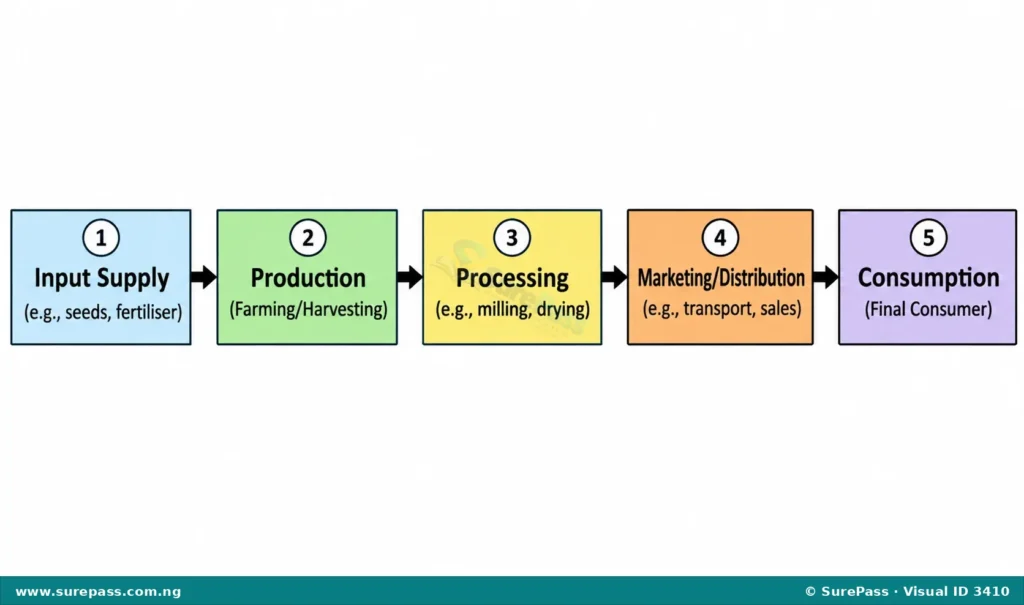
An agricultural value chain is the full range of activities and services required to bring an agricultural product from the farm to the final consumer.
It includes all the steps involved in producing, processing, distributing, and selling agricultural goods. This chain connects farmers, processors, transporters, marketers, and consumers, ensuring that products move efficiently through different stages.
The agricultural value chain begins with the supply of inputs needed for farming, such as seeds, fertilisers, and tools. It then moves through the actual farming process, harvesting, storage, processing, packaging, transportation, and finally, sale to consumers.

Value Addition in Agriculture
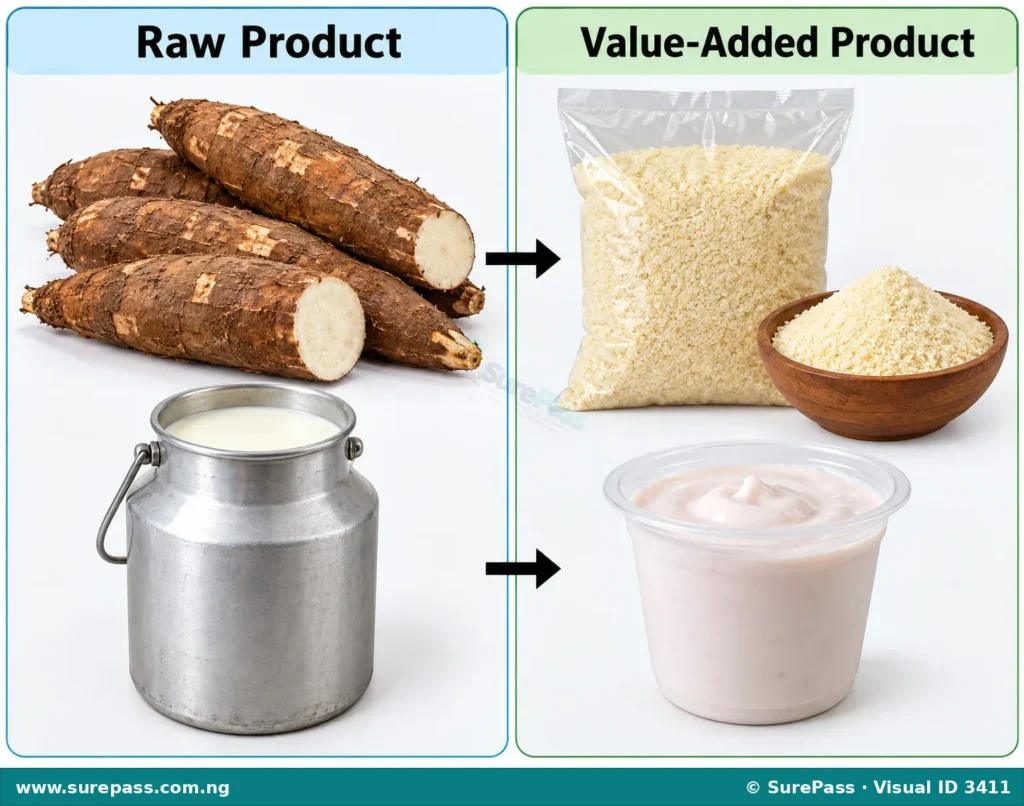
Value addition in agriculture refers to the process of enhancing the value of raw agricultural products through various activities such as processing, packaging, branding, or other modifications.
This process transforms raw farm produce into more desirable, marketable, and often higher-priced products. Value addition can occur at different stages of the value chain, from the farm gate to the final retail point.
Examples of value addition include:
- Processing fresh cassava roots into garri, fufu, or cassava flour.
- Converting fresh cow milk into yoghurt, cheese, or butter.
- Drying fresh tomatoes into tomato paste or powder.
- Milling maize into maize flour.
- Packaging fresh fruits and vegetables into attractive, ready-to-eat packs.
- Smoking or drying fish to preserve it and extend its shelf life.
These activities increase the product’s shelf life, improve its quality, make it easier to transport, and meet specific consumer demands, thereby increasing its market value.
Importance of Agricultural Value Chain
The agricultural value chain is crucial for both farmers and the overall economy. It creates a structured system that benefits all participants.
Importance to Farmers
The agricultural value chain offers several benefits to farmers:
- Increased Income: By participating in value addition, farmers can sell processed or packaged products at higher prices than raw produce, leading to increased profits.
- Reduced Post-Harvest Losses: Processing helps to preserve perishable goods, reducing spoilage and waste that often occur after harvest.
- Improved Market Access: Value-added products often have a wider market reach, including urban centres and export markets, which might not be accessible for raw produce.
- Enhanced Product Quality: Processing can improve the quality, safety, and appeal of products, making them more attractive to consumers.
- Diversification of Products: Farmers can create a variety of products from a single raw material, offering more choices to consumers and reducing reliance on a single product.
- Empowerment: Farmers gain more control over their produce and can negotiate better prices when they are involved in processing and marketing.
Importance to the Economy
The agricultural value chain also plays a significant role in national economic development:
- Job Creation: Each stage of the value chain, from input supply to processing, transportation, and marketing, creates numerous employment opportunities for people.
- Food Security: Efficient value chains ensure that food products are consistently available to consumers, contributing to national food security.
- Economic Growth: Increased agricultural production and value addition contribute to the Gross Domestic Product (GDP) of the country.
- Foreign Exchange Earnings: Exporting value-added agricultural products can generate significant foreign exchange for the country.
- Industrial Development: The demand for processing equipment, packaging materials, and transportation services stimulates growth in other industrial sectors.
- Rural Development: Investments in agricultural value chains often lead to improved infrastructure and services in rural areas, enhancing the quality of life for rural communities.
Processing Agricultural Products for Value Addition: Cassava to Garri
Processing cassava into garri is a common and important value addition activity in Nigeria. Garri is a staple food made from fermented and roasted cassava tubers. This process extends the shelf life of cassava and makes it easier to store and transport.
Materials and Equipment Required
The required materials and equipment are:
- Fresh cassava tubers
- Water
- Grater (manual or mechanical)
- Pressing machine or heavy stones (for dewatering)
- Sieving machine or sieve (for separating fine garri from coarse particles)
- Large frying pan (garri roaster)
- Firewood or gas burner
- Large bowls or basins
- Bags (for fermentation and storage)
- Peeling knife
Procedure for Processing Cassava into Garri
The procedure involves the following steps:
- Harvesting and Peeling: Harvest fresh cassava tubers from the farm. Use a peeling knife to carefully remove the outer brown skin and the inner pinkish layer of the cassava tubers. Ensure all dirt and unwanted parts are removed.
- Washing: Wash the peeled cassava tubers thoroughly with clean water to remove any remaining dirt or impurities.
- Grating: Grate the washed cassava tubers into a fine mash using a manual grater or a mechanical grater. The finer the mash, the smoother the garri will be.
- Fermentation and Dewatering: Pack the grated cassava mash into strong, porous bags. Place these bags under a heavy press or stack heavy stones on them. This process removes excess water and allows the cassava to ferment for 2-3 days. Fermentation gives garri its characteristic sour taste and helps to detoxify the cassava.
- Sieving: After dewatering and fermentation, break up the pressed cassava cake. Pass the fermented mash through a sieve to remove any lumps, fibres, or coarse particles, leaving behind fine, granular cassava flour.
- Frying (Roasting): Heat a large, dry frying pan (garri roaster) over a fire or gas burner. Add a small amount of the sieved cassava flour to the hot pan. Stir continuously with a wooden paddle to prevent burning and ensure even roasting. The heat dries the garri further and gives it a crunchy texture. Continue frying until the garri granules are dry, light, and crispy.
- Cooling and Packaging: Remove the roasted garri from the pan and spread it out to cool completely. Once cooled, package the garri in clean, dry bags or containers for storage and sale.




0 comments
Open the discussion when you need it. Comments stay collapsed until requested so the initial article remains light.