



ARTICLE CONTENTSOn this page 7 sections
Soil Conservation
Performance Objectives
By the end of the lesson, students should be able to:
- explain the meaning of Soil conservation;
- discuss the importance of soil conservation;
- identify methods of soil conservation;
- discuss the causes of soil degradation.
Meaning of Soil Conservation
Soil conservation refers to the practices and techniques used to protect soil from degradation and loss, maintaining its fertility and productivity for sustainable use.
It involves managing the soil to prevent erosion, nutrient depletion, and structural damage. The goal is to ensure that the soil remains healthy and productive for farming and other uses over a long period.
Importance of Soil Conservation
Soil conservation is crucial for several reasons, impacting agriculture, the environment, and human well-being.
- Maintains Soil Fertility: Conservation practices help to retain essential nutrients in the soil, which are vital for healthy plant growth and good crop yields.
- Prevents Soil Erosion: By protecting the soil surface, conservation methods reduce the loss of topsoil by wind and water, preserving the most fertile layer of the soil.
- Ensures Food Security: Healthy and productive soil is fundamental for growing food crops. Conserving soil helps to ensure a continuous supply of food for the population.
- Protects Water Quality: Reduced soil erosion means less sediment and fewer pollutants (like fertilisers and pesticides) wash into rivers and streams, improving water quality.
- Supports Biodiversity: Healthy soil provides a habitat for many organisms, including beneficial insects and microorganisms, contributing to overall ecosystem health.
- Mitigates Climate Change: Soil can store carbon, and conservation practices like cover cropping and mulching help to increase the soil’s carbon-holding capacity, reducing greenhouse gases in the atmosphere.
- Prevents Desertification: In dry regions, soil conservation helps to prevent the spread of desert-like conditions by maintaining soil structure and moisture.
Causes of Soil Degradation
Soil degradation is the decline in soil quality, leading to a reduction in its capacity to support plant growth and other ecosystem functions.
It involves the loss of soil fertility, structure, organic matter, and biological activity. Understanding the causes of soil degradation is the first step towards implementing effective conservation measures.
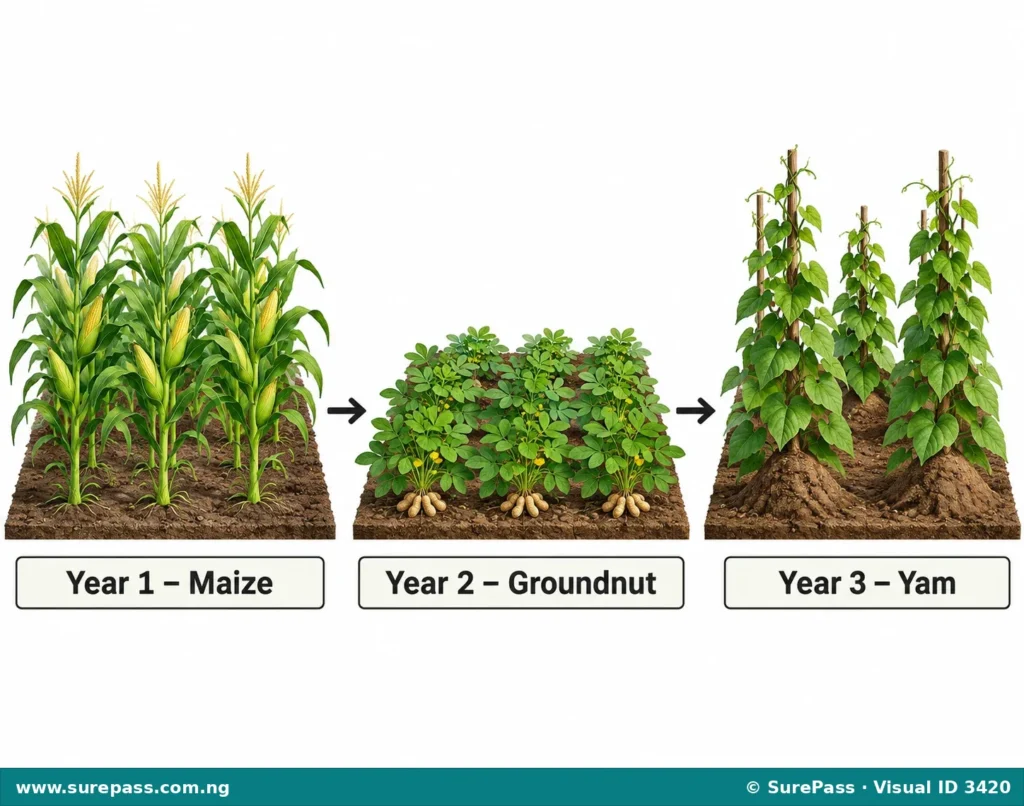
The main causes of soil degradation include:
- Erosion: This is the process by which soil particles are detached and transported by natural forces like wind and water.
- Water Erosion: Heavy rainfall and runoff can wash away topsoil, especially on bare or sloping land, forming rills and gullies.
- Wind Erosion: Strong winds can lift and carry away dry, loose soil particles, particularly in open, unprotected fields.
- Bush Burning: This involves setting fire to vegetation, often to clear land for farming or hunting.
- Loss of Organic Matter: Fire burns off organic matter in the topsoil, which is crucial for soil fertility and structure.
- Destruction of Microorganisms: High temperatures kill beneficial soil organisms that contribute to nutrient cycling.
- Exposure of Soil: Burning leaves the soil bare and unprotected, making it highly vulnerable to erosion by wind and water.
- Deforestation: This is the clearing of forests or trees from a forested area, often for agriculture, logging, or urban development.
- Loss of Soil Cover: Trees and their roots protect the soil from the direct impact of rain and wind. Removing them exposes the soil.
- Reduced Organic Matter: Forests contribute organic matter to the soil through falling leaves and decaying wood. Deforestation reduces this input.
- Increased Runoff: Without tree cover, rainwater runs off quickly, carrying away topsoil and reducing water infiltration into the ground.
Methods of Soil Conservation
Various methods are employed to conserve soil, each designed to protect the soil from degradation and maintain its health and productivity.
Effective soil conservation often involves combining several methods to suit specific land conditions and agricultural practices.
- Cover Cropping: This involves planting crops specifically to cover the soil rather than for harvest.
- Purpose: Cover crops protect the soil from the direct impact of rain and wind, reduce erosion, suppress weeds, and add organic matter and nutrients to the soil when they decompose.
- Examples: Common cover crops include legumes like mucuna (velvet bean), centrosema, and sunn hemp, which also fix nitrogen in the soil. Grasses like millet or sorghum can also be used.
- Mulching: This involves covering the soil surface with a layer of organic or inorganic materials.
- Purpose: Mulch protects the soil from erosion, reduces moisture loss through evaporation, suppresses weed growth, moderates soil temperature, and adds organic matter as it decomposes.
- Examples: Common mulching materials include dry leaves, straw, grass clippings, wood chips, and crop residues.
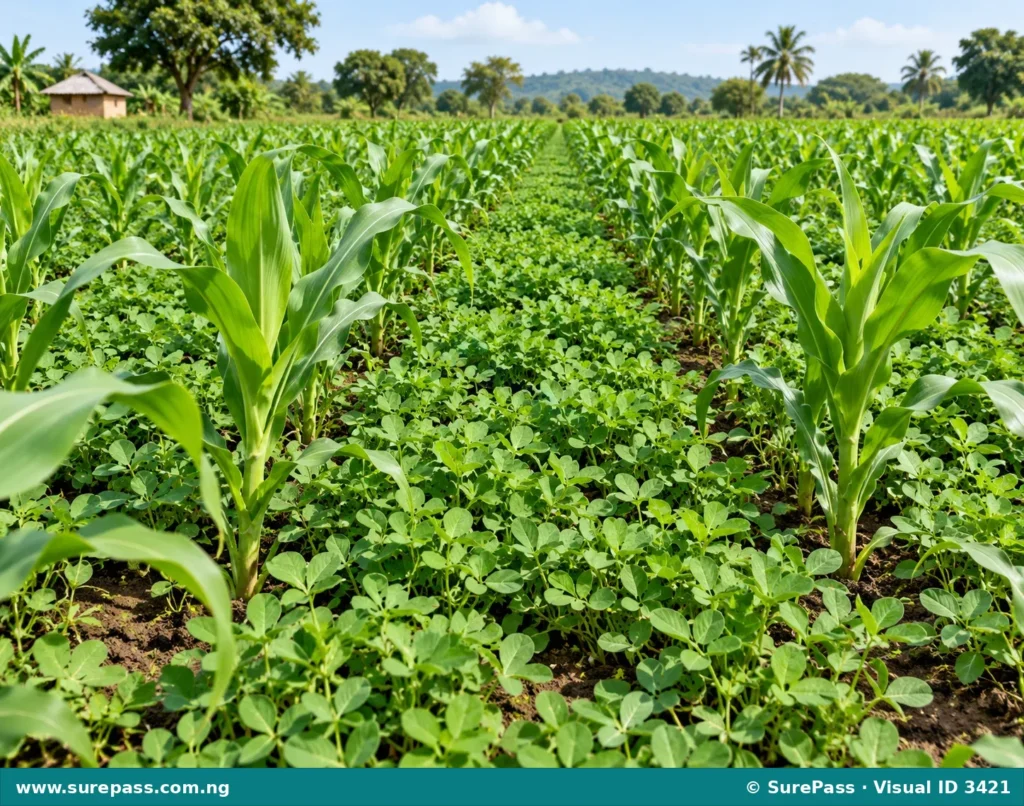
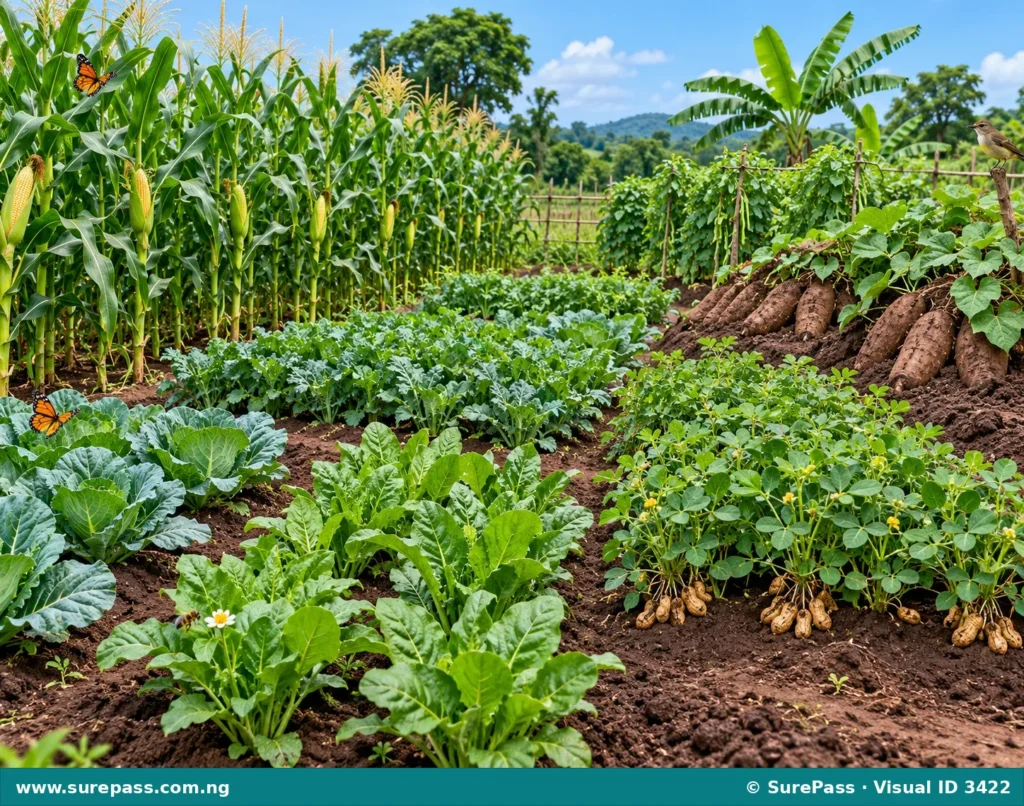
Skill: Planting of Cover Crops to Reduce Soil Erosion
Planting cover crops is a practical and effective method to protect soil from erosion, improve soil health, and enhance fertility. This skill involves selecting appropriate cover crops and establishing them correctly in the field.
How to Plant Cover Crops
The procedure for planting cover crops involves the following steps:
- Select the Right Cover Crop: Choose a cover crop suitable for the local climate, soil type, and the main crop being grown. Consider factors like growth rate, nitrogen-fixing ability, and ease of termination. For example, mucuna or centrosema are good choices for many Nigerian farming systems.
- Prepare the Land: Clear the land of weeds and previous crop residues. Light tillage may be done if necessary, but minimal soil disturbance is often preferred to maintain soil structure.
- Sow the Seeds:
- Broadcasting: Scatter the cover crop seeds evenly over the prepared land. This method is quick and suitable for large areas.
- Row Planting: Plant seeds in rows, similar to how main crops are planted. This allows for easier management and can be done manually or with a planter.
- Intercropping: If planting between existing main crops, carefully sow the cover crop seeds in the spaces between the rows.
- Cover the Seeds: Lightly cover the seeds with a thin layer of soil using a rake or by dragging a light branch over the area. This helps with germination and protects seeds from birds.
- Watering: If rainfall is insufficient, water the newly planted cover crops to ensure good germination and establishment.
- Monitor Growth: Observe the cover crops as they grow. Ensure they establish a good canopy to cover the soil effectively.
- Management (Termination): When it is time to plant the main crop, the cover crop can be terminated. This can be done by cutting it down and leaving the residue on the soil surface as mulch, or by light tillage to incorporate it into the soil.
Important Safety Tips
- Always use appropriate tools for land preparation and planting.
- Wear protective clothing, such as gloves, to protect hands from soil and plant material.
- Handle seeds carefully and avoid contact with eyes or mouth.
- If using any machinery for land preparation, ensure it is operated safely and correctly.
- Wash hands thoroughly after handling soil and seeds.




0 comments
Open the discussion when you need it. Comments stay collapsed until requested so the initial article remains light.