


ARTICLE CONTENTSOn this page 7 sections
Actors, Stages and Roles in the Agricultural Value Chain
Performance Objectives
By the end of the lesson, students should be able to:
- identify major actors in agricultural value chain;
- describe different stages of agricultural value chain;
- explain the role of each stage in value adding;
- develop a rice value chain.
Understanding the Agricultural Value Chain
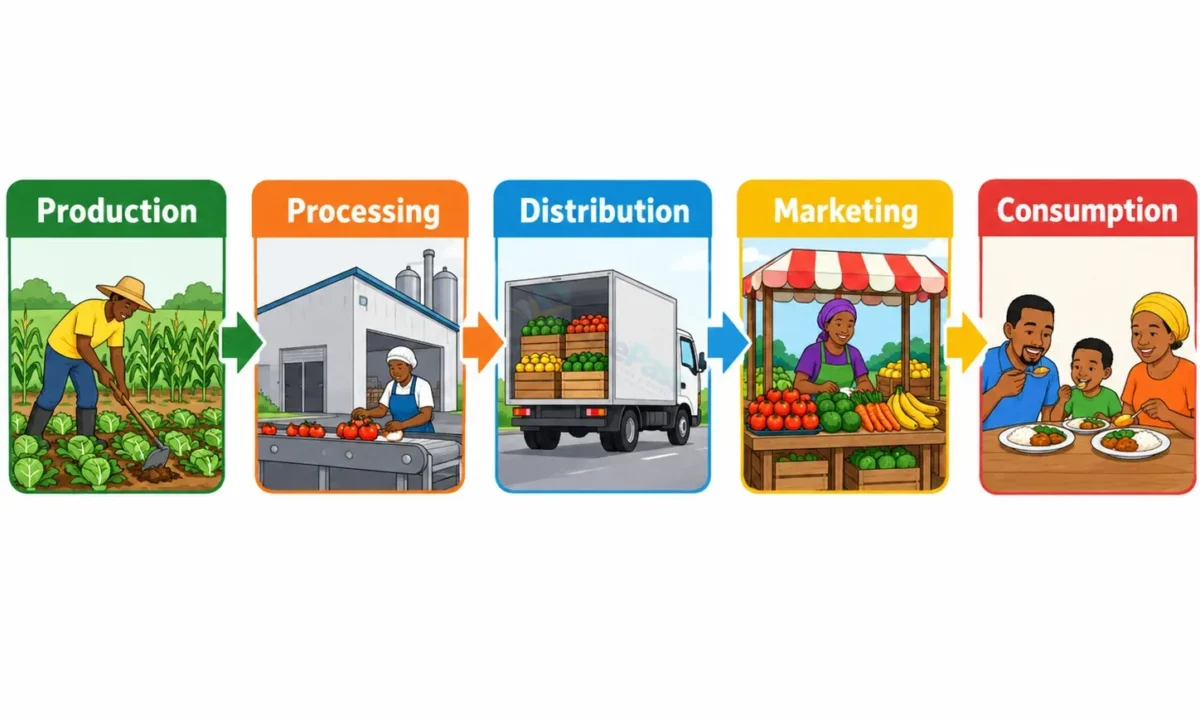
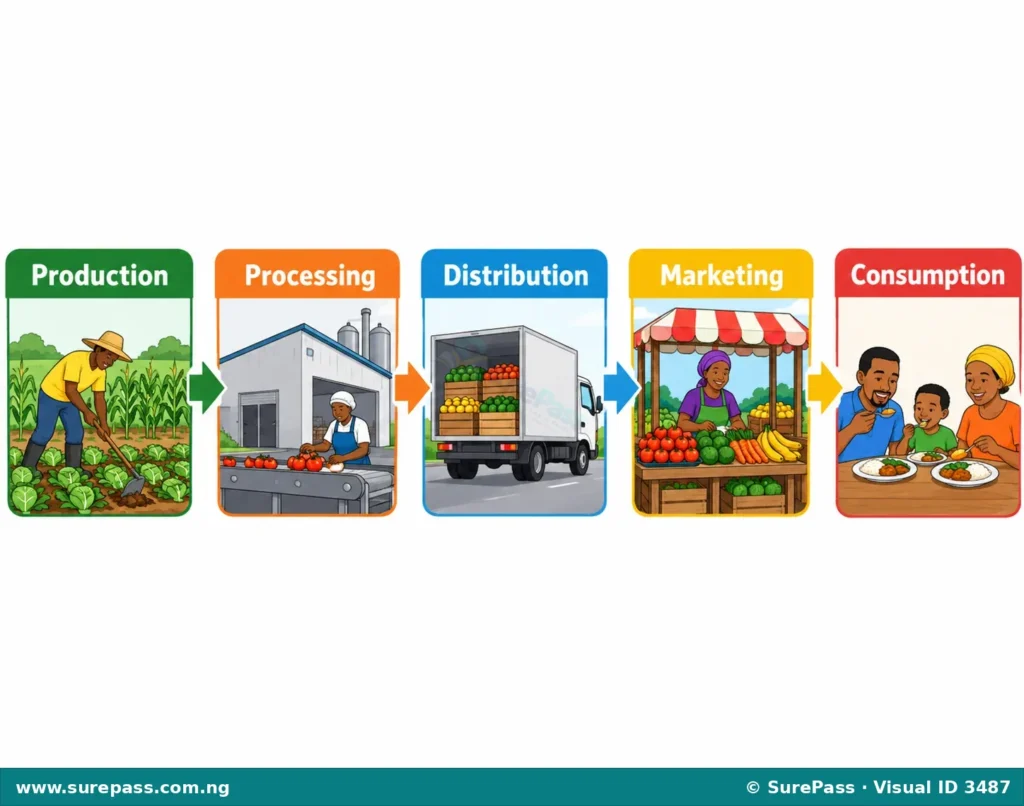
The agricultural value chain describes the full range of activities and services required to bring an agricultural product from the farm to the final consumer. It includes all the steps involved in producing, processing, distributing, marketing, and consuming farm products.
This chain adds value to the raw agricultural product at each stage, transforming it into something more useful, desirable, or accessible to the consumer. Understanding this chain helps to improve efficiency, reduce waste, and increase profits for those involved.
Major Actors in the Agricultural Value Chain
Many individuals and groups play important roles in moving agricultural products from the farm to the consumer. These individuals and groups are known as actors in the agricultural value chain. Each actor contributes to adding value to the product.
The major actors in the agricultural value chain include:
- Producers: These are the farmers who cultivate crops or rear livestock. They are at the very beginning of the value chain, responsible for growing raw agricultural products like maize, yam, rice, cassava, or raising animals like chickens, goats, and fish.
- Processors: These actors transform raw agricultural products into different forms. For example, they might turn cassava into garri or fufu, maize into flour, or milk into cheese and yoghurt. Processing often increases the shelf life and market value of the product.
- Distributors: Distributors are responsible for moving products from processors or producers to markets, wholesalers, or retailers. This involves transportation, storage, and sometimes packaging. They ensure products reach different locations where they are needed.
- Marketers/Retailers: These actors sell the products directly to the final consumers. They include market traders, supermarket owners, and hawkers. They make the products available and visible to buyers.
- Consumers: These are the final buyers and users of the agricultural products. They purchase and consume the food items or other agricultural goods. Their demand drives the entire value chain.
- Input Suppliers: These actors provide the necessary materials for production, such as seeds, fertilisers, pesticides, farm tools, and animal feed. Without their inputs, producers cannot begin their work.
- Service Providers: These include individuals or organisations offering services like financial support (banks), transportation services, extension services (agricultural advice), and research. They support the smooth operation of the entire chain.
Stages in the Agricultural Value Chain
The agricultural value chain is made up of several distinct stages, each contributing to the transformation and movement of the product. These stages ensure that raw farm produce is eventually consumed in a suitable form.
The different stages of the agricultural value chain are:
- Production: This is the initial stage where raw agricultural products are grown or raised. It involves activities like land preparation, planting, cultivation, harvesting, and rearing of animals. Farmers are the primary actors at this stage.
- Processing: At this stage, raw agricultural products are transformed into different forms to add value, improve shelf life, or make them more convenient for consumption. Examples include milling rice, grinding maize into flour, drying fish, or making juice from fruits.
- Distribution: This stage involves the movement of processed or raw agricultural products from the point of production or processing to various markets or storage facilities. It includes transportation, warehousing, and logistics to ensure products reach their intended destinations.
- Marketing: Marketing involves all activities related to selling the product to consumers. This includes packaging, branding, pricing, advertising, and sales. It aims to make the product attractive and accessible to buyers.
- Consumption: This is the final stage where the end-users purchase and consume the agricultural products. It completes the cycle of the value chain, as consumer demand influences future production.
Role of Each Stage in Value Addition
Value addition refers to the process of increasing the economic value of a product at each stage of the value chain. Each stage plays a crucial role in making the product more desirable, useful, or accessible, thereby increasing its market price and benefit to the consumer.
The role played at each stage for value addition includes:
- Production:
- Quantity and Quality: Producing a good quantity of high-quality raw materials is the first step in value addition. Better quality produce fetches higher prices.
- Variety: Cultivating diverse crops or rearing different animals provides options for consumers and processors.
- Timeliness: Producing crops or animals at the right time to meet market demand adds value by ensuring availability when needed.
- Processing:
- Transformation: Converting raw materials into finished or semi-finished products (e.g., cassava to garri, tomatoes to paste) makes them more convenient and ready for use.
- Preservation: Processing methods like drying, canning, or freezing extend the shelf life of perishable goods, reducing waste and allowing for wider distribution.
- Enhanced Appeal: Processing can improve the taste, appearance, and nutritional value of products, making them more attractive to consumers.
- New Products: Creating entirely new products from raw materials (e.g., fruit into juice, groundnuts into oil) expands market opportunities.
- Distribution:
- Accessibility: Moving products from production areas to consumption centres makes them available to a wider range of consumers who might not have access to the farm.
- Timely Delivery: Efficient distribution ensures products reach markets when they are fresh and in demand, preventing spoilage and meeting consumer needs.
- Reduced Costs: Optimised transport and storage can reduce overall costs, which can be passed on as savings to consumers or increased profit margins.
- Marketing:
- Information: Marketing activities inform consumers about the product’s features, benefits, and availability, creating demand.
- Branding and Packaging: Attractive packaging and strong branding can differentiate a product from competitors, making it more appealing and justifying a higher price.
- Pricing Strategies: Effective pricing ensures that the product is competitive while also covering costs and generating profit.
- Market Linkages: Marketing connects producers and processors with buyers, ensuring sales and reducing post-harvest losses.
- Consumption:
- Demand Creation: Consumer preferences and purchasing habits drive the entire value chain. When consumers buy products, it signals demand for continued production and supply.
- Feedback: Consumer feedback on product quality and satisfaction can lead to improvements in production and processing, further adding value.
Developing a Rice Value Chain
Developing a value chain for a specific product like rice involves identifying all the steps and actors involved from the initial farming to the final consumption. This helps to understand how value is added at each stage and where improvements can be made.
The procedure for developing a rice value chain involves the following steps:
- Identify the Product: Clearly state the product for which the value chain is being developed. In this case, it is rice.
- Map the Production Stage:
- Identify the farmers who grow rice.
- List the inputs they use (seeds, fertilisers, water, labour, machinery).
- Describe the farming practices (land preparation, planting, irrigation, harvesting).
- Note any initial processing on the farm (e.g., threshing, drying of paddy rice).
- Map the Processing Stage:
- Identify the rice millers or processors.
- Describe the processing steps: cleaning, de-husking (removing the outer shell to get brown rice), milling (removing bran to get white rice), polishing, sorting, and packaging.
- Consider any by-products (e.g., rice bran for animal feed).
- Map the Distribution Stage:
- Identify how the processed rice moves from the mill to the market.
- List the transporters (trucks, vans).
- Identify storage facilities (warehouses).
- Note any wholesalers or aggregators who buy in bulk from millers.
- Map the Marketing Stage:
- Identify the retailers who sell rice to consumers (market stalls, supermarkets, small shops).
- Describe how the rice is presented (sacks, branded bags).
- Consider pricing strategies and any promotional activities.
- Map the Consumption Stage:
- Identify the final consumers (households, restaurants, institutions).
- Understand their preferences (e.g., local rice vs. imported, specific grain types).
- Identify Key Actors at Each Stage: For each stage, list the specific individuals, businesses, or organisations involved. For example, at the production stage, it’s rice farmers; at processing, it’s rice mill owners.
- Identify Value Addition at Each Stage: For each step, explain how value is added. For example, milling adds value by transforming paddy rice into edible white rice, making it easier to cook and consume. Packaging adds value by protecting the product and making it attractive.
- Identify Challenges and Opportunities: Look for areas where the chain can be improved, such as better access to inputs, more efficient processing technology, or stronger market linkages.


0 comments
Open the discussion when you need it. Comments stay collapsed until requested so the initial article remains light.