


ARTICLE CONTENTSOn this page 5 sections
Meaning, Origin and Development of Agriculture for SS 1
Performance Objectives
By the end of the lesson, students should be able to:
- explain the meaning of agriculture;
- discuss the origin and development of Agriculture;
- distinguish between the stone age and modern agriculture.
Meaning of Agriculture
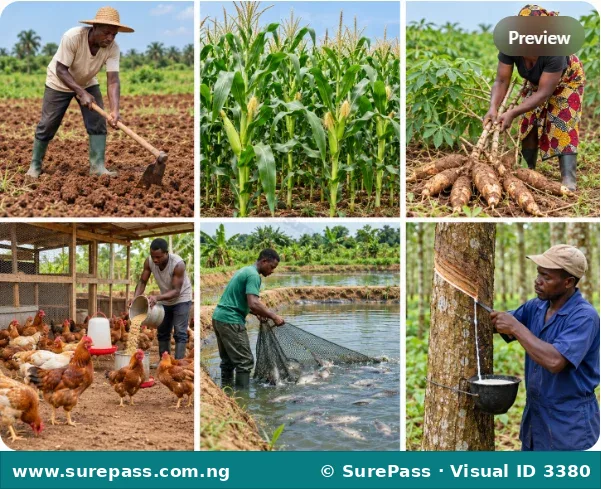
Agriculture is the science and art of cultivating the soil, growing crops, and raising livestock for human use.
It involves a wide range of activities aimed at producing food, fibre, fuel, and other products necessary for human survival and well-being. These activities include preparing land for planting, sowing seeds, nurturing plants, harvesting crops, breeding and caring for farm animals, and processing agricultural products.
Agriculture is a fundamental human activity that provides the raw materials for many industries and supports the livelihoods of a large portion of the world’s population. It is not just about farming; it also includes related practices like fishing (aquaculture), forestry, and the management of natural resources for agricultural purposes.
Origin and Development of Agriculture
The story of agriculture is the story of human civilisation. For most of human history, people lived as hunter-gatherers, moving from place to place to find food. They hunted wild animals and gathered wild plants, fruits, and nuts. This way of life was uncertain, as food sources could be scarce or move away.
The Stone Age and Early Agriculture
The Stone Age refers to a long period in human history when stone was widely used to make tools. During the later part of the Stone Age, known as the Neolithic period, a major shift occurred in how humans obtained food. This period, often called the Neolithic Revolution, marked the beginning of agriculture.
Around 10,000 years ago, people began to settle in one place and cultivate crops. They observed that seeds dropped on the ground would grow into new plants. This led to the deliberate planting of seeds and the cultivation of specific plants like wheat, barley, rice, and millet. At the same time, humans started domesticating animals such as goats, sheep, cattle, and pigs. These animals provided meat, milk, hides, and labour.
Early Stone Age agriculture was characterised by:
- Simple Tools: Farmers used basic tools made from stone, wood, and bone, such as digging sticks, hoes, and sickles.
- Subsistence Farming: The primary goal was to produce enough food for the family or community, with little surplus for trade.
- Manual Labour: Almost all work was done by hand, with limited help from domesticated animals.
- Limited Knowledge: Farmers had a basic understanding of soil, weather, and plant growth, often relying on traditional methods passed down through generations.
- Small Scale: Farms were generally small, covering limited areas of land.
This transition from hunting and gathering to settled farming allowed human populations to grow, leading to the development of villages, towns, and eventually complex societies.

Modern Agriculture
Modern agriculture represents a significant advancement from the Stone Age. It began to take shape with the Industrial Revolution and has continued to evolve rapidly, especially in the last century. This period is marked by scientific discoveries, technological innovations, and a focus on increasing productivity and efficiency.
Key characteristics of modern agriculture include:
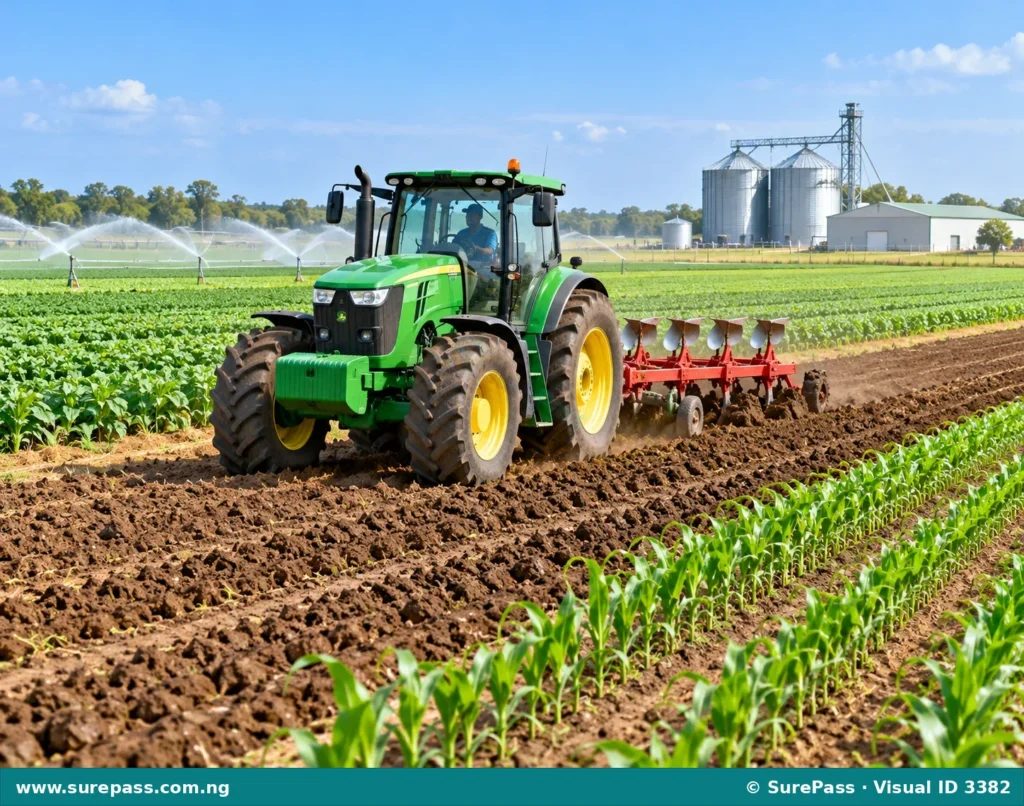
- Advanced Technology and Mechanisation: Farmers use sophisticated machinery like tractors, harvesters, and irrigation systems to perform tasks quickly and efficiently.
- Scientific Methods: Agriculture is guided by scientific research in areas such as genetics (for improved crop varieties and animal breeds), soil science, pest control, and nutrition.
- Specialisation and Commercial Scale: Farms often specialise in specific crops or livestock, producing large quantities for sale in local and international markets.
- Use of Inputs: Modern agriculture relies heavily on inputs such as improved seeds, synthetic fertilisers, pesticides, and animal feeds to boost yields.
- Global Trade: Agricultural products are traded globally, connecting farmers to consumers worldwide.
- Data and Information Technology: Farmers use data analytics, GPS technology, and other digital tools for precision farming, optimising resource use and monitoring farm conditions.
Modern agriculture aims to produce more food with fewer resources, feed a growing global population, and ensure food security. However, it also faces challenges related to environmental sustainability and resource management.
Distinguishing Between Stone Age and Modern Agriculture
The differences between Stone Age and modern agriculture are vast, reflecting thousands of years of human innovation and development. Understanding these distinctions helps to appreciate the journey of agriculture.
The main differences are:
- Tools and Technology: Stone Age agriculture used simple tools made of stone, wood, and bone, relying on manual labour. Modern agriculture uses complex machinery, advanced irrigation systems, and digital technology.
- Scale of Production: Stone Age farming was primarily for subsistence, producing just enough for the family or community. Modern agriculture operates on a commercial scale, producing large surpluses for markets.
- Methods and Knowledge: Stone Age methods were basic and traditional. Modern agriculture is based on scientific research, genetic improvements, and precise management techniques.
- Inputs Used: Stone Age farmers relied on natural fertility and basic seed saving. Modern farmers use improved seeds, synthetic fertilisers, pesticides, and specialised animal feeds.
- Purpose: The main purpose of Stone Age agriculture was survival and self-sufficiency. Modern agriculture aims for high productivity, profitability, and feeding a large, often urban, population.
- Impact on Environment: Stone Age farming had a localised and generally low environmental impact. Modern agriculture, while highly productive, can have significant environmental impacts, including soil degradation and water pollution, if not managed sustainably.




0 comments
Open the discussion when you need it. Comments stay collapsed until requested so the initial article remains light.