


ARTICLE CONTENTSOn this page 6 sections
Agricultural Development Programmes in Nigeria
Performance Objectives
By the end of the lesson, students should be able to:
- explain the meaning of Agricultural development programmes;
- identify the government Agricultural development programmes;
- discuss the objectives of these programmes;
- enumerate challenges faced by government in the implementation of the programmes.
Meaning of Agricultural Development Programmes
Agricultural development programmes are organised efforts by the government to improve farming practices, increase food production, and enhance the overall well-being of farmers and the agricultural sector.
These programmes are designed to address specific problems in agriculture, such as low yields, poor access to resources, and inadequate infrastructure. They aim to transform traditional farming into a more modern, efficient, and profitable enterprise, ensuring food security and economic growth for the nation.
Government Agricultural Development Programmes in Nigeria
Over the years, the Nigerian government has introduced various programmes to boost agricultural production and improve the lives of farmers. These initiatives reflect the government’s commitment to making agriculture a cornerstone of the national economy.
Operation Feed the Nation (OFN)
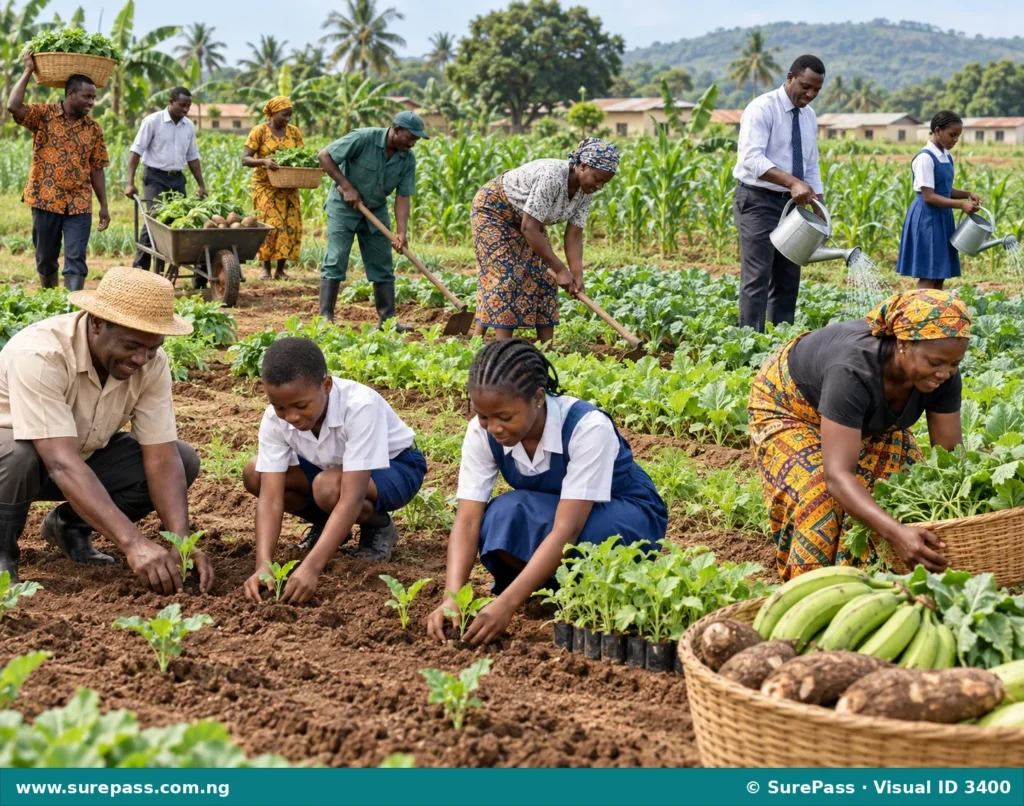
Operation Feed the Nation (OFN) was an agricultural programme launched in 1976 by the military government of General Olusegun Obasanjo. The main goal of OFN was to encourage all Nigerians, including civil servants, students, and urban dwellers, to engage in food production, even on a small scale, to achieve national food self-sufficiency.
The programme aimed to create awareness about the importance of agriculture and to mobilise human and material resources towards increasing food output. It encouraged backyard gardening, communal farming, and the cultivation of available land to supplement food supply.
Agricultural Development Programmes (ADPs)
Agricultural Development Programmes (ADPs) were introduced in the late 1970s and early 1980s with support from the World Bank. Unlike OFN, which was a national campaign, ADPs focused on specific geographical areas, usually states or groups of local government areas, to provide comprehensive support to farmers.
The ADPs aimed to improve agricultural productivity by providing farmers with essential services and resources. These programmes established farm service centres, provided extension services, improved rural infrastructure, and facilitated access to improved seeds, fertilisers, and credit facilities.
Objectives of Agricultural Development Programmes
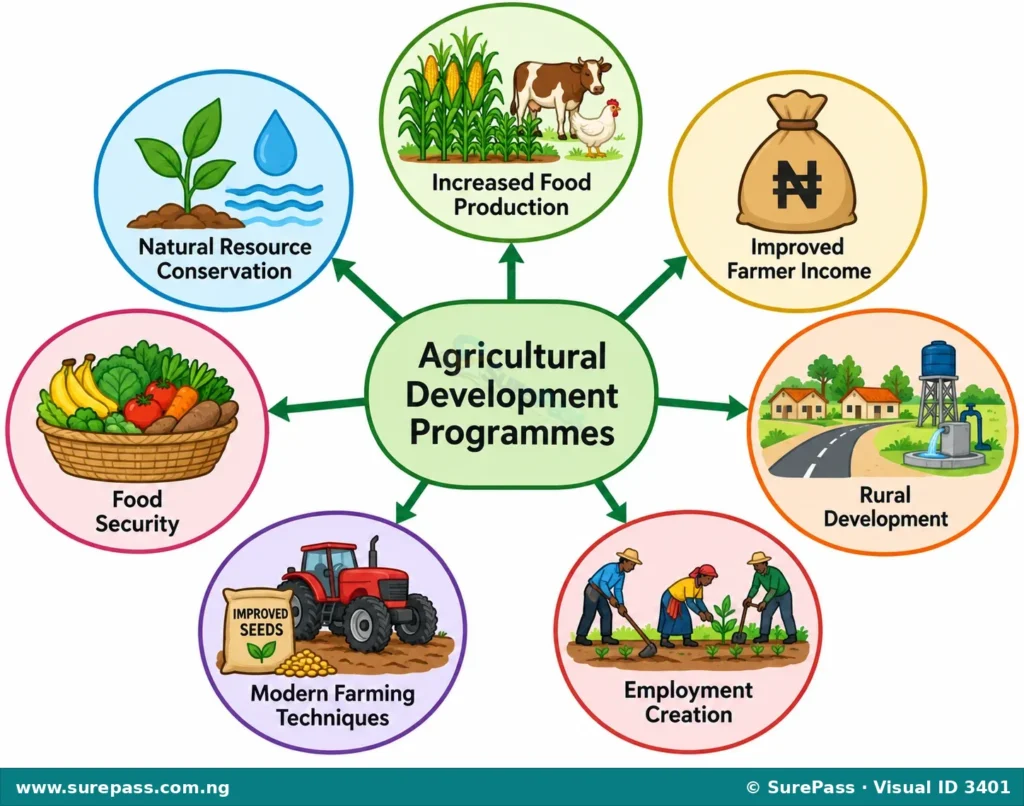
Government agricultural development programmes are designed with specific goals to address challenges in the agricultural sector. The objectives of these programmes generally include:
- Increasing Food Production: A primary objective is to boost the quantity of food crops and livestock produced to ensure food security for the growing population. This involves encouraging farmers to adopt better farming methods and use improved inputs.
- Improving Farmers’ Income: Programmes aim to enhance the economic well-being of farmers by helping them increase their yields and access better markets for their produce. This leads to higher profits and an improved standard of living for farming communities.
- Promoting Rural Development: Many programmes include components for developing rural areas, such as building roads, providing boreholes for water, and establishing processing facilities. This makes rural areas more attractive and improves the quality of life for residents.
- Creating Employment Opportunities: By expanding agricultural activities and establishing related industries (like food processing), these programmes create jobs for many people, especially in rural areas.
- Encouraging Modern Farming Techniques: Programmes often introduce farmers to new technologies, improved crop varieties, better animal breeds, and sustainable farming practices to make agriculture more efficient and productive.
- Ensuring Food Security: A key objective is to make sure that enough food is available, accessible, and affordable for all citizens at all times, reducing reliance on food imports.
- Conserving Natural Resources: Some programmes focus on promoting sustainable land use practices and protecting the environment to ensure that agricultural resources remain productive for future generations.
Challenges in the Implementation of Agricultural Development Programmes
Despite the noble intentions behind agricultural development programmes, their implementation in Nigeria has faced numerous challenges. These challenges often hinder the programmes from achieving their full potential and limit their impact on the agricultural sector.
Some of the significant challenges include:
- Inadequate Funding: Many programmes suffer from insufficient budget allocation or irregular release of funds, which limits their scope and effectiveness. Without consistent funding, planned activities cannot be fully executed.
- Poor Infrastructure: Lack of good roads, storage facilities, processing plants, and reliable electricity in rural areas makes it difficult for farmers to transport their produce to markets, store it properly, or add value through processing.
- Lack of Access to Credit: Farmers, especially small-scale farmers, often struggle to access loans from banks and other financial institutions. This limits their ability to purchase improved seeds, fertilisers, machinery, or expand their farms.
- Corruption and Mismanagement: Funds and resources meant for agricultural programmes are sometimes diverted or mismanaged, preventing them from reaching the intended beneficiaries. This undermines the integrity and effectiveness of the programmes.
- Inadequate Extension Services: There is often a shortage of well-trained agricultural extension workers to educate farmers on modern farming techniques, pest control, and disease management. This leaves many farmers using outdated methods.
- Climate Change and Environmental Factors: Unpredictable weather patterns, such as prolonged droughts or heavy floods, can destroy crops and livestock, making agricultural planning difficult and reducing yields despite programme efforts.
- Land Tenure System: The traditional land tenure system, where land ownership is fragmented or communal, can make it difficult for farmers to acquire large tracts of land for commercial farming or to use land as collateral for loans.
- Insecurity: In some regions, insecurity due to banditry, kidnapping, or communal clashes disrupts farming activities, forces farmers to abandon their lands, and discourages investment in agriculture.
- Policy Inconsistency: Frequent changes in government policies and priorities can lead to the abandonment of ongoing programmes or a lack of continuity, wasting resources and effort.
- Lack of Farmer Participation: Sometimes, programmes are designed without adequate consultation with farmers, leading to solutions that do not fully address their real needs or are not practical for their local conditions.

0 comments
Open the discussion when you need it. Comments stay collapsed until requested so the initial article remains light.