



ARTICLE CONTENTSOn this page 8 sections
Maintenance of Simple Farm Tools
Performance Objectives
By the end of the lesson, students should be able to:
- identify reasons for the maintenance of simple farm tools;
- list basic maintenance practices of simple farm tools;
- outline dangers associated with non-maintenance of simple farm tools;
- clean and sharpen farm tools.
Introduction to Farm Tool Maintenance
Simple farm tools are essential for various agricultural activities, from preparing the soil to harvesting crops. Tools such as hoes, rakes, cutlasses, spades, and shovels are used daily on farms. For these tools to remain effective and last long, they require proper care and maintenance. Maintenance involves a set of practices designed to keep tools in good working condition.
Reasons for Maintaining Farm Tools
Regular maintenance of farm tools is crucial for several important reasons. Neglecting tools can lead to poor performance, damage, and even safety risks.
- To Prolong Life Span: Proper maintenance helps to extend the useful life of farm tools. When tools are cleaned, oiled, and stored correctly, they are protected from wear and tear, rust, and damage, allowing them to be used for many years.
- To Ensure Good Performance: Well-maintained tools perform their tasks efficiently. A sharp cutlass cuts easily, and a clean hoe digs effectively. This makes farm work easier, faster, and less tiring for the farmer.
- To Prevent Rust: Many farm tools are made of metal, which can rust when exposed to moisture and air. Rust weakens the metal, making the tool brittle and less effective. Cleaning and oiling tools after use helps to prevent rust formation.
- To Ensure Safety: A well-maintained tool is safer to use. A blunt or rusty tool can slip, break, or require excessive force, increasing the risk of accidents and injuries to the user.
- To Save Costs: Maintaining tools regularly is cheaper than frequently replacing damaged tools or repairing them extensively. Good maintenance reduces the need to buy new tools often.
Basic Maintenance Practices for Farm Tools
To keep farm tools in excellent condition, certain basic maintenance practices should be followed consistently. These practices are simple but highly effective.
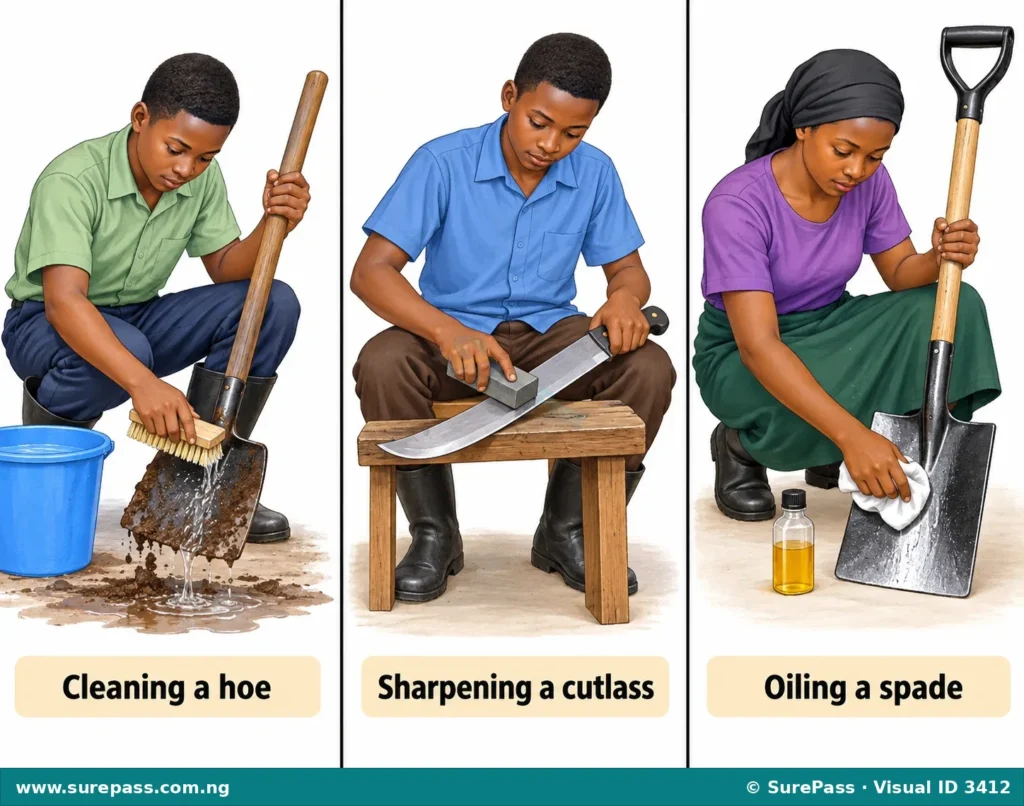
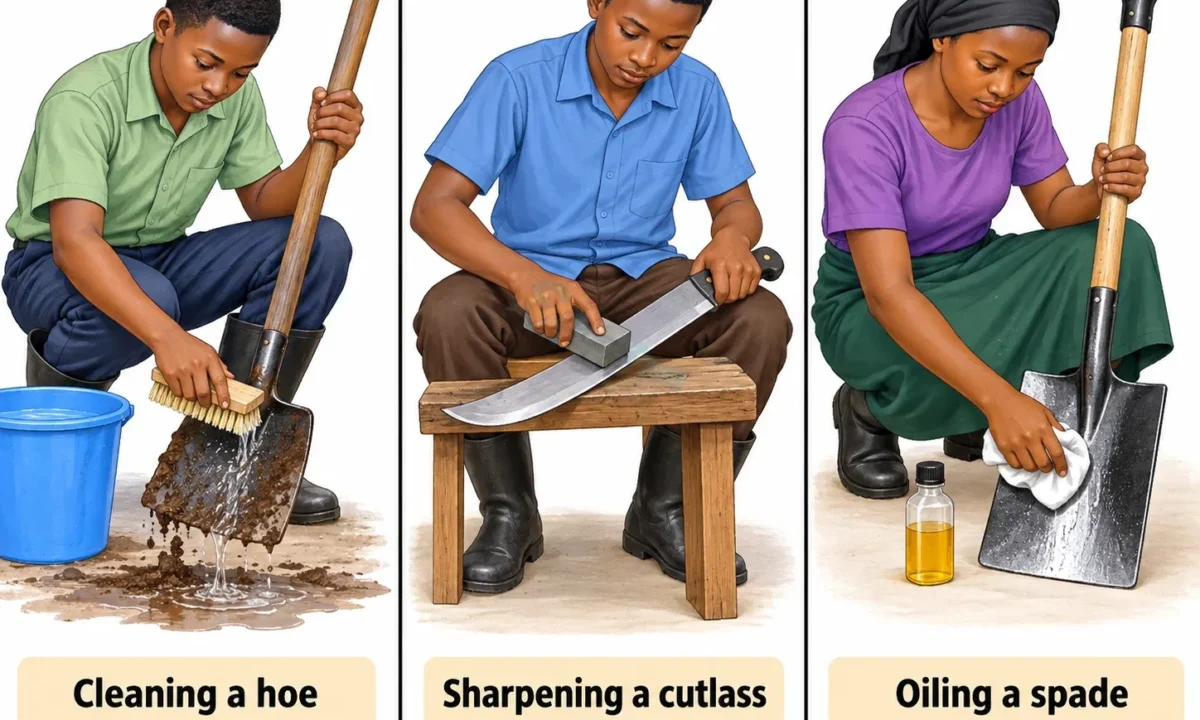
- Cleaning: This is the most fundamental maintenance practice. After each use, tools should be thoroughly cleaned to remove soil, plant sap, debris, and moisture. Remaining dirt can hold moisture, leading to rust and corrosion.
- Sharpening: Tools with cutting edges, such as cutlasses, hoes, and spades, become blunt with use. Sharpening restores their cutting ability, making them efficient and safe to use.
- Oiling/Greasing: Metal parts of tools, especially cutting edges and moving parts, should be oiled or greased after cleaning. Oil or grease creates a protective layer that prevents rust and reduces friction in moving parts.
- Proper Storage: Tools should be stored in a dry, secure place, away from direct sunlight, rain, and dampness. Hanging tools on racks or storing them in toolboxes helps to keep them organised and protected.
- Repairing Minor Damages: Small issues like loose handles or slightly bent parts should be fixed promptly. Ignoring minor damages can lead to more significant problems and render the tool unusable.
Dangers of Non-Maintenance of Farm Tools
Failing to maintain farm tools can lead to several negative consequences, affecting both the tools and the farmer.
- Rusting: This is one of the most common dangers. When metal tools are not cleaned and oiled, they quickly develop rust. Rust weakens the tool’s structure, makes it difficult to use, and can eventually cause it to break.
- Bluntness: Cutting and digging tools become blunt over time if not sharpened. A blunt tool requires more effort to use, slows down work, and can cause fatigue. It also increases the risk of injury as the tool might slip instead of cutting or digging cleanly.
- Reduced Efficiency: Unmaintained tools do not perform well. A rusty shovel will not glide through soil easily, and a blunt cutlass will tear rather than cut plants. This reduces productivity and makes farm tasks harder.
- Increased Risk of Injury: Blunt tools can slip and cause cuts. Rusty tools can break unexpectedly during use, leading to accidents. Loose handles can detach, causing the tool to fly off and hit someone.
- Shorter Life Span: Tools that are not maintained will wear out quickly and need to be replaced more often, leading to increased costs for the farmer.
- Spread of Diseases: Uncleaned tools can carry plant diseases from one plant or area to another, especially if they have been used on infected plants.
How to Clean Farm Tools
Cleaning farm tools after each use is a simple but vital step in their maintenance. This procedure helps to remove dirt and moisture, preventing rust and prolonging the tool’s life.
The required materials are:
- Water
- Stiff brush or wire brush
- Old cloth or rag
- Scraper (optional, for stubborn dirt)
The procedure involves the following steps:
- After using a tool like a hoe, rake, spade, or shovel, immediately remove any large clumps of soil or plant debris by hand or with a scraper.
- Use a stiff brush or wire brush to scrub off remaining dirt, mud, and plant residue from the metal parts of the tool. For wooden handles, wipe them clean with a damp cloth.
- Rinse the metal parts of the tool with water to remove any remaining fine particles.
- Thoroughly dry all parts of the tool with an old cloth or rag. Ensure no moisture is left, as this can lead to rust.
- For tools with wooden handles, allow them to air dry completely before storage.
- Once clean and dry, proceed to oiling or greasing the metal parts before storing the tool.
How to Sharpen Farm Tools
Sharpening tools like cutlasses, hoes, and spades ensures they remain effective for cutting and digging. A sharp tool requires less effort and is safer to use.
The required materials are:
- Sharpening stone (whetstone) or file
- Safety gloves
- Eye protection (optional, but recommended)
- Old cloth
- Oil (for the sharpening stone, if required)
The procedure involves the following steps:
- Safety First: Always wear safety gloves to protect hands from sharp edges. Consider wearing eye protection.
- Secure the Tool: Place the tool on a stable surface or hold it firmly. For a cutlass, hold the handle securely with one hand, keeping the blade away from the body.
- Prepare the Sharpening Stone: If using a sharpening stone, apply a few drops of oil or water to its surface, as recommended by the stone’s manufacturer. This helps to lubricate the stone and carry away metal particles.
- Find the Angle: Identify the original bevel (angle) of the tool’s cutting edge. Maintain this angle throughout the sharpening process.
- Sharpening Motion:
- For a cutlass or hoe, place the sharpening stone or file against the bevelled edge.
- Push the stone or file away from the body, along the cutting edge, using firm, consistent strokes.
- Repeat this motion several times on one side of the blade.
- Turn the tool over and repeat the process on the other side, maintaining the same angle.
- Continue alternating sides until a sharp edge is achieved.
- Check for Sharpness: Carefully check the sharpness by observing the edge. It should feel smooth and sharp, without any burrs (small, rough edges). Do not test sharpness by running a finger along the edge.
- Clean and Oil: After sharpening, wipe the tool clean with an old cloth to remove any metal filings. Then, apply a thin layer of oil to the sharpened edge to prevent rust.
- Store Safely: Store the sharpened tool in a safe place, ensuring the sharp edge is protected and cannot cause accidental injury.





0 comments
Open the discussion when you need it. Comments stay collapsed until requested so the initial article remains light.