


ARTICLE CONTENTSOn this page 5 sections
Economic Activities in the Immediate Environment
Performance Objectives
By the end of the lesson, students should be able to:
- identify economic activities in their environment;
- describe the economic activities identified.
Understanding Economic Activities
Economic activities are the ways people in a community produce, distribute, and consume goods and services to meet their needs and earn a living. These activities are essential for the survival and development of any society.
In any immediate environment, such as a village, town, or city, various activities take place daily that contribute to the local economy. These activities often depend on the natural resources available, the skills of the people, and the needs of the community.
Types of Economic Activities in the Immediate Environment
Economic activities can be broadly categorised based on the type of work involved. In the immediate environment, common economic activities include agriculture, transportation, mining, manufacturing, and construction.
1. Agriculture
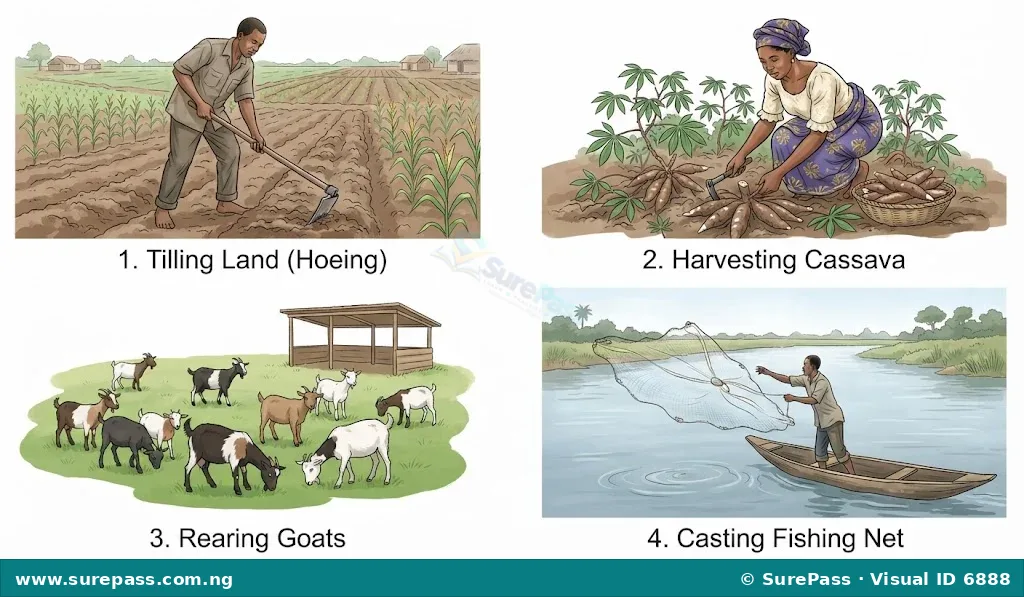
Agriculture involves cultivating land, raising animals, and harvesting natural resources to produce food and other products. It is a fundamental economic activity in many Nigerian communities, especially in rural areas.
Common agricultural activities in the immediate environment include:
- Farming: This is the cultivation of crops. Farmers prepare the land, plant seeds, tend to the growing plants, and harvest them. Common crops grown in Nigeria include yam, cassava, maize, rice, beans, and various vegetables. Farming can be identified by observing farmlands, farm tools like hoes and cutlasses, and the presence of crops.
- Animal Husbandry: This involves raising animals for various purposes, such as meat, milk, eggs, or labour. Common animals raised in Nigerian communities include goats, sheep, chickens, cattle, and pigs. Animal husbandry can be identified by observing animal pens, grazing areas, and people tending to livestock.
- Fishing: This is the activity of catching fish and other aquatic animals from rivers, lakes, ponds, or coastal waters. Fishing is common in communities located near water bodies. Methods include using nets, hooks, and traps. Fishing can be identified by observing fishing boats, nets, and the sale of fresh or smoked fish in local markets.
The presence of fertile land, adequate rainfall, and nearby water bodies often determines the type and scale of agricultural activities in an area.
2. Means of Transportation
Transportation involves the movement of people, goods, and services from one place to another. Efficient transportation is crucial for connecting communities and facilitating trade.
In the immediate environment, various means of transportation are used:
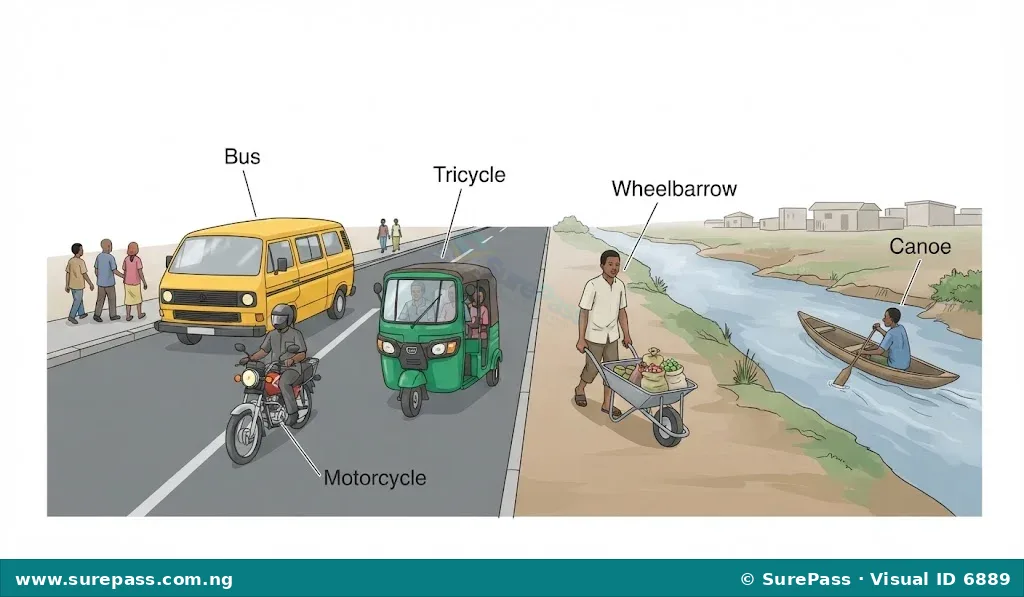
- Road Transportation: This is the most common form, involving vehicles like cars, buses, motorcycles (okada), tricycles (keke napep), and bicycles. Goods are transported using lorries, vans, and wheelbarrows. Road transportation can be identified by observing roads, motor parks, bus stops, and the movement of vehicles.
- Water Transportation: In communities near rivers, lakes, or the coast, canoes and boats are used to move people and goods. This is vital for fishing communities and those separated by water bodies. Water transportation can be identified by observing jetties, canoes, boats, and activities around water bodies.
- Footpaths and Walking: In many rural areas, people still rely on walking along footpaths to move within their immediate environment, especially for short distances or to access farms. This can be identified by observing well-trodden paths and people walking with goods or farm produce.
The availability of roads, waterways, and the need to move people and goods influence the types of transportation activities observed.
3. Mining
Mining is the process of extracting valuable minerals or other geological materials from the earth. While large-scale mining often occurs in specific regions, smaller-scale mining activities are common in many immediate environments.
Examples of local mining activities include:
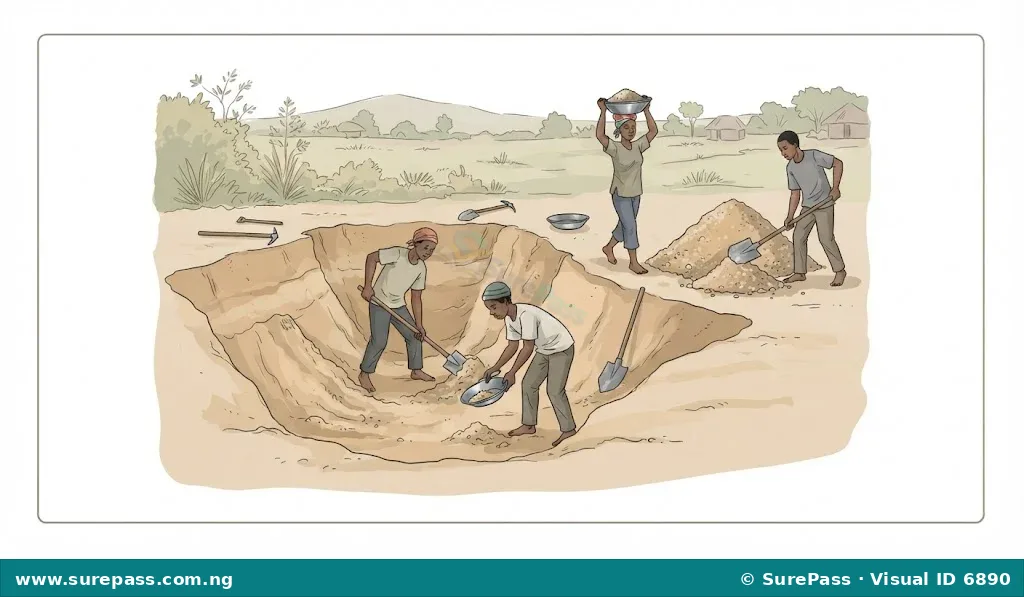
- Sand Mining: This involves excavating sand from riverbeds or land for use in construction. It is common in areas with sandy deposits.
- Quarrying: This is the extraction of stones, gravel, and crushed rock from quarries, primarily for construction purposes.
- Clay Extraction: Clay is dug from the ground for pottery, brick-making, or traditional building materials.
- Small-scale Mineral Mining: In some specific areas, small-scale extraction of minerals like gold or gemstones may occur, often using basic tools.
Mining activities can be identified by observing excavation sites, piles of sand, gravel, or stones, and the use of tools like shovels, pickaxes, and sometimes small machinery. The presence of specific mineral deposits or suitable geological formations determines where these activities take place.
4. Manufacturing and Industry
Manufacturing and industry involve transforming raw materials into finished goods. In the immediate environment, this often refers to small-scale industries and artisanal work rather than large factories.
Common local manufacturing and industrial activities include:
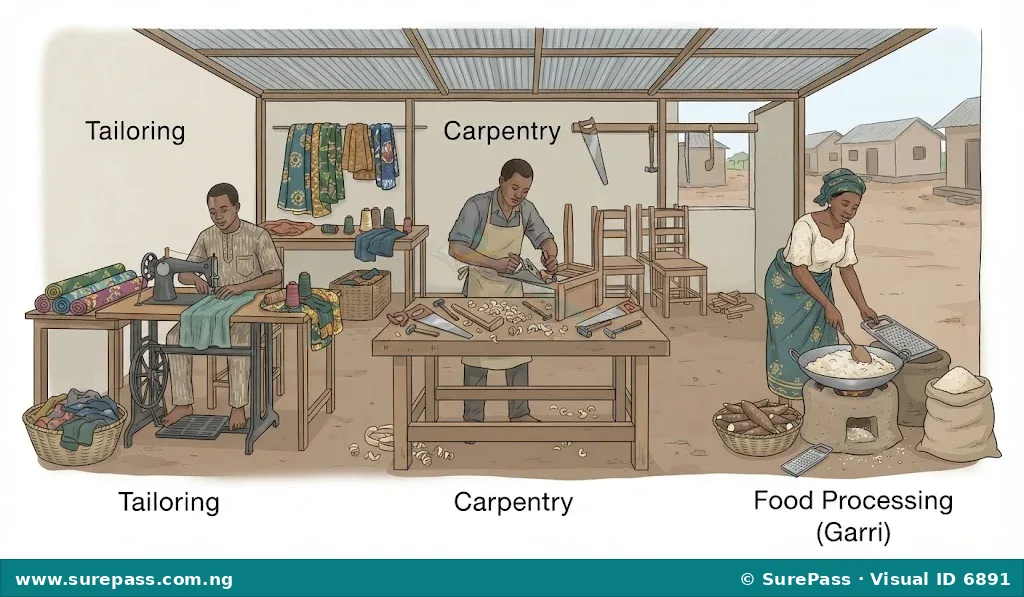
- Tailoring and Dressmaking: People sew clothes for individuals and for sale, using sewing machines and various fabrics.
- Carpentry: Carpenters make furniture, doors, windows, and other wooden items using wood, saws, hammers, and other tools.
- Pottery: Potters create pots, plates, and other items from clay, often using traditional methods.
- Blacksmithing: Blacksmiths forge metal tools like hoes, cutlasses, and spare parts using fire, hammers, and anvils.
- Food Processing: This includes activities like garri production from cassava, palm oil extraction from palm fruits, bread baking, and local snack production.
These activities can be identified by observing workshops, the use of specific tools (sewing machines, saws, anvils), and the production of finished goods. The availability of raw materials and local demand for specific products are key reasons for these activities.
5. Construction
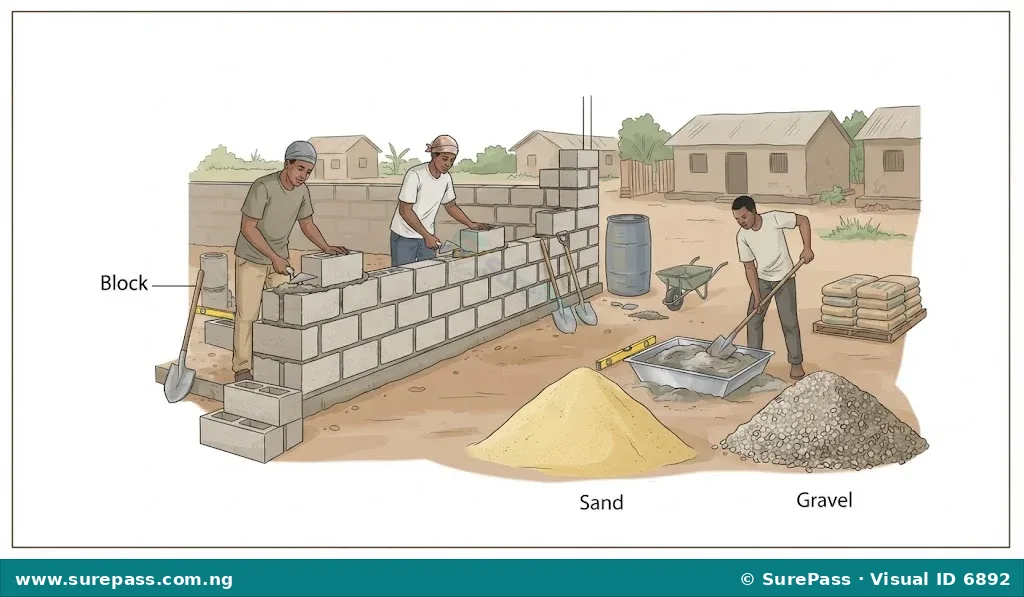
Construction involves building and maintaining structures such as houses, shops, roads, bridges, and other infrastructure. This activity is visible in almost every community.
Examples of construction activities in the immediate environment include:
- Building Houses and Shops: This involves laying foundations, erecting walls with blocks or bricks, roofing, and finishing.
- Road Construction and Maintenance: Building new roads or repairing existing ones to improve connectivity.
- Bridge and Culvert Construction: Building structures to cross rivers or drainage channels.
- Renovation and Repair: Fixing existing buildings or structures.
Construction activities can be identified by observing building sites, piles of construction materials (cement, sand, gravel, blocks), scaffolding, and workers using tools like trowels, shovels, and measuring tapes. The need for shelter, infrastructure development, and community growth drives construction activities.
Identifying and Describing Local Economic Activities
To identify and describe economic activities in your immediate environment, it is important to observe carefully and ask questions. This skill helps in understanding how your community functions and how people make a living.
How to Identify Economic Activities:
- Observe the Landscape: Look for specific features like farmlands, markets, workshops, construction sites, roads, or water bodies.
- Notice People’s Occupations: Pay attention to what people are doing. Are they farming, selling goods, driving vehicles, building, or making things?
- Identify Tools and Equipment: The tools used can indicate the type of activity. For example, hoes and cutlasses suggest farming, sewing machines suggest tailoring, and shovels suggest construction or mining.
- Look for Products and Services: The goods being sold or services being offered (e.g., transportation, repairs) are direct evidence of economic activities.
How to Describe Economic Activities:
When describing an economic activity, consider the following aspects:
- Name of the Activity: State clearly what the activity is (e.g., farming, tailoring, sand mining).
- What it Involves: Explain the main tasks or processes involved (e.g., “Farming involves planting crops like yam and cassava, weeding, and harvesting”).
- People Involved: Mention who typically performs the activity (e.g., “Farmers cultivate the land,” “Tailors sew clothes”).
- Tools and Materials Used: List the common tools and raw materials (e.g., “Hoes and cutlasses are used for farming,” “Wood and saws are used in carpentry”).
- Location: Describe where the activity usually takes place (e.g., “Farming takes place on farmlands,” “Tailoring is done in workshops or homes”).
- Purpose or Output: Explain what the activity produces or achieves (e.g., “Farming produces food,” “Tailoring produces clothes,” “Construction provides buildings”).
- Reasons for its Presence: Briefly explain why this activity is found in that environment (e.g., “Farming is common due to fertile land,” “Construction is ongoing because of community growth”).
By systematically observing and describing these elements, a clear picture of the economic landscape of an immediate environment can be formed.




0 comments
Open the discussion when you need it. Comments stay collapsed until requested so the initial article remains light.