


ARTICLE CONTENTSOn this page 7 sections
Weather and Climate
Performance Objectives
By the end of the lesson, students should be able to:
- discuss the meanings of weather and climate;
- describe elements of weather and climate;
- identify factors influencing weather and climate influencers;
- discuss the effects of weather and climate on human activities.
Meaning of Weather and Climate
Weather and climate are two important concepts in geography that describe the atmospheric conditions of a place. While they are related, they refer to different time scales.
What is Weather?
Weather refers to the day-to-day or short-term atmospheric conditions of a place.
Weather can change rapidly, sometimes within hours or even minutes. For example, a morning might be sunny, but by afternoon, it could become cloudy and rainy. Weather describes conditions like temperature, rainfall, wind, and cloud cover at a specific moment or over a short period, such as a day or a week.
What is Climate?
Climate refers to the average weather conditions of a place over a long period, usually 30 years or more.
Climate is a more stable and predictable pattern of weather. It is determined by observing and recording weather elements over many years to find the typical conditions for a region. For instance, Nigeria generally has a tropical climate, meaning it is typically warm and experiences wet and dry seasons over the year, even though the daily weather can vary.
Elements of Weather and Climate
The elements of weather and climate are the specific atmospheric conditions that are measured and observed. These elements help to describe the state of the atmosphere at any given time and contribute to the overall climate of a region. The main elements include:
- Temperature
- Rainfall
- Humidity
- Wind
- Atmospheric Pressure
Temperature
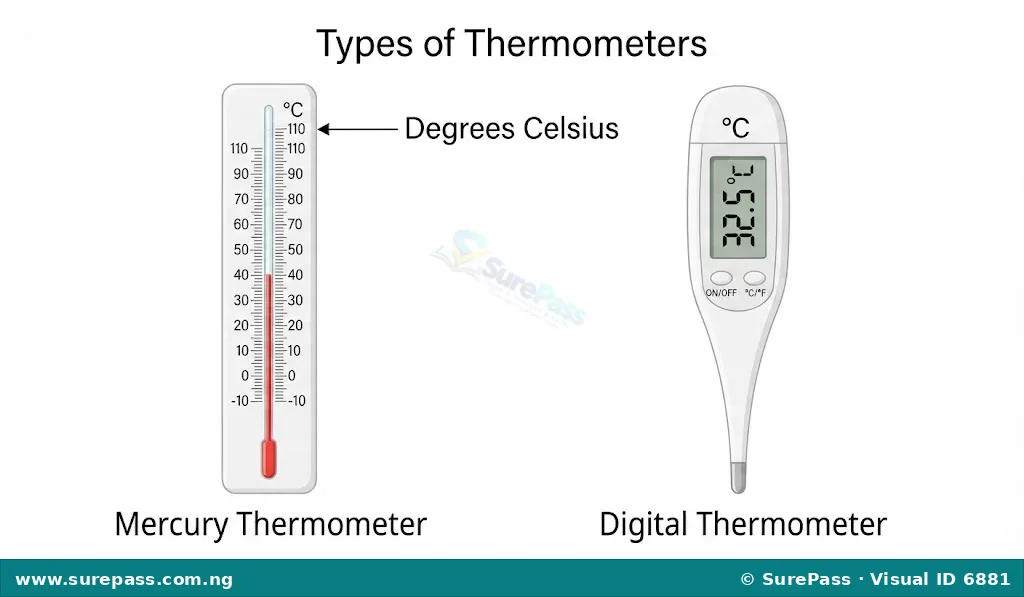
Temperature is the degree of hotness or coldness of the atmosphere.
It is measured using a thermometer, typically in degrees Celsius (°C) or Fahrenheit (°F). Temperature varies throughout the day and year, influenced by factors such as the sun’s position, cloud cover, and proximity to large bodies of water. High temperatures indicate hot conditions, while low temperatures indicate cold conditions.
Rainfall
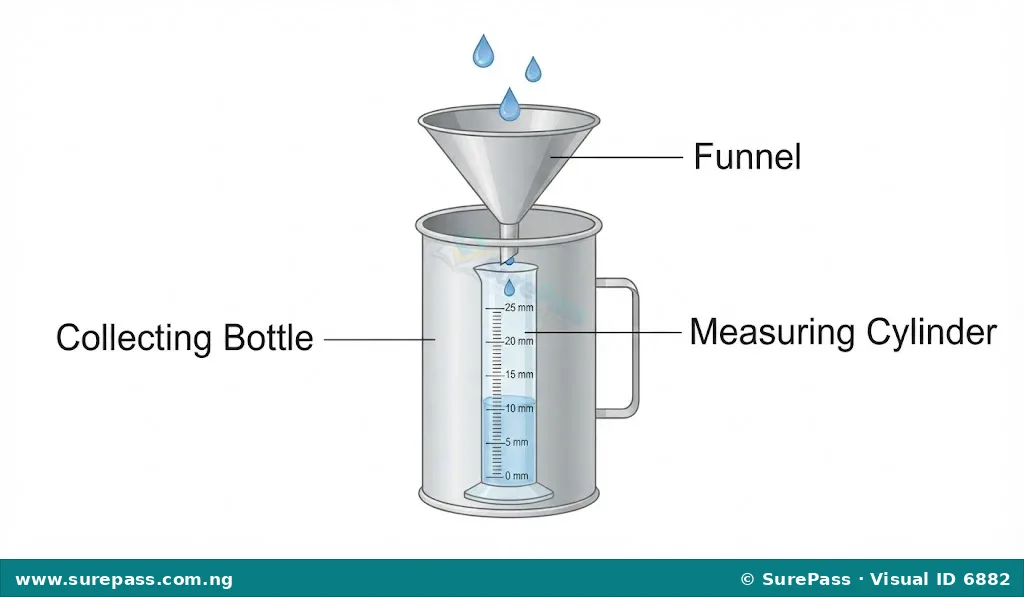
Rainfall is the amount of water that falls to the Earth’s surface in the form of rain, snow, hail, or sleet.
In tropical regions like Nigeria, rainfall primarily occurs as rain. It is measured using a rain gauge, usually in millimetres (mm). Rainfall is crucial for agriculture and water supply, and its distribution throughout the year defines seasons in many parts of the world.
Humidity
Humidity is the amount of water vapour present in the atmosphere.
It indicates how moist or dry the air is. High humidity makes the air feel heavy and sticky, while low humidity makes it feel dry. Humidity is measured using a hygrometer. It plays a role in cloud formation and the likelihood of precipitation.
Wind
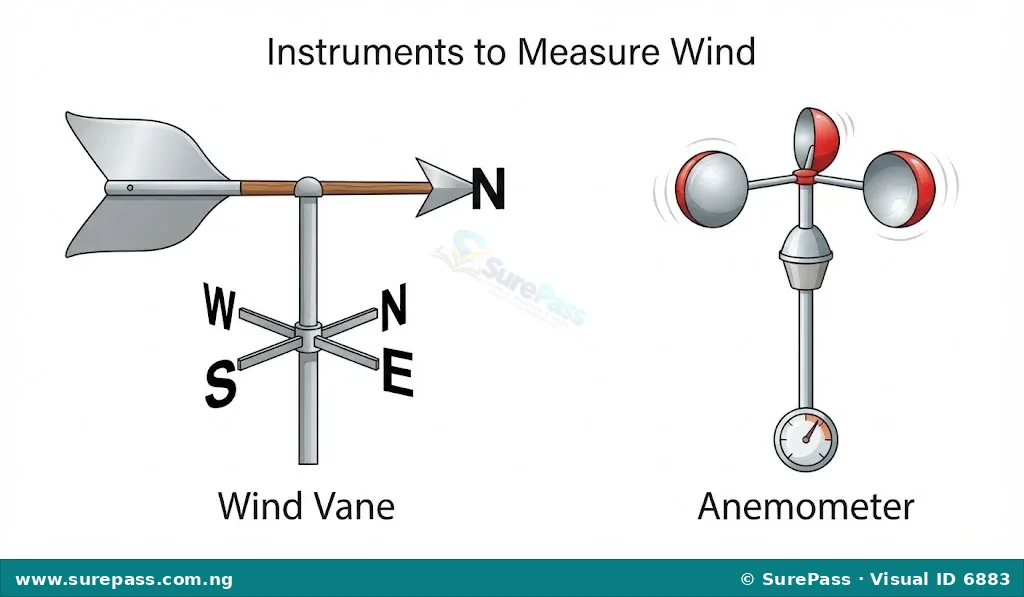
Wind is the movement of air from an area of high atmospheric pressure to an area of low atmospheric pressure.
Wind has two main characteristics: direction and speed. Wind direction is measured using a wind vane, which points in the direction from which the wind is blowing. Wind speed is measured using an anemometer. Wind affects temperature, carries moisture, and influences ocean currents.
Atmospheric Pressure
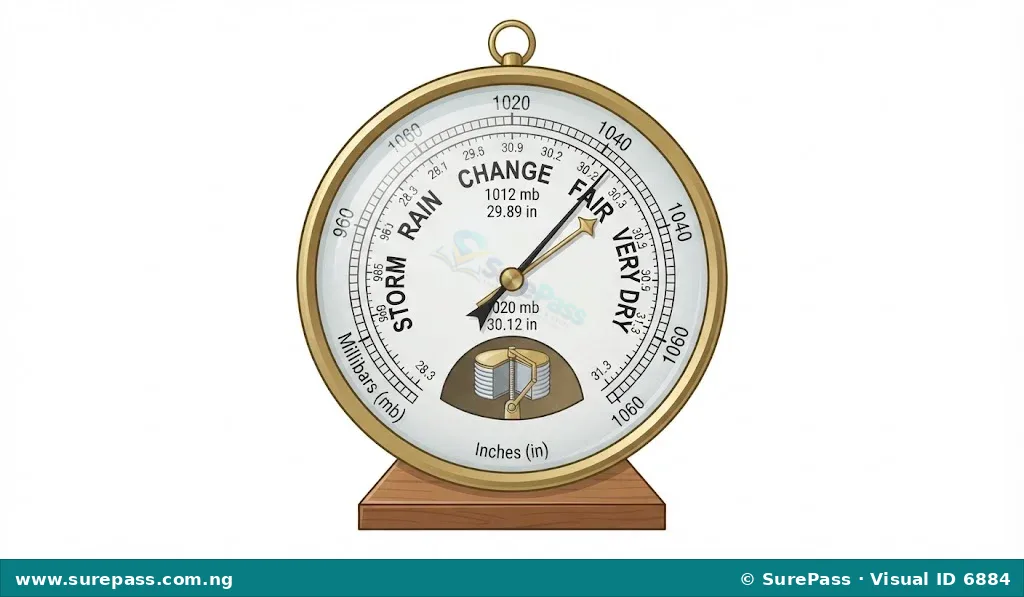
Atmospheric pressure is the force exerted by the weight of the air above a given point on the Earth’s surface.
It is measured using a barometer, typically in millibars (mb) or hectopascals (hPa). Changes in atmospheric pressure are often associated with changes in weather. High pressure usually indicates stable, clear weather, while low pressure often brings cloudy, stormy conditions.
Factors Influencing Climate
The climate of a region is not uniform across the Earth. Several geographical factors interact to create the distinct climatic zones observed around the world. These factors determine the long-term average weather conditions of a place.
Altitude
Altitude refers to the height of a place above sea level.
As altitude increases, temperature generally decreases. This is because the air at higher altitudes is thinner and contains less water vapour and dust, which means it absorbs and retains less heat. For every 1,000 metres increase in altitude, the temperature drops by about 6.5°C. This is why mountain tops are often covered in snow, even in tropical regions.
Latitude
Latitude is the angular distance of a place north or south of the Equator.
Latitude is a major factor influencing climate because it determines the angle at which the sun’s rays strike the Earth’s surface. Places near the Equator (low latitudes) receive more direct sunlight throughout the year, leading to consistently high temperatures. As latitude increases towards the poles (high latitudes), the sun’s rays become more spread out and less direct, resulting in lower temperatures and distinct seasons.
Slope
Slope refers to the angle or inclination of the land surface.
The direction a slope faces, known as its aspect, can influence local climate. Slopes facing the sun (e.g., south-facing slopes in the Northern Hemisphere) receive more direct sunlight and are generally warmer and drier. Slopes facing away from the sun (e.g., north-facing slopes) receive less direct sunlight and tend to be cooler and moister. This difference can affect vegetation and soil conditions.
Ocean Currents
Ocean currents are continuous, directed movements of ocean water driven by forces such as wind, temperature, and salinity differences.
Ocean currents can significantly influence the climate of coastal regions. Warm ocean currents, like the Gulf Stream, carry warm water from equatorial regions towards higher latitudes, warming the air above them and leading to milder, wetter climates in coastal areas. Cold ocean currents, like the Benguela Current off the coast of Southern Africa, carry cold water from polar regions, cooling the air and often leading to drier, cooler climates or even deserts along the coast.
Cloud Cover
Cloud cover refers to the amount of the sky covered by clouds.
Clouds play a dual role in influencing temperature. During the day, clouds reflect incoming solar radiation back into space, reducing the amount of sunlight that reaches the Earth’s surface and thus lowering daytime temperatures. At night, clouds act like a blanket, trapping heat that radiates from the Earth’s surface, preventing it from escaping into space and thus keeping nighttime temperatures warmer. Regions with persistent cloud cover tend to have smaller daily temperature ranges.
Effects of Weather and Climate on Human Activities
Weather and climate have profound impacts on various aspects of human life and activities. Understanding these effects helps communities adapt and plan for different conditions.
The effects of weather and climate on human activities include:
- Agriculture: Climate dictates the types of crops that can be grown in a region. For example, rice requires high rainfall and warm temperatures, while wheat thrives in cooler, temperate climates. Extreme weather events like droughts, floods, and heatwaves can destroy crops, leading to food shortages and economic losses for farmers.
- Housing and Settlement: The design and construction of houses are influenced by climate. In hot, humid climates, houses may have large windows, high ceilings, and light materials to promote ventilation and keep interiors cool. In cold climates, houses are built with insulation, smaller windows, and heating systems to retain warmth. Climate also influences the location of settlements, with people often preferring areas with favourable conditions.
- Clothing: The type of clothing people wear is directly related to the weather and climate. In hot weather, light, breathable fabrics like cotton are preferred. In cold weather, heavy, insulated clothing made of wool or synthetic materials is necessary to stay warm.
- Transportation: Weather conditions significantly affect transportation. Heavy rainfall can cause floods, making roads impassable. Fog and strong winds can disrupt air and sea travel. Icy conditions make roads dangerous for driving. Climate influences the design of infrastructure, such as bridges built to withstand strong winds or roads designed to drain water effectively.
- Health: Weather and climate can impact human health. Extreme heat can lead to heatstroke, while extreme cold can cause hypothermia. Certain diseases, like malaria, are more prevalent in warm, humid climates where mosquitoes thrive. Air quality can also be affected by weather patterns, such as wind carrying pollutants.
- Tourism and Recreation: Many tourist activities are weather-dependent. Beach holidays require sunny weather, while skiing depends on snow. Climate influences the types of recreational activities available in a region, from water sports in tropical areas to winter sports in colder regions.
- Energy Consumption: Temperature extremes lead to increased energy consumption for heating in cold climates and air conditioning in hot climates. This affects electricity demand and can strain energy resources.
Observing and Recording Weather Elements in the Local Environment
Observing and recording weather elements is a practical skill that helps in understanding local weather patterns and how they contribute to the climate. This involves using simple instruments to gather data over time.
Materials Required:
To observe and record weather elements, the following materials are useful:
- Thermometer (for temperature)
- Rain gauge (for rainfall)
- Wind vane (for wind direction)
- Anemometer (for wind speed) – Optional for basic observation
- Barometer (for atmospheric pressure) – Optional for basic observation
- Notebook or chart for recording data
- Pen or pencil
Procedure for Observing and Recording Weather Elements:
The procedure involves the following steps:
- Set up Instruments: Place the thermometer in a shaded, well-ventilated area, away from direct sunlight and heat sources, to measure air temperature accurately. Position the rain gauge in an open area, away from buildings or trees that might block rainfall. Set up the wind vane in an open space where it can freely rotate to show wind direction.
- Establish Observation Times: Decide on specific times each day to take readings, for example, 9:00 AM, 12:00 PM, and 3:00 PM. Consistency is important for accurate data collection.
- Record Temperature: Read the temperature from the thermometer at the designated times. Note the reading in degrees Celsius (°C) in the notebook.
- Record Rainfall: After any rain event, or at the end of each day, check the rain gauge. Read the amount of water collected in millimetres (mm). Empty the gauge after each reading to prepare for the next measurement. If there is no rain, record “0 mm”.
- Record Wind Direction: Observe the direction the wind vane is pointing. Note the direction (e.g., North, South-West, East) in the notebook.
- Record Wind Speed (if applicable): If an anemometer is available, read the wind speed (e.g., in kilometres per hour or metres per second) and record it.
- Record Atmospheric Pressure (if applicable): If a barometer is available, read the atmospheric pressure (e.g., in millibars or hectopascals) and record it.
- Note General Weather Conditions: In addition to instrument readings, make qualitative observations such as “sunny,” “cloudy,” “partly cloudy,” “foggy,” “hazy,” or “stormy.”
- Organise Data: Create a simple table in the notebook with columns for Date, Time, Temperature, Rainfall, Wind Direction, Wind Speed (if measured), Atmospheric Pressure (if measured), and General Conditions.
- Analyse Data (Over Time): After collecting data for several days or weeks, observe patterns. For example, notice if temperatures are consistently higher in the afternoon, or if wind usually blows from a certain direction. This long-term observation helps to understand the local climate.




0 comments
Open the discussion when you need it. Comments stay collapsed until requested so the initial article remains light.