



ARTICLE CONTENTSOn this page 5 sections
Agricultural Agencies in Nigeria
Performance Objectives
By the end of the lesson, students should be able to:
- explain Agricultural agencies;
- identify the government/ non -governmental agencies;
- identify their basic roles in agricultural development.
What Are Agricultural Agencies?
Agricultural agencies are organisations established by governments, private bodies, or international communities to support and promote agricultural development.
These agencies work to improve farming practices, increase food production, ensure food security, and enhance the livelihoods of farmers and rural communities. They provide various forms of assistance, including technical advice, financial support, training, research, and policy formulation.
Types of Agricultural Agencies
Agricultural agencies can be broadly categorised into two main types based on their funding and operational structure:
- Governmental Agencies: These are agencies established, funded, and controlled by the government of a country. Their mandates are usually derived from national policies and laws, and they work to implement government agricultural programmes.
- Non-Governmental Agencies (NGOs): These are independent organisations that are not part of the government. They can be local, national, or international. NGOs often receive funding from donations, grants, or international bodies and work directly with communities to address specific agricultural challenges.
Specific Agricultural Agencies in Nigeria and Their Functions
Several agencies operate in Nigeria, contributing to the growth and development of the agricultural sector. These agencies play crucial roles in various aspects of farming, food processing, and rural development.
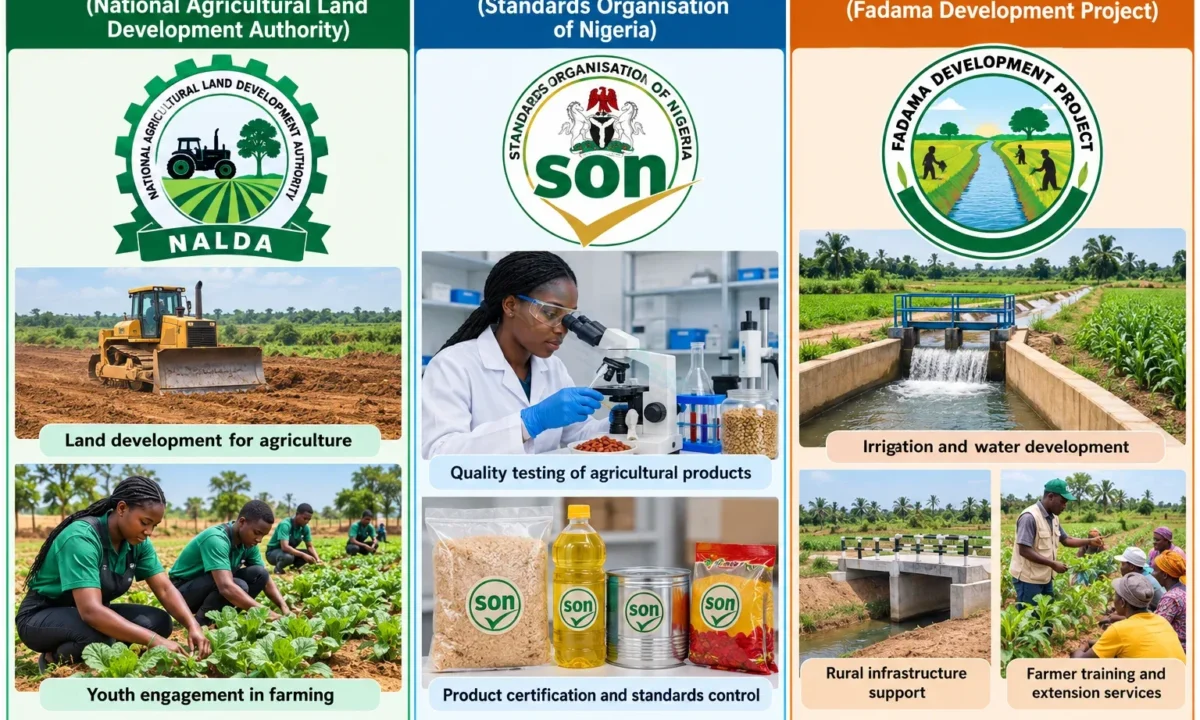
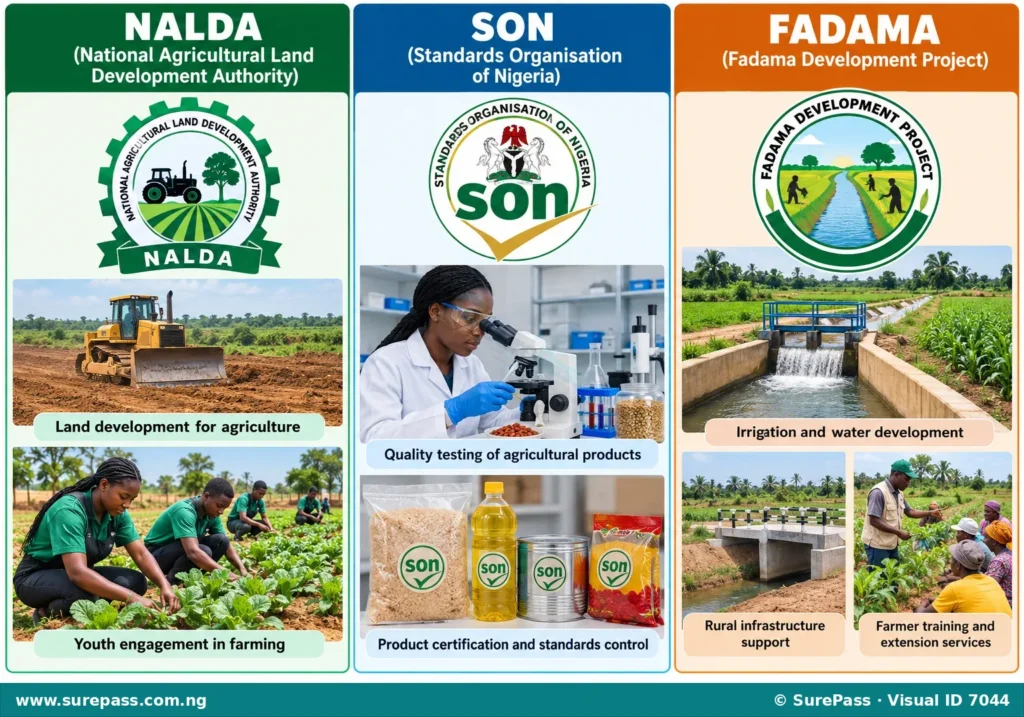
National Agricultural Land Development Authority (NALDA)
NALDA is a governmental agency established to promote and support agricultural land development and food security in Nigeria.
Its main functions and contributions include:
- Land Development: NALDA focuses on developing unused or underutilised land for agricultural purposes, making it available to farmers for cultivation.
- Food Security: The agency aims to achieve food security by increasing local food production through various initiatives, including the provision of improved seeds and fertilisers.
- Youth and Women Empowerment: NALDA engages youth and women in profitable agricultural ventures, providing them with training, land, and inputs to become successful farmers.
- Rural Development: It contributes to rural development by creating employment opportunities in agriculture and improving the economic conditions of rural communities.
Standards Organisation of Nigeria (SON)
SON is a governmental agency responsible for setting and enforcing standards for products and services in Nigeria, including agricultural products.
Its functions and contributions to agriculture include:
- Standardisation of Agricultural Products: SON develops and promotes standards for agricultural produce, processed foods, and agricultural inputs like fertilisers and pesticides. This ensures quality and safety.
- Quality Control: The agency carries out inspections and tests to ensure that agricultural products, whether for local consumption or export, meet national and international quality standards.
- Consumer Protection: By ensuring quality standards, SON protects consumers from substandard or harmful agricultural products.
- Market Access: Adherence to SON standards helps Nigerian agricultural products gain acceptance in international markets, boosting exports and farmer income.
FADAMA Development Project (FADAMA)
FADAMA is a World Bank-assisted governmental programme in Nigeria aimed at increasing the income of users of rural land and water resources, particularly smallholder farmers.
Its key functions and contributions are:
- Poverty Reduction: FADAMA projects focus on reducing poverty among rural farmers by improving their access to resources, technology, and markets.
- Infrastructure Development: It supports the development of small-scale rural infrastructure, such as irrigation facilities, rural roads, and storage facilities, which are crucial for agricultural productivity.
- Capacity Building: The programme provides training and technical assistance to farmers in modern farming techniques, business management, and value addition.
- Community Empowerment: FADAMA promotes community-driven development, allowing local communities to identify and implement projects that meet their specific agricultural needs.
Food and Agriculture Organization (FAO)
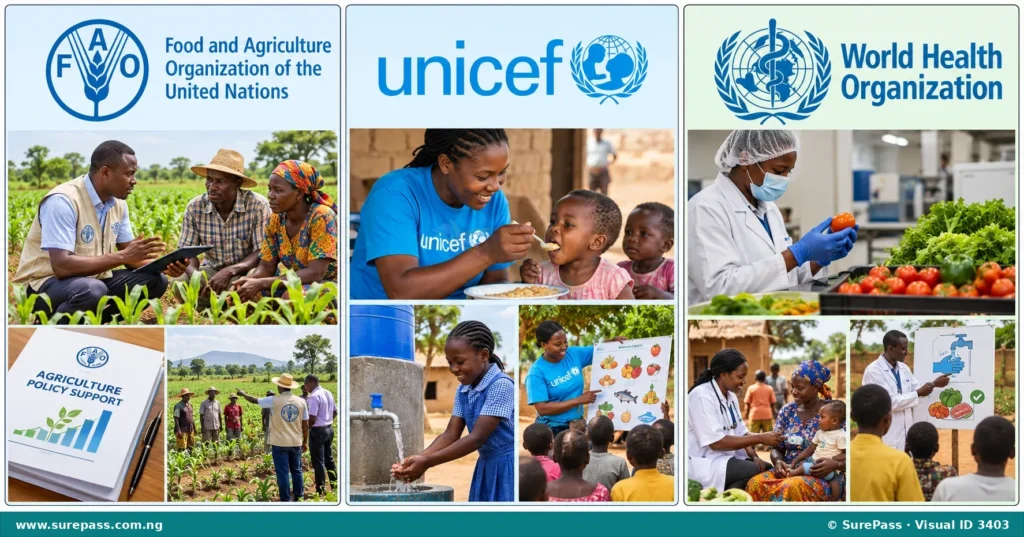
The FAO is a specialised agency of the United Nations that leads international efforts to defeat hunger and improve nutrition and food security.
Its functions and contributions to agriculture in Nigeria include:
- Technical Assistance: FAO provides technical expertise and advice to the Nigerian government and farmers on sustainable agricultural practices, crop production, livestock management, and fisheries.
- Policy Support: It assists in the formulation and implementation of agricultural policies and strategies aimed at improving food security and rural development.
- Emergency Response: In times of food crises or natural disasters, FAO provides emergency food aid and support to restore agricultural livelihoods.
- Data and Information: The organisation collects, analyses, and disseminates data and information on agriculture, food, and nutrition, which helps in planning and decision-making.
United Nations Children’s Fund (UNICEF)
UNICEF is a United Nations agency responsible for providing humanitarian and developmental aid to children worldwide. While not primarily an agricultural agency, its work significantly impacts agricultural communities and food security.
Its contributions related to agriculture in Nigeria include:
- Nutrition Programmes: UNICEF implements programmes to combat malnutrition in children, often working with farming communities to promote diverse and nutritious food production and consumption.
- Water, Sanitation, and Hygiene (WASH): By improving access to clean water and sanitation in rural areas, UNICEF supports the health of farming families, which in turn enhances their capacity for agricultural work.
- Food Security for Children: The agency advocates for policies and practices that ensure food security for children, including supporting smallholder farmers to produce enough food for their families and communities.
- Education and Livelihoods: UNICEF supports education and livelihood programmes in rural areas, which can include training in agricultural skills for young people and women.
World Health Organization (WHO)
The WHO is a specialised agency of the United Nations concerned with international public health. Its work, like UNICEF’s, has indirect but significant impacts on agriculture, particularly concerning food safety and health in farming communities.
Its contributions related to agriculture in Nigeria include:
- Food Safety Standards: WHO works with national governments, including Nigeria, to develop and implement food safety standards, ensuring that agricultural products are safe for consumption and preventing foodborne illnesses.
- Health in Agricultural Communities: It addresses health issues prevalent in rural and farming communities, such as access to healthcare, control of vector-borne diseases (e.g., malaria), and occupational health for farmers.
- Nutrition and Health: WHO promotes healthy diets and good nutrition, which influences the demand for diverse agricultural products and encourages sustainable food systems.
- Disease Surveillance: The organisation monitors and responds to outbreaks of diseases that can affect both human health and livestock, which are critical for agricultural productivity and food security.





0 comments
Open the discussion when you need it. Comments stay collapsed until requested so the initial article remains light.