


ARTICLE CONTENTSOn this page 7 sections
Laboratory Safety Rules
Performance Objectives
By the end of the lesson, students should be able to:
- describe a laboratory;
- identify types of laboratories;
- identify various apparatus and equipment in the biology lab;
- apply safety rules in the laboratory;
- use personal protective equipment (PPE).
Meaning of Laboratory
A laboratory is a specially equipped room or building where scientific experiments, research, and practical investigations are carried out.
Laboratories provide a controlled environment for scientists and students to observe, measure, and analyse phenomena safely and accurately. They are essential for learning and discovery in various scientific fields.
Types of Laboratories
Laboratories are designed and equipped according to the specific type of work conducted within them. Different scientific disciplines require different tools, environments, and safety protocols.
Common types of laboratories include:
- Medical Laboratory: These laboratories are found in hospitals and clinics. They are used for analysing patient samples such as blood, urine, and tissues to diagnose diseases, monitor treatment, and assess overall health.
- Research Laboratory: Research laboratories are dedicated to conducting scientific research to discover new knowledge, develop new technologies, or test hypotheses. They can be found in universities, government institutions, and private companies, focusing on areas like biology, chemistry, physics, or engineering.
- Specialised Laboratories: These are laboratories designed for very specific tasks or fields. Examples include forensic laboratories (for crime investigation), environmental laboratories (for analysing air, water, and soil samples), and quality control laboratories (for testing product standards).
Apparatus and Equipment in the Biology Laboratory
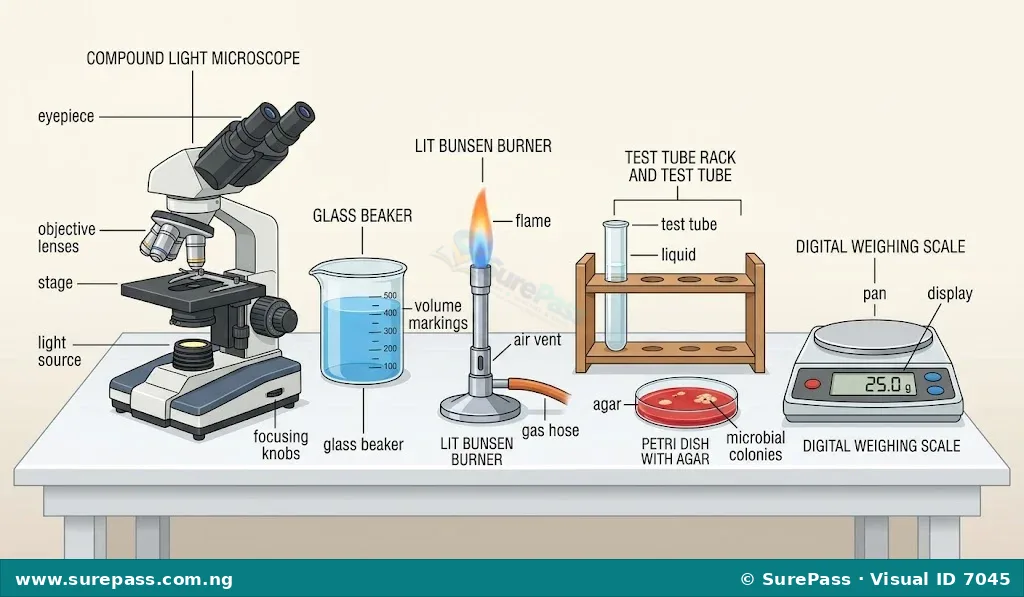
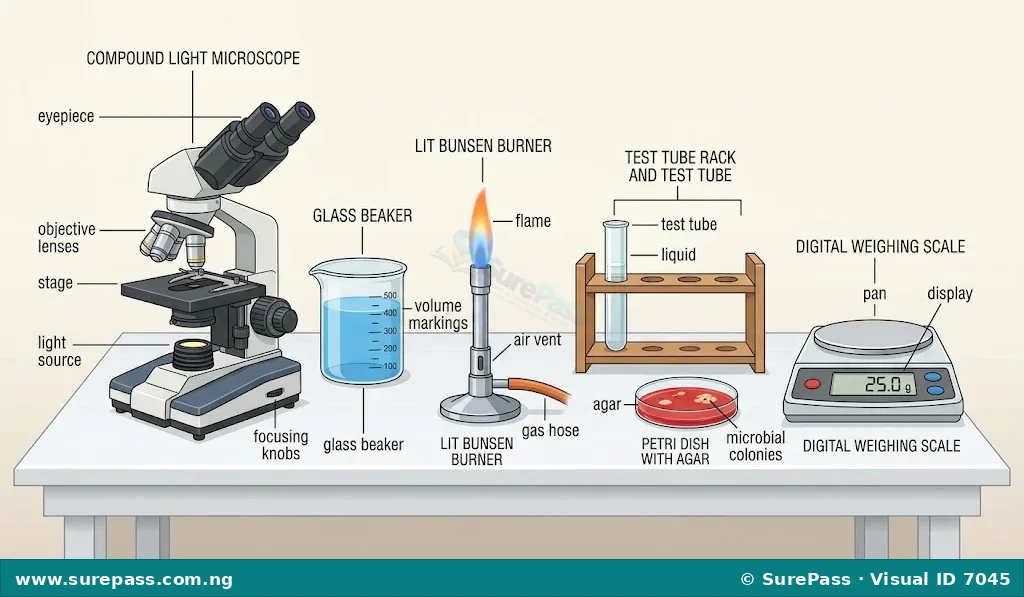
The biology laboratory is equipped with various tools and instruments, known as apparatus and equipment, that are essential for conducting experiments, observations, and dissections related to living organisms.
Some common apparatus and equipment found in a biology laboratory include:
- Test Tubes: Small, cylindrical glass tubes with a rounded bottom, used for holding small amounts of liquids, mixing chemicals, or heating substances.
- Petri Dishes: Shallow, circular, transparent dishes with a lid, commonly used for culturing microorganisms like bacteria and fungi on a growth medium.
- Beaker: Cylindrical glass containers with a flat bottom and a pouring lip, used for holding, mixing, and heating liquids. They are not typically used for precise measurements.
- Bunsen Burners: Gas burners that produce a single open flame, used for heating, sterilising, and combustion in experiments.
- Fume Cupboard: A ventilated enclosure that protects laboratory workers from exposure to hazardous fumes, vapours, and dust by drawing air away from the work area.
- Water Trough: A shallow container, often made of plastic or metal, used for collecting gases over water or for holding water for various experiments.
- Microscopes: Optical instruments used to magnify small objects or specimens that are too small to be seen with the naked eye, allowing for detailed observation of cells, tissues, and microorganisms.
- Weighing Scale: An instrument used to measure the mass of substances accurately, often digital for precision.
Laboratory Safety Rules
Working in a laboratory involves potential hazards, so it is crucial to follow strict safety rules to prevent accidents, injuries, and contamination. Adhering to these rules protects everyone in the laboratory.
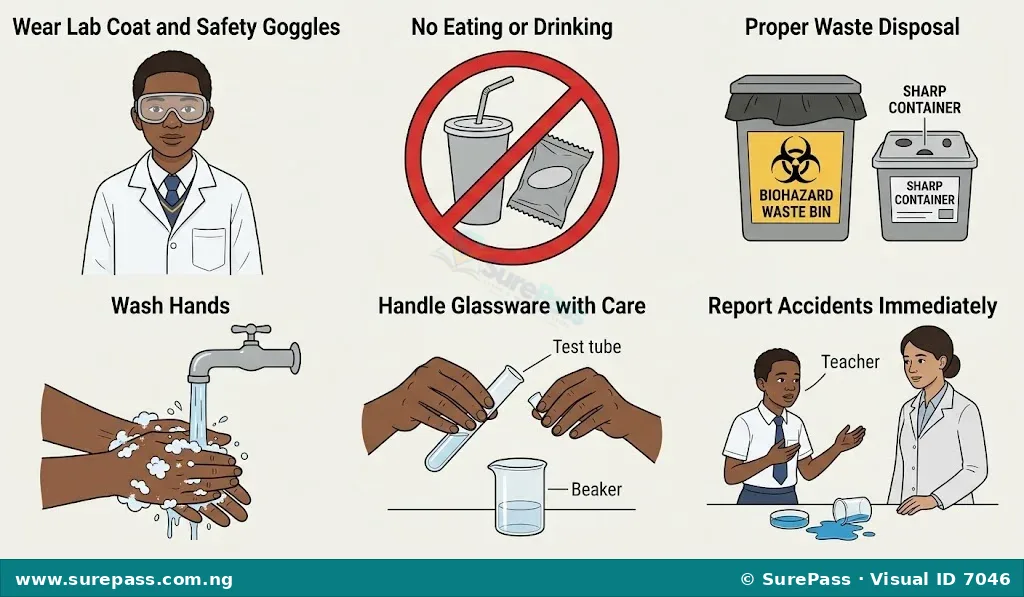
Important laboratory safety rules include:
- Wearing Appropriate Personal Protective Equipment (PPE): PPE includes items like lab coats, safety goggles, and gloves. These protect the body, eyes, and hands from chemical splashes, heat, and biological contaminants.
- Avoiding Eating and Drinking in the Laboratory: Food and drinks can become contaminated with chemicals or microorganisms, which can then be ingested. This rule prevents accidental poisoning or infection.
- Proper Disposal of Waste: Laboratory waste, including broken glass, sharp objects, chemical residues, and biological materials, must be disposed of in designated containers. This prevents injury and environmental contamination.
- Reading Instructions Carefully: Before starting any experiment, read all instructions thoroughly and understand the procedure and potential hazards.
- Reporting Accidents and Spills: Any accident, injury, or chemical spill, no matter how minor, must be reported immediately to the supervising teacher or laboratory technician.
- Knowing Emergency Procedures: Be aware of the location of emergency exits, fire extinguishers, first-aid kits, and emergency showers/eyewash stations. Understand how to use them.
- Keeping the Work Area Tidy: Maintain a clean and organised workspace. Clutter can lead to spills, broken apparatus, and other accidents.
- Washing Hands: Always wash hands thoroughly with soap and water before leaving the laboratory, especially after handling chemicals or biological materials.
- Handling Chemicals Safely: Never taste or smell chemicals directly. Use a wafting motion to smell vapours if necessary. Always add acid to water slowly, not water to acid.
- Handling Glassware Carefully: Inspect glassware for cracks or chips before use. Dispose of broken glass in designated containers.
Using Personal Protective Equipment (PPE) Effectively
Personal Protective Equipment (PPE) is vital for ensuring safety in the laboratory. Effective use of PPE involves knowing what equipment to use, how to wear it correctly, and how to remove it safely.
Common Personal Protective Equipment (PPE) in a Biology Lab
The primary PPE items for a biology laboratory are:
- Lab Coat: A long-sleeved coat made of durable material, worn over regular clothing to protect against splashes and spills.
- Safety Goggles: Protective eyewear designed to shield the eyes from chemical splashes, flying debris, and harmful vapours.
- Gloves: Disposable gloves, usually made of latex or nitrile, worn to protect hands from chemicals, biological agents, and contamination.
Procedure for Wearing and Removing PPE
Wearing and removing PPE correctly minimises the risk of contamination and exposure to hazards.
The procedure involves the following steps:
- Wearing a Lab Coat:
- Select a lab coat of the correct size that covers your arms and torso.
- Put on the lab coat and button it up completely to ensure full protection.
- Wearing Safety Goggles:
- Ensure the safety goggles are clean and free from scratches.
- Place the goggles over your eyes, ensuring they fit snugly around your face without gaps, covering both the front and sides of your eyes.
- Wearing Gloves:
- Ensure your hands are clean and dry before putting on gloves.
- Select the correct size of gloves.
- Carefully slide your hands into the gloves, ensuring they cover your wrists and overlap with the cuffs of your lab coat if possible.
- Removing Gloves Safely:
- Grasp the cuff of one glove near the wrist with your other gloved hand.
- Pull the glove off, turning it inside out as you remove it. Hold the removed glove in your still-gloved hand.
- Slide an ungloved finger under the cuff of the remaining glove, avoiding touching the outer contaminated surface.
- Pull this glove off, turning it inside out and enclosing the first glove within it.
- Dispose of the gloves immediately in the designated waste bin.
- Removing a Lab Coat:
- Unbutton the lab coat.
- Carefully remove the lab coat, turning it inside out to contain any potential contaminants on the outer surface.
- Place the lab coat in the designated laundry or storage area.
- Washing Hands:
- After removing all PPE, wash your hands thoroughly with soap and water for at least 20 seconds.
- Dry your hands with a clean paper towel.




0 comments
Open the discussion when you need it. Comments stay collapsed until requested so the initial article remains light.