


ARTICLE CONTENTSOn this page 7 sections
Pollution
Performance Objectives
By the end of the lesson, students should be able to:
- explain the meaning of pollution;
- identify the different types of pollution;
- explain the sources of pollutants;
- discuss the effects of pollutants on the environment;
- discuss pollution control in the environment.
Meaning of Pollution
Pollution is the introduction of harmful substances or products into the environment, making it unclean or unsafe.
These harmful substances, known as pollutants, can affect the air, water, and soil, making them unsuitable for living organisms. Pollution can also involve the release of energy, such as noise or heat, to a level that causes harm.
Types of Pollution
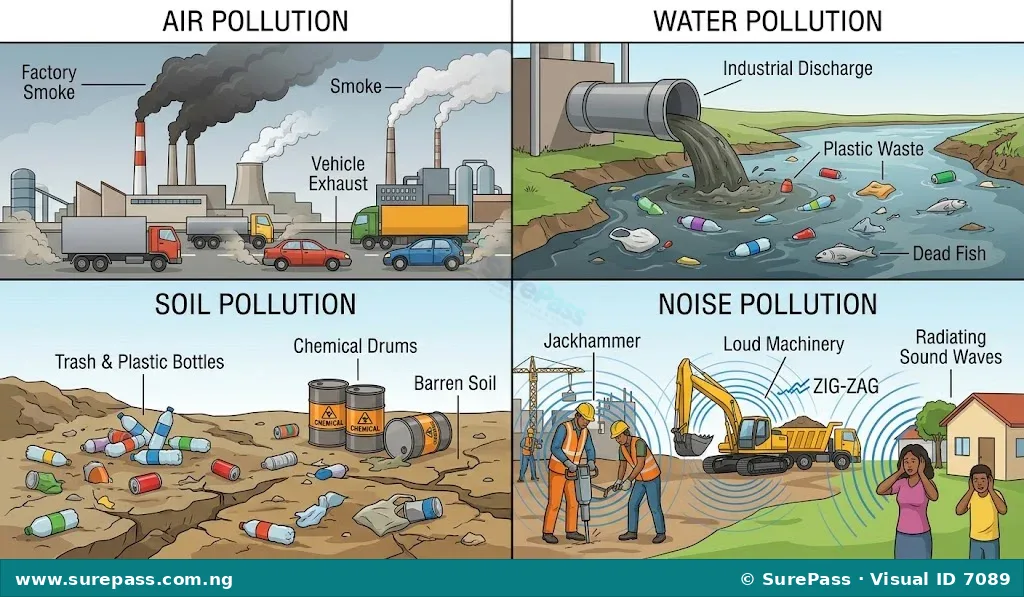
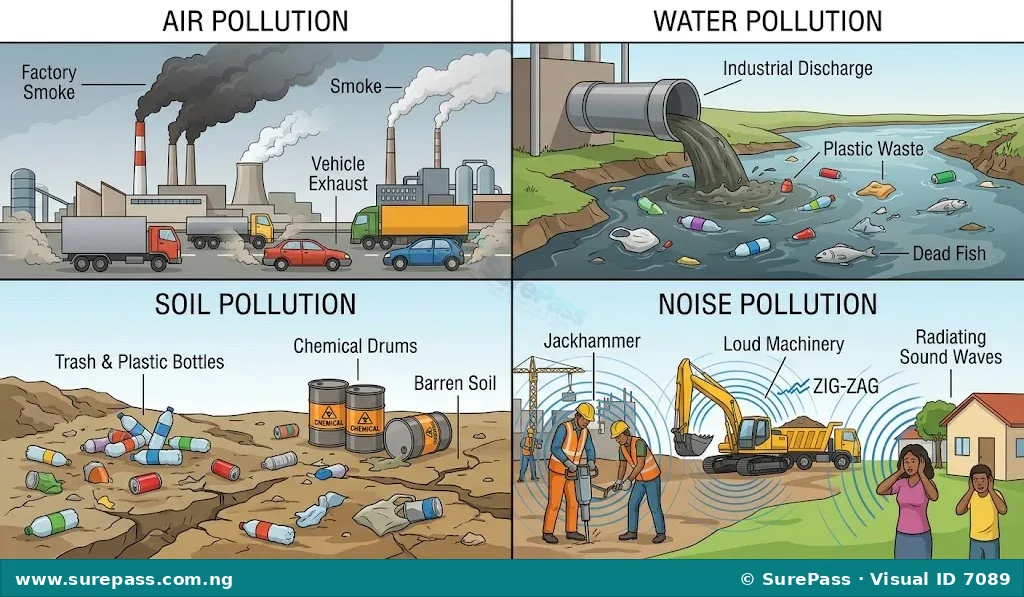
Pollution can be categorised based on the part of the environment it affects or the nature of the harmful agent. Understanding these types helps in identifying specific problems and finding solutions.
Air Pollution
Air pollution occurs when harmful gases, dust, smoke, or odours are introduced into the atmosphere, making the air unhealthy to breathe.
Common air pollutants include smoke from vehicles and factories, dust from construction sites, and gases released from burning fossil fuels.
Water Pollution
Water pollution is the contamination of water bodies, such as rivers, lakes, oceans, and groundwater, by harmful substances.
This type of pollution makes water unsafe for drinking, swimming, and supporting aquatic life. Examples of water pollutants include sewage, industrial waste, and agricultural chemicals.
Soil Pollution
Soil pollution is the contamination of soil with harmful chemicals or other substances that reduce its quality and productivity.
Contaminated soil can affect plant growth and make food crops unsafe for consumption. Sources often include improper waste disposal, industrial chemicals, and excessive use of pesticides.
Noise Pollution
Noise pollution refers to excessive or unwanted sound that can disrupt human or animal life.
Unlike other types of pollution that involve physical substances, noise pollution is about the level of sound energy. High levels of noise can cause stress, hearing loss, and disrupt communication.
Sources of Pollutants
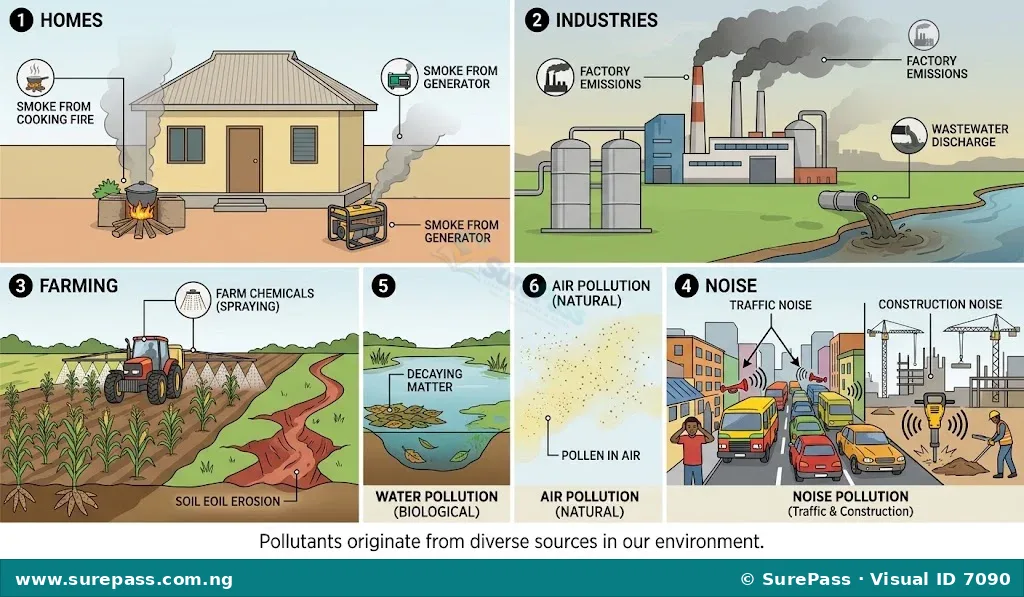
Pollutants originate from various activities and locations. Identifying these sources is crucial for effective pollution control.
Homes
Households contribute to pollution through daily activities. Domestic waste, including plastic bags, food scraps, and old electronics, often ends up in landfills or improperly disposed of, leading to soil and water pollution.
Sewage from toilets and bathrooms, if not properly treated, can contaminate water bodies. Smoke from cooking with firewood or charcoal, and fumes from generators, contribute to air pollution and noise pollution respectively.
Industries
Industrial activities are major sources of various pollutants. Factories release smoke and harmful gases like sulfur dioxide and nitrogen oxides into the air. Wastewater containing toxic chemicals, heavy metals, and dyes is often discharged into rivers and lakes, causing severe water pollution.
Solid industrial waste, such as chemical residues and manufacturing by-products, can contaminate soil if not managed properly. Industrial machinery also produces significant noise pollution.
Soil
The soil itself can become a source of pollutants, especially when it is degraded or misused. Soil erosion, caused by deforestation or poor farming practices, leads to sediment washing into rivers, making the water cloudy and affecting aquatic life.
Chemicals like pesticides, herbicides, and fertilisers applied to farm lands can leach through the soil into groundwater or run off into surface water, causing water pollution. Improper disposal of waste directly into the soil also makes the soil a source of contamination.
Noise
Loud sounds from various human activities are sources of noise pollution. These include:
- Vehicles: Cars, motorcycles, buses, and trucks produce engine noise and horn blasts.
- Generators: Many homes and businesses in Nigeria rely on generators, which are often very loud.
- Construction sites: Jackhammers, bulldozers, and other heavy machinery create intense noise.
- Industrial machinery: Equipment in factories and workshops can generate continuous loud sounds.
- Public events: Loud music from parties, religious gatherings, and street hawkers also contribute.
Plants
While plants are generally beneficial, certain plant-related processes can contribute to pollution. For example, large amounts of decaying plant matter in water bodies can consume oxygen as they decompose, leading to oxygen depletion that harms fish and other aquatic organisms.
Pollen released by certain plants can also act as an air pollutant, causing allergic reactions and respiratory problems in sensitive individuals.
Effects of Pollutants
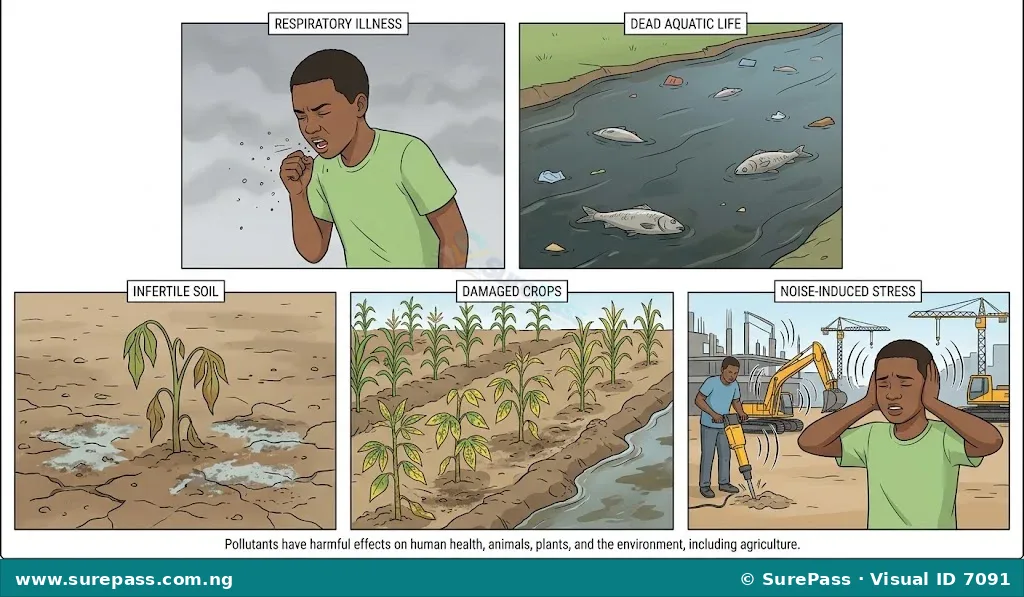
Pollutants have wide-ranging negative impacts on living organisms and the environment. These effects can be immediate or long-term.
Effects on Human Health
Air pollution can cause respiratory problems like asthma, bronchitis, and lung infections. Long-term exposure can lead to heart disease and cancer. Contaminated water, if consumed, can cause waterborne diseases such as cholera, typhoid, and dysentery.
Exposure to soil pollutants through contaminated food or direct contact can lead to various health issues, including poisoning and developmental problems. Noise pollution can cause hearing loss, stress, high blood pressure, and sleep disturbances.
Effects on Animals and Plants
Air pollutants can damage plant leaves, reduce growth, and make them more susceptible to diseases. Acid rain, caused by air pollution, can harm forests and aquatic ecosystems.
Water pollution is devastating for aquatic life, leading to the death of fish, amphibians, and other organisms. Oil spills, for instance, can coat birds and marine animals, preventing them from moving or feeding. Soil pollution can make soil infertile, preventing plants from growing and affecting the animals that depend on those plants for food.
Effects on the Environment
Pollution degrades the quality of natural resources. Air pollution contributes to global warming and climate change. Water pollution destroys aquatic habitats and reduces biodiversity.
Soil pollution reduces soil fertility, making land unsuitable for agriculture and leading to desertification. Overall, pollution disrupts ecosystems, reduces biodiversity, and makes the environment less habitable for many species.
Effects of Water and Soil Pollution on Agriculture
Water and soil pollution have significant negative impacts on agriculture, which is vital for food production. The effects include:
- Reduced crop yield: Contaminated soil loses its fertility, making it difficult for crops to grow well. Toxic chemicals in the soil can directly harm plants, leading to stunted growth or death.
- Unsafe food products: Crops grown in polluted soil or irrigated with polluted water can absorb harmful chemicals. When these crops are consumed, they can transfer the pollutants to humans and animals, posing health risks.
- Damage to irrigation systems: Sediment from water pollution can clog irrigation channels and pumps, making it harder to water crops effectively.
- Loss of beneficial soil organisms: Pesticides and other chemicals in polluted soil can kill beneficial microorganisms and insects that are essential for soil health and nutrient cycling.
- Water scarcity for irrigation: Polluted water sources become unusable for irrigation, forcing farmers to seek alternative, often more expensive, water sources or abandon farming.
Pollution Control
Controlling pollution involves various strategies aimed at reducing the release of pollutants into the environment and mitigating their effects. Effective pollution control requires a combination of individual actions, community efforts, and government policies.
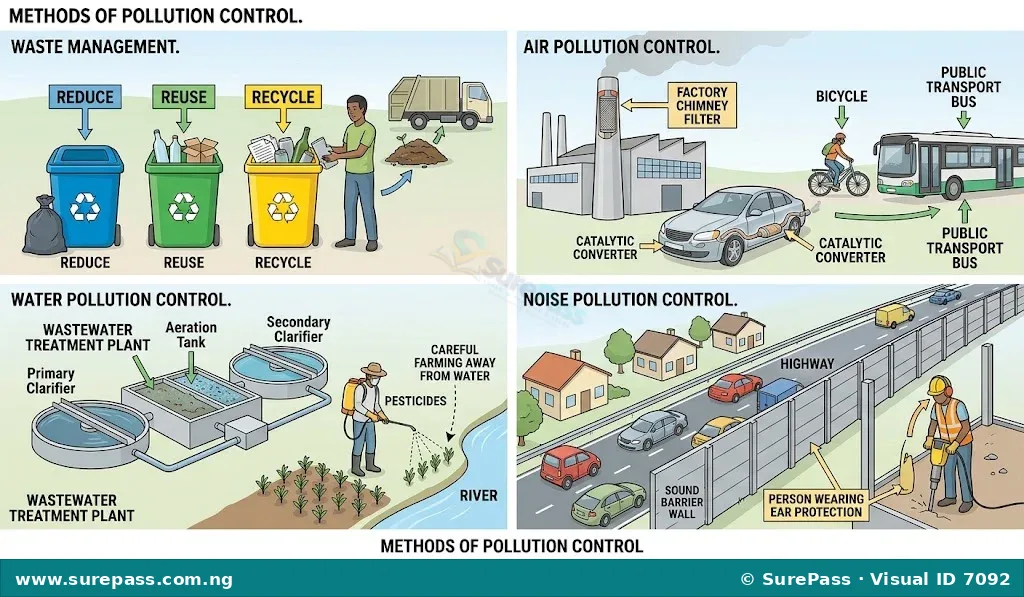
Waste Management
Proper waste management is crucial for controlling soil and water pollution. This includes:
- Reduce: Minimising the amount of waste produced by consuming less and choosing products with less packaging.
- Reuse: Finding new uses for items instead of discarding them, such as using old plastic containers for storage.
- Recycle: Processing used materials into new products, like turning plastic bottles into new plastic items or paper into recycled paper.
- Proper disposal: Ensuring that non-recyclable waste is disposed of in designated landfills or incinerators that meet environmental standards.
Air Pollution Control
Controlling air pollution involves reducing emissions from vehicles and industries. Measures include:
- Using cleaner fuels: Promoting the use of fuels with lower pollutant emissions.
- Installing filters: Equipping factory chimneys and vehicle exhausts with filters (e.g., catalytic converters) to trap harmful gases and particulate matter.
- Promoting public transport and cycling: Reducing the number of private vehicles on the road.
- Encouraging renewable energy: Shifting from fossil fuels to solar, wind, and hydro power.
- Afforestation: Planting more trees, as they absorb carbon dioxide and other air pollutants.
Water Pollution Control
Preventing water contamination requires careful management of wastewater and agricultural runoff. Key methods include:
- Wastewater treatment: Treating sewage and industrial effluent before discharging it into water bodies to remove harmful substances.
- Preventing chemical runoff: Encouraging responsible use of fertilisers and pesticides in agriculture to prevent them from washing into rivers and groundwater.
- Avoiding direct dumping: Prohibiting the dumping of waste, especially plastics and chemicals, into rivers, lakes, and oceans.
- Protecting wetlands: Preserving natural wetlands, which act as natural filters for water.
Noise Pollution Control
Reducing excessive noise levels helps protect human health and well-being. Control measures include:
- Urban planning: Designing cities with separate zones for residential, commercial, and industrial activities to minimise noise impact.
- Noise barriers: Constructing walls or planting trees along busy roads and industrial areas to absorb sound.
- Vehicle maintenance: Ensuring vehicles are well-maintained to reduce engine noise.
- Regulating loud activities: Setting limits on noise levels for construction work, industrial operations, and public events, especially in residential areas.
- Using quieter equipment: Encouraging the use of modern, less noisy machinery in industries and construction.


0 comments
Open the discussion when you need it. Comments stay collapsed until requested so the initial article remains light.