



ARTICLE CONTENTSOn this page 4 sections
Conservation
Performance Objectives
By the end of the lesson, students should be able to:
- explain waste management;
- identify waste management techniques;
- explain deforestation;
- discuss the impact of deforestation on the environment.
Understanding Waste Management
The environment is constantly affected by human activities. One significant impact comes from the waste generated daily in homes, schools, markets, and industries. Effective handling of this waste is crucial for maintaining a healthy environment.
Meaning of Waste
Waste refers to any unwanted or unusable material that is discarded after its primary use or is worthless, defective, or of no use.
Waste can be solid, liquid, or gaseous. Examples of solid waste include food scraps, plastic bottles, paper, and broken furniture. Liquid waste includes sewage and industrial effluents, while gaseous waste includes smoke and harmful gases released from factories and vehicles.
Meaning of Waste Management
Waste management is the process of collecting, transporting, processing, recycling, or disposing of waste materials.
The goal of waste management is to reduce the harmful effects of waste on human health and the environment. Proper waste management helps to keep communities clean, prevent the spread of diseases, and conserve natural resources.
Waste Management Techniques
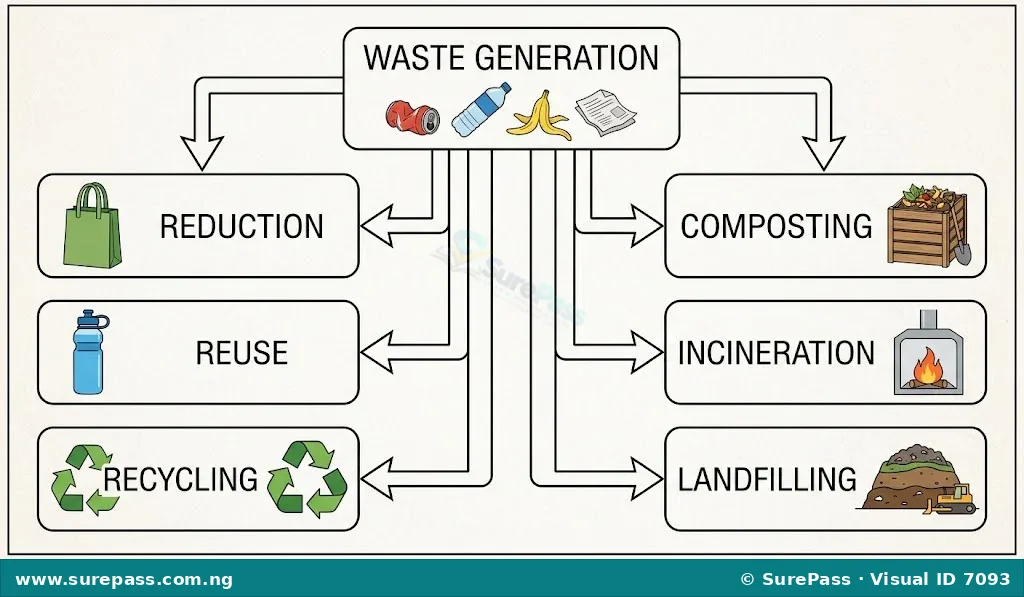
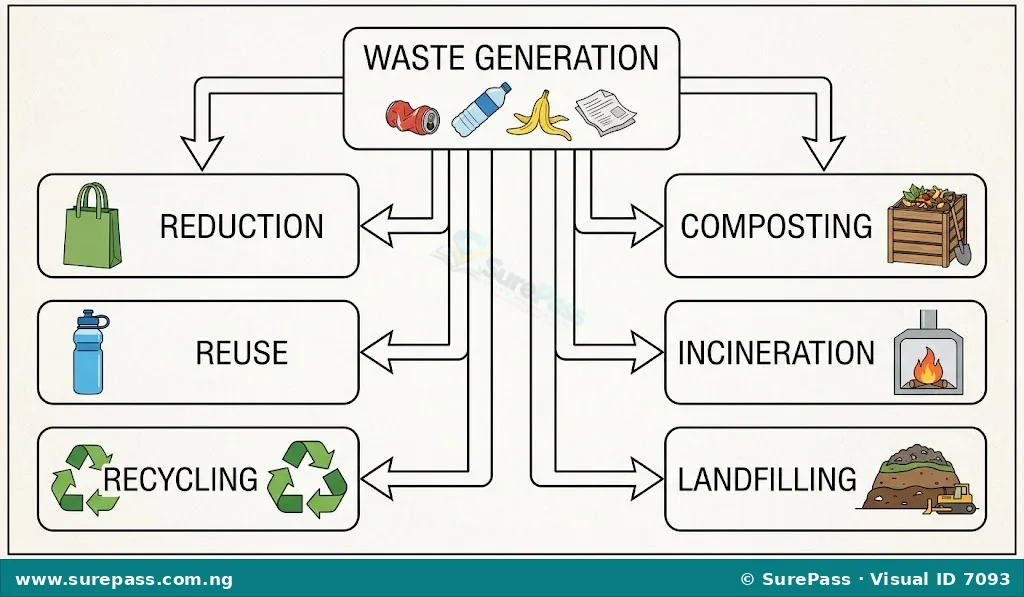
Various techniques are employed to manage waste effectively. These techniques aim to reduce the amount of waste that ends up in landfills and to minimise environmental pollution.
Common waste management techniques include:
- Reduction: This involves decreasing the amount of waste produced in the first place. It is the most effective way to manage waste. Examples include buying products with less packaging, using reusable bags instead of plastic bags, and avoiding single-use items.
- Reuse: This technique involves using items again for their original purpose or for a different purpose instead of discarding them. Examples include refilling water bottles, donating old clothes, and using glass jars for storage.
- Recycling: Recycling is the process of converting waste materials into new products. This helps to conserve natural resources and reduce pollution. Materials commonly recycled include plastics, paper, glass, and metals.
- Composting: This is a natural process where organic waste materials, such as food scraps and garden waste, decompose to form nutrient-rich soil conditioner called compost. Composting reduces the amount of organic waste sent to landfills and enriches soil for agriculture.
- Incineration: This involves burning waste materials at high temperatures to reduce their volume and sometimes generate energy. While it significantly reduces waste volume, it must be done with proper air pollution controls to prevent the release of harmful gases.
- Landfilling: This is the oldest and most common method of waste disposal, where waste is buried in designated areas called landfills. Modern landfills are designed to minimise environmental impact by lining the bottom to prevent leakage of harmful liquids (leachate) into the soil and groundwater.
Practicing Cleanliness and Hygiene
Maintaining cleanliness and hygiene is a fundamental aspect of waste management and environmental conservation. It involves personal habits and community practices that prevent the accumulation of waste and the spread of diseases.
Important practices for cleanliness and hygiene include:
- Regularly sweeping and cleaning homes, schools, and surrounding areas.
- Disposing of waste in designated bins and not littering.
- Washing hands frequently, especially after handling waste and before eating.
- Ensuring proper drainage systems to prevent stagnant water, which can be breeding grounds for mosquitoes and other pests.
- Covering dustbins to prevent pests from accessing waste.
- Participating in community clean-up exercises.
Sorting Wastes for Disposal
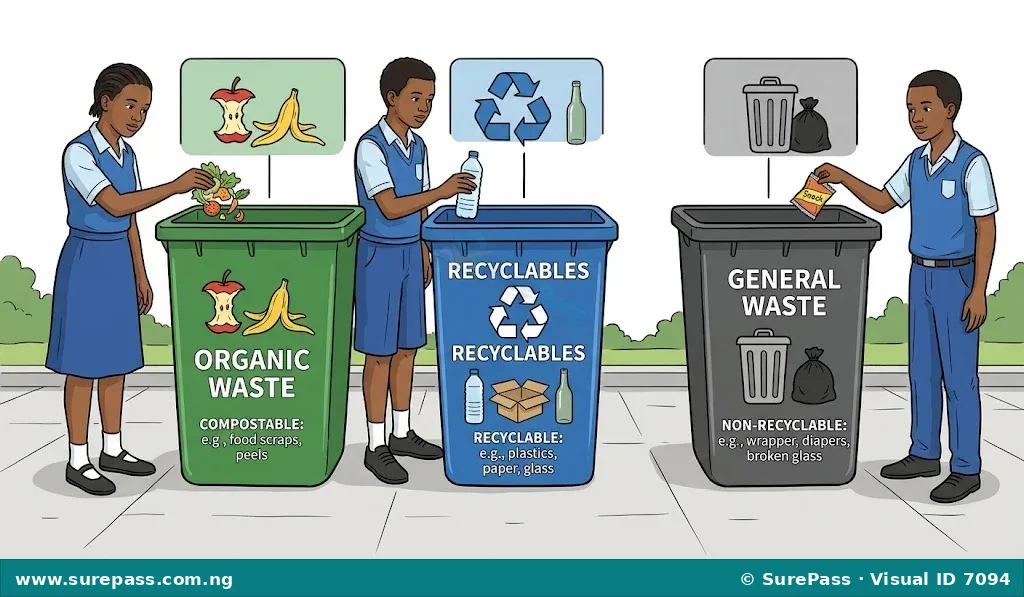
Sorting waste is a crucial skill in effective waste management, especially for recycling and composting. It involves separating different types of waste materials into designated containers.
How to Sort Waste for Disposal
The procedure for sorting waste involves the following steps:
- Identify Waste Types: Before disposal, identify whether the waste is organic (food scraps, garden waste), recyclable (plastics, paper, glass, metal), or general waste (non-recyclable, non-organic).
- Prepare Separate Bins: Set up different bins or containers for each waste category. For example, one bin for organic waste, another for plastics, one for paper, and a general waste bin.
- Rinse Recyclables: For items like plastic bottles, glass jars, and metal cans, rinse them with water to remove any food residue. This prevents contamination and makes them suitable for recycling.
- Flatten Cardboard and Paper: Flatten cardboard boxes and fold paper to save space in the recycling bin.
- Dispose of Organic Waste: Place food scraps, fruit peels, and garden waste into the organic waste bin, which can then be used for composting.
- Dispose of General Waste: Place items that cannot be recycled or composted into the general waste bin. This waste will typically go to a landfill or incineration plant.
- Regularly Empty Bins: Empty the sorted bins regularly into larger collection points or designated community bins.
By sorting waste, individuals contribute to reducing landfill waste, conserving resources, and promoting a cleaner environment.
Understanding Deforestation
Forests are vital ecosystems that provide numerous benefits to the environment and living organisms. However, human activities often lead to the destruction of these forests, a process known as deforestation.
Meaning of Deforestation
Deforestation is the clearing of forest land for other uses, such as agriculture, cattle ranching, logging, urban development, or mining.
It involves the permanent removal of trees to make land available for other purposes. While some tree removal might be for sustainable forestry, deforestation specifically refers to the large-scale, often irreversible, destruction of forests.
Impact of Deforestation on the Environment
The widespread removal of forests has severe and far-reaching consequences for the environment, affecting various natural processes and human well-being.
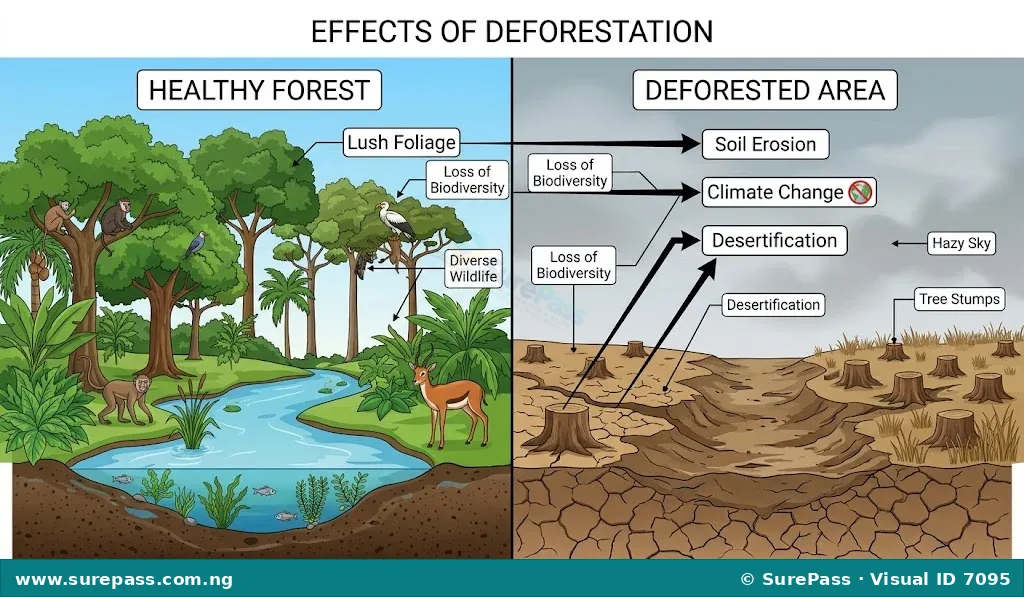
The major impacts of deforestation on the environment include:
- Soil Erosion: Trees play a crucial role in holding soil together with their roots. When forests are cleared, the soil is exposed to direct rainfall and wind. This leads to increased soil erosion, where the top fertile layer of soil is washed away by water or blown away by wind. This loss of topsoil reduces soil fertility, making it difficult for new plants to grow.
- Climate Change: Forests act as “carbon sinks,” absorbing large amounts of carbon dioxide (a greenhouse gas) from the atmosphere during photosynthesis. When trees are cut down and burned or left to decompose, they release the stored carbon dioxide back into the atmosphere. This increases the concentration of greenhouse gases, contributing to global warming and climate change.
- Disruption of the Water Cycle: Trees release water vapour into the atmosphere through a process called transpiration, which contributes to cloud formation and rainfall. Deforestation reduces transpiration, leading to less moisture in the air and decreased rainfall in affected areas. This can alter local and regional weather patterns, leading to droughts and affecting water availability.
- Desertification: This is the process by which fertile land becomes desert, typically as a result of drought, deforestation, or inappropriate agriculture. When forests are removed, the land becomes dry, barren, and loses its ability to support vegetation, eventually turning into a desert-like landscape. This is particularly evident in regions bordering existing deserts.
- Increase in Natural Disasters: Forests act as natural barriers against certain natural disasters. For example, tree roots stabilise slopes, preventing landslides. Forest cover also helps to absorb excess rainwater, reducing the risk of floods. Deforestation removes these natural protections, making areas more vulnerable to landslides, mudslides, and severe flooding.
- Health Issues: The environmental changes caused by deforestation can lead to various health problems. Increased dust and particulate matter from exposed soil can worsen respiratory conditions. Changes in climate and water cycles can lead to food insecurity and malnutrition. Furthermore, the destruction of forest habitats can bring humans into closer contact with disease-carrying animals, potentially leading to the emergence of new diseases.





0 comments
Open the discussion when you need it. Comments stay collapsed until requested so the initial article remains light.