


ARTICLE CONTENTSOn this page 5 sections
Biology as a Scientific Discipline
Performance Objectives
By the end of the lesson, students should be able to:
- explain the meaning of biology;
- mention the branches of biology;
- distinguish between biology and other science subjects.
Meaning of Biology
Biology is the scientific study of living things.
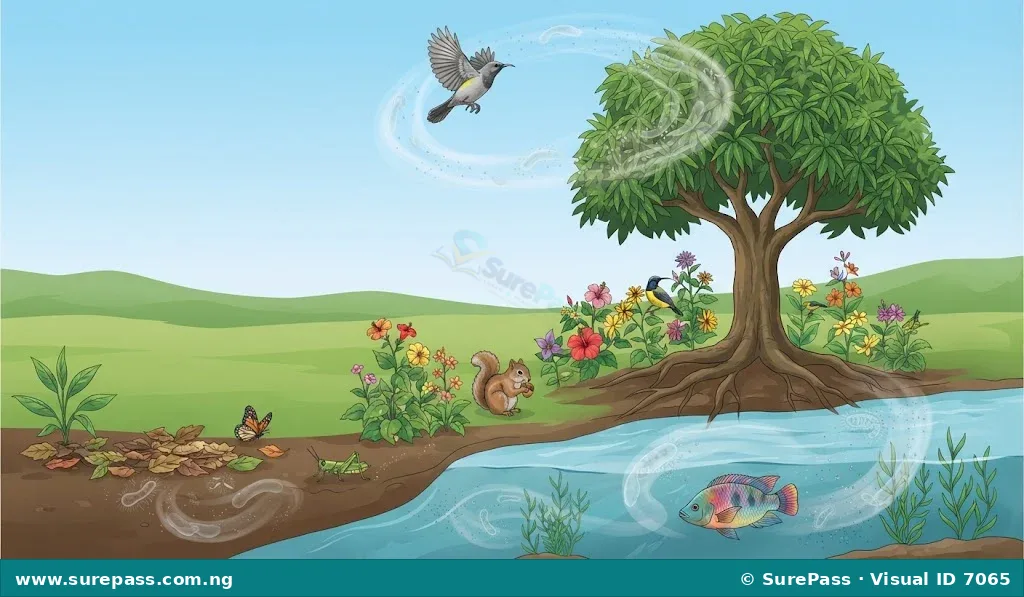
The word “biology” comes from two Greek words: “bios,” meaning life, and “logos,” meaning study. Therefore, biology is literally the study of life. This vast field explores all aspects of living organisms, from the smallest bacteria to the largest whales, and includes plants, animals, fungi, and microorganisms.
Biologists study how living things are structured, how they function, how they grow, how they reproduce, how they interact with each other and their environment, and how they have evolved over time. Understanding biology helps explain the diversity of life on Earth and the processes that sustain it.
Branches of Biology
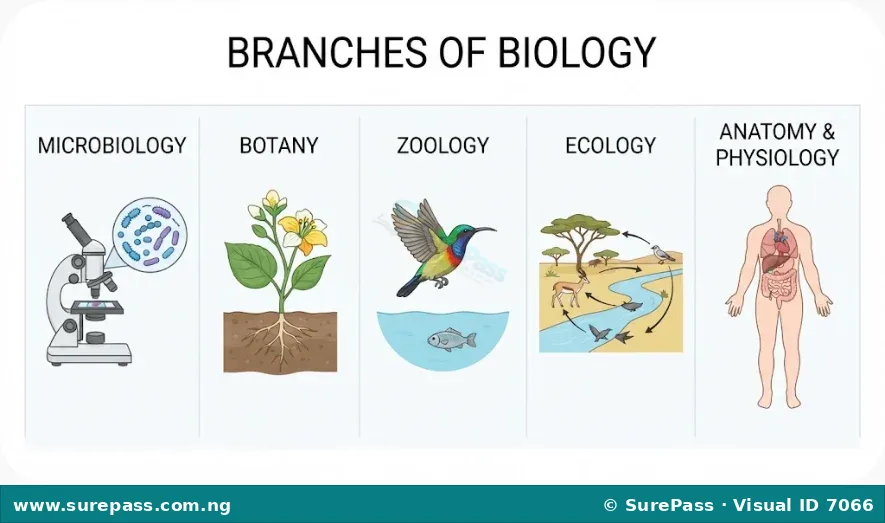
Biology is a very broad subject, so it is divided into several specialised branches to make its study easier. Each branch focuses on a specific aspect or type of living organism.
Some of the major branches of biology include:
- Microbiology: This is the study of microorganisms, which are living things too small to be seen with the naked eye. Examples of microorganisms include bacteria, viruses, fungi, and protozoa. Microbiologists study their structure, function, and their roles in the environment, disease, and industry.
- Botany: This branch focuses on the scientific study of plants. Botanists investigate plant structure, growth, reproduction, metabolism, diseases, chemical properties, and evolutionary relationships. This includes everything from tiny algae to giant trees.
- Zoology: Zoology is the scientific study of animals. Zoologists explore animal behaviour, physiology, classification, evolution, and distribution. This branch covers a wide range of animals, from insects and fish to birds and mammals.
- Ecology: This is the study of how living organisms interact with each other and with their non-living environment. Ecologists examine ecosystems, food chains, population dynamics, and the impact of human activities on the environment.
- Anatomy: Anatomy is the study of the structure of living organisms and their parts. For example, human anatomy studies the structure of the human body, including organs, bones, and tissues.
- Physiology: This branch deals with the study of the functions of living organisms and their parts. For instance, human physiology examines how the different organs and systems in the human body work together to maintain life.
Relationship Between Biology and Other Science Subjects: The Scientific Method
Biology is closely related to other science subjects like Chemistry, Physics, and Mathematics. While each science focuses on different aspects of the natural world, they all share a common approach to understanding it: the scientific method.
The scientific method is a systematic way of investigating the natural world, gathering information, and explaining phenomena. It is a logical process that scientists use to answer questions and solve problems. By using the scientific method, biologists can conduct experiments and draw reliable conclusions, just like physicists or chemists.
Steps of the Scientific Method
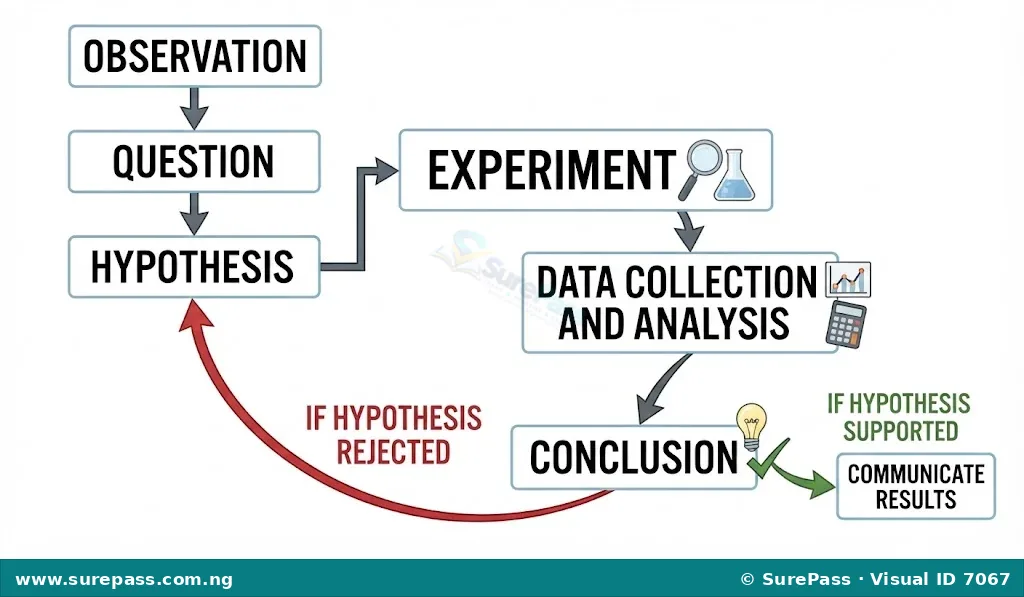
The scientific method typically involves the following steps:
- Observation: This is the first step, where a scientist notices something interesting or puzzling in the natural world. Observations can be made using the senses (sight, hearing, touch, smell, taste) or with instruments like microscopes or telescopes.
For example, a biologist might observe that plants grow taller in one part of a garden than in another.
- Question: Based on the observation, a question is formulated. This question should be specific and testable.
Following the example, the biologist might ask: “Does the amount of sunlight affect plant height?”
- Hypothesis: A hypothesis is a testable explanation or an educated guess that attempts to answer the question. It is often stated as an “If… then…” statement.
The biologist might hypothesise: “If plants receive more sunlight, then they will grow taller.”
- Experimentation: This step involves designing and carrying out an experiment to test the hypothesis. A good experiment includes a control group (which does not receive the treatment) and an experimental group (which receives the treatment). All other conditions must be kept constant.
To test the hypothesis, the biologist could grow two groups of identical plants. One group (experimental) receives full sunlight, while the other group (control) receives limited sunlight. All other factors like water, soil, and temperature are kept the same for both groups.
- Data Collection and Analysis: During the experiment, data (information) is carefully collected. This data can be quantitative (numbers, like plant height in centimetres) or qualitative (descriptions, like plant colour). After collection, the data is organised and analysed to look for patterns or trends.
The biologist would measure the height of plants in both groups regularly and record the measurements. Then, they would compare the average heights of the plants in the full sunlight group versus the limited sunlight group.
- Conclusion: Based on the analysis of the data, a conclusion is drawn. The conclusion states whether the hypothesis is supported or rejected. It is important to note that an experiment can support a hypothesis, but it cannot definitively prove it. If the hypothesis is rejected, a new hypothesis may be formed, and the process can start again.
If the plants in full sunlight grew significantly taller, the biologist would conclude that the hypothesis is supported: more sunlight does lead to taller plants. If there was no significant difference, the hypothesis would be rejected.
- Communication of Results: Scientists share their findings with others through reports, presentations, or publications. This allows other scientists to review the work, replicate the experiments, and build upon the knowledge.
By following these steps, biologists, chemists, physicists, and other scientists ensure that their findings are reliable and contribute to a deeper understanding of the natural world. This shared method is what distinguishes science from other forms of knowledge.



0 comments
Open the discussion when you need it. Comments stay collapsed until requested so the initial article remains light.