


ARTICLE CONTENTSOn this page 8 sections
Scientific Collaboration and Communication
Performance Objectives
By the end of the lesson, students should be able to:
- present in detail the processes involved in developing scientific research with confidence;
- carry out a project;
- write a project report;
- present a project report.
Scientific research is a systematic way of investigating and understanding the natural world. In biology, it helps to discover new facts about living organisms, solve health problems, improve agriculture, and protect the environment. This process often involves working with others and clearly communicating findings.
Understanding Scientific Research
Scientific research is a structured process used to investigate observations and answer questions about the natural world. It involves careful observation, experimentation, and analysis to gain new knowledge or verify existing knowledge.
Steps in Scientific Research
Developing scientific research involves a series of logical steps that guide investigators from a question to a conclusion. These steps ensure that the research is systematic and reliable.
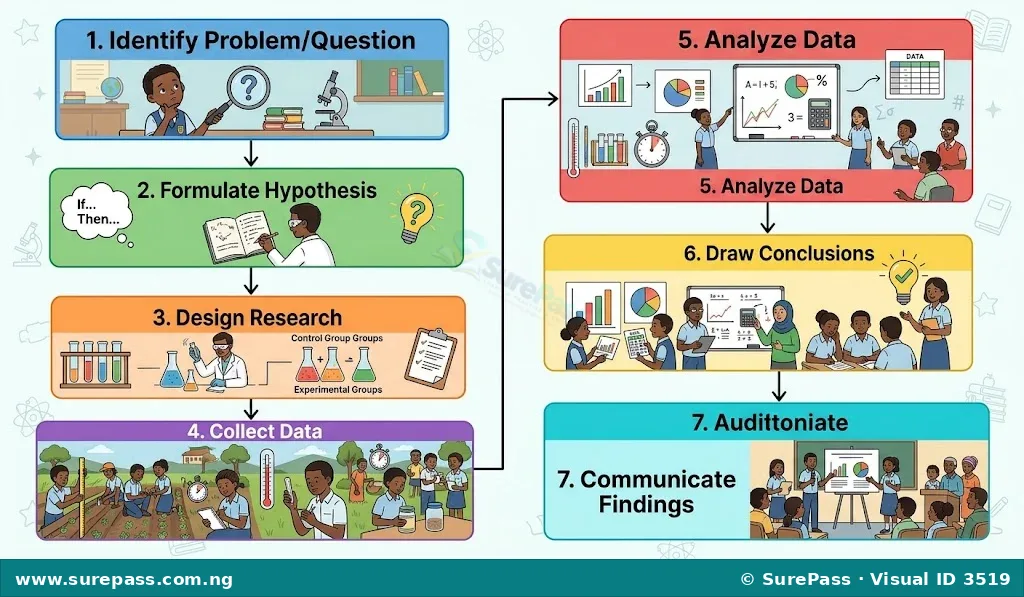
The general steps involved in scientific research include:
- Identifying a Problem or Question: This is the starting point of any research. It involves observing something unusual or identifying a gap in current knowledge. For example, noticing a high rate of a particular disease in a community.
- Formulating a Hypothesis: A hypothesis is a testable explanation or a proposed answer to the research question. It is an educated guess based on existing knowledge. For instance, “Poor sanitation in the community leads to an increase in cholera cases.”
- Designing the Research: This step involves planning how to test the hypothesis. It includes deciding on the methods to collect data, the materials needed, and the procedures to follow.
- Collecting Data: Data collection involves gathering information through observation, experiments, surveys, or interviews, according to the research design.
- Analysing Data: Once data is collected, it needs to be organised, interpreted, and analysed to find patterns, relationships, or trends.
- Drawing Conclusions: Based on the data analysis, a conclusion is drawn about whether the hypothesis is supported or rejected.
- Communicating Findings: The results of the research are shared with others through reports, presentations, or publications. This allows others to learn from the research and build upon it.
Research Teamwork
Scientific research, especially in biology, often involves complex tasks that are difficult for one person to complete alone. Working in a team allows for the sharing of ideas, skills, and workload, leading to more comprehensive and effective research outcomes.
Importance of Teamwork in Scientific Research
Teamwork is crucial in scientific research for several reasons:
- Sharing of Knowledge and Skills: Team members often bring different areas of expertise, allowing for a broader understanding of the research problem.
- Increased Efficiency: Tasks can be divided among team members, making the research process faster and more efficient.
- Diverse Perspectives: Different viewpoints can lead to more creative solutions and a more thorough analysis of results.
- Mutual Support: Team members can support each other, especially when facing challenges or difficulties during the research.
- Improved Problem-Solving: Complex problems can be tackled more effectively when multiple minds work together to find solutions.
Roles within a Research Team
For a research team to function effectively, each member typically has specific roles and responsibilities. These roles help to organise the work and ensure all aspects of the project are covered.
Common roles within a research team include:
- Team Leader: Guides the team, ensures tasks are completed, and facilitates communication.
- Data Collector: Responsible for gathering information and observations according to the research design.
- Recorder/Secretary: Documents all meetings, data, and important decisions made by the team.
- Analyst: Helps to organise and interpret the collected data.
- Presenter: Prepares and delivers the project report to an audience.
Effective Teamwork Skills
Successful teamwork relies on certain skills that enable members to work together harmoniously and productively.
Important teamwork skills include:
- Communication: Clearly expressing ideas, listening actively to others, and providing constructive feedback.
- Cooperation: Working together towards a common goal, sharing resources, and helping each other.
- Responsibility: Taking ownership of assigned tasks and completing them diligently.
- Respect: Valuing the opinions and contributions of all team members, even when there are disagreements.
- Conflict Resolution: Addressing disagreements constructively and finding solutions that benefit the team.

Executing Projects
Executing a project involves putting the research plan into action. This stage requires careful organisation, attention to detail, and adherence to the designed methodology to ensure accurate data collection and successful completion of the project.
Planning a Project
Before execution, thorough planning is essential. A well-planned project is more likely to succeed and yield reliable results.
Key aspects of project planning include:
- Defining Project Scope: Clearly outlining what the project will cover and what it will not.
- Setting Objectives: Establishing specific, measurable, achievable, relevant, and time-bound (SMART) goals for the project.
- Developing a Timeline: Creating a schedule with deadlines for each task to ensure the project stays on track.
- Allocating Resources: Identifying and assigning necessary materials, equipment, and human resources to different tasks.
- Identifying Potential Challenges: Anticipating problems that might arise and planning for how to address them.
Carrying Out the Project
This is the practical phase where the planned activities are performed. It involves collecting data, making observations, and conducting experiments.
When carrying out a project, consider the following:
- Follow the Design: Adhere strictly to the research design and methodology to maintain consistency and validity.
- Accurate Data Collection: Record all observations and measurements carefully and precisely. Use appropriate tools and techniques.
- Systematic Observation: Observe phenomena systematically, noting details such as changes, quantities, and conditions.
- Safety Precautions: Always prioritise safety. Use protective gear when necessary and handle materials and equipment responsibly. For example, when collecting samples from the community, ensure proper hygiene and avoid dangerous areas.
- Documentation: Keep detailed records of all activities, including dates, times, and any unexpected events.
Writing Project Reports
After completing a scientific project, the findings must be documented in a clear, concise, and organised manner. A project report serves as a formal record of the research, allowing others to understand the process, results, and conclusions.
Purpose of a Project Report
A project report serves several important purposes:
- Documentation: It provides a permanent record of the research conducted.
- Communication: It allows researchers to share their findings with the scientific community and the public.
- Evaluation: It enables others to review and evaluate the methodology and conclusions of the research.
- Future Reference: It can be used as a basis for further research or to build upon existing knowledge.
Structure of a Scientific Project Report
A typical scientific project report follows a standard structure to ensure all necessary information is presented logically.
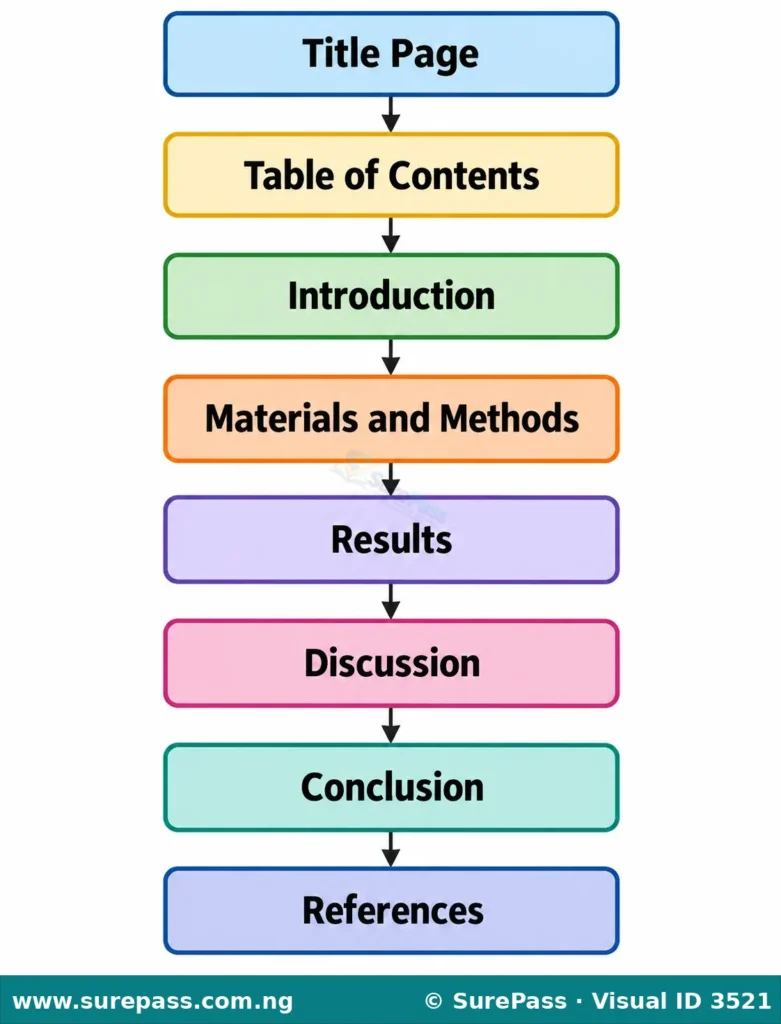
The common sections of a scientific project report are:
- Title Page: Includes the project title, names of the researchers, class, subject, and date.
- Table of Contents: Lists the main sections and their corresponding page numbers.
- Introduction: Provides background information, states the research problem, and outlines the objectives and hypothesis of the project.
- Materials and Methods: Describes the materials, equipment, and procedures used in the project in enough detail for others to replicate the study.
- Results: Presents the findings of the project, often using tables, graphs, and figures, without interpretation or discussion.
- Discussion: Interprets the results, explains their significance, compares them with existing knowledge, and discusses any limitations of the study.
- Conclusion: Summarises the main findings and states whether the hypothesis was supported or rejected.
- Recommendations (Optional): Suggests areas for future research or practical applications based on the findings.
- References: Lists all sources of information cited in the report.
- Appendices (Optional): Includes supplementary materials such as raw data, questionnaires, or detailed calculations.
Key Elements of Each Section
Each section of the report has specific content requirements:
- Introduction: Should clearly state the purpose of the study and what the researchers aimed to achieve.
- Materials and Methods: Must be detailed enough for another person to repeat the experiment exactly. Include quantities, types of equipment, and steps taken.
- Results: Present data objectively. Use clear labels for tables and figures. Do not explain why the results occurred here.
- Discussion: This is where the results are explained and interpreted. Connect the findings back to the hypothesis and objectives.
- Conclusion: A brief summary of the most important findings and their implications.
Guidelines for Clear Report Writing
To ensure a report is effective, certain writing guidelines should be followed:
- Clarity: Use simple, precise language. Avoid jargon where possible, or explain it if necessary.
- Accuracy: Ensure all facts, figures, and data presented are correct.
- Objectivity: Present information without personal bias. Focus on facts and evidence.
- Conciseness: Be brief and to the point. Avoid unnecessary words or lengthy explanations.
- Grammar and Spelling: Proofread carefully to eliminate errors that can distract the reader.
Project Presentations and Public Speaking
Presenting a project report involves communicating the research findings verbally to an audience. This requires good public speaking skills and the ability to convey information clearly and confidently.
Purpose of Project Presentations
Presentations are an important part of the scientific process because they:
- Share Knowledge: Allow researchers to disseminate their findings to a wider audience, including peers, teachers, and community members.
- Receive Feedback: Provide an opportunity for the audience to ask questions and offer constructive criticism, which can help improve future research.
- Develop Communication Skills: Enhance the presenter’s ability to speak clearly, confidently, and persuasively.
- Demonstrate Understanding: Show that the researchers fully grasp their project and its implications.
Planning a Presentation
A well-planned presentation is key to effective communication.
Consider the following when planning a presentation:
- Know Your Audience: Tailor the content and language to suit the knowledge level and interests of the listeners.
- Identify Key Messages: Determine the most important points to convey and focus on them.
- Structure the Presentation: Organise the content logically with an introduction, main body, and conclusion.
- Prepare Visual Aids: Use slides, charts, or diagrams to illustrate points and make the presentation more engaging. Ensure visuals are clear and easy to understand.
- Practice: Rehearse the presentation multiple times to become familiar with the content and timing.
Delivering a Presentation
Effective delivery is crucial for a successful presentation. It involves more than just speaking; it includes how the presenter engages with the audience.
Tips for delivering a presentation:
- Speak Clearly and Confidently: Project your voice so everyone can hear you. Speak at a moderate pace.
- Maintain Eye Contact: Look at different members of the audience to create a connection and show engagement.
- Use Appropriate Body Language: Stand tall, use natural gestures, and avoid fidgeting.
- Manage Time: Stick to the allocated time for the presentation.
- Engage the Audience: Ask rhetorical questions or use examples to keep listeners interested.

Handling Questions and Feedback
After a presentation, there is usually a question-and-answer session. This is an opportunity to clarify points and engage further with the audience.
When handling questions and feedback:
- Listen Carefully: Pay full attention to the question being asked.
- Answer Clearly: Provide concise and direct answers. If you do not know the answer, it is acceptable to say so and offer to find out.
- Be Respectful: Respond politely to all questions and feedback, even if you disagree.
- Thank the Audience: Express gratitude for their questions and attention.
Using Digital and Community Resources for Research
Modern scientific research benefits greatly from the availability of digital tools and resources within the community. These resources can enhance the research process from data gathering to presentation.
Digital Tools for Research
Digital tools have revolutionised how scientific research is conducted and communicated.
Examples of digital tools and their uses include:
- Internet: Used for gathering background information, reviewing existing studies, and accessing scientific articles from reputable sources.
- Computers: Essential for writing project reports, creating visual aids (like charts and graphs), and designing presentation slides.
- Spreadsheet Software (e.g., Microsoft Excel): Used for organising, analysing, and visualising data.
- Presentation Software (e.g., Microsoft PowerPoint): Used to create engaging slides for project presentations.
Community Resources for Research
The local community can be a rich source of information and context for scientific research, especially for biology projects that address local problems.
Examples of community resources include:
- Local Problems: Identifying environmental issues (e.g., waste management, water pollution), health concerns (e.g., prevalence of malaria), or agricultural challenges (e.g., crop diseases) within the community can provide relevant research topics.
- Community Members: Interviewing local residents, farmers, or health workers can provide valuable firsthand information and perspectives.
- Local Institutions: Visiting local health centres, agricultural extension offices, or environmental agencies can provide data, expert advice, or access to relevant facilities.
- Natural Environment: Observing local ecosystems, plant and animal life, or water bodies can provide direct data for biological studies.
By effectively utilising both digital and community resources, students can conduct meaningful scientific research that addresses real-world problems and contributes to local knowledge.




0 comments
Open the discussion when you need it. Comments stay collapsed until requested so the initial article remains light.