



ARTICLE CONTENTSOn this page 8 sections
Climate
Performance Objectives
By the end of the lesson, students should be able to:
- explain the meaning of climate;
- discuss the elements of climate;
- explain the meaning and causes of climate change;
- discuss mitigation of climate change.
Meaning of Climate
Climate is the average weather conditions of a particular area recorded over a long period, typically between 30 and 35 years.
While weather refers to the daily atmospheric conditions of a place at any given time, climate represents the long-term pattern of these conditions. In crop production and horticulture, climate is a fundamental factor because it determines the types of crops that can be grown in a specific region, the planting dates, the growth rate of crops, and the overall yield. For instance, crops like cocoa and oil palm thrive in the humid forest zones of southern Nigeria due to the prevailing climate, while cereal crops like millet and sorghum are better suited to the drier savannah climate of northern Nigeria.
Observe the diagram below to understand the difference between weather and climate.
Elements of Climate
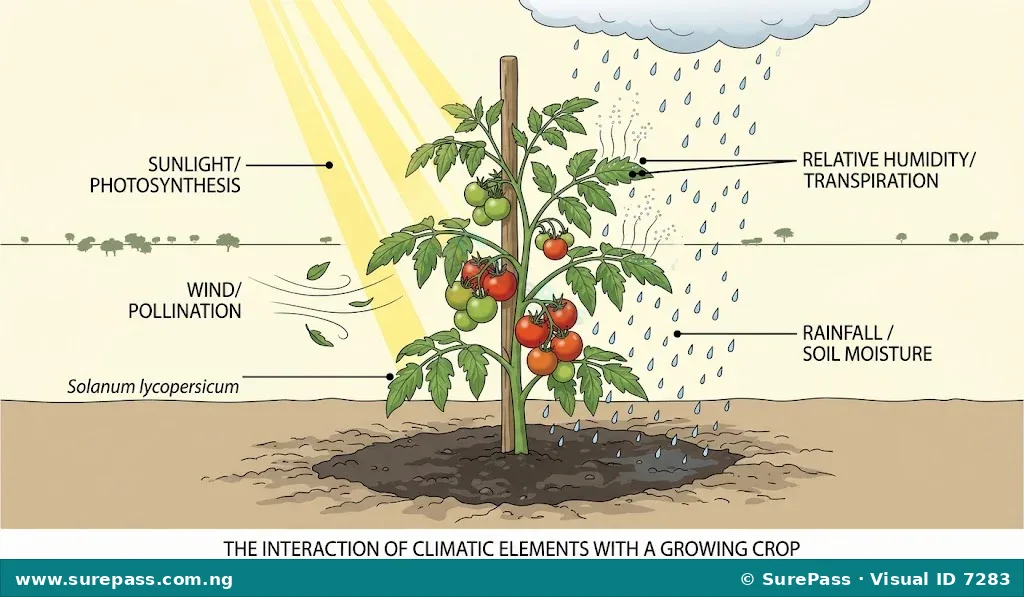
Climatic elements are the physical properties of the atmosphere that describe the state of the climate at any given time. These elements directly influence plant growth, development, and reproduction.
The main elements of climate that affect crop production and horticulture are:
- Rainfall (Precipitation)
- Temperature
- Sunlight (Solar Radiation)
- Wind
- Relative Humidity
- Atmospheric Pressure
Rainfall (Precipitation)
Rainfall is the primary source of water for crop growth under rain-fed agriculture. Water is essential for seed germination, nutrient dissolution in the soil, and transport of nutrients within the plant. It also maintains plant turgidity and cools the plant through transpiration. However, excessive rainfall can lead to soil erosion, waterlogging, leaching of essential plant nutrients, and an increase in fungal diseases. Conversely, a lack of rainfall leads to drought, wilting, and poor crop yields.
Temperature
Temperature refers to the degree of hotness or coldness of the atmosphere. It influences vital physiological processes in plants, including photosynthesis, respiration, transpiration, and seed germination. Every crop has an optimum temperature range within which it grows best. Extremely high temperatures can cause heat stress, pollen sterility, and excessive water loss, while extremely low temperatures can retard growth or cause frost damage to sensitive horticultural crops.
Sunlight (Solar Radiation)
Sunlight is the primary source of energy for photosynthesis, the process by which green plants manufacture their food. The duration of light (photoperiod), its intensity, and its quality affect crop development. Some crops require long hours of daylight to flower (long-day plants), others require short daylight periods (short-day plants), while some are unaffected by day length (day-neutral plants). Sunlight also influences the evaporation of water from the soil and plant surfaces.
Wind
Wind is air in motion. Moderate wind is beneficial to crops as it aids in pollination (especially in wind-pollinated crops like maize) and assists in the dispersal of seeds and fruits. It also helps in the circulation of carbon dioxide around the plant canopy. However, strong winds or storms can cause severe damage, such as lodging (blowing over of crops), breaking of branches, premature shedding of fruits and flowers, and accelerated soil erosion.
Relative Humidity
Relative humidity is the amount of moisture present in the air compared to the maximum amount the air can hold at that temperature, expressed as a percentage. It affects the rate of transpiration in plants. When relative humidity is high, transpiration is reduced, which can limit nutrient uptake. High humidity also creates a favorable environment for the spread of fungal and bacterial pathogens. Low relative humidity increases the rate of transpiration, which can lead to moisture stress if soil water is limited.
Atmospheric Pressure
Atmospheric pressure is the force exerted by the weight of the air above the earth’s surface. While it does not directly affect plant growth as visibly as rainfall or temperature, it determines wind speed and direction, which in turn influences weather systems and precipitation patterns.
Look at the illustration below to see how these climatic elements interact with a growing crop.
Meaning and Causes of Climate Change
Climate change is a significant, long-term alteration in the global or regional climate patterns, often observed as changes in temperature, rainfall, and wind patterns over several decades or longer.
In recent times, climate change has led to rising global temperatures, unpredictable rainfall patterns, prolonged droughts, and more frequent extreme weather events. These changes pose a major threat to food security, crop production, and horticultural practices in Nigeria and across the globe.
The causes of climate change are grouped into two main categories:
- Natural causes
- Human (anthropogenic) causes
Natural Causes of Climate Change
Natural factors have influenced the earth’s climate for millions of years before human activities began. These include:
- Volcanic Eruptions: When volcanoes erupt, they release large quantities of greenhouse gases, dust, and ash into the atmosphere. These particles can reflect solar radiation back into space, causing temporary global cooling, while the released carbon dioxide contributes to long-term warming.
- Solar Variations: Changes in the intensity of solar energy reaching the earth can cause fluctuations in global temperatures.
- Earth’s Orbital Changes: Slow variations in the earth’s orbit and tilt affect the distribution and amount of solar energy reaching different parts of the earth over thousands of years.
Human (Anthropogenic) Causes of Climate Change
Human activities are the primary drivers of the rapid climate change observed in modern times. These activities increase the concentration of greenhouse gases (such as carbon dioxide, methane, and nitrous oxide) in the atmosphere, trapping more heat. The key human activities include:
- Deforestation: Forests act as carbon sinks by absorbing carbon dioxide from the atmosphere for photosynthesis. Clearing forests for agricultural expansion, timber, and urbanization reduces the number of trees available to absorb carbon dioxide, leading to an accumulation of this gas in the atmosphere.
- Burning of Fossil Fuels: The combustion of coal, oil, and natural gas for electricity, industrial processes, and transportation releases massive amounts of carbon dioxide into the atmosphere.
- Agricultural Practices: Certain farming practices contribute significantly to greenhouse gas emissions. For example, flooded rice paddies produce methane gas through anaerobic decomposition. Livestock rearing (especially cattle) releases methane during digestion. Additionally, the excessive use of synthetic nitrogen fertilizers releases nitrous oxide, a potent greenhouse gas.
- Bush Burning: The common practice of burning crop residues and clearing land with fire releases carbon dioxide, carbon monoxide, and particulate matter into the atmosphere, destroying soil organic matter and contributing to global warming.
- Industrialization: Factories and manufacturing plants release various greenhouse gases and chemical pollutants that damage the atmosphere and trap heat.
Observe the diagram below to understand how greenhouse gases trap heat in the atmosphere, leading to global warming.
Mitigation of Climate Change
Climate change mitigation refers to actions and strategies aimed at reducing, preventing, or offsetting the emission of greenhouse gases to limit the extent of global warming.
In crop production and horticulture, mitigation involves adopting sustainable agricultural practices that reduce emissions and enhance the soil’s ability to store carbon. These practices help farmers adapt to changing conditions while protecting the environment.
Effective strategies for mitigating climate change in agriculture include:
- Afforestation and Reforestation: Afforestation involves planting trees in areas where there were previously no trees, while reforestation is the replanting of trees in deforested areas. Trees absorb carbon dioxide from the atmosphere and store it as carbon in their wood and roots.
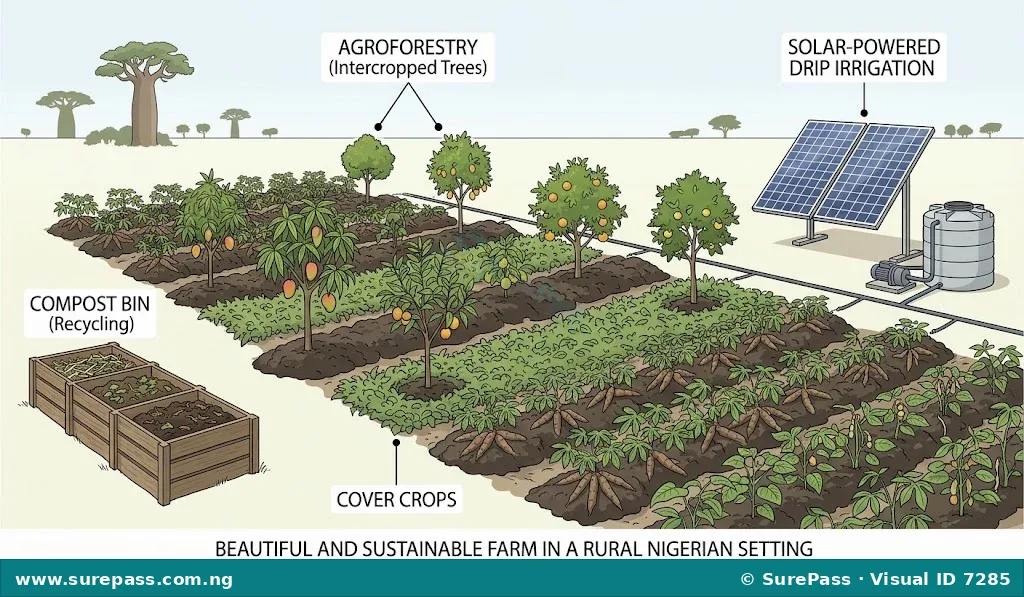
- Agroforestry: This is the practice of integrating trees and shrubs with crops and livestock on the same farmland. Agroforestry increases biodiversity, improves soil structure, enhances carbon sequestration, and provides shade and windbreaks for horticultural crops.
- Conservation Tillage: Traditional tillage (ploughing and harrowing) exposes soil organic matter to oxygen, which accelerates its decomposition and releases carbon dioxide. Conservation tillage (minimum or zero tillage) leaves crop residues on the soil surface, reducing soil disturbance and keeping carbon locked in the soil.
- Cover Cropping: Planting cover crops, such as legumes (e.g., mucuna, cowpea), during off-seasons protects the soil from erosion, suppresses weeds, improves soil fertility, and increases organic carbon storage in the soil.
- Efficient Fertilizer Management: Farmers can reduce nitrous oxide emissions by applying synthetic nitrogen fertilizers precisely according to crop needs, or by substituting them with organic manures and compost.
- Improved Waste Management: Instead of burning crop residues, farmers can compost them to produce organic manure. This recycles nutrients back into the soil and prevents the release of carbon dioxide and smoke into the atmosphere.
- Use of Renewable Energy: Adopting solar-powered irrigation pumps, wind energy, and biogas systems on farms reduces reliance on fossil fuels (diesel and petrol generators), thereby lowering greenhouse gas emissions.
Look at the illustration below to see sustainable agricultural practices that help mitigate climate change.
Summary
Climate is the long-term average of weather conditions over 30 to 35 years, and it plays a decisive role in crop production. The elements of climate, such as rainfall, temperature, sunlight, wind, and relative humidity, directly affect plant growth and development. Climate change, driven by natural factors and human activities like deforestation, fossil fuel combustion, and poor agricultural practices, poses a severe threat to agriculture. However, through mitigation strategies like afforestation, agroforestry, conservation tillage, and efficient waste management, farmers can reduce greenhouse gas emissions and build resilient agricultural systems.
Study Questions
Answer the following questions to test your understanding of the lesson:
- Define climate and state how it differs from weather.
- List five elements of climate and explain how any three of them affect crop production.
- What is climate change?
- Distinguish between the natural and human causes of climate change, giving two examples of each.
- Discuss four practical ways farmers can mitigate climate change in crop production and horticulture.




0 comments
Open the discussion when you need it. Comments stay collapsed until requested so the initial article remains light.