


ARTICLE CONTENTSOn this page 8 sections
Diseases and control
Performance Objectives
By the end of the lesson, students should be able to:
- explain the meaning of disease;
- identify field and store diseases based on symptoms;
- discuss the mode of disease damage;
- explain disease prevention and control measures.
Meaning of Crop Disease
A crop disease is any abnormal deviation from the normal structure, physiological function, or state of a plant that interferes with its growth, development, or economic value.
Diseases in crops are primarily caused by pathogens, which are disease-causing microorganisms. These pathogens include fungi, bacteria, viruses, and nematodes. Non-living factors, such as nutrient deficiencies, adverse weather conditions, and soil acidity, can also cause physiological disorders that resemble diseases. When a pathogen infects a plant, it disrupts the normal life processes of the crop, leading to visible signs of distress known as symptoms.
Types and Symptoms of Crop Diseases
Crop diseases are broadly classified into two categories based on where the infection and damage occur. These are field diseases and store diseases.
Field Diseases
Field diseases are diseases that attack and damage crops while they are still growing on the farm before harvest. These diseases can affect the leaves, stems, roots, flowers, or fruits of the growing plant.
Common examples of field diseases and their symptoms include:
- Maize Rust: This is caused by a fungus. The symptoms include the appearance of small, powdery, reddish-brown pustules on both surfaces of the leaves. In severe cases, the leaves turn yellow, dry up prematurely, and die, which reduces the photosynthetic capacity of the maize plant.
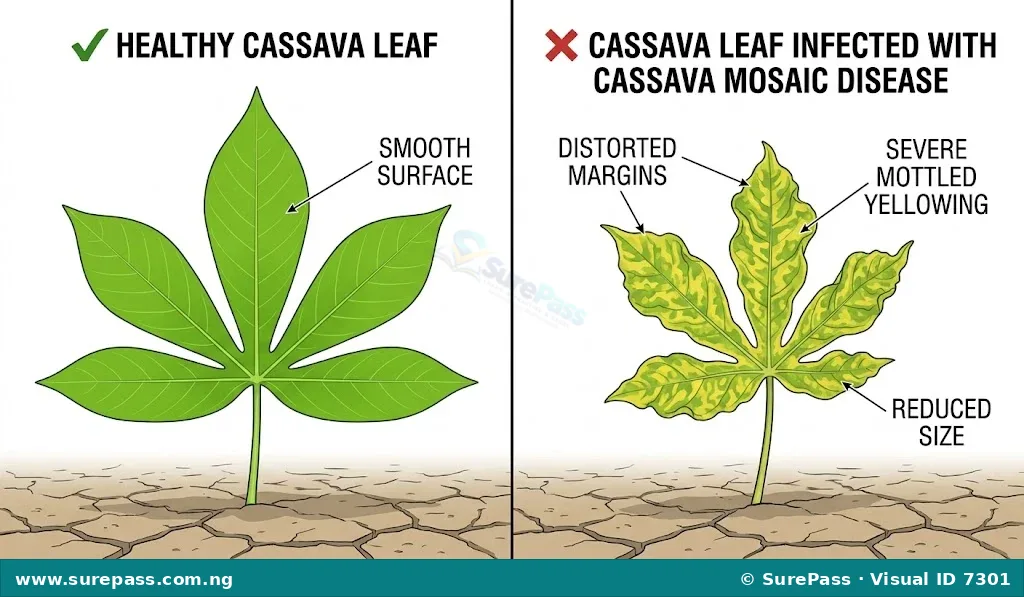
- Cassava Mosaic Disease: This is caused by a virus and is transmitted by whiteflies. The symptoms include chlorosis, which is the yellowing or mottling of the leaves. The leaves also become distorted, wrinkled, and reduced in size, leading to stunted growth of the entire plant and a drastic reduction in tuber yield.
- Rice Blast: This is caused by a fungus. The symptoms include spindle-shaped lesions with reddish-brown or grey centres on the leaves, stems, and nodes. The infected stems often break at the nodes, and the panicles produce empty or light grains.
- Groundnut Rosette: This is caused by a virus and is transmitted by aphids. The symptoms include severe stunting of the plant, chlorotic or green mosaic patterns on the leaves, and the formation of distorted, small, clustered leaves that give the plant a bushy appearance.
- Tomato Bacterial Wilt: This is caused by a bacterium. The symptoms include rapid wilting of the leaves and stem of the tomato plant, starting from the younger leaves, without initial yellowing. The plant eventually collapses and dies, and a slimy bacterial ooze can be seen when the stem is cut open.
Observe the image below to see the physical differences between a healthy crop leaf and one infected with a field disease.
Store Diseases
Store diseases are diseases that attack and damage harvested crop produce while they are kept in storage facilities, barns, silos, or warehouses. These pathogens thrive in environments with high humidity, poor ventilation, and high temperatures.
Common examples of store diseases and their symptoms include:
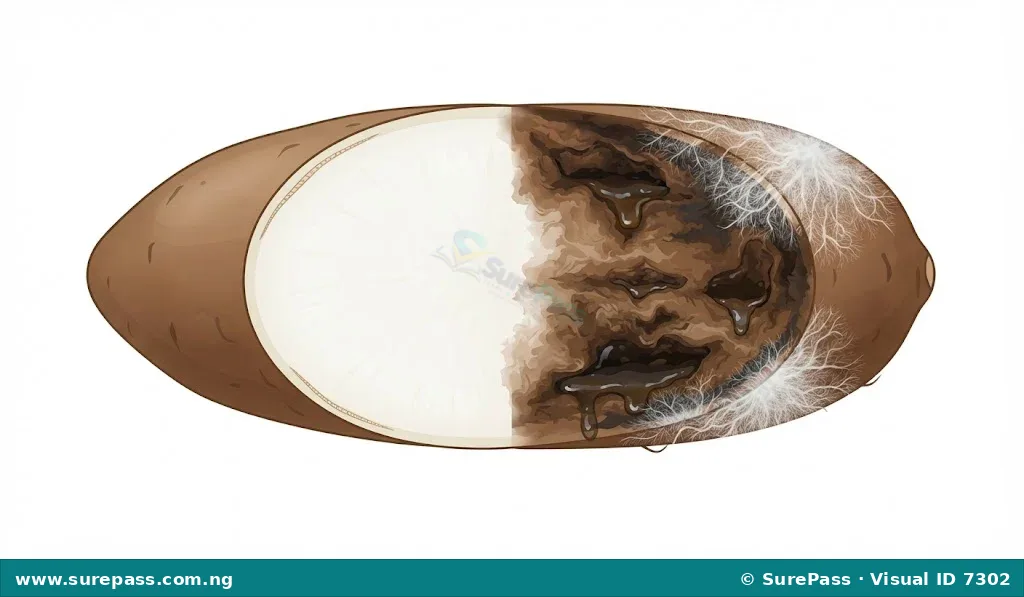
- Yam Tuber Rot: This is caused by various fungi and bacteria that gain entry through wounds created during harvest or transportation. The symptoms include the softening of the internal tissues of the tuber, discoloration of the flesh to brown or black, a wet or dry decay, and the production of a foul, offensive odor.
- Maize Grain Rot or Mold: This is caused by fungi such as Aspergillus and Fusarium species. The symptoms include the growth of powdery white, pink, green, or black mold on the surface of the grains, discoloration of the grains, and a musty smell.
- Bean Anthracnose or Rot: This is caused by a fungus. The symptoms include dark, sunken, circular spots on the stored seeds, shrivelling of the seed coat, and eventual decay of the beans, making them unfit for consumption or planting.
- Onion Neck Rot: This is caused by a fungus. The symptoms include the softening of the neck tissue of the onion bulb, which gradually spreads downwards into the bulb scales. The infected areas become sunken, watery, and covered with a grey, powdery mold.
Observe the image below to see how store pathogens damage harvested tubers during storage.
Mode of Disease Damage
Pathogens damage crops in different ways depending on whether the crop is growing in the field or kept in storage. Understanding these modes of damage helps in selecting the right control measures.
Field Damage
The modes of disease damage on field crops include:
- Reduction of Photosynthetic Area: Leaf spots, rusts, and blights destroy leaf tissues. This reduces the total green surface area available for photosynthesis, leading to poor food manufacture and low crop yields.
- Stunting and Malformation: Viral infections disrupt the internal hormonal balance of the plant. This causes dwarfism, leaf curling, and overall stunted growth, which prevents the crop from reaching its full genetic potential.
- Vascular Blockage: Wilt pathogens multiply inside the xylem vessels of the plant. This blocks the upward movement of water and dissolved mineral salts from the soil, causing the plant to wilt and die.
- Destruction of Reproductive Organs: Some pathogens directly attack flowers, fruits, and developing seeds. This leads to flower abortion, premature fruit drop, or the formation of empty, chaffy grains.
- Root Decay: Root rot pathogens destroy the root system of the plant. This reduces the plant’s ability to absorb water and nutrients, and weakens its anchorage, making the crop susceptible to lodging.
Store Damage
The modes of disease damage on stored crops include:
- Tissue Liquefaction and Decay: Soft rot bacteria and fungi secrete enzymes that break down the cell walls of stored tubers and fruits, turning solid produce into a soft, watery, decayed mass.
- Mycotoxin Contamination: Certain storage fungi, particularly Aspergillus flavus, produce highly toxic chemical compounds known as aflatoxins on stored grains. These toxins make the grains poisonous and unsafe for human and animal consumption.
- Loss of Seed Viability: Storage pathogens often attack and destroy the embryo of stored seeds. This prevents the seeds from germinating when planted in the next cropping season.
- Nutrient and Weight Loss: Pathogens feed on the stored starch, proteins, and sugars within the grains and tubers. This reduces the dry weight, nutritional value, and overall quality of the produce.
- Loss of Market Value: Discoloration, moldy coatings, and foul odors make the stored produce unattractive to buyers, leading to severe financial losses for the farmer.
Disease Prevention and Control Measures
To ensure high crop yields and preserve harvested produce, farmers must implement effective disease prevention and control measures. These measures are grouped into cultural, chemical, biological, and physical methods.
Methods used to prevent and control crop diseases include:
- Cultural Control: This involves the use of standard farming practices to prevent disease outbreak and spread. Examples include crop rotation to break the life cycle of pathogens, planting disease-resistant crop varieties, timely planting and harvesting, proper spacing to reduce humidity within the crop canopy, regular weeding to remove alternative hosts of pathogens, and farm sanitation, which involves burning or burying infected crop residues.
- Chemical Control: This involves the application of chemical substances to kill or inhibit pathogens. Examples include the use of fungicides to control fungal diseases, bactericides for bacterial infections, and nematicides to control parasitic soil nematodes. Chemical control should be carried out carefully following manufacturer instructions to avoid environmental pollution and chemical poisoning.
- Biological Control: This involves the introduction of natural enemies or beneficial microorganisms to suppress the population of pathogens. For example, using non-toxic strains of a fungus to compete with and suppress toxic, disease-causing strains in the soil.
- Physical and Mechanical Control: This involves physical treatments to eliminate pathogens. Examples include hot water treatment of seeds before planting to kill internal pathogens, soil solarization, which uses plastic sheets to trap solar heat and sterilize the soil, and the physical removal and destruction of infected plants or plant parts.
Specific measures to prevent and control store diseases include:
- Proper Drying: Grains must be dried thoroughly to a safe moisture content, usually below twelve to fourteen percent, before they are placed in storage. This low moisture level prevents the growth of storage molds.
- Cleaning and Disinfection: Storage structures, barns, silos, and bags must be thoroughly cleaned, swept, and disinfected with approved chemicals before storing new harvests.
- Adequate Ventilation: Storage rooms must be well-ventilated, cool, and dry. Proper air circulation prevents the build-up of heat and humidity, which are conditions that favor pathogen multiplication.
- Sorting and Grading: All bruised, damaged, or diseased tubers and grains must be sorted out and discarded before storage. This prevents pathogens from spreading from infected produce to healthy ones.
- Use of Storage Protectants: Applying approved organic dusts, botanical extracts like neem powder, or safe chemical fumigants to stored produce to protect them from fungal decay and insect vectors.
How to Identify Field and Store Diseases
Developing the skill to identify crop diseases based on physical symptoms is essential for timely intervention on the farm and in the store.
The required materials for this activity are:
- Infected plant leaves showing spots, rusts, or mosaic patterns
- Infected yam tubers showing signs of rot
- Moldy maize or bean grains
- Hand lenses or magnifying glasses
- Writing materials for recording observations
The procedure involves the following steps:
- Collect samples of infected leaves, stems, grains, and tubers from the school farm or a local market.
- Place the field samples on a clean table and examine the leaves and stems carefully using a hand lens.
- Look for specific symptoms such as reddish-brown powdery spots, yellow mottling, leaf wrinkling, or spindle-shaped lesions.
- Examine the stored grains and tubers for signs of soft tissue, discoloration, white or black moldy growth, and check for any foul odor.
- Record the observations in a table, noting the name of the crop, the part affected, the observed symptoms, and whether it is a field or store disease.
- Clean the work area and wash hands thoroughly with soap and water after handling infected plant materials.
Evaluation Guide
To evaluate understanding of crop diseases and their control, the following questions should be answered:
- What is the meaning of a crop disease?
- Distinguish between field diseases and store diseases, giving two examples of each.
- Describe three symptoms of Cassava Mosaic Disease.
- Explain three modes of disease damage on stored crops.
- Discuss four cultural methods of controlling field crop diseases.
- State three ways of preventing mold growth in stored grains.



0 comments
Open the discussion when you need it. Comments stay collapsed until requested so the initial article remains light.