



ARTICLE CONTENTSOn this page 6 sections
Crop adaptability to climate change
Performance Objectives
By the end of the lesson, students should be able to:
- explain the meaning of crop adaptability;
- identify factors that enhance crop adaptability to climate change.
Meaning of Crop Adaptability
Crop adaptability is the ability of a crop species or variety to adjust, survive, grow and yield successfully under changing or adverse environmental conditions.
In agricultural ecology, crops are constantly exposed to various environmental factors such as temperature, rainfall, soil nutrients and sunlight. When these factors deviate from the optimum range required for normal crop growth, the crop must possess certain physiological, structural or genetic traits that enable it to withstand the stress. Crop adaptability ensures that agricultural productivity is maintained even when the environment becomes unfavorable.
Climate change refers to long-term shifts in temperatures and weather patterns, primarily caused by human activities and natural processes.
These shifts have led to significant challenges for agriculture in Nigeria and across the globe. Unpredictable weather patterns directly affect crop growth cycles, soil fertility and water availability.
The primary environmental challenges posed by climate change to crop production in Nigeria include:
- Erratic and unpredictable rainfall patterns, leading to sudden dry spells or prolonged wet seasons.
- Prolonged periods of drought and water scarcity, especially in the northern savannah regions.
- Increased frequency of flooding in coastal and riverine agricultural zones, which submerges farmlands and destroys crops.
- Rising average temperatures and extreme heatwaves, which increase evapotranspiration rates and cause heat stress in crops.
- Increased incidence of crop pests, weeds and diseases, as warmer temperatures favor the reproduction and spread of pathogens and insects.
Understanding crop adaptability is essential for developing strategies that protect food security and sustain farming communities under these changing climatic conditions.
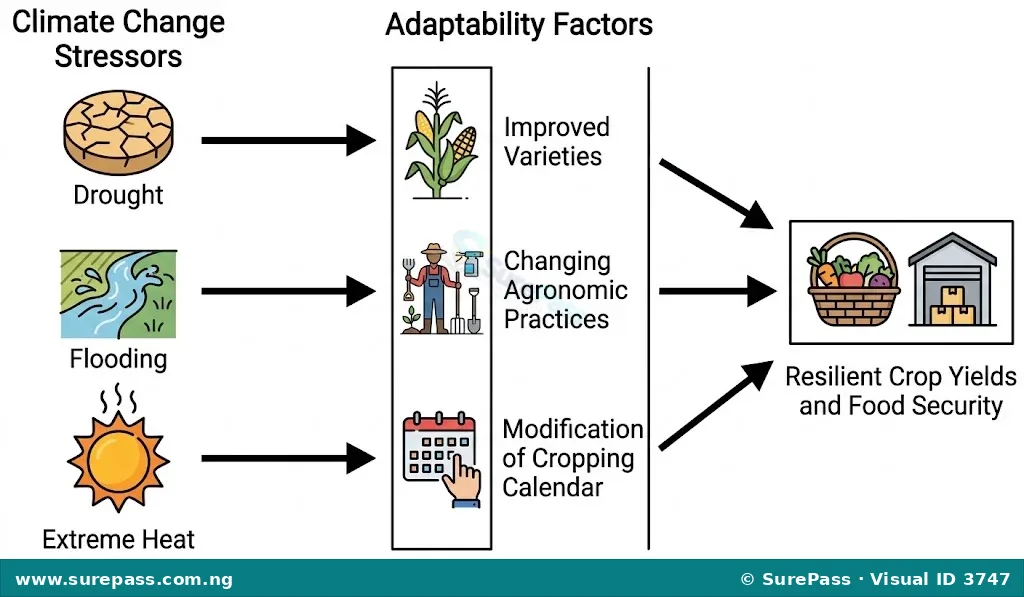
Factors that Enhance Crop Adaptability to Climate Change
To mitigate the negative impacts of climate change on crop production, various adaptation strategies must be employed. These strategies involve genetic improvements, field management adjustments and planning modifications.
The main factors that enhance crop adaptability to climate change are:
- Use of improved crop varieties.
- Changing agronomic practices.
- Modification of the cropping calendar.
1. Improved Crop Varieties
Improved crop varieties are plants that have been selectively bred or genetically modified by agricultural scientists to possess superior traits, such as resistance to environmental stress, pests and diseases.
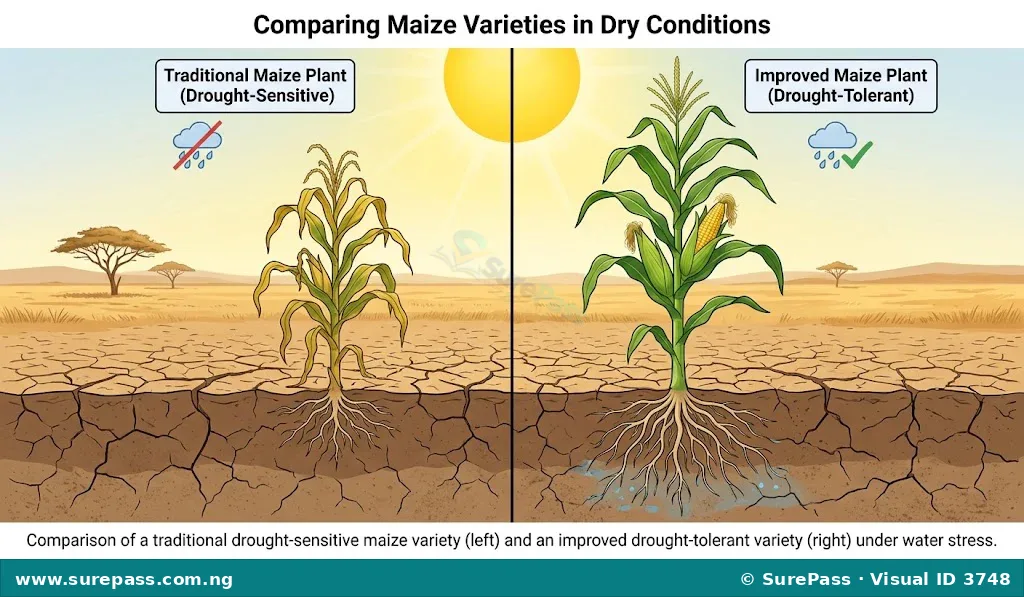
Developing and planting improved varieties is one of the most effective ways to ensure crop adaptability. These varieties are tailored to survive specific climatic challenges that traditional varieties cannot withstand.
Examples of improved crop varieties developed for climate resilience include:
- Drought-tolerant varieties: These crops are selected to withstand prolonged dry spells. They may possess deep root systems to access underground water or physiological mechanisms that reduce water loss through transpiration. An example is drought-tolerant maize developed for arid and semi-arid regions of Nigeria.
- Early-maturing varieties: These crops have shortened life cycles, allowing them to reach maturity and produce yields quickly. This enables them to escape late-season drought or make the most of short rainy seasons. Examples include short-duration cowpea and early-maturing cassava.
- Flood-tolerant varieties: These crops are capable of surviving prolonged submergence under water. An example is flood-tolerant rice, often referred to as “scuba rice,” which can survive underwater for up to two weeks in flood-prone riverine areas.
- Pest and disease-resistant varieties: Climate change often leads to the outbreak of new pests and diseases. Breeding crops with built-in resistance to these biological threats ensures survival and stable yields.
2. Changing Agronomic Practices
Agronomic practices are the physical field management techniques and cultural methods used by farmers to cultivate crops from planting to harvest.
By adjusting these practices, farmers can modify the microclimate around the crops, conserve soil resources and reduce the physical stress imposed on plants by extreme weather events.
Key agronomic practices that enhance crop adaptability include:
- Mulching: This involves covering the soil surface with organic materials, such as dry grass, straw and crop residues, or inorganic materials like plastic sheets. Mulch conserves soil moisture by reducing evaporation, moderates soil temperature and prevents soil erosion.
- Conservation tillage: This practice includes minimum tillage or zero tillage, which reduces soil disturbance. By leaving crop residues on the field and avoiding excessive ploughing, the soil structure is preserved, organic matter is maintained and moisture retention is improved.
- Cover cropping: Planting fast-growing crops, such as mucuna, sweet potato or melon, covers the soil surface. This cover protects the soil from direct sunlight, reduces water evaporation, suppresses weed growth and prevents soil erosion during heavy rainstorms.
- Agroforestry: This is the deliberate integration of woody perennials (trees or shrubs) with agricultural crops on the same piece of land. The trees provide shade, reduce wind speed, lower ambient temperatures around the crops and improve soil fertility through leaf litter.
- Efficient irrigation systems: Instead of relying solely on rainfall, farmers adopt irrigation. Drip or trickle irrigation systems deliver water directly to the root zone of crops, minimizing water loss through evaporation and runoff, which is highly beneficial during dry spells.
3. Modification of the Cropping Calendar
A cropping calendar is a schedule that outlines the timing of agricultural activities, including land preparation, sowing, weeding, fertilizer application and harvesting, based on seasonal weather patterns.
Due to climate change, traditional cropping calendars that farmers relied upon for generations are no longer accurate. The onset and cessation of rains have become highly erratic. Modifying the cropping calendar is necessary to align farming activities with the actual current weather patterns.
Methods used to modify the cropping calendar include:
- Shifting planting dates: Farmers delay or advance sowing dates to align with the actual onset of the rainy season. Planting too early before the rains are fully established can lead to crop failure due to subsequent dry spells, while planting too late can shorten the growing period.
- Utilizing meteorological forecasts: Modern farmers rely on seasonal climate predictions and weather forecasts provided by meteorological agencies, such as the Nigerian Meteorological Agency (NiMet). This scientific data helps farmers make informed decisions on when to prepare land and sow seeds.
- Relay cropping and sequential cropping: Farmers adjust planting schedules to grow two or more crops in sequence on the same field. For instance, planting a short-duration crop immediately after harvesting an early-maturing crop allows the farmer to maximize the use of residual soil moisture at the end of the rainy season.
Summary of Adaptation Factors
The table below summarizes how each factor enhances crop adaptability to specific climate change challenges:
| Adaptation Factor | Specific Climate Challenge Addressed | How It Enhances Adaptability |
|---|---|---|
| Improved Varieties (Drought-tolerant) | Water scarcity and dry spells | Reduces water loss and accesses deep soil moisture. |
| Improved Varieties (Early-maturing) | Shortened rainy seasons | Completes life cycle quickly before the dry season begins. |
| Mulching and Cover Cropping | High temperatures and soil moisture loss | Conserves soil moisture and lowers soil temperature. |
| Conservation Tillage | Soil degradation and erosion | Preserves soil structure and retains organic matter. |
| Shifting Planting Dates | Erratic onset of rainfall | Prevents crop failure by planting only when rains are established. |
| Agroforestry | Extreme heat and windstorms | Provides shade, windbreaks and moderates the microclimate. |
Evaluation Guide
The following questions can be used to evaluate understanding of this unit:
- Explain the meaning of crop adaptability in the context of climate change.
- Identify and discuss three major factors that enhance crop adaptability to climate change.
- Provide two examples of improved crop varieties and explain how they adapt to changing weather patterns.
- Describe how changing agronomic practices can help conserve soil moisture during dry spells.
- Why is the modification of the cropping calendar necessary for modern farmers in Nigeria?


0 comments
Open the discussion when you need it. Comments stay collapsed until requested so the initial article remains light.