



ARTICLE CONTENTSOn this page 7 sections
Desirable Ethics in Life and Business
Performance Objectives
By the end of the lesson, students should be able to:
- explain the meaning of ethics in life and business;
- identify the desirable ethics in life and business;
- explain the benefits of practicing ethics in life and business.
Meaning of Ethics in Life and Business
Ethics refers to the moral principles, values and rules of conduct that govern the behavior of an individual or a group in society.
It acts as a guide for distinguishing between right and wrong actions, ensuring that individuals and organizations act in ways that do not harm others or the environment.
Life ethics refers to the moral principles and values that guide the daily decisions, actions and relationships of an individual within the community.
These personal values are developed from family upbringing, cultural norms, religious teachings and societal expectations. They influence how a person treats neighbors, respects public property and fulfills civic duties.
Business ethics refers to the system of moral principles, values and professional standards that guide decision-making, operations and behavior within a commercial enterprise.
In crop production and horticulture, business ethics governs how farmers, nursery operators and agribusiness managers interact with consumers, employees, suppliers, competitors and the natural environment. It ensures that the pursuit of profit does not compromise food safety, environmental health or human dignity.
Examples of Desirable Ethics
Desirable ethics are positive moral values and practices that promote trust, fairness and sustainability. These ethics can be categorized into personal life practices and professional agribusiness operations.
Common examples of desirable ethics in personal life include:
- Honesty: Speaking the truth and refusing to deceive others in daily interactions.
- Integrity: Standing firmly by moral principles and doing the right thing even when unsupervised.
- Respect: Valuing the rights, safety, opinions and property of other people in the community.
- Responsibility: Accepting accountability for personal actions, duties and obligations.
- Fairness: Treating all individuals equitably without bias, discrimination or favoritism.
In the context of crop production, horticulture and agribusiness, desirable business ethics include:
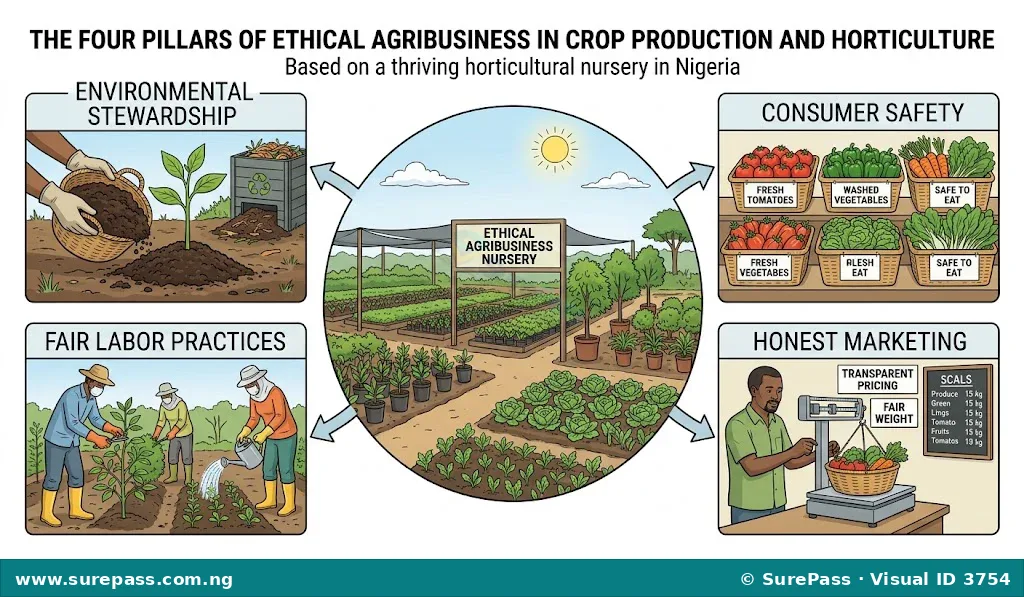
- Truthfulness in Product Labeling: Providing accurate information regarding seed varieties, germination rates, chemical treatments and the organic status of agricultural produce.
- Fair Pricing: Charging reasonable prices for agricultural inputs, seedlings and harvested crops, and avoiding artificial price inflation during periods of scarcity.
- Environmental Stewardship: Practicing sustainable farming methods, such as crop rotation, proper waste disposal and controlled chemical application, to prevent soil degradation and water pollution.
- Fair Treatment of Workers: Providing farm laborers with safe working conditions, protective gear, fair wages and reasonable working hours.
- Quality Assurance: Ensuring that food crops, fruits and vegetables offered for sale are safe, healthy and free from harmful chemical residues or pathogens.
- Compliance with Regulations: Adhering to government agricultural policies, quarantine laws and environmental protection standards.
Observe the diagram below showing the core pillars of ethical agribusiness.
Benefits of Practicing Desirable Ethics
The adoption of ethical standards in personal life and business operations yields significant advantages. These benefits contribute to personal peace, social harmony and the long-term profitability of agribusinesses.
The primary benefits of practicing desirable ethics in personal life include:
- Peace of Mind: Living honestly reduces anxiety and the fear of exposure or legal punishment.
- Good Reputation: Ethical individuals earn the trust, respect and admiration of community members.
- Harmonious Relationships: Respect and fairness prevent conflicts, fostering peaceful coexistence in families and neighborhoods.
- Personal Growth: Taking responsibility for actions helps individuals learn from mistakes and build strong character.
The primary benefits of practicing desirable ethics in a crop production and horticulture business include:
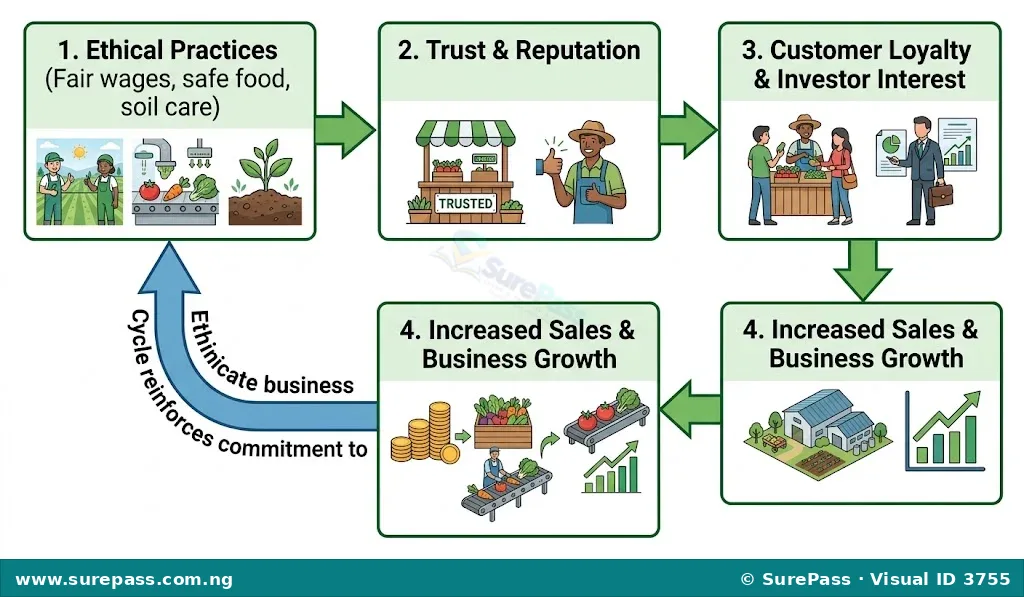
- Customer Loyalty: Consumers prefer to buy food crops and ornamental plants from farmers who consistently supply safe, high-quality and honestly labeled produce.
- Brand Reputation: An ethical agribusiness builds a strong brand image, which can attract premium buyers, supermarkets and export opportunities.
- Employee Retention and Productivity: Farm workers who are treated fairly, paid promptly and provided with safety gear are more motivated, leading to higher farm productivity and lower staff turnover.
- Long-Term Sustainability: Ethical practices like soil conservation and proper water management preserve the natural resources needed to keep the farm productive for future generations.
- Access to Credit and Investment: Financial institutions, cooperative societies and agricultural investors prefer to fund transparent, legally compliant and ethically run agribusinesses.
- Avoidance of Legal Penalties: Compliance with agricultural and environmental laws protects the business from costly lawsuits, fines and closures by regulatory authorities.
The diagram below illustrates how ethical practices lead to business growth.
Ethical Decision-Making in Agribusiness
Agribusiness managers frequently face situations where they must choose between short-term financial gain and ethical responsibility. Understanding how to make ethical decisions is a critical management skill.
The following table contrasts ethical and unethical decisions in common crop production scenarios:
| Scenario | Ethical Decision | Unethical Decision |
|---|---|---|
| Pest Control | Observing the recommended pre-harvest interval after spraying pesticides to ensure no chemical residue remains on crops sold to consumers. | Harvesting and selling crops immediately after chemical spraying to take advantage of high market prices, ignoring consumer health risks. |
| Seed Marketing | Labeling seeds with their actual germination rate and variety, even if the germination rate is lower than expected. | Mixing old, non-viable seeds with fresh seeds and selling them as high-quality hybrid seeds to maximize profit. |
| Soil Management | Using organic manure and cover crops to maintain soil fertility, even though it requires more labor. | Overusing cheap, synthetic fertilizers to force rapid crop growth, leading to long-term soil acidity and water pollution. |
| Labor Management | Paying farm laborers the agreed wage upon completion of weeding or harvesting tasks. | Withholding or delaying payments to vulnerable farm laborers to reduce operational costs. |
Practical Exercise: Ethical Farm Management Plan
This practical exercise guides learners on how to design an ethical management plan for a school vegetable garden or a small home horticulture project.
The required materials are:
- Writing materials (paper and pens).
- A list of school farm rules and guidelines.
- A sample record book for farm inputs and sales.
The procedure involves the following steps:
- Identify the Project: Select a specific crop production project, such as cultivating fluted pumpkin (ugu) or raising ornamental flowers in a nursery.
- Draft the Ethical Code: Write down a set of five ethical rules that will govern the project. These must cover seed sourcing, chemical use, labor sharing among group members, and sales.
- Design the Safety Protocol: Outline the safety measures to be taken when applying organic manure or handling garden tools to protect the health of the students involved.
- Create a Transparent Record System: Design a simple ledger to record all expenses (purchasing seeds, soil, pots) and all income from sales, ensuring that every transaction is transparently documented.
- Plan for Waste Disposal: Write down a clear method for disposing of agricultural waste, such as composting weeds and crop residues rather than burning them or dumping them in drainage channels.





0 comments
Open the discussion when you need it. Comments stay collapsed until requested so the initial article remains light.