


ARTICLE CONTENTSOn this page 8 sections
Pests and control
Performance Objectives
By the end of the lesson, students should be able to:
- explain the meaning of pests
- identify and discuss types of pests
- discuss the mode of pests damage
- explain prevention and control measures
Meaning of Pests
A pest is any organism that causes damage, disease, or economic loss to crops, livestock, or human property.
In crop production and horticulture, pests are organisms that attack crops at various stages of growth, from planting in the field to storage after harvest. These organisms reduce the yield, quality, and market value of agricultural produce. While insects make up the largest group of crop pests, other organisms such as rodents, birds, nematodes, mites, and snails also cause significant agricultural damage.
Types of Pests
Crop pests are broadly classified into two main groups based on where they attack crops:
- Field pests
- Store pests
Field Pests
Field pests are organisms that attack crops while they are still growing on the farm. These pests damage crops from the seedling stage up to maturity before harvest.
Common examples of field pests include:
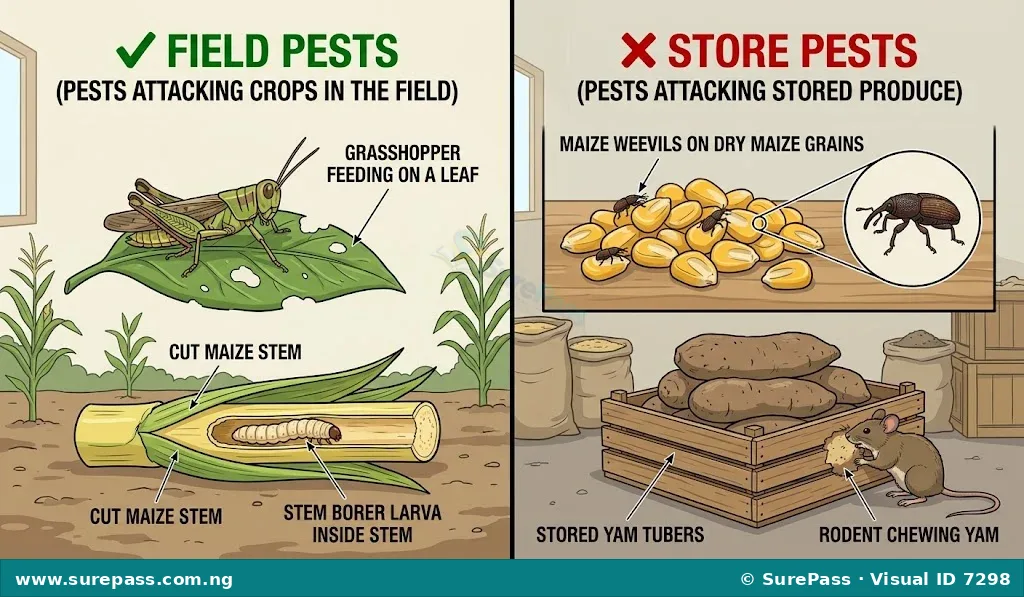
- Stem Borers: Insect larvae that tunnel into the stems of cereal crops like maize, millet, and sorghum, weakening the plants and causing them to break or wither.
- Grasshoppers and Locusts: Chewing insects that feed on the leaves, shoots, and young stems of various crops, often defoliating entire fields.
- Aphids and Whiteflies: Piercing and sucking insects that feed on plant sap, causing leaves to curl, yellow, and wilt. They also transmit viral diseases.
- Cotton Stainers: Insects that pierce cotton bolls to suck sap, leaving stains that ruin the quality of the cotton lint.
- Rodents (such as Grasscutters and Rats): Mammals that dig up planted seeds, chew through cassava tubers, or cut down mature cereal stalks.
- Birds (such as Quelea birds): Pests that feed on mature grains of rice, millet, and sorghum directly from the standing crop.
Store Pests
Store pests are organisms that attack harvested crop products after they have been placed in storage facilities, barns, or silos. These pests feed on dry grains, tubers, and processed agricultural products.
Common examples of store pests include:
- Weevils (such as Maize Weevils and Cowpea Weevils): Small beetles that bore into dry grains and seeds to feed and lay eggs, leaving hollow shells and powdery residue.
- Flour Beetles: Pests that infest processed crop products like flour, semolina, and yam flour, making them unfit for human consumption.
- Rodents (such as Rats and Mice): Mammals that chew through storage bags, feed on stored grains and tubers, and contaminate food with urine and faeces.
- Yam Beetles (in storage): Beetles that continue to feed on harvested yam tubers in barns, causing rotting and reducing market value.
Observe the image below to identify common field and store pests.
Modes of Pest Damage
Pests damage crops in different ways depending on their mouthparts, feeding habits, and physical activities.
Modes of Damage by Field Pests
Field pests damage growing crops through the following methods:
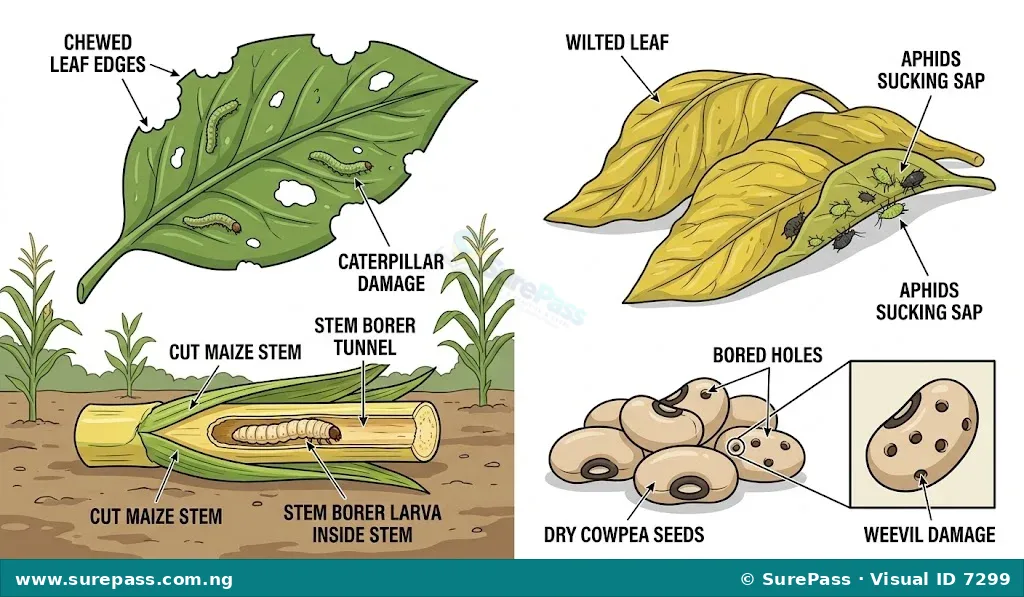
- Biting and Chewing: Pests with strong biting mouthparts, such as grasshoppers, caterpillars, and beetles, cut and eat plant parts like leaves, stems, flowers, and fruits. This reduces the photosynthetic area of the plant.
- Piercing and Sucking: Pests like aphids, whiteflies, and cotton stainers use needle-like mouthparts to pierce plant tissues and suck out liquid sap. This leads to wilting, stunted growth, and leaf curling.
- Boring and Tunneling: Larvae of stem borers and certain beetles bore holes into stems, roots, or fruits. This disrupts the transport of water and nutrients, causing the plant to wither or collapse.
- Transmission of Diseases: Sucking pests often act as vectors, carrying viruses, bacteria, or fungi from infected plants to healthy ones during feeding.
- Root Destruction: Nematodes and soil-dwelling insect larvae feed on plant roots, reducing the plant’s ability to absorb water and nutrients from the soil.
Modes of Damage by Store Pests
Store pests damage harvested agricultural products through the following methods:
- Hollowing of Grains: Weevils bore into dry grains of maize, cowpea, and rice, eating the internal endosperm and embryo. This leaves the grains hollow, light, and useless for planting or consumption.
- Contamination: Pests contaminate stored food with their faeces, urine, webbing, cocoons, and dead bodies, which promotes the growth of toxic moulds and fungi.
- Reduction of Seed Viability: When store pests eat the embryo (germ) of stored seeds, the seeds lose their ability to germinate when planted.
- Boring into Tubers: Yam beetles and rodents chew holes into stored yam and cassava tubers, creating entry points for rot-causing microorganisms.
Look at the diagram below to see the physical signs of pest damage on crops.
Pest Prevention and Control Measures
To protect crops and ensure high yields, farmers use various methods to prevent pest infestation or control existing pest populations. These measures are grouped into four main categories:
- Cultural control
- Physical and mechanical control
- Biological control
- Chemical control
Cultural Control
Cultural control involves the use of standard farming practices to make the environment less favourable for pests.
Common cultural control practices include:
- Crop Rotation: Alternating different types of crops on the same land breaks the life cycle of host-specific pests.
- Timely Planting and Harvesting: Planting early helps crops grow past vulnerable stages before pest populations peak. Harvesting promptly prevents field pests from attacking mature crops.
- Farm Sanitation: Clearing weeds, removing crop residues, and burning infested plant parts destroy hiding places and breeding grounds for pests.
- Use of Resistant Varieties: Planting crop varieties that are naturally resistant to pest attacks, such as cassava varieties resistant to mosaic disease vectors.
- Tillage: Ploughing and harrowing the soil exposes soil-dwelling pests, pupae, and eggs to predators and sunlight.
Physical and Mechanical Control
Physical and mechanical control involves using physical barriers, manual labour, or simple devices to destroy or exclude pests.
Examples of physical and mechanical control include:
- Handpicking and Killing: Manually removing large insects, caterpillars, and snails from plants and destroying them.
- Fencing and Netting: Erecting wire mesh fences around farms to keep out rodents, or using insect-proof nets in greenhouses.
- Trapping: Setting traps to catch rodents and larger mammalian pests in fields or storage barns.
- Scarecrows and Noise Makers: Placing scarecrows or reflective ribbons in fields to frighten away birds.
- Hermetic Storage: Storing dry grains in airtight containers or bags to suffocate insects by depriving them of oxygen.
Biological Control
Biological control is the introduction or encouragement of natural enemies (predators, parasites, or pathogens) to reduce pest populations.
Examples of biological control include:
- Introducing Predators: Releasing ladybird beetles to feed on aphids, or keeping cats in storage areas to hunt rats.
- Using Parasitoids: Releasing tiny wasps that lay eggs inside pest caterpillars, eventually killing them.
- Applying Pathogens: Using specific bacteria or fungi that infect and kill target insect pests without harming crops or humans.
Chemical Control
Chemical control involves the use of toxic chemical substances, known as pesticides, to kill or repel pests.
Types of chemical pesticides used in agriculture include:
- Insecticides: Chemicals used to kill insect pests (e.g., spraying cotton stainers or stem borers).
- Rodenticides: Chemical poisons used to kill rats, mice, and other rodents.
- Nematicides: Chemicals applied to the soil to control parasitic nematodes.
- Fumigants: Toxic gases used to treat stored grains in airtight silos to kill all stages of store pests.
Chemical control is highly effective and fast-acting, but it must be used carefully to avoid environmental pollution, poisoning of non-target organisms, and chemical residues on food.
Practical Identification and Control Skills
How to Identify Pest Damage on Growing Crops
To identify pest damage in the field, look for the following physical signs on growing crops:
- Irregular holes in leaves: This indicates the presence of biting and chewing pests like grasshoppers or caterpillars.
- Yellowing, curling, or wilting leaves: This suggests sap-sucking pests like aphids or whiteflies are feeding on the plant.
- Dead hearts in cereals: When the central shoot of a maize plant dries up while the lower leaves remain green, it indicates stem borer damage inside the stem.
- Boreholes with powdery waste (frass): Small holes on stems or fruits accompanied by sawdust-like waste indicate boring insects.
How to Prepare a Store to Prevent Pest Infestation
This practical procedure outlines how to prepare a storage facility before introducing new harvest to prevent store pest damage.
The procedure involves the following steps:
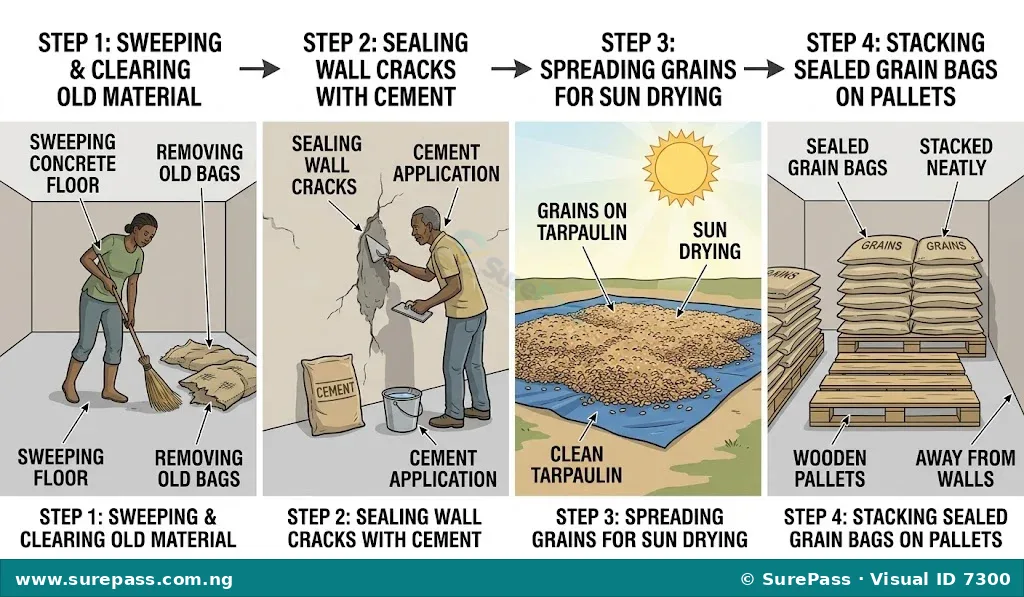
- Empty the store completely: Remove all old grains, debris, and damaged bags from the storage room.
- Clean the storage facility: Sweep the floors, walls, and ceiling thoroughly to remove dust, webs, and hidden insects.
- Repair cracks and crevices: Seal all cracks in the walls and floor with cement to eliminate hiding places for weevils and entry points for rodents.
- Disinfest the store: Spray the empty store walls and floor with a recommended residual insecticide, or fumigate the airtight space.
- Dry the produce thoroughly: Ensure grains are dried to a safe moisture content (usually below twelve percent) before storage, as dampness encourages pest activity and mould growth.
- Use clean storage containers: Pack the dry grains into clean, pest-free bags or airtight drums, and place them on wooden pallets away from the walls.
Observe the diagram below showing the key steps in preparing a grain store.
Review Questions
Use the following questions to review understanding of the topic:
- Explain the meaning of pests in crop production.
- Identify and discuss the two main types of crop pests, giving three examples of each.
- Discuss the modes of damage caused by field pests and store pests.
- Explain four categories of pest prevention and control measures, providing one practical example for each.




0 comments
Open the discussion when you need it. Comments stay collapsed until requested so the initial article remains light.