


ARTICLE CONTENTSOn this page 6 sections
Introduction to Business Studies
Performance Objectives
By the end of the lesson, students should be able to:
- explain the meaning of Business Studies;
- discuss the importance of Business Studies;
- identify the components of Business Studies;
- discuss the career opportunities in Business Studies.
Meaning of Business Studies
Business Studies is the study of how businesses are organised, managed and operated. It teaches about the activities involved in making, buying and selling goods and services to satisfy people’s needs and wants.
This subject helps learners understand the world of work, how money is made, and how different parts of a business work together. It covers everything from a small shop in the market to large companies that operate across many cities in Nigeria and beyond.
Importance of Business Studies
Business Studies is important for many reasons. It helps people understand how the economy works and how businesses contribute to society. Learning Business Studies can prepare individuals for future jobs and even help them start their own businesses.
The importance of Business Studies includes the following:
- Understanding the Business World: It helps learners understand how goods and services are produced, distributed and sold. This knowledge is useful for everyone, whether they work in business or not. For example, understanding why a shop sells certain items or how a product gets from a factory to the market.
- Developing Skills for Life: The subject teaches important skills such as problem-solving, decision-making, communication and financial literacy, which are useful in everyday life. These skills can help a person manage their daily tasks, make wise choices, and interact effectively with others.
- Preparing for Future Careers: It introduces various job roles and career paths available in the business sector, helping learners make informed choices about their future. This can include roles in banking, marketing, office administration, and more.
- Encouraging Entrepreneurship: Business Studies inspires learners to think about starting their own businesses and becoming job creators instead of just job seekers. It teaches the basics of how to identify opportunities and turn ideas into successful ventures.
- Managing Personal Finances: It provides basic knowledge about managing money, saving and making wise spending decisions. This helps individuals handle their own money responsibly and plan for the future.
Components of Business Studies
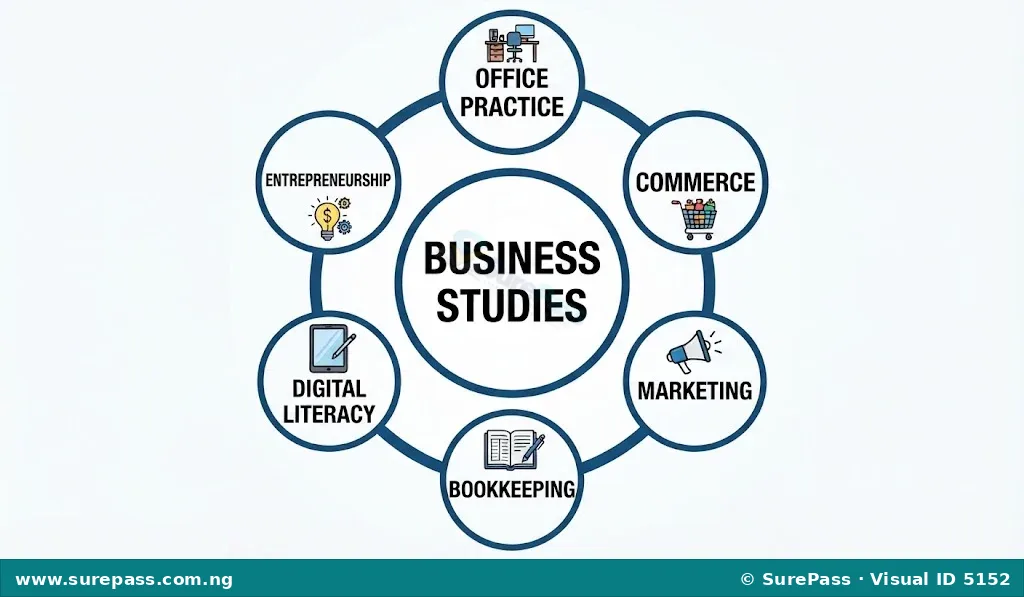
Business Studies is made up of several different parts, or components, that work together to give a complete understanding of business. Each component focuses on a specific area of business activity.
The main components of Business Studies are:
- Office Practice
- Commerce
- Marketing
- Bookkeeping
- Digital Literacy
- Entrepreneurship
Office Practice
Office Practice involves learning about the daily activities and procedures carried out in an office. This includes how to handle documents, use office equipment like computers and printers, and communicate effectively with colleagues and clients.
It teaches skills needed to keep an office running smoothly, such as filing important papers, typing reports, and managing appointments. Good office practice ensures that information is organised, tasks are completed efficiently, and the office environment is productive.
Commerce
Commerce is about the buying and selling of goods and services. It covers all the activities that help move products from where they are made to where they are consumed. This includes the exchange of goods between producers and consumers.
This component includes understanding trade (local and international), transportation (moving goods), banking (handling money), insurance (protecting against risks) and warehousing (storing goods). Commerce helps people get the products they need and helps businesses reach their customers across different locations.
Marketing
Marketing is the process of making people aware of products or services and encouraging them to buy. It involves understanding what customers want and then creating, promoting and selling products to meet those needs. Marketing helps businesses connect with their target audience.
Activities in marketing include advertising (telling people about products), sales promotion (offering discounts or special deals) and public relations (building a good image for the business). The goal of marketing is to connect businesses with their customers and build strong, lasting relationships.
Bookkeeping
Bookkeeping is the process of recording all the financial transactions of a business. This means keeping track of all the money coming in (income from sales) and all the money going out (expenses like salaries or rent).
It involves maintaining accurate records of sales, purchases, payments and receipts. Good bookkeeping helps a business know how much money it has, how much it owes to others, and how much money others owe to it. This information is vital for making good business decisions.
Digital Literacy
Digital Literacy refers to the ability to find, evaluate, create and communicate information using digital technologies, such as computers, smartphones and the internet. In business, it means being able to use digital tools for various tasks.
This component teaches how to use software applications like word processors and spreadsheets, send professional emails, browse the internet for business information, and understand online safety and security. Digital literacy is essential in today’s modern business world, where many operations are done digitally.
Entrepreneurship
Entrepreneurship is about identifying business opportunities and taking the risk to start and manage a new business. It involves creating new products or services, finding innovative ways to do things, and solving problems for customers. An entrepreneur is someone who sees a need and creates a business to fill it.
This component encourages creativity, innovation and leadership. Entrepreneurs are people who start businesses, often creating jobs for others and contributing to the economic growth of a community or country.
Career Opportunities in Business Studies
Studying Business Studies opens up many different career paths. The skills and knowledge gained from this subject are valuable in almost every industry and sector of the economy.
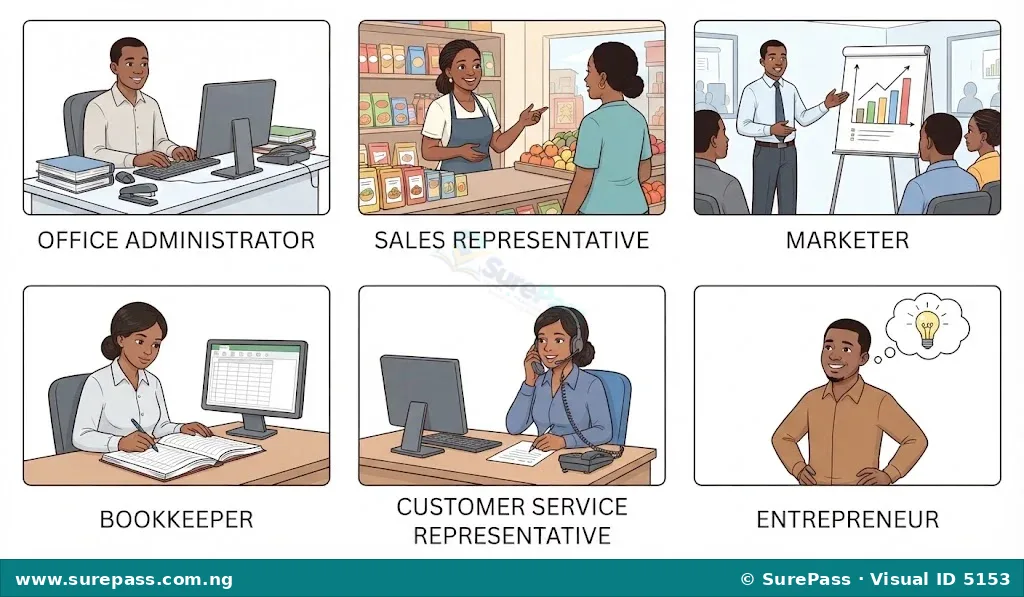
Identifying career opportunities in Business Studies involves understanding the various roles available in different business areas. Some common career opportunities include:
- Office Administrator: A person who manages the daily operations of an office, handles documents, schedules meetings and provides support to staff. They ensure the office runs smoothly.
- Sales Representative: Someone who sells products or services to customers, explains their benefits and helps meet customer needs. They often work directly with clients to close deals.
- Marketer: A professional who promotes products and services, creates advertising campaigns and researches customer preferences. They help businesses attract and retain customers.
- Bookkeeper: A person responsible for recording financial transactions, managing invoices and keeping accurate financial records for a business. They ensure all money matters are properly documented.
- Customer Service Representative: An individual who helps customers with their questions, complaints and orders, ensuring they have a good experience. They are the first point of contact for many customers.
- Bank Teller: A person who handles customer transactions at a bank, such as deposits, withdrawals and cashing cheques. They assist customers with their banking needs.
- Entrepreneur: Someone who starts and runs their own business, creating new products or services and managing all aspects of the company. They are innovators and business leaders.
- Data Entry Clerk: A person who inputs information into computer systems, ensuring data is accurate and organised. They play a crucial role in maintaining business records and databases.
These careers show how Business Studies prepares individuals for various roles that are essential for the smooth running of businesses and the economy. The skills learned are transferable and highly valued in the job market.




0 comments
Open the discussion when you need it. Comments stay collapsed until requested so the initial article remains light.