



ARTICLE CONTENTSOn this page 8 sections
Marketing Hair Styling, Makeup Application and Henna Design Products (Goods and Services)
Performance Objectives
By the end of the lesson, students should be able to:
- state the meaning of market and marketing;
- explain the basic characteristics of markets;
- discuss the importance of marketing;
- identify factors that determine the choice of target markets;
- explain marketing strategies;
- identify different means of marketing.
Understanding Market and Marketing
What is a Market?
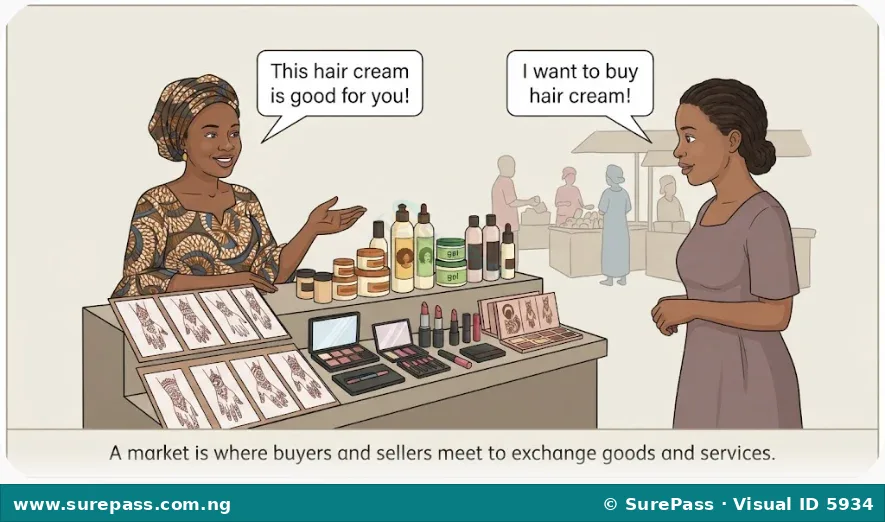
A market is a place or system where buyers and sellers meet to exchange goods and services.
This meeting can happen in a physical location, like a local shop or a large market square, or it can happen online, such as through a website or social media platform. In a market, buyers want to purchase goods or services, and sellers want to sell them.
What is Marketing?
Marketing is the process of letting people know about products or services and convincing them to buy.
It involves all the activities a business does to promote and sell its products or services to customers. This includes understanding what customers want, creating the right product, setting a good price, making the product available, and telling people about it.
Basic Characteristics of a Market
Markets have several basic characteristics that make them function. These characteristics help to ensure that buying and selling can happen smoothly:
- Buyers: These are the people who want to purchase goods or services. They have needs and desires that they want to satisfy.
- Sellers: These are the people or businesses that offer goods or services for sale. They want to make a profit by meeting the needs of buyers.
- Goods and Services: These are the items or activities that are exchanged in the market. Goods are physical items like hair products or makeup kits, while services are actions performed for others, such as hair styling or makeup application.
- Exchange: This is the act of giving something (usually money) to receive something else (goods or services). Both buyers and sellers agree on the value of what is being exchanged.
- Interaction: Buyers and sellers communicate with each other. This interaction can be direct, like talking in a shop, or indirect, like seeing an advertisement.
Importance of Marketing
Marketing is very important for businesses, especially for those offering hair styling, makeup application, and henna design products and services. Its importance includes:
- Creating Awareness: Marketing helps people know that a product or service exists. For example, it lets potential customers know about a new hair salon or a unique henna artist.
- Attracting Customers: Good marketing makes people interested in buying. It can show how a particular makeup product can enhance beauty or how a hair styling service can transform a look.
- Increasing Sales: When more people know about and are interested in a product or service, sales tend to increase. This helps the business grow and make more money.
- Building Reputation: Marketing helps a business build a good name and trust with customers. When customers have a good experience, they are likely to return and recommend the business to others.
- Understanding Customer Needs: Marketing involves listening to customers to understand what they want. This helps businesses create products and services that truly meet customer needs, like offering specific hair treatments or makeup shades.
Factors for Selecting a Market
When a business decides where to sell its products or services, it needs to consider several factors. These factors help determine the best target market:
- Location of Customers: Where do the potential customers live or work? For hair styling and makeup services, it is important to be in an area where many people need these services, such as residential areas or busy commercial centres.
- Customer Needs and Preferences: What do customers in a particular area want? Some areas might have a higher demand for traditional hair braiding, while others might prefer modern hair treatments or specific makeup brands.
- Competition: How many other businesses offer similar products or services in that area? It is important to know if the market is already crowded or if there is room for a new business.
- Accessibility: Can customers easily reach the market or business? This includes considering transport links, parking, and how easy it is for people to find the location.
- Purchasing Power: Can the customers in that area afford the products or services being offered? A business should choose a market where customers have enough money to buy what is being sold.
Marketing Strategies
Marketing strategies are plans that businesses use to reach their customers and achieve their sales goals. Two important parts of marketing strategy are target markets and the marketing mix.
Target Markets
A target market is a specific group of customers that a business aims to sell its products or services to.
Instead of trying to sell to everyone, businesses focus on a smaller group of people who are most likely to buy what they offer. For example, a hair salon might target young women who want trendy hairstyles, or a henna artist might target brides and people attending special events.
Marketing Mix (4 Ps)
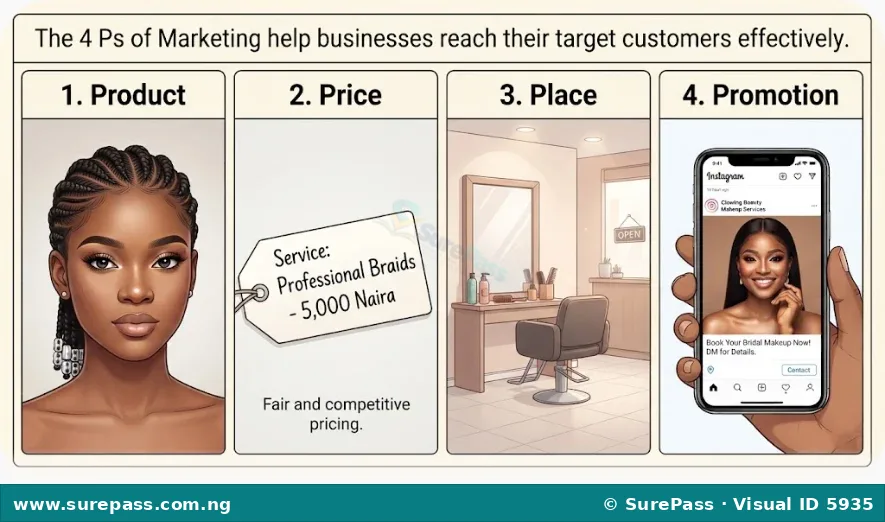
The marketing mix is a set of tools that a business uses to implement its marketing strategy. These tools are often called the “4 Ps”: Product, Price, Place, and Promotion.
- Product: This refers to the actual goods or services being offered. For hair styling, makeup, and henna, the product includes the quality of the hair cream, the range of makeup colours, the skill of the stylist, or the creativity of the henna design. A good product meets customer needs and is of high quality.
- Price: This is the amount of money customers pay for the product or service. The price must be fair and competitive, reflecting the value of the product while also allowing the business to make a profit. For example, a luxury hair treatment might have a higher price than a basic haircut.
- Place (Distribution): This refers to where and how the product or service is made available to customers. This could be a physical salon, a mobile service that visits customers’ homes, an online store for makeup products, or a stall at a market. The place should be convenient for the target customers.
- Promotion: This involves all the ways a business communicates with its customers to inform, persuade, and remind them about its products or services. Promotion includes advertising, social media posts, special offers, and word-of-mouth recommendations. For example, a makeup artist might promote their services by sharing photos of their work on Instagram.
Means of Marketing
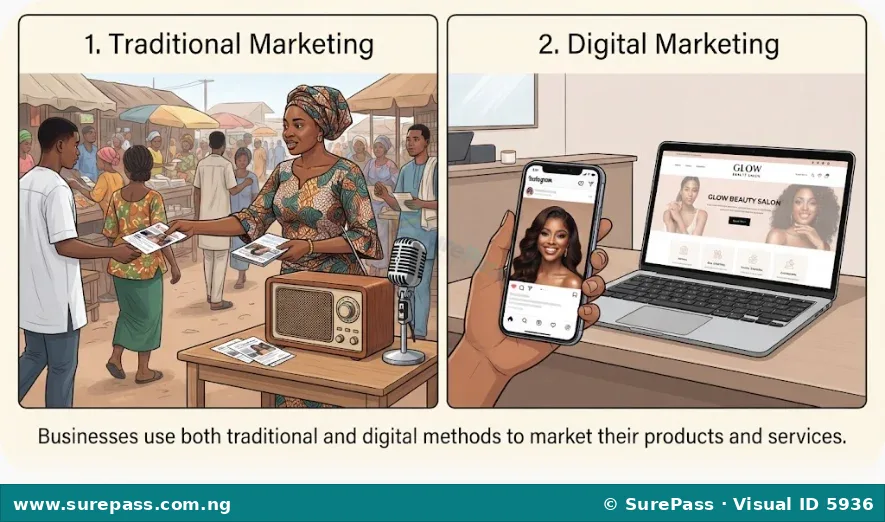
Businesses use different ways to market their products and services. These can be broadly categorised into traditional marketing and digital marketing.
Traditional Marketing
Traditional marketing involves older, non-digital methods of promoting products and services. These methods have been used for a long time and are still effective, especially in local communities.
Examples of traditional marketing for hair styling, makeup, and henna include:
- Word-of-Mouth: This is when satisfied customers tell their friends and family about a good product or service. It is a powerful form of marketing because people trust recommendations from those they know.
- Flyers and Posters: Printing small papers (flyers) or larger sheets (posters) with information about services and prices, then distributing them in public places or pasting them on notice boards.
- Local Newspaper Advertisements: Placing adverts in community newspapers that reach people in a specific area.
- Radio Advertisements: Broadcasting short messages about products or services on local radio stations.
- Signboards and Banners: Placing large signs outside a salon or at a market to attract attention.
- Community Events: Setting up a stall or offering free demonstrations at local fairs, markets, or community gatherings to showcase skills and products.
Digital Marketing
Digital marketing uses electronic devices and the internet to promote products and services. It is a modern approach that allows businesses to reach a wider audience quickly.
Examples of digital marketing for hair styling, makeup, and henna include:
- Social Media Marketing: Using platforms like Instagram, Facebook, and TikTok to share photos and videos of hair styles, makeup looks, and henna designs. Businesses can interact with customers, run contests, and post special offers.
- Website: Creating a professional website where customers can see services, prices, book appointments, and even buy products online.
- Email Marketing: Sending newsletters or promotional emails to customers who have signed up to receive updates about new products, services, or discounts.
- Online Advertisements: Placing adverts on websites, search engines (like Google), or social media platforms that target specific groups of people.
- Blogging and Vlogging: Creating written articles (blogs) or video content (vlogs) about beauty tips, product reviews, or tutorials related to hair, makeup, and henna. This helps to attract people interested in these topics.



0 comments
Open the discussion when you need it. Comments stay collapsed until requested so the initial article remains light.