


ARTICLE CONTENTSOn this page 9 sections
Hair Care Practices and Treatment
Performance Objectives
By the end of the lesson, students should be able to:
- explain the meaning and importance of hair care;
- identify different types of hair and scalp conditions;
- shampoo, condition, dry, moisturize, brush, comb, style and trim hair,
- treat hair and scalp conditions.
Meaning of Hair Care
Hair care refers to all the practices involved in keeping the hair and scalp clean, healthy and attractive. It includes washing, conditioning, moisturizing, and protecting the hair from damage.
Proper hair care helps to maintain the natural beauty and strength of the hair. It also ensures the scalp remains free from problems.
Importance of Hair Care
Hair care is important for several reasons:
- Cleanliness: Regular hair care keeps the hair and scalp clean, removing dirt, oil and product buildup.
- Health: It promotes a healthy scalp, which is essential for healthy hair growth.
- Appearance: Well-cared-for hair looks neat, shiny and attractive.
- Protection: Hair care practices protect the hair from damage caused by heat, chemicals and environmental factors.
- Comfort: A clean and healthy scalp prevents itching and discomfort.
Types of Hair
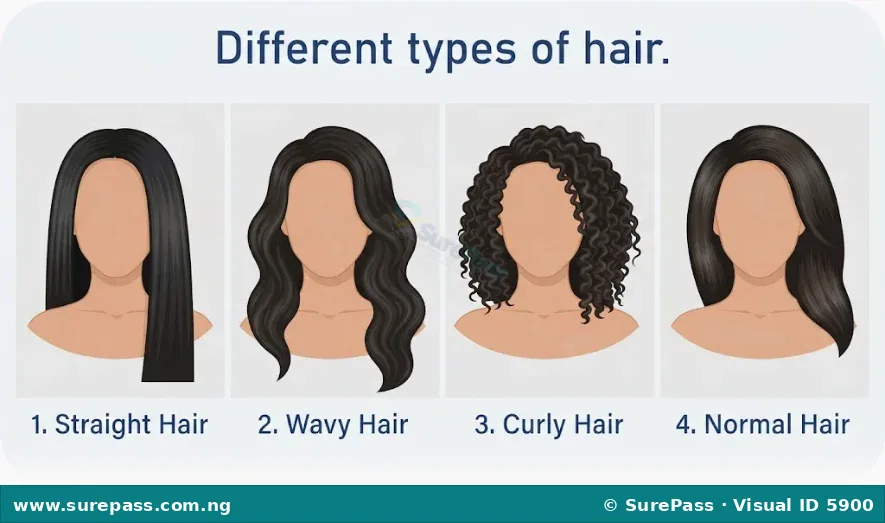
Hair comes in different types, each with its own characteristics. Understanding hair type helps in choosing the right care products and practices. The main types of hair include:
- Straight Hair: This hair type lies flat and smooth. It does not have natural curls or waves. Straight hair can sometimes be oily because natural oils from the scalp can easily travel down the hair shaft.
- Wavy Hair: Wavy hair has a gentle S-shape pattern. It is not as straight as straight hair and not as curly as curly hair. Wavy hair can be prone to frizz.
- Curly Hair: Curly hair has distinct curl patterns, ranging from loose loops to tight coils. It tends to be drier than straight or wavy hair because the natural oils from the scalp find it harder to travel down the curled hair shaft.
- Normal Hair: Normal hair is well-balanced. It is neither too oily nor too dry. It usually has a healthy shine and is easy to manage.
Scalp Conditions
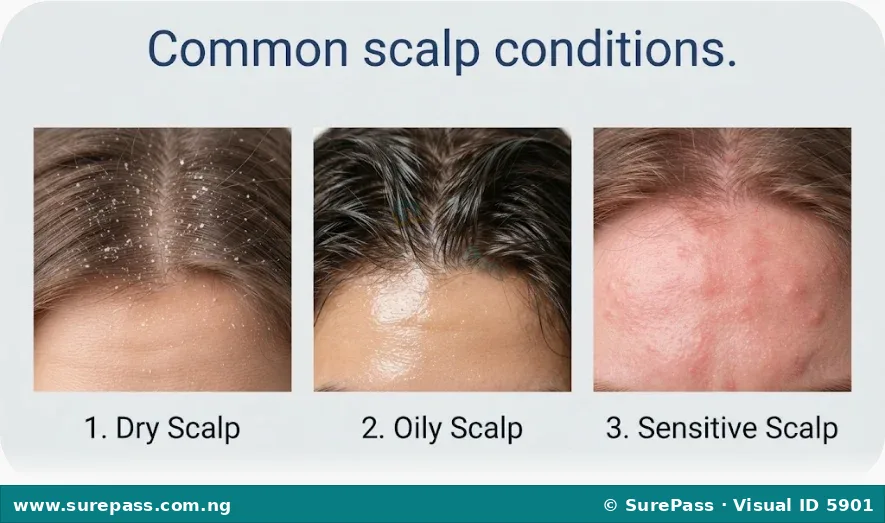
The scalp is the skin on the head where hair grows. Just like hair, the scalp can also have different conditions that require specific care. Common scalp conditions include:
- Dry Scalp: A dry scalp lacks enough moisture. It can feel tight, itchy and may show flakes that are small and white. Dry scalp can be caused by harsh shampoos, cold weather or not drinking enough water.
- Oily Scalp: An oily scalp produces too much natural oil (sebum). This can make the hair look greasy and feel heavy. An oily scalp can also lead to itching and dandruff.
- Sensitive Scalp: A sensitive scalp reacts easily to certain products or environmental factors. It can feel itchy, red or irritated. People with sensitive scalps need to use gentle, mild hair care products.
Basic Hair Care Practices
Basic hair care practices are the regular steps taken to keep hair and scalp healthy. These practices include:
- Shampooing: This is the process of washing the hair and scalp with shampoo to remove dirt, oil and product buildup.
- Conditioning: After shampooing, conditioner is applied to the hair to make it soft, smooth and easy to comb. It helps to restore moisture.
- Drying: This involves removing water from the hair after washing. Hair can be air-dried or towel-dried gently.
- Moisturizing: Applying hair oils or creams to keep the hair hydrated and prevent dryness.
- Brushing: Using a brush to detangle hair and distribute natural oils from the scalp to the hair ends.
- Combing: Using a comb to detangle hair, especially after washing or before styling.
- Styling: Arranging the hair into a desired look, such as braids, ponytails or twists.
- Trimming: Cutting off the very ends of the hair to remove split ends and keep the hair healthy.
Treatments for Different Hair and Scalp Conditions
Treating hair and scalp conditions involves using specific products and practices to address the problem. The treatment depends on the specific condition:
- For Dry Scalp:
- Use moisturizing shampoos and conditioners.
- Apply natural oils like coconut oil or olive oil to the scalp regularly.
- Avoid washing hair with very hot water.
- Drink plenty of water to keep the body hydrated.
- For Oily Scalp:
- Use shampoos designed for oily hair to control oil production.
- Wash hair regularly, but avoid over-washing, which can make the scalp produce more oil.
- Avoid heavy conditioners or apply them only to the hair ends, not the scalp.
- For Sensitive Scalp:
- Use mild, fragrance-free shampoos and conditioners.
- Avoid products with harsh chemicals or dyes.
- Test new products on a small area of the scalp first to check for reactions.
- For Dandruff (often linked to oily or dry scalp):
- Use anti-dandruff shampoos that contain special ingredients to treat flakes and itching.
- Follow the instructions on the anti-dandruff shampoo bottle carefully.
Practical Hair Care Skills
Learning how to properly care for hair involves practical steps. These skills help to keep hair healthy and well-maintained.
How to Shampoo Hair
Shampooing cleans the hair and scalp. The procedure involves the following steps:
- Wet the hair thoroughly with lukewarm water.
- Pour a small amount of shampoo into the palm of the hand.
- Apply the shampoo to the scalp and hair, gently massaging with the fingertips to create lather.
- Rinse the hair thoroughly with lukewarm water until all the shampoo is washed out.
- Repeat if necessary, especially if the hair is very dirty.
How to Condition Hair
Conditioning makes hair soft and easy to manage. The procedure involves the following steps:
- After rinsing shampoo, squeeze out excess water from the hair.
- Apply a small amount of conditioner, focusing on the mid-lengths and ends of the hair. Avoid applying too much to the scalp.
- Leave the conditioner on for the time recommended on the product label (usually 1-3 minutes).
- Rinse the hair thoroughly with cool water until the hair feels smooth and clean.
How to Dry Hair
Drying removes water from the hair. The procedure involves the following steps:
- Gently squeeze excess water from the hair after rinsing.
- Wrap a clean towel around the head and gently pat the hair to absorb water. Avoid rubbing vigorously, as this can cause damage.
- Allow the hair to air dry naturally, or use a blow dryer on a cool or low heat setting, holding it at a distance from the hair.
How to Moisturize Hair
Moisturizing keeps hair hydrated and prevents dryness. The procedure involves the following steps:
- After drying, take a small amount of hair oil (like coconut oil or olive oil) or a moisturizing cream.
- Rub it between the palms of the hands.
- Gently apply the moisturizer to the hair, focusing on the ends and drier areas.
- Distribute it evenly through the hair.
How to Brush and Comb Hair
Brushing and combing help to detangle and style hair. The procedure involves the following steps:
- Choose the right tool: a wide-tooth comb for wet hair and a brush for dry hair.
- Start from the ends of the hair and work upwards towards the roots, gently detangling small sections.
- Hold the hair firmly near the scalp while combing or brushing to avoid pulling.
- Brush dry hair gently to distribute natural oils and smooth the hair.
How to Style Hair
Styling involves arranging hair into a desired look. The procedure involves the following steps:
- Ensure the hair is clean, dry and detangled.
- Decide on a simple style, such as a ponytail, two braids or twists.
- Use a comb to part the hair as needed for the style.
- Gather, twist or braid sections of hair according to the chosen style.
- Secure the style with hairbands or clips if required.
How to Trim Hair
Trimming removes split ends and keeps hair healthy. This skill should be performed with care or under adult supervision. The procedure involves the following steps:
- Ensure the hair is clean and dry.
- Use sharp hair-cutting scissors, not regular paper scissors.
- Take a small section of hair and hold it straight between two fingers.
- Carefully snip off only the very ends of the hair, about half an inch, to remove split ends.
- Repeat for all sections of the hair.
- Always ask an adult for help or supervision when trimming hair.
Applying Treatment to Hair and Scalp Conditions
Applying treatment involves using specific products to address a scalp or hair issue. The procedure involves the following steps:
- Read the instructions on the treatment product carefully.
- For scalp treatments (e.g., anti-dandruff shampoo, scalp oil), apply the product directly to the scalp and massage gently.
- For hair treatments (e.g., deep conditioner, hair mask), apply the product evenly through the hair, focusing on the affected areas.
- Leave the treatment on for the recommended time.
- Rinse thoroughly as instructed by the product.
- Always follow product instructions and seek adult guidance for specific treatments.


0 comments
Open the discussion when you need it. Comments stay collapsed until requested so the initial article remains light.