


ARTICLE CONTENTSOn this page 7 sections
Selecting Cosmetics for Makeup
Performance Objectives
By the end of the lesson, students should be able to:
- state the meaning and importance of makeup;
- select cosmetics for makeup application.
Meaning of Makeup
Makeup refers to cosmetic products applied to the face or body to enhance or alter a person’s appearance.
It is used to highlight certain features, cover minor imperfections, or create a desired look for different occasions.
Importance of Makeup
Makeup is important for several reasons, depending on the individual and the situation.
The importance of makeup includes:
- Enhancing Features: Makeup can make certain facial features, like the eyes or lips, appear more prominent or attractive.
- Covering Blemishes: It can help to hide minor skin imperfections such as pimples, dark spots, or uneven skin tone, making the skin look smoother.
- Boosting Confidence: For many people, wearing makeup can make them feel more confident and presentable, especially for special events or public appearances.
- Expressing Creativity: Makeup can be a form of artistic expression, allowing individuals to experiment with colours and styles to create unique looks.
- Protecting the Skin: Some makeup products, like foundations with SPF, can offer a layer of protection against the sun’s harmful rays.
Cosmetics for Makeup
Cosmetics are products used to cleanse, beautify, promote attractiveness, or alter the appearance. For makeup, specific cosmetic products are used on the face.
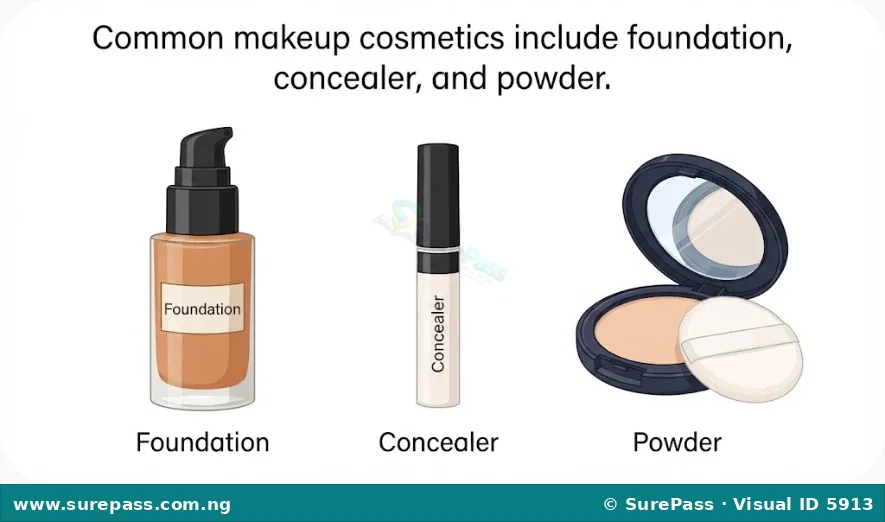
Common cosmetics used for makeup include:
- Foundation: This is a base makeup applied to the face to create an even, uniform colour to the complexion, cover flaws, and sometimes change the natural skin tone. It comes in various shades to match different skin colours.
- Concealer: Concealer is a type of cosmetic used to mask dark circles, age spots, blemishes, and other small imperfections visible on the skin. It is often thicker than foundation and is applied to specific areas that need more coverage.
- Powder: Face powder is used to set foundation and concealer, reduce shine, and give the skin a smooth, matte finish. It can also be used alone to absorb excess oil and even out skin tone.
Tips for Selecting Cosmetics for Makeup
Choosing the right makeup cosmetics is important for achieving a good look and keeping the skin healthy. The selection process depends on several factors related to an individual’s skin.
Understanding Skin Types
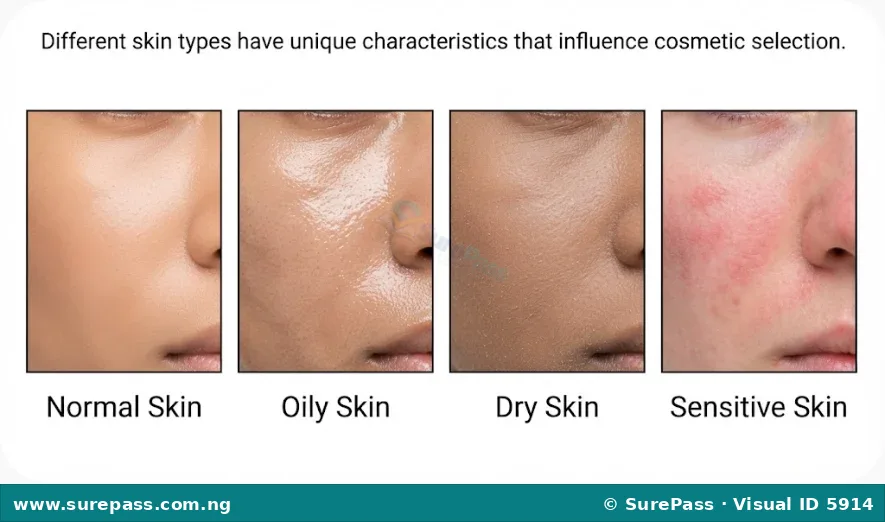
Different skin types react differently to makeup products. Knowing your skin type helps in selecting suitable cosmetics.
The main skin types are:
- Normal Skin: This skin type is well-balanced, not too oily and not too dry. It has a smooth texture and rarely experiences breakouts. People with normal skin can usually use a wide range of cosmetic formulations.
- Oily Skin: Oily skin produces excess sebum, which can make the face look shiny, especially in the T-zone (forehead, nose, and chin). This skin type is prone to enlarged pores and acne. Cosmetics for oily skin should be oil-free and non-comedogenic (meaning they won’t clog pores).
- Dry Skin: Dry skin lacks moisture and can feel tight, flaky, or rough. It may also show fine lines more easily. Cosmetics for dry skin should be hydrating and moisturising to prevent further dryness and discomfort.
- Combination Skin: This skin type has both oily and dry areas. Typically, the T-zone is oily, while the cheeks and other areas are dry or normal. Selecting cosmetics for combination skin often involves using different products or formulations for different parts of the face.
- Sensitive Skin: Sensitive skin is easily irritated by certain ingredients, leading to redness, itching, or burning sensations. Cosmetics for sensitive skin should be hypoallergenic, fragrance-free, and contain minimal ingredients to reduce the risk of reaction.
Considering Skin Conditions
Beyond general skin types, specific skin conditions can also influence cosmetic choices.
Common skin conditions to consider include:
- Acne-Prone Skin: This skin condition is characterised by frequent breakouts of pimples, blackheads, and whiteheads. Cosmetics for acne-prone skin should be non-comedogenic, oil-free, and sometimes contain ingredients that help treat acne, such as salicylic acid.
- Hyperpigmentation: This refers to dark spots or patches on the skin, often caused by sun exposure or acne scars. Concealers and foundations with good coverage can help to even out skin tone. Some products also contain ingredients that help reduce hyperpigmentation over time.
- Redness: Skin redness can be caused by sensitivity, rosacea, or irritation. Green-tinted concealers are often used to neutralise redness before applying foundation. Foundations designed for sensitive skin can also help.
Choosing the Right Formulations
Cosmetics come in different forms, known as formulations. The right formulation works best with your skin type and condition.
Common formulations for foundation, concealer, and powder include:
- Liquid Formulations: These are versatile and can offer light to full coverage.
- For oily skin, look for oil-free or matte liquid foundations and concealers.
- For dry skin, hydrating or dewy liquid foundations and concealers are suitable.
- Cream Formulations: Creams are generally thicker and provide more coverage.
- They are often good for dry or mature skin as they can be more moisturising.
- People with oily skin should avoid heavy cream formulations as they can feel greasy and clog pores.
- Powder Formulations: Powders are excellent for controlling shine and setting liquid or cream products.
- Loose powders provide a lighter finish and are good for setting makeup.
- Pressed powders offer more coverage and are convenient for touch-ups throughout the day, especially for oily skin.
- For dry skin, use powder sparingly to avoid accentuating dryness or fine lines.
Selecting Cosmetics for Makeup Application
To effectively select cosmetics for makeup application, follow these steps:
- Identify Your Skin Type: Determine if your skin is normal, oily, dry, combination, or sensitive. You can do this by observing how your skin feels and looks throughout the day. For example, if your face gets shiny quickly, you likely have oily skin.
- Note Any Skin Conditions: Check for specific concerns like acne, dark spots, or redness. These conditions will guide your choice of coverage and ingredients.
- Choose Foundation Based on Skin Type and Shade:
- For oily skin, select an oil-free, matte-finish liquid or powder foundation.
- For dry skin, choose a hydrating, dewy-finish liquid or cream foundation.
- For normal or combination skin, a balanced liquid foundation works well.
- Always test the foundation shade on your jawline in natural light to ensure it matches your neck and face perfectly.
- Select Concealer for Specific Needs:
- For dark circles, choose a concealer one shade lighter than your foundation.
- For blemishes, select a concealer that matches your foundation shade exactly.
- Consider the formulation: liquid for light coverage, cream for heavier coverage.
- Pick Powder to Set and Control Shine:
- For oily skin, use a translucent or pressed powder to set makeup and reduce shine.
- For dry skin, use a very light dusting of translucent powder only in areas that tend to get shiny, or skip powder altogether if not needed.
- Read Product Labels: Look for terms like “non-comedogenic,” “oil-free,” “fragrance-free,” or “hypoallergenic” if you have specific skin concerns like acne or sensitivity.
- Test Products (if possible): If samples are available, try a small amount on your skin to check for irritation or how it looks after a few hours.




0 comments
Open the discussion when you need it. Comments stay collapsed until requested so the initial article remains light.