



ARTICLE CONTENTSOn this page 7 sections
Safety in hair care practices
Performance Objectives
By the end of the lesson, students should be able to:
- explain the meaning of safety and types of safety in hair care practices;
- discuss the importance of safety in haircare practices;
- demonstrate safety in haircare practices.
Hair care involves working with different tools, products, and sometimes heat. To ensure that everyone involved stays healthy and unharmed, it is very important to understand and practice safety. Safety in hair care protects both the person giving the service and the person receiving it.
Meaning of Safety
Safety means being protected from harm, danger, injury, or risk.
In hair care, safety means taking steps to prevent accidents, injuries, or the spread of sickness while styling or treating hair. This includes protecting yourself, your client, and the environment where you work.
Types of Safety in Hair Care
There are three main types of safety that are important in hair care practices:
- Personal Safety
- Client Safety
- Workplace Safety
Personal Safety
Personal safety refers to the measures taken to protect yourself, the hair stylist or practitioner, from harm or injury during hair care activities. This ensures that you remain healthy and able to perform your work effectively.
Examples of personal safety in hair care include:
- Wearing protective gloves when handling chemicals like hair dyes or relaxers to protect your skin.
- Using comfortable shoes to avoid foot pain when standing for long periods.
- Maintaining good posture to prevent back pain or muscle strain.
- Washing hands thoroughly before and after each client to prevent the spread of germs to yourself.
- Being careful when using sharp tools like scissors or razors to avoid cutting yourself.
Client Safety
Client safety refers to the measures taken to protect the person receiving the hair care service from any harm, injury, or discomfort.
Ensuring client safety builds trust and makes the client feel comfortable and secure. Examples of client safety in hair care include:
- Checking for allergies to hair products before applying them.
- Using clean and sanitised tools and equipment for every client to prevent infections.
- Protecting the client’s clothes with a cape during chemical treatments or hair cutting.
- Being careful with hot tools like curling irons or hair dryers to avoid burning the client’s skin or scalp.
- Avoiding pulling the client’s hair too tightly during braiding or styling to prevent pain or hair damage.
- Ensuring the client’s comfort in the chair and during washing.
Workplace Safety
Workplace safety refers to the measures taken to ensure that the salon or hair care environment is safe for everyone present, including stylists, clients, and other staff.
A safe workplace prevents accidents and creates a healthy environment for everyone. Examples of workplace safety in hair care include:
- Keeping floors clean and dry to prevent slips and falls.
- Storing chemicals and hair products properly in labelled containers and away from children.
- Ensuring good ventilation in the salon, especially when using strong-smelling chemicals.
- Keeping electrical cords tidy and away from water to prevent electric shocks.
- Having a first-aid kit readily available for minor injuries.
- Disposing of sharp objects like broken razor blades safely in a special container.
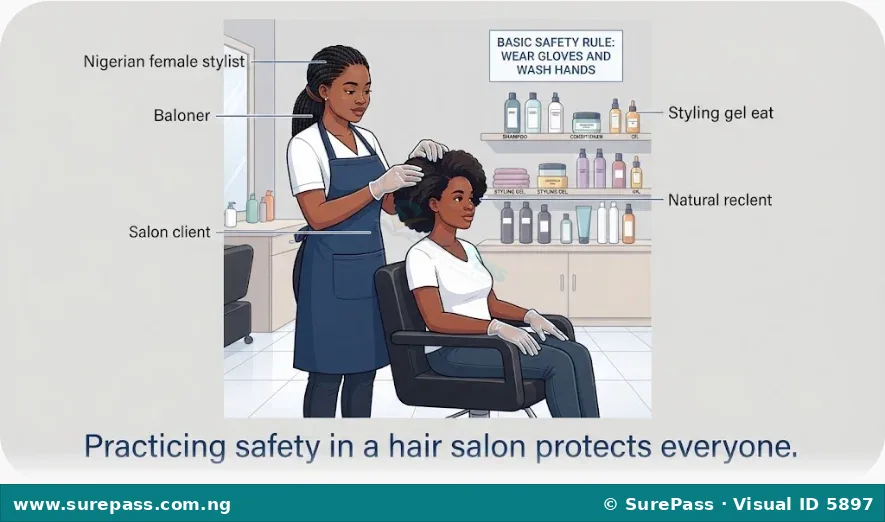
Importance of Safety in Hair Care Practices
Practicing safety in hair care is very important for several reasons:
- Prevents Injuries: Safety measures help to avoid cuts, burns, slips, and other physical injuries to both the stylist and the client.
- Prevents Infections and Diseases: Using clean tools and washing hands stops the spread of germs, bacteria, and fungi that can cause scalp infections or other diseases.
- Protects Health: Proper ventilation and careful handling of chemicals protect everyone from breathing in harmful fumes or having skin reactions.
- Builds Trust: When clients see that a stylist cares about their safety, they feel more comfortable and confident in the service, leading to a good reputation.
- Maintains Professionalism: Following safety rules shows that the stylist is skilled, responsible, and serious about their work.
- Avoids Accidents: A safe workplace reduces the risk of accidents like fires from electrical faults or spills that could harm people.
Safety in Making Different Hairstyles
When making different hairstyles, specific safety practices must be followed to ensure good results and prevent harm.
Using Well-Maintained Tools and Equipment for Hairstyling
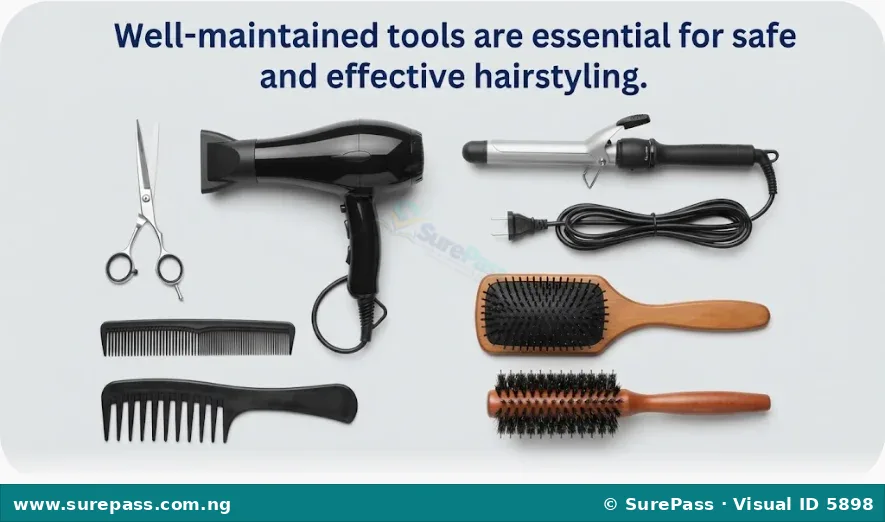
Tools and equipment used for hairstyling must always be in good condition. Well-maintained tools work better and are safer to use.
Examples of well-maintained tools include:
- Sharp Scissors: Dull scissors can pull and damage hair, making it difficult to cut neatly. Sharp scissors cut cleanly and precisely.
- Clean Clippers and Trimmers: Clippers should be free of hair and debris, and their blades should be oiled regularly to prevent snagging hair and causing irritation.
- Functional Hair Dryers and Curling Irons: Electrical tools should have undamaged cords and be working correctly to avoid electric shocks or burns. They should not overheat excessively.
- Intact Combs and Brushes: Combs with broken teeth can scratch the scalp or pull hair. Brushes with missing bristles are less effective and can also damage hair.
Using poorly maintained tools can lead to:
- Hair damage, such as split ends or breakage.
- Scalp irritation or injury.
- Electric shocks or burns from faulty equipment.
- Unsatisfactory hairstyling results.
Sanitizing Combs and Brushes
Sanitizing means cleaning something to remove dirt and reduce the number of germs to a safe level.
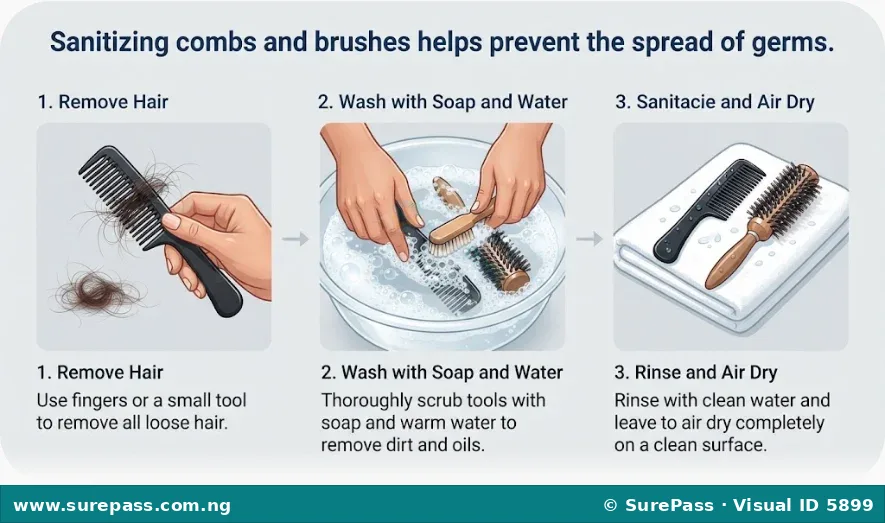
Combs and brushes come into direct contact with hair and scalp, picking up hair, skin flakes, oils, and germs. If not cleaned properly, these germs can spread from one person to another, causing infections like ringworm or dandruff.
The process of sanitizing combs and brushes involves the following steps:
- Remove Hair: First, remove all loose hair from the comb or brush using a brush cleaner or your fingers.
- Wash with Soap and Water: Wash the combs and brushes thoroughly with warm water and soap. Scrub them well to remove any dirt, oil, or product residue.
- Rinse: Rinse them under clean running water to remove all soap.
- Disinfect: Soak the combs and brushes in a suitable disinfectant solution for the time recommended by the product manufacturer. Common disinfectants used in salons include barbicide or other approved sanitizing solutions.
- Rinse Again: After disinfecting, rinse the tools again with clean water to remove any disinfectant residue.
- Dry: Allow the combs and brushes to air dry completely on a clean towel or in a clean, dry place before storing them.
How to Demonstrate Safety in Hair Care Practices
Demonstrating safety in hair care practices involves applying the knowledge of personal, client, and workplace safety, as well as proper tool maintenance and sanitization. This procedure outlines key steps to follow:
The procedure involves the following steps:
- Prepare Yourself:
- Wash your hands thoroughly with soap and water before starting any hair care service.
- Wear clean, comfortable clothing and, if necessary, protective gloves for chemical treatments.
- Ensure your hair is neatly tied back to prevent it from falling into the client’s hair or products.
- Prepare the Client:
- Seat the client comfortably in a clean chair.
- Drape a clean cape over the client’s shoulders to protect their clothing.
- Ask the client if they have any allergies or scalp sensitivities before applying any products.
- Prepare the Workplace:
- Ensure the work area is clean, tidy, and free from clutter.
- Check that the floor is dry to prevent slips.
- Arrange all tools and products neatly and within easy reach.
- Inspect and Prepare Tools:
- Check all tools (scissors, combs, brushes, dryers) to ensure they are clean, well-maintained, and in good working condition.
- Sanitize all combs and brushes by first removing hair, washing with soap and water, rinsing, soaking in disinfectant, rinsing again, and then air-drying.
- Ensure electrical cords are not frayed or damaged and are kept away from water.
- Perform Hair Care Safely:
- Use tools carefully and precisely, avoiding any sudden movements that could injure the client or yourself.
- Test the temperature of hot tools on your hand or a towel before applying them to the client’s hair or scalp.
- Apply hair products according to instructions, avoiding contact with the client’s eyes or sensitive skin areas.
- Avoid pulling the client’s hair too tightly during styling.
- Clean Up After Service:
- Remove all hair clippings from the client and the floor.
- Clean and sanitize all used tools immediately after each client.
- Dispose of any waste, especially sharp items like razor blades, safely in a designated container.
- Wipe down your workstation and chair.
- Wash your hands again.



0 comments
Open the discussion when you need it. Comments stay collapsed until requested so the initial article remains light.