


ARTICLE CONTENTSOn this page 11 sections
Production of Shampoo and Conditioner
Performance Objectives
By the end of the lesson, students should be able to:
- explain shampoo, conditioner and the various types;
- explain the uses of shampoo and conditioner;
- identify the ingredients for making shampoo;
- explain the ingredients for making conditioner;
- produce shampoo and conditioner.
Meaning of Shampoo
Shampoo is a liquid product used to clean the hair and scalp.
It helps to remove dirt, oil, sweat, and product buildup from the hair, leaving it fresh and clean.
Meaning of Conditioner
Conditioner is a liquid product applied to the hair after shampooing.
It helps to make the hair soft, smooth, shiny, and easier to comb by adding moisture and nutrients.
Types of Shampoo
Shampoos are made for different hair needs. Some common types include:
- Normal Hair Shampoo: This type is for hair that is neither too oily nor too dry. It cleans gently without stripping natural oils.
- Oily Hair Shampoo: This shampoo helps to control excess oil on the scalp and hair. It often contains ingredients that reduce oiliness.
- Dry Hair Shampoo: Designed for hair that lacks moisture, this shampoo adds hydration and helps to prevent dryness and frizz.
- Anti-Dandruff Shampoo: This type helps to treat dandruff and an itchy scalp. It contains special ingredients to reduce flaking.
- Colour-Treated Hair Shampoo: This shampoo is gentle and helps to protect hair colour from fading, keeping the colour vibrant for longer.
Types of Conditioner
Conditioners also come in different types to suit various hair needs. Some common types are:
- Rinse-Out Conditioner: This is the most common type, applied after shampooing and rinsed out after a few minutes. It provides daily moisture and detangling.
- Leave-In Conditioner: This conditioner is applied to damp hair after washing and is not rinsed out. It provides continuous moisture, protection, and helps with styling.
- Deep Conditioner (Hair Mask): This is a thicker, more intensive conditioner used less frequently, usually once a week. It provides deep hydration and repair for damaged or very dry hair.
- Volumising Conditioner: This type is for fine or thin hair, designed to add body and fullness without weighing the hair down.
- Repairing Conditioner: Formulated for damaged, brittle, or chemically treated hair, this conditioner helps to strengthen hair strands and reduce breakage.
Uses of Shampoo
Shampoo has several important uses for hair care:
- Cleaning the Hair and Scalp: The main use of shampoo is to remove dirt, dust, excess oil (sebum), sweat, and styling product residues from the hair and scalp.
- Preventing Scalp Issues: Regular shampooing helps to prevent scalp problems like itching, irritation, and dandruff by keeping the scalp clean.
- Improving Hair Appearance: By removing buildup, shampoo makes hair look cleaner, fresher, and often shinier.
- Preparing Hair for Styling: Clean hair is easier to style and allows styling products to work more effectively.
Uses of Conditioner
Conditioner plays a vital role in maintaining healthy and manageable hair:
- Moisturising Hair: Conditioner adds moisture back into the hair strands, which can be lost during shampooing. This helps to keep hair hydrated and soft.
- Detangling Hair: It smooths the hair cuticles, making hair easier to comb and reducing tangles, especially after washing.
- Adding Shine: By smoothing the hair surface, conditioner helps hair reflect light better, giving it a healthy shine.
- Protecting Hair: Conditioner can form a protective layer on the hair, helping to shield it from environmental damage, heat styling, and breakage.
- Improving Hair Texture: It makes hair feel smoother, softer, and more manageable, reducing frizz and improving overall texture.
Basic Ingredients for Making Shampoo
Making shampoo involves combining several ingredients that work together to clean and care for the hair. The basic ingredients include:
- Water: This is the main ingredient and forms the base of most liquid shampoos. It helps to dissolve other ingredients and create the liquid consistency.
- Nitro sol (100g): Nitro sol is a thickening agent. It helps to make the shampoo thick and rich, giving it a good texture and making it easier to use.
- Sodium Lauryl Sulfate (S.L.S.) (150g): S.L.S. is a foaming agent and a surfactant. It creates the lather that helps to lift dirt and oil from the hair and scalp, allowing them to be rinsed away.
- Fragrance: This is added to give the shampoo a pleasant smell.
- Colourant: A small amount of colourant can be added to give the shampoo an appealing look.
- Preservative: This ingredient helps to prevent the growth of bacteria and mould in the shampoo, making it last longer.
Basic Ingredients for Making Conditioner
Conditioners are formulated to moisturise, detangle, and protect hair. The basic ingredients for making conditioner include:
- Distilled Water: This is the primary base for the conditioner, ensuring purity and preventing mineral buildup in the product.
- Humectants: These ingredients attract and hold moisture from the air into the hair. Examples include glycerine. Humectants help to keep the hair hydrated and soft.
- Emollients: Emollients are oils or fatty substances that soften and smooth the hair. They create a protective layer on the hair surface, making it feel soft and look shiny. Examples include shea butter, coconut oil, or other natural oils.
- Conditioning Agents: These are ingredients that help to detangle hair, reduce static, and improve its overall feel and appearance.
- Preservative: Similar to shampoo, a preservative is needed to prevent the growth of microbes and extend the shelf life of the conditioner.
- Fragrance: This is added to give the conditioner a pleasant scent.
Procedure for Making Shampoo and Conditioner
Producing shampoo and conditioner involves a series of steps to ensure the ingredients are properly mixed and the final product is safe and effective. The general procedure is similar for both:
How to Produce Shampoo
The procedure for making shampoo involves careful mixing of the ingredients to achieve the desired consistency and cleaning power.
The required materials are:
- Water
- Nitro sol (100g)
- Sodium Lauryl Sulfate (S.L.S.) (150g)
- Fragrance
- Colourant
- Preservative
- Large mixing basin or bowl
- Stirring rod or spoon
- Measuring cups and spoons
- Desired containers for packaging
The procedure involves the following steps:
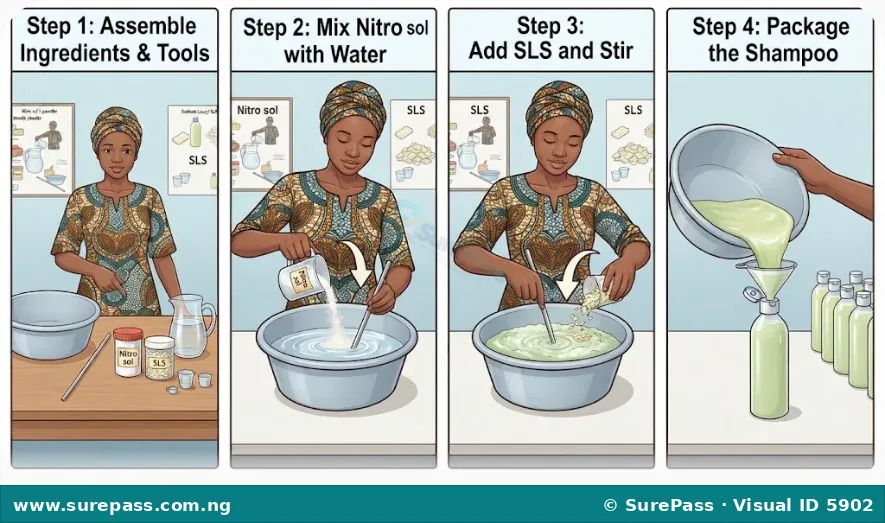
- Assemble Tools and Ingredients: Gather all the necessary tools and ingredients on a clean work surface. Ensure all measuring tools are clean.
- Measure Water: Pour the correct measure of water into the large mixing basin. Water is the base, so its quantity will determine the final volume.
- Dissolve Nitro sol: Slowly add the 100g of Nitro sol to the water in the basin. Stir continuously until the Nitro sol completely dissolves and the mixture starts to thicken. This step requires patience to avoid lumps.
- Add Sodium Lauryl Sulfate (S.L.S.): Gradually add the 150g of S.L.S. to the thickened mixture. Stir gently but thoroughly to mix it in without creating too much foam. S.L.S. is the main cleaning agent.
- Add Other Ingredients: Add a few drops of fragrance and colourant, if desired, and stir them in. Then, add the preservative according to the recommended amount to ensure the shampoo lasts.
- Mix Thoroughly: Continue to stir the mixture until all ingredients are well combined and the shampoo has a uniform consistency.
- Allow to Settle: Let the shampoo mixture sit undisturbed for some time, usually a few hours or overnight. This allows any air bubbles to rise and disappear, making the shampoo clearer.
- Package in Desired Containers: Once the shampoo has settled and is clear, carefully pour it into clean, empty shampoo bottles or other desired containers. Label the containers clearly.
How to Produce Conditioner
Making conditioner also requires careful measurement and mixing to create a smooth, effective product that softens and detangles hair.
The required materials are:
- Distilled water
- Humectant (e.g., glycerine)
- Emollient (e.g., shea butter, coconut oil)
- Conditioning agent
- Preservative
- Fragrance
- Large mixing basin or bowl
- Stirring rod or spoon
- Measuring cups and spoons
- Desired containers for packaging
The procedure involves the following steps:
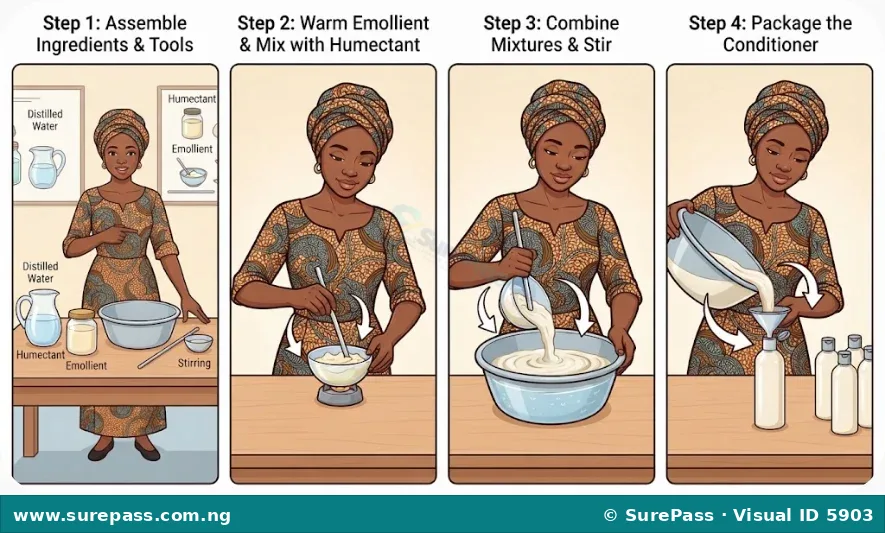
- Assemble Tools and Ingredients: Gather all necessary tools and ingredients on a clean work surface. Ensure all equipment is clean.
- Measure Distilled Water: Pour the correct measure of distilled water into the large mixing basin.
- Combine Humectants and Emollients: In a separate smaller bowl, gently warm the emollient (if solid) until it melts. Then, add the humectant to the melted emollient and mix them well.
- Mix Oil and Water Phases: Slowly add the humectant and emollient mixture to the distilled water in the large basin while stirring continuously. This helps to create an emulsion, where the oils and water mix together.
- Add Conditioning Agents: Add the conditioning agents to the mixture and stir until they are fully dissolved and incorporated. These agents help with detangling and smoothing.
- Add Other Ingredients: Add the preservative and fragrance to the mixture. Stir well to ensure they are evenly distributed throughout the conditioner.
- Mix Thoroughly: Continue stirring until the conditioner has a smooth, creamy, and uniform consistency.
- Allow to Settle: Let the conditioner mixture sit undisturbed for some time, usually a few hours. This allows the mixture to stabilise and any small air bubbles to disappear.
- Package in Desired Containers: Once the conditioner has settled and is smooth, carefully pour it into clean, empty conditioner bottles or other suitable containers. Label the containers clearly.




0 comments
Open the discussion when you need it. Comments stay collapsed until requested so the initial article remains light.