



ARTICLE CONTENTSOn this page 6 sections
Concept of Money
Performance Objectives
By the end of the lesson, students should be able to:
- explain the meaning and origin of money;
- discuss the uses of money;
- state the importance and methods of saving money,
- describe the sources of funding for Hair Styling, Makeup Application and Henna design start-up.
Meaning and Evolution of Money
Money is anything that is generally accepted as a medium of exchange for goods and services. It allows people to buy and sell things without having to trade items directly.
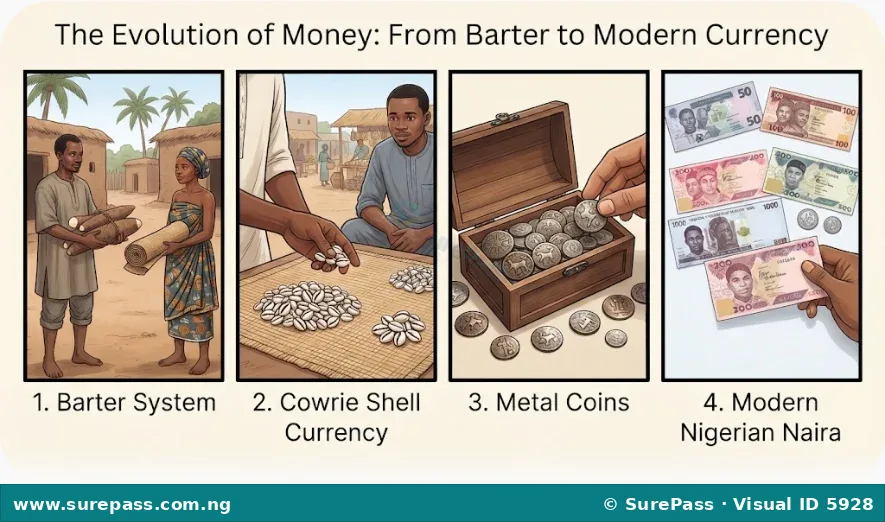
Before money as we know it today existed, people used a system called trade by barter. This meant exchanging goods and services directly for other goods and services. For example, a farmer might trade a bag of yams for a piece of cloth from a weaver. This system had many problems. It was often difficult to find someone who had exactly what you wanted and also wanted exactly what you had to offer.
Over time, people started using certain items as a common medium of exchange. These items were valuable and accepted by most people. Early forms of money included cowries, salt, beads, and even metal coins. These items made trade easier because everyone agreed on their value.
The evolution of money continued with the introduction of paper money, which represented a certain value of gold or silver held in a bank. Today, we use banknotes and coins issued by the government, and also digital money in bank accounts or mobile wallets. This modern money makes buying, selling, and saving much simpler and more efficient.
Uses of Money
Money serves several important purposes in daily life. It makes it possible for people to get the things they need and want.
- Medium of Exchange: This is the most common use of money. It means money is used to buy goods and services. For example, you use money to buy food, clothes, pay for transport, or get a haircut.
- Store of Value: Money can be saved and used later. If you earn money today, you do not have to spend it immediately. You can keep it and use it to buy things in the future. This allows people to save for big purchases or emergencies.
- Measure of Value: Money helps us compare the value of different goods and services. For example, a pair of shoes might cost N5,000, while a school bag costs N3,000. This shows that the shoes are more valuable than the school bag in terms of money.
- Standard of Deferred Payment: Money allows people to pay for things later. This is important for loans and credit. For instance, a person can borrow money today and agree to pay it back with interest at a future date.
Saving Money
Meaning of Saving Money
Saving money means keeping a portion of your income or earnings instead of spending it immediately. It is setting aside money for future use or for specific goals.
Importance of Saving Money
Saving money is a very important habit, especially for young people and those planning to start a business. It provides security and helps achieve future goals.
The importance of saving money includes:
- For Future Needs: Saving allows you to buy things you need in the future, such as school supplies, new clothes, or even a gift for someone.
- For Emergencies: Unexpected things can happen, like needing money for medicine or a sudden repair. Having savings helps you handle these situations without stress.
- Achieving Goals: If you dream of starting a small beauty business, like hair styling or makeup application, saving money is the first step towards making that dream a reality.
- Financial Security: Having savings gives you a sense of security, knowing that you have money available when you need it.
- Learning Good Habits: Saving teaches discipline and responsible money management, which are valuable skills for life.
Methods of Saving Money
There are several simple and effective ways to save money. Choosing the right method depends on how much you want to save and how often.
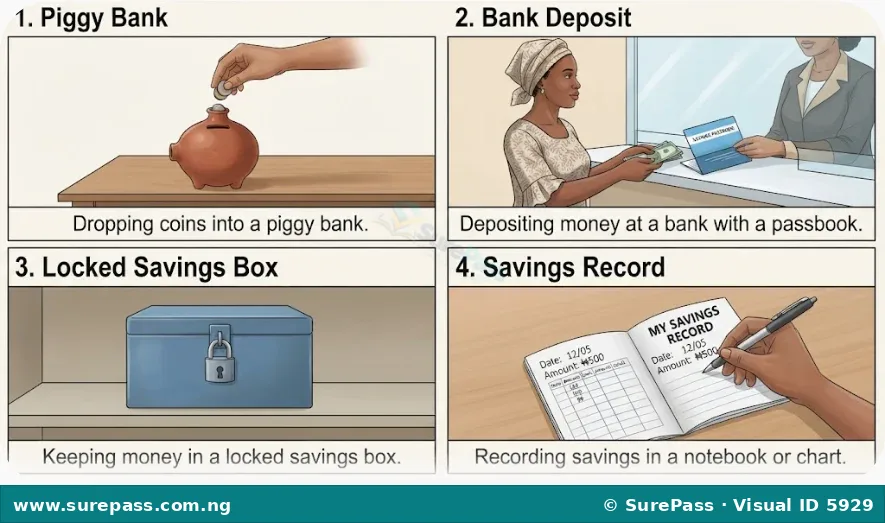
- Using a Piggy Bank: A piggy bank is a container, often shaped like a pig, where you can put coins and small banknotes. It is a simple way to save money at home.
- Opening a Savings Account: Many banks offer savings accounts for young people. You can deposit money into this account, and the bank keeps it safe for you. Some accounts even pay a small amount of interest, which means your money grows over time.
- Using a Savings Box: Similar to a piggy bank, a savings box is a secure container where you can keep money. Some savings boxes have locks to keep the money safe.
- Recording Savings: Keeping a record of your savings helps you track your progress. You can use a notebook, a simple chart, or even a cardboard paper to write down how much you save and when. This helps you see how your money is growing.
Sources of Funding for Hair Styling, Makeup Application and Henna Design Start-up
Starting any business, even a small beauty business like hair styling, makeup application, or henna design, requires money. This money is called funding. Knowing where to get this funding is important for planning your business.
Personal Sources of Funding
Personal sources of funding come from your own efforts and resources. These are often the first places young entrepreneurs look to get money for their business ideas.
- Personal Savings: This is money you have saved yourself over time. It could be from gifts, doing small chores, or saving a portion of your allowance. Using your own savings shows commitment to your business idea.
- Selling Personal Items: You might have items you no longer need or use, such as old toys, books, or clothes, that can be sold to raise money.
- Earning Money from Small Jobs: You can offer simple services to people in your community, such as running errands, helping with chores, or washing cars. The money earned can be saved for your business.
Family Sources of Funding
Family members can be a great source of support when starting a business. They might be willing to help you financially.
- Gifts from Parents or Guardians: Your parents or guardians might give you money to help you start your business, especially if they believe in your idea and see your effort.
- Loans from Family Members: A family member might lend you money, which you would agree to pay back over time, possibly with a small amount of interest. This teaches you about managing debt responsibly.
- Support from Siblings or Relatives: Older siblings, aunts, uncles, or other relatives might also contribute money to help you get your business off the ground.
Combining personal and family sources can provide a good foundation for funding a small beauty business start-up. It is important to have a clear plan for how the money will be used, even if it is a small amount.




0 comments
Open the discussion when you need it. Comments stay collapsed until requested so the initial article remains light.