


ARTICLE CONTENTSOn this page 8 sections
Business Communication
Performance Objectives
By the end of the lesson, students should be able to:
- explain the meaning of communication;
- state the purpose and importance of communication in business and daily life;
- classify the different media of communication;
- use different communication media effectively.
- Apply digital tools in communication.
Meaning of Communication
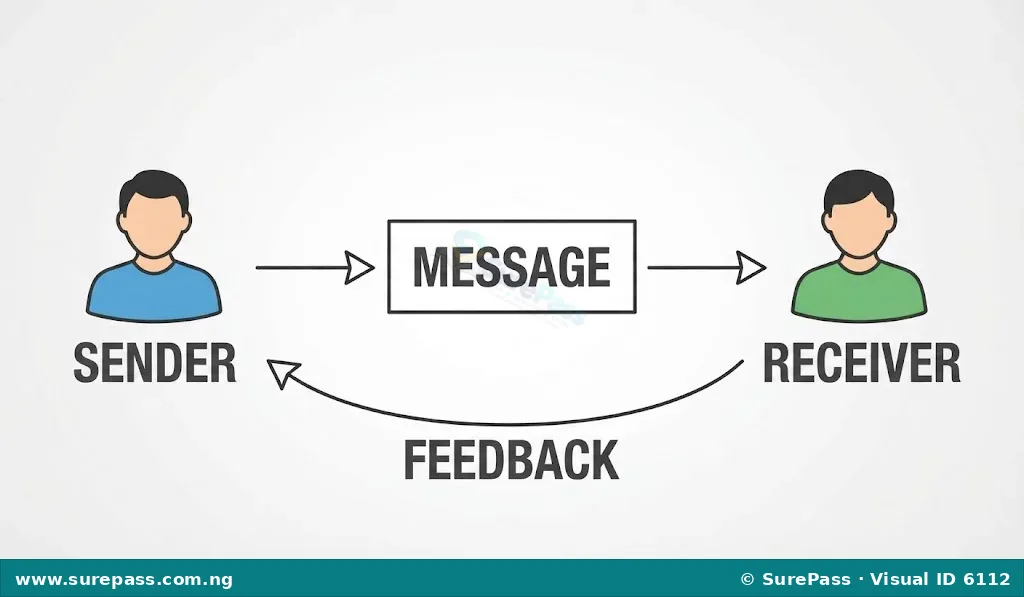
Communication is the process of sending and receiving information between two or more people.
It involves sharing ideas, facts, feelings, and messages so that they are understood by everyone involved. Effective communication ensures that the message sent is the message received and understood.
Purpose and Importance of Communication
Communication serves several vital purposes and is important in both business and daily life.
Purpose of Communication
The main purposes of communication include:
- To Inform: To provide facts, data, or news to others. For example, a business informs customers about a new product.
- To Persuade: To convince others to adopt a certain viewpoint or take a specific action. For instance, an advertisement persuades people to buy a product.
- To Instruct: To give directions or guidance on how to do something. A manager instructs employees on how to complete a task.
- To Entertain: To amuse or provide enjoyment. Stories, jokes, and movies are forms of communication for entertainment.
- To Build Relationships: To connect with others, share experiences, and foster understanding. This is crucial for teamwork and social interaction.
Importance of Communication in Business
In the business world, effective communication is essential for success. Its importance includes:
- Decision Making: Businesses rely on accurate and timely information to make good decisions. Communication ensures that all relevant data reaches decision-makers.
- Coordination of Activities: Different departments and employees need to communicate to work together smoothly. This prevents misunderstandings and ensures tasks are completed efficiently.
- Customer Relations: Good communication helps businesses understand customer needs, address complaints, and build loyalty. This leads to increased sales and a good reputation.
- Employee Motivation: Clear communication from management helps employees understand their roles, feel valued, and stay motivated. This improves productivity and job satisfaction.
- Problem Solving: When problems arise, effective communication helps identify the root cause, discuss solutions, and implement corrective actions quickly.
- Marketing and Sales: Businesses communicate with potential customers through advertising, promotions, and sales pitches to inform them about products and services.
Importance of Communication in Daily Life
Communication is equally important in everyday interactions:
- Building Relationships: It helps individuals connect with family, friends, and community members, fostering understanding and trust.
- Sharing Information: People share news, ideas, and experiences with each other, keeping everyone informed about events and situations.
- Expressing Needs and Feelings: Communication allows individuals to express their desires, emotions, and concerns, which is vital for personal well-being.
- Learning and Education: Students communicate with teachers and peers to learn new concepts, ask questions, and share knowledge.
- Safety and Security: Clear communication of warnings, instructions, and emergency information helps ensure the safety of individuals and communities.
- Conflict Resolution: Effective communication helps people discuss disagreements, find common ground, and resolve conflicts peacefully.
Media of Communication
Communication media are the channels or methods used to transmit messages from a sender to a receiver. These media can be classified into different types based on how the message is conveyed.
Classification of Communication Media
The main types of communication media include:
- Verbal Communication
- Non-Verbal Communication
- Visual Communication
1. Verbal Communication
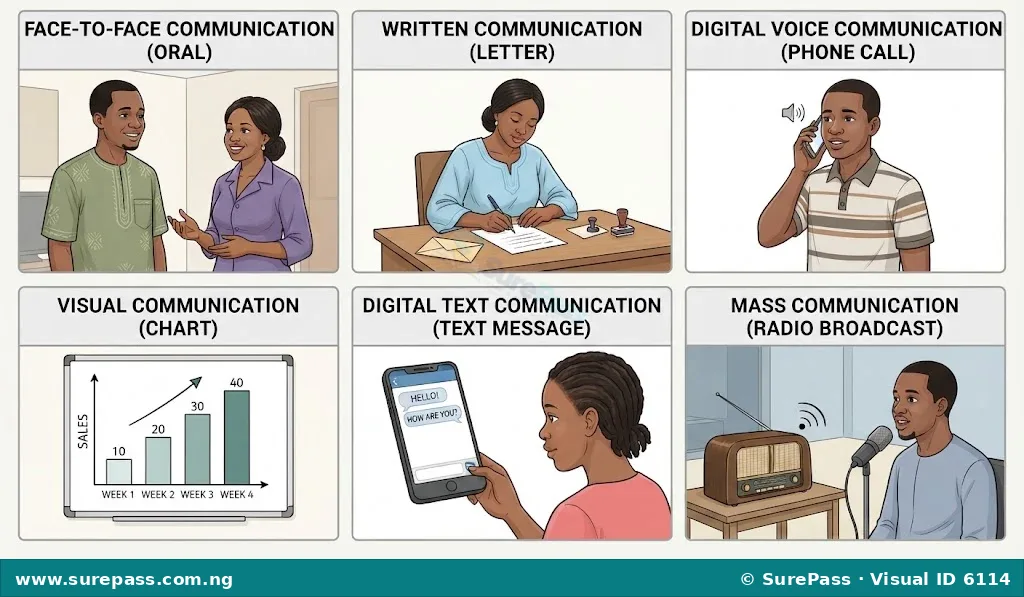
Verbal communication uses words to convey messages. It can be further divided into oral and written forms.
Oral Communication
Oral communication involves speaking to transmit messages. It is often immediate and allows for quick feedback.
Examples of oral communication include:
- Face-to-face conversations
- Telephone calls
- Meetings
- Presentations
- Speeches
- Radio broadcasts
Written Communication
Written communication involves using written words, symbols, or drawings to convey messages. It provides a record of the message and can be reviewed later.
Examples of written communication include:
- Letters
- Emails
- Reports
- Memos
- Text messages
- Books and newspapers
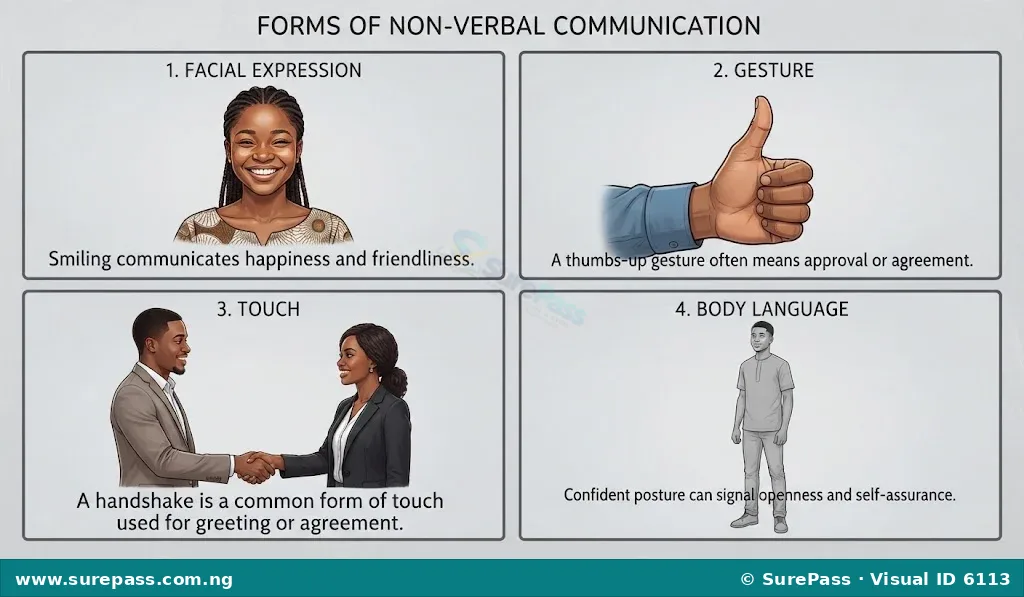
2. Non-Verbal Communication
Non-verbal communication involves conveying messages without using words. It often complements or sometimes contradicts verbal messages.
Examples of non-verbal communication include:
- Body Language: Gestures, posture, facial expressions, and eye contact. For example, nodding your head to show agreement.
- Appearance: Dress code, hairstyle, and personal grooming. A neat appearance can convey professionalism.
- Touch: Handshakes, pats on the back, or hugs. A firm handshake can show confidence.
- Space (Proxemics): The distance maintained between people during communication. Standing too close might be seen as aggressive, while standing too far might suggest disinterest.
- Voice Tone (Paralanguage): The pitch, volume, speed, and rhythm of speech. A calm tone can convey reassurance, while a loud tone might suggest anger.
3. Visual Communication
Visual communication uses images, symbols, and graphics to convey messages. It is often used to make information easier to understand and remember.
Examples of visual communication include:
- Charts and graphs
- Maps
- Diagrams
- Photographs
- Videos
- Signs and symbols (e.g., traffic signs)
Using Different Communication Media Effectively
The effectiveness of communication depends on choosing the right medium for the message and situation.
Effective Use of Oral Communication
Oral communication is effective when:
- Immediate Feedback is Needed: For discussions, problem-solving, or answering questions directly.
- Personal Touch is Required: For building rapport, motivating employees, or handling sensitive issues.
- Message is Simple and Short: For quick instructions or sharing brief updates.
- Non-Verbal Cues are Important: To convey emotions or sincerity through tone of voice and facial expressions.
Effective Use of Written Communication
Written communication is effective when:
- A Permanent Record is Needed: For contracts, policies, official reports, or legal documents.
- Message is Complex or Detailed: To provide comprehensive information that can be reviewed multiple times.
- Accuracy is Crucial: To avoid misunderstandings that might arise from spoken words.
- Message Needs to Reach Many People: Through emails, newsletters, or publications.
- Sender and Receiver are Geographically Separated: When immediate interaction is not possible.
Effective Use of Non-Verbal Communication
Non-verbal communication is effective when:
- Reinforcing Verbal Messages: A smile while saying “thank you” adds sincerity.
- Conveying Emotions: Facial expressions can show happiness, sadness, or anger more powerfully than words.
- Indicating Understanding or Disagreement: Nodding or shaking the head can quickly show a response.
- Establishing Rapport: Appropriate eye contact and open body language can build trust.
Effective Use of Visual Communication
Visual communication is effective when:
- Simplifying Complex Data: Charts and graphs make statistics easy to understand.
- Illustrating Processes: Diagrams can show steps in a procedure clearly.
- Capturing Attention: Images and videos are often more engaging than plain text.
- Overcoming Language Barriers: Symbols and icons can be understood universally.
- Providing Directions: Maps and signs guide people effectively.
Tools and Technologies for Communication
Communication tools and technologies are the specific instruments and systems used to facilitate the sending and receiving of messages. These have evolved significantly over time, from traditional methods to advanced digital platforms.
Traditional Communication Tools
These are older methods that do not rely on modern electronic devices but are still used in many contexts:
- Letters: Written messages sent through postal services.
- Memos: Short written messages used for internal communication within an organisation.
- Newspapers and Magazines: Printed publications for mass communication.
- Radio: Broadcasts sound messages to a wide audience.
- Television: Broadcasts audio and visual messages to a wide audience.
- Public Address Systems: Used to make announcements to a group of people in a specific location.
Digital Tools and Technologies for Communication
Digital tools and technologies use electronic devices and the internet to enable fast and wide-reaching communication. These have transformed how businesses and individuals interact.
Examples of digital communication tools and technologies include:
- Computers: Used for creating, sending, and receiving various forms of digital communication, such as emails, documents, and presentations.
- Smartphones: Mobile devices that combine phone calls, text messaging, internet access, email, and various communication apps.
- Internet: A global network that connects computers and allows for the exchange of information worldwide.
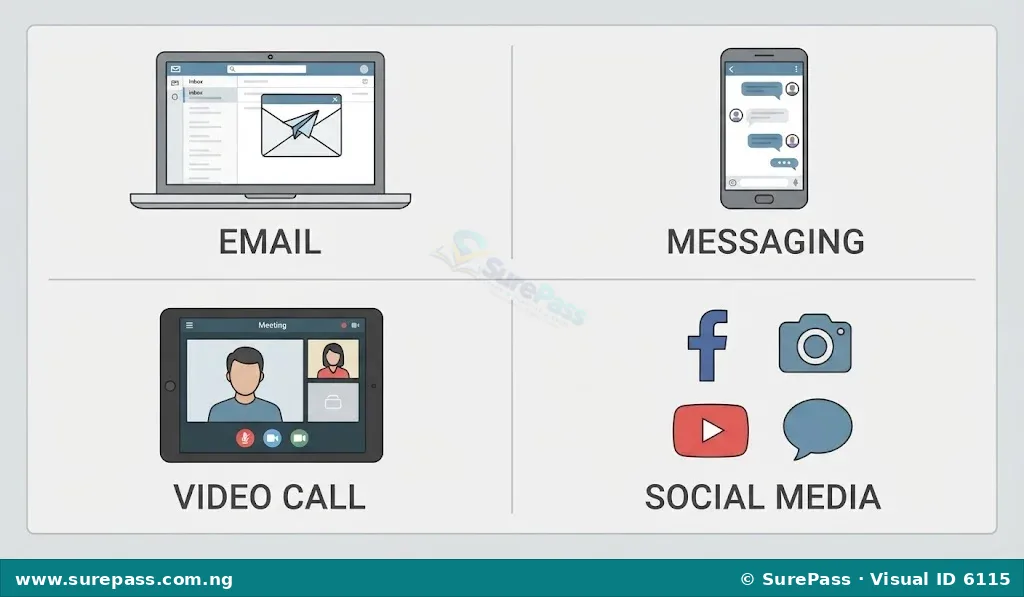
- Email (Electronic Mail): A system for sending and receiving messages electronically over the internet.
- Social Media Platforms: Websites and applications like Facebook, Twitter, Instagram, and LinkedIn that allow users to share content, interact, and build communities.
- Messaging Apps: Applications like WhatsApp, Telegram, and Messenger that allow instant text, voice, and video communication.
- Video Conferencing Tools: Platforms like Zoom, Google Meet, and Microsoft Teams that enable real-time video and audio meetings over the internet.
- Websites and Blogs: Online platforms used by individuals and businesses to publish information, articles, and updates to a global audience.
Applying Digital Tools in Communication
Applying digital tools effectively involves understanding their features and choosing the most appropriate tool for a specific communication need.
Using Digital Tools for Business Communication
Businesses use digital tools to improve efficiency, reach, and speed of communication:
- Email for Formal Communication: Used for sending official documents, reports, proposals, and important announcements to employees, clients, and partners. It provides a written record.
- Video Conferencing for Meetings: Allows teams in different locations to hold virtual meetings, reducing travel time and costs. It enables face-to-face interaction remotely.
- Messaging Apps for Quick Updates: Used for instant communication within teams for quick questions, urgent updates, or informal discussions.
- Social Media for Marketing and Customer Engagement: Businesses use platforms like Instagram and Facebook to promote products, interact with customers, and build brand awareness. LinkedIn is used for professional networking and recruitment.
- Company Websites and Blogs for Information Sharing: Used to publish company news, product information, and thought leadership content, making it accessible to a global audience 24/7.
- Project Management Software: Tools that allow teams to communicate about tasks, share files, and track progress on projects.
Using Digital Tools in Daily Life
Individuals use digital tools for various daily communication needs:
- Smartphones for Personal Connections: Used for calling family and friends, sending text messages, and sharing photos and videos.
- Social Media for Social Interaction: People connect with friends, share personal updates, and follow news and interests on platforms like Facebook and Instagram.
- Messaging Apps for Group Communication: Used to create groups for family, friends, or community organisations to share information and coordinate activities.
- Email for Formal and Informal Correspondence: Used for school assignments, job applications, online shopping confirmations, and personal letters.
- Online Forums and Communities: People join online groups to discuss hobbies, seek advice, or share experiences with others who have similar interests.



0 comments
Open the discussion when you need it. Comments stay collapsed until requested so the initial article remains light.