


ARTICLE CONTENTSOn this page 8 sections
Commodity Exchange
Performance Objectives
By the end of the lesson, students should be able to:
- state the meaning and importance commodity exchange;
- explain the characteristics of a commodity exchange;
- state the types of commodities traded on a commodity exchange;
- explain the functions of a commodity exchange;
- discuss the different methods of trading in the commodity exchange.
Meaning of Commodity Exchange
A commodity exchange is an organised market where buyers and sellers meet to trade in standardised primary products, known as commodities. These products include agricultural goods, natural resources, and other raw materials.
Trading on a commodity exchange involves buying and selling contracts for future delivery of these goods, rather than the physical goods themselves at the time of the transaction. This allows for price discovery and risk management for producers and consumers.
Importance of Commodity Exchange
Commodity exchanges play a crucial role in an economy by providing a structured environment for trading essential goods. Their importance can be seen in several areas:
- Price Discovery: The exchange provides a transparent platform where the forces of demand and supply determine the fair market price of commodities. This helps producers know what price to expect and consumers to anticipate future costs.
- Risk Management (Hedging): Farmers, miners, and other producers can sell their future output at a predetermined price, protecting themselves from price drops. Similarly, manufacturers can buy future supplies at a fixed price, guarding against price increases.
- Capital Formation: The exchange attracts investors who provide capital, which can be used to finance production and storage of commodities.
- Standardisation: Commodities traded on the exchange are standardised in terms of quality, quantity, and delivery terms. This reduces disputes and makes trading more efficient.
- Market Information: Commodity exchanges provide valuable information on prices, supply, and demand trends, which helps participants make informed decisions.
- Facilitates International Trade: By providing a global benchmark for commodity prices, exchanges facilitate international trade and investment in these goods.
Characteristics of a Commodity Exchange
Commodity exchanges possess distinct features that differentiate them from other markets. These characteristics ensure efficient and fair trading:
- Standardised Contracts: All commodities traded on the exchange are bought and sold using standardised contracts. These contracts specify the quantity, quality, delivery date, and location, removing the need for physical inspection at the time of trade.
- Regulated Environment: Commodity exchanges operate under strict rules and regulations set by government bodies. This ensures transparency, fairness, and prevents market manipulation.
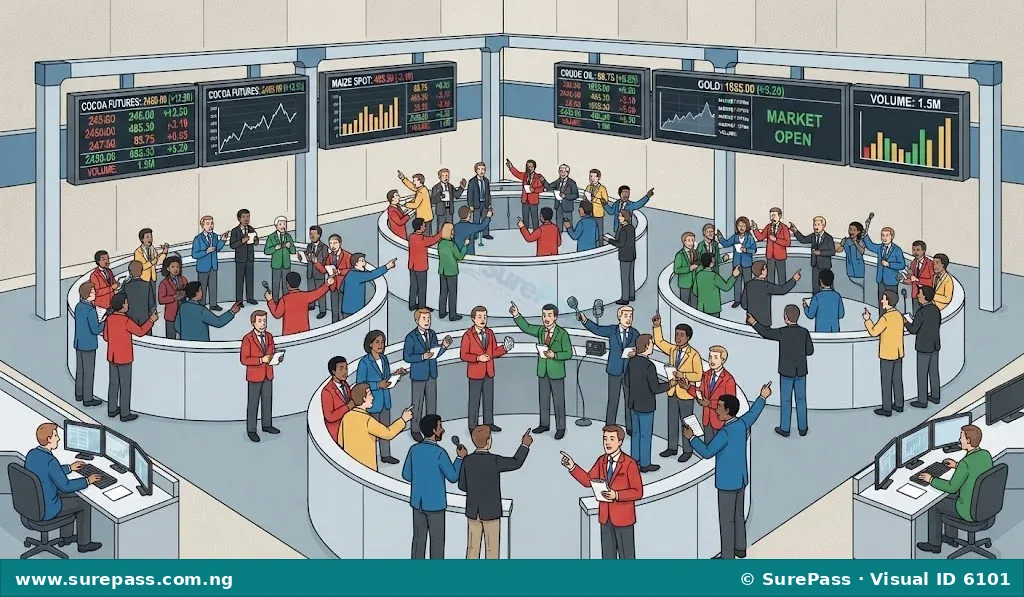
- Centralised Trading Platform: Trading takes place on a centralised platform, either a physical trading floor or an electronic system, where all buyers and sellers interact.
- Price Transparency: Prices are openly displayed and updated in real-time, ensuring that all participants have access to the same information.
- Clearing House: A clearing house guarantees the performance of contracts, acting as an intermediary between buyers and sellers. This reduces counterparty risk.
- Speculation: The exchange allows for speculation, where individuals buy or sell contracts based on their predictions of future price movements, hoping to profit from price changes.
- High Liquidity: Due to the large number of buyers and sellers, it is generally easy to buy or sell commodity contracts without significantly affecting the price.
Commodities Traded on the Exchange
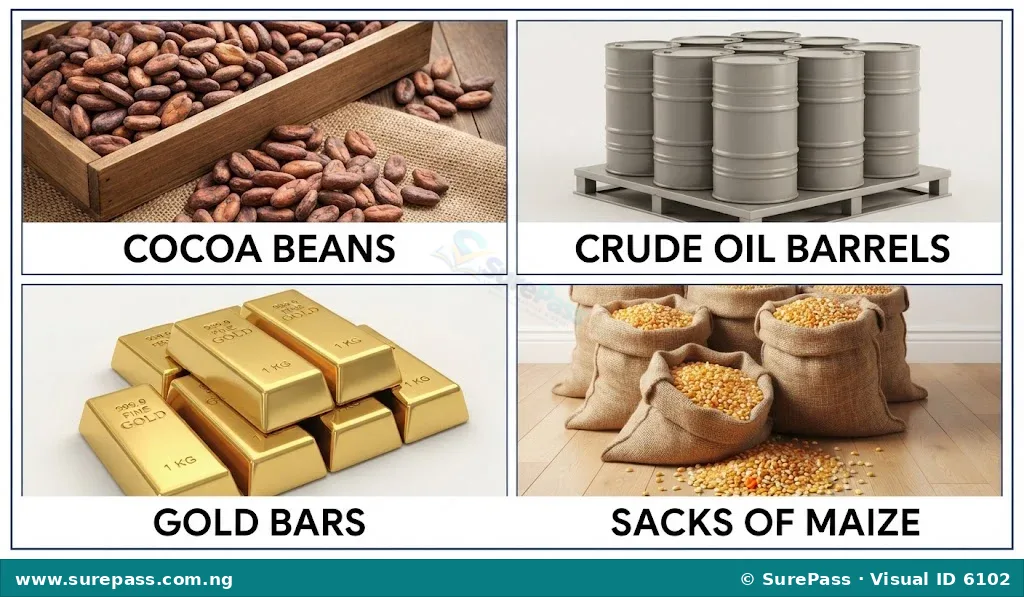
A wide range of primary products are traded on commodity exchanges. These are generally categorised into a few main groups:
- Agricultural Commodities: These include crops and livestock products.
- Grains: Maize (corn), wheat, rice, soybeans.
- Softs: Cocoa, coffee, sugar, cotton, palm oil.
- Livestock: Live cattle, lean hogs.
- Energy Commodities: These are sources of energy.
- Crude oil (e.g., Brent Crude, West Texas Intermediate)
- Natural gas
- Heating oil
- Gasoline
- Metals: These include precious and industrial metals.
- Precious Metals: Gold, silver, platinum, palladium.
- Industrial Metals: Copper, aluminium, zinc, lead.
In Nigeria, agricultural commodities like cocoa, palm oil, maize, and sorghum are particularly relevant for local commodity exchanges.
Functions of a Commodity Exchange
Commodity exchanges perform several vital functions that benefit producers, consumers, and the economy as a whole:
- Price Stabilisation: By providing a continuous market, commodity exchanges help to reduce extreme price fluctuations, leading to more stable prices for both producers and consumers over time.
- Facilitating Hedging: This is a key function where participants can protect themselves from adverse price movements. Farmers can sell their crops forward to lock in a price, while food manufacturers can buy raw materials forward to secure their costs.
- Providing Liquidity: The exchange ensures that there are always buyers and sellers, making it easy to enter or exit positions quickly without significantly impacting market prices.
- Standardisation of Products: The exchange sets clear standards for the quality, quantity, and delivery terms of commodities, which simplifies trading and reduces transaction costs.
- Dissemination of Market Information: Commodity exchanges collect and publish data on prices, trading volumes, and open interest. This information is crucial for market participants to make informed decisions.
- Mobilisation of Savings: By offering investment opportunities in commodity contracts, exchanges attract savings from individuals and institutions, channelling them into productive economic activities.
- Ensuring Fair Trading Practices: Through strict rules and regulations, the exchange ensures that all trading activities are conducted fairly and transparently, protecting participants from fraud and manipulation.
Methods of Trading on the Commodity Exchange
Trading on a commodity exchange can occur through different methods, which have evolved with technology. The primary methods include:
- Open Outcry System: This is the traditional method of trading on a physical trading floor. Traders communicate verbally and use hand signals to indicate their bids (offers to buy) and offers (offers to sell). This method relies on human interaction in a designated trading pit.
- Electronic Trading System: This is the most common method used today. Traders use computer terminals to enter their buy and sell orders directly into an electronic system. The system matches orders automatically based on price and time priority. This method offers greater speed, efficiency, and accessibility to a wider range of participants globally.
- Hybrid System: Some exchanges use a combination of both open outcry and electronic trading. Certain contracts or trading hours might use open outcry, while others use electronic systems. This allows exchanges to leverage the benefits of both methods.
The shift towards electronic trading has made commodity markets more accessible and efficient, allowing for faster execution of trades and broader participation from various parts of the world.


0 comments
Open the discussion when you need it. Comments stay collapsed until requested so the initial article remains light.