



ARTICLE CONTENTSOn this page 8 sections
Simple Garment Sketching
Performance Objectives
By the end of the lesson, students should be able to:
- identify different kinds of garments;
- demonstrate the use of sketching materials and tools;
- sketch simple garments.
Introduction to Garment Sketching
Garment sketching is the art of drawing clothes. It is a way for fashion designers and garment makers to put their ideas on paper before they start making the actual clothes. Sketching helps to plan the look, shape, and details of a garment.
Learning to sketch simple garments is a basic but important skill in fashion design. It allows for quick expression of ideas and helps in visualising how a piece of clothing will look.
What Are Garments?
A garment is an item of clothing.
Garments are worn on the body for protection, comfort, modesty, or fashion. They come in many different styles and are made from various materials.
Kinds of Garments
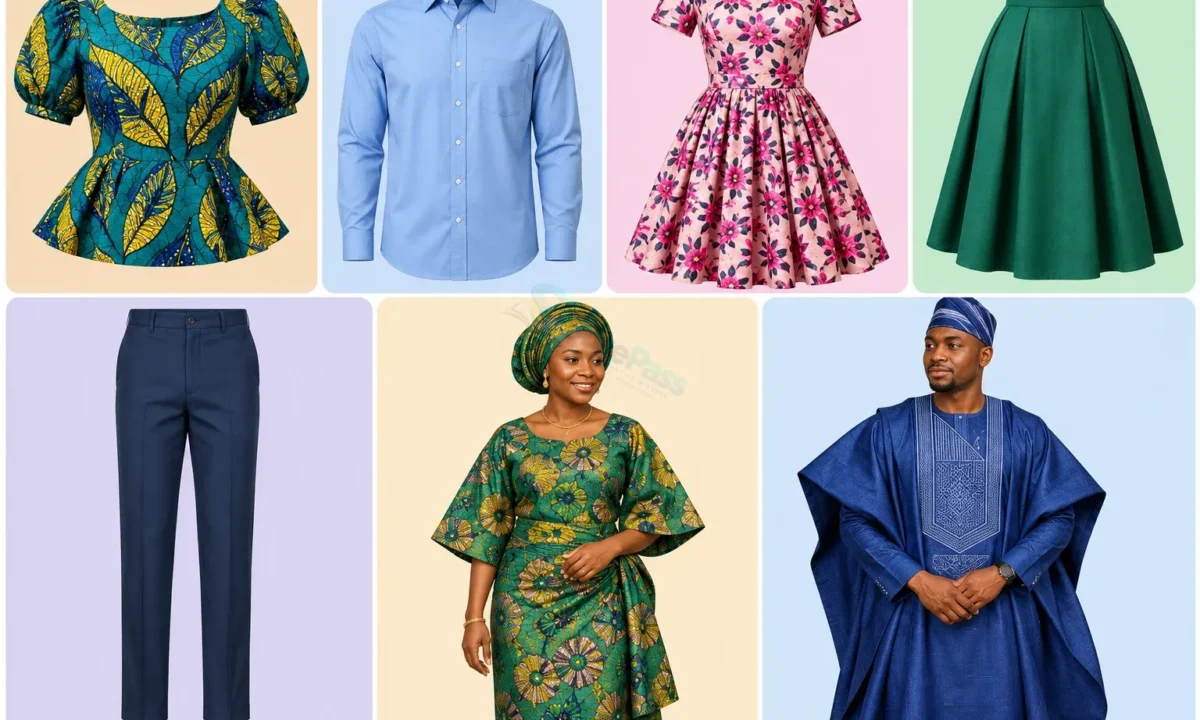
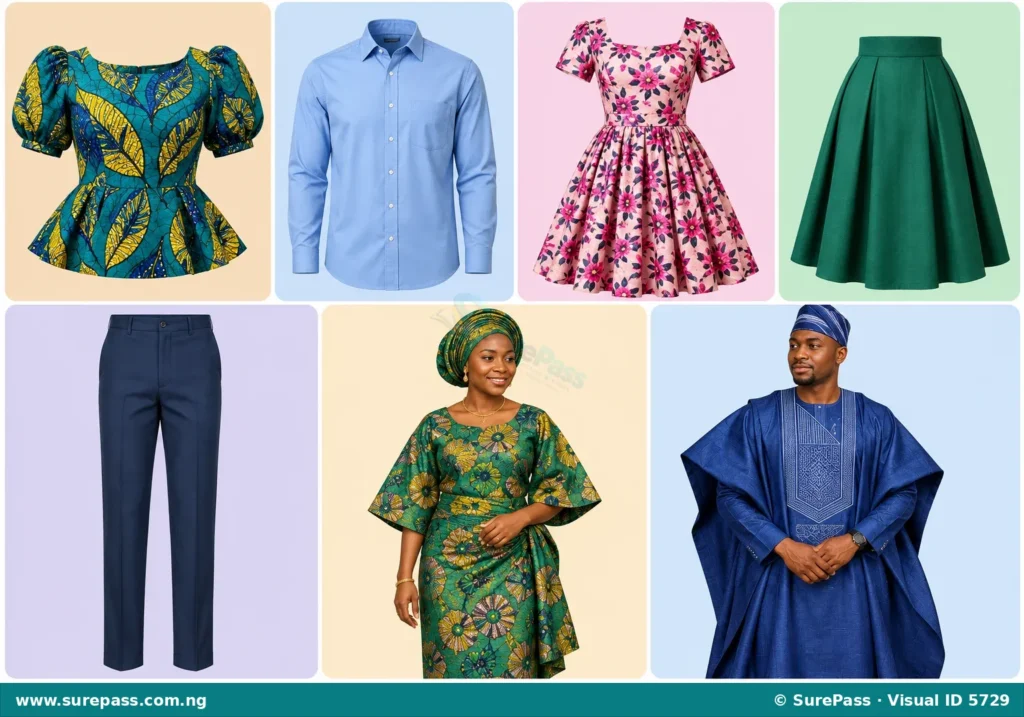
There are many different kinds of garments, each designed for specific purposes or occasions. Understanding these types helps in identifying and sketching them correctly.
Blouse
A blouse is a loose-fitting upper garment, typically worn by women and girls. It often has decorative elements like ruffles, embroidery, or special collars.
Shirt
A shirt is an upper garment, usually with a collar, sleeves, and a front opening with buttons. Shirts are commonly worn by both men and women.
Dress
A dress is a one-piece garment that covers the body from the shoulders down, usually to the knees or longer. Dresses are typically worn by women and girls.
Skirt
A skirt is a lower-body garment that hangs from the waist and covers part or all of the legs. Skirts come in various lengths and styles.
Trouser
A trouser is a garment that covers the body from the waist to the ankles, with separate coverings for each leg. Trousers are worn by both men and women.
Traditional Wears
Traditional wears are garments that reflect the culture and heritage of a particular group of people. In Nigeria, there are many beautiful traditional wears.
Examples of Nigerian traditional wears include:
- Agbada: A flowing wide-sleeved robe worn by men, especially in the Yoruba culture.
- Buba and Iro: A traditional blouse (Buba) and wrapper (Iro) combination worn by Yoruba women.
- Isi Agu: A distinctive patterned fabric often made into shirts or tunics, popular among the Igbo people.
- Gele: A headtie worn by women, often with traditional outfits.
Materials and Tools for Garment Sketching
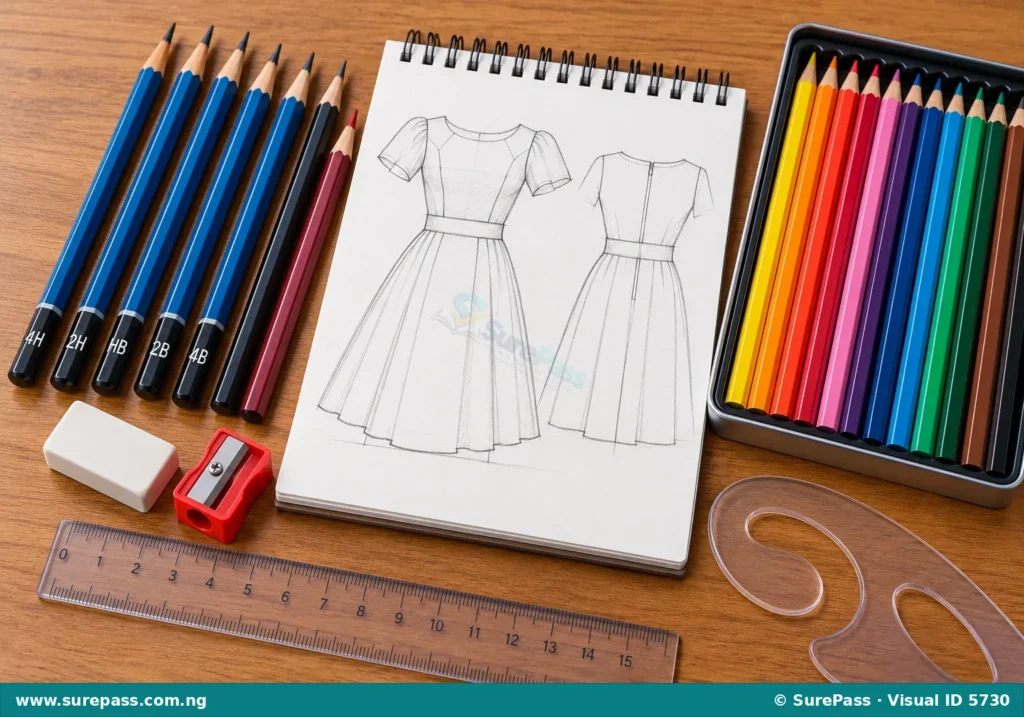
To make a good sketch, certain materials and tools are needed. These tools help in drawing clear lines, making corrections, and adding colour.
Pencils
Pencils are used for drawing lines and outlines. They come in different hardness levels, but for simple sketching, a regular HB pencil is suitable.
Sketch/Drawing Books
A sketch or drawing book contains plain paper suitable for drawing. The paper should be smooth enough for pencils to glide easily.
Erasers
Erasers are used to remove pencil marks. They help to correct mistakes or lighten lines that are too dark.
Sharpeners
Sharpeners are used to keep pencil tips sharp. A sharp pencil allows for precise and clean lines in a sketch.
Colour Pencils
Colour pencils are used to add colour to sketches. They help to make the garment look more realistic and attractive.
How to Use Sketching Materials and Tools
Using sketching tools correctly helps in creating neat and accurate garment sketches.
The procedure for using sketching materials and tools involves the following steps:
- Hold the Pencil Correctly: Hold the pencil firmly but not too tightly. For light lines, hold it further from the tip. For darker lines, hold it closer to the tip.
- Draw Lightly First: Begin sketching with light pencil strokes. This makes it easier to erase mistakes without leaving marks on the paper.
- Use the Eraser Carefully: When erasing, rub gently to avoid tearing the paper. Use the eraser to remove unwanted lines or to clean up smudges.
- Keep Pencils Sharp: Use a sharpener regularly to maintain a sharp pencil tip. A sharp tip allows for fine details and crisp lines.
- Organise Your Sketchbook: Use your sketch/drawing book to keep your sketches organised. Start a new page for each new sketch or design idea.
- Apply Colour Pencils: When adding colour, apply light layers first and build up the intensity. Use different colours to show different parts or details of the garment.
Making Simple Garment Sketches
Sketching a garment involves drawing its basic shape and adding simple details. The goal is to create a clear representation of the clothing item.
Steps for Sketching a Simple Garment
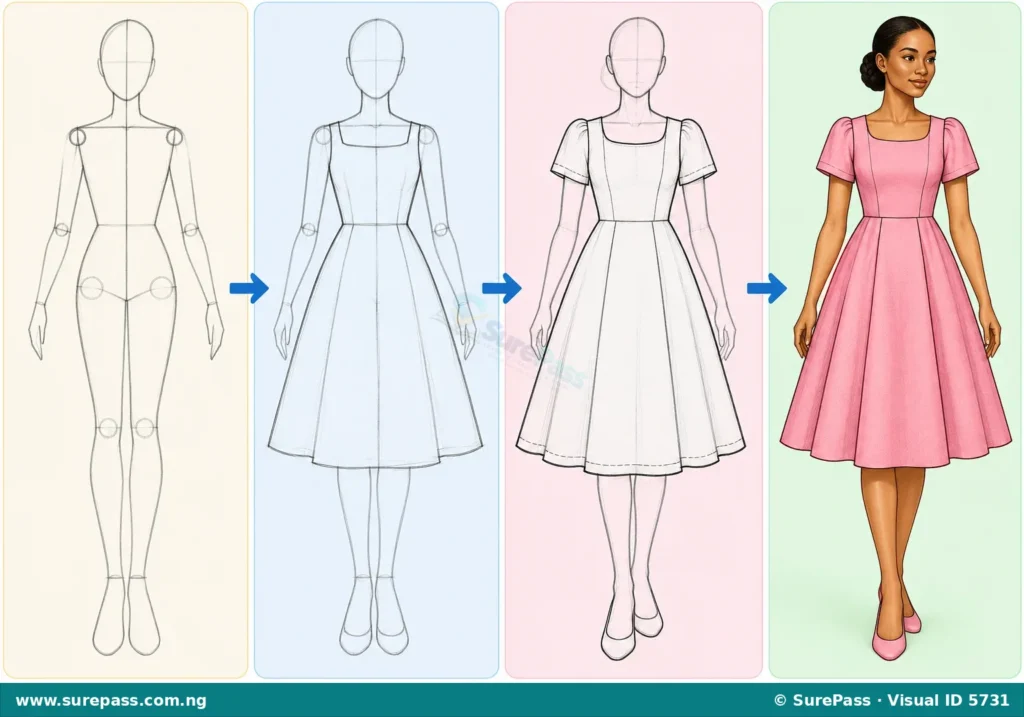
The procedure for sketching a simple garment, such as a dress, involves the following steps:
- Draw a Basic Body Outline: Start by drawing a very simple outline of a human figure. This does not need to be detailed, just a basic shape to hang the garment on. Think of it as a stick figure or a simple mannequin shape.
- Sketch the Garment’s Main Shape: Lightly draw the overall shape of the garment over the body outline. For a dress, this would be the outline of the top part and the skirt part. Focus on the general silhouette.
- Add Basic Details: Once the main shape is clear, add simple details like the neckline, sleeves (if any), and the hemline. Do not add too many details at this stage.
- Refine the Lines: Go over your light lines with a slightly darker pencil to make the final outline of the garment clear. Erase any unnecessary light lines or mistakes.
- Add Simple Folds or Drapes: To make the garment look more realistic, add a few simple lines to suggest folds or drapes in the fabric, especially where the garment might bend or gather.
- Add Colour (Optional): Use colour pencils to add colour to your sketch. This helps to show what the garment might look like in real life.



0 comments
Open the discussion when you need it. Comments stay collapsed until requested so the initial article remains light.