


ARTICLE CONTENTSOn this page 9 sections
Jesus Gives His Life for Us on the Cross
Performance Objectives
By the end of the lesson, students should be able to:
- narrate the arrest, trials, death and resurrection of Jesus;
- state reasons Jesus gave up His life on the cross for us.
Memory Verse
The memory verse for this lesson is:
“For God so loved the world, that he gave his only Son, that whoever believes in him should not perish but have eternal life.” – John 3:16
Bible Reading
The main Bible passages for this lesson are:
- Matthew 26:47-54 (for the arrest of Jesus)
- Luke 23:1-25 (for the trials and suffering of Jesus)
- Luke 23:26-49 (for the death on the cross)
- Matthew 28:6 (for the resurrection of Jesus)
- Mark 16:6 (for the resurrection of Jesus)
- John 3:16 (for reasons Jesus gave His life)
- John 10:10 (for reasons Jesus gave His life)
The Arrest of Jesus
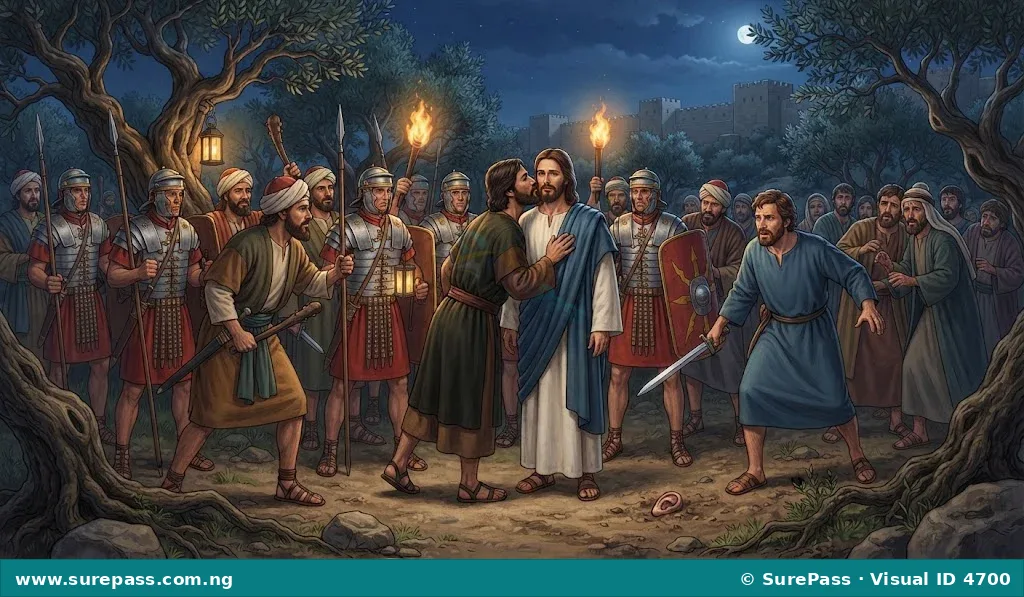
After Jesus had shared the Last Supper with His disciples, He went to a garden called Gethsemane to pray. While He was praying, His disciple Judas Iscariot came with a large crowd of people. These people carried swords and clubs. They were sent by the chief priests and elders to arrest Jesus.
Judas had agreed to betray Jesus. He told the crowd that the person he would kiss was Jesus, and they should arrest Him. Judas went straight to Jesus and said, “Greetings, Rabbi!” then he kissed Him. Immediately, the men grabbed Jesus and arrested Him.
One of Jesus’ disciples, Peter, drew his sword and cut off the ear of the high priest’s servant. But Jesus told Peter to put his sword away. Jesus said that He could ask His Father for many angels to protect Him, but He allowed Himself to be arrested so that God’s plan could be fulfilled.
The Trials and Suffering of Jesus
After His arrest, Jesus was taken to different leaders for trial. First, He was taken to Annas, then to Caiaphas, the high priest, and then to the Sanhedrin, the Jewish council. They accused Him of many things, but Jesus remained mostly silent.
The Jewish leaders could not put Jesus to death themselves, so they took Him to Pontius Pilate, the Roman governor. They told Pilate that Jesus was claiming to be King of the Jews, which was against Roman law. Pilate questioned Jesus and found no fault in Him. He tried to release Jesus because it was a custom to release one prisoner during the Passover festival.
Pilate offered the crowd a choice: either release Jesus or release a dangerous criminal named Barabbas. The chief priests and elders stirred up the crowd to ask for Barabbas to be released and for Jesus to be crucified. Pilate washed his hands, showing that he was not responsible for Jesus’ death, and handed Jesus over to be crucified.
Before being led away, Jesus suffered greatly. The soldiers mocked Him, put a crown of thorns on His head, dressed Him in a purple robe, and beat Him. They spat on Him and hit Him with a staff. Jesus endured all this suffering without complaining.
The Death on the Cross
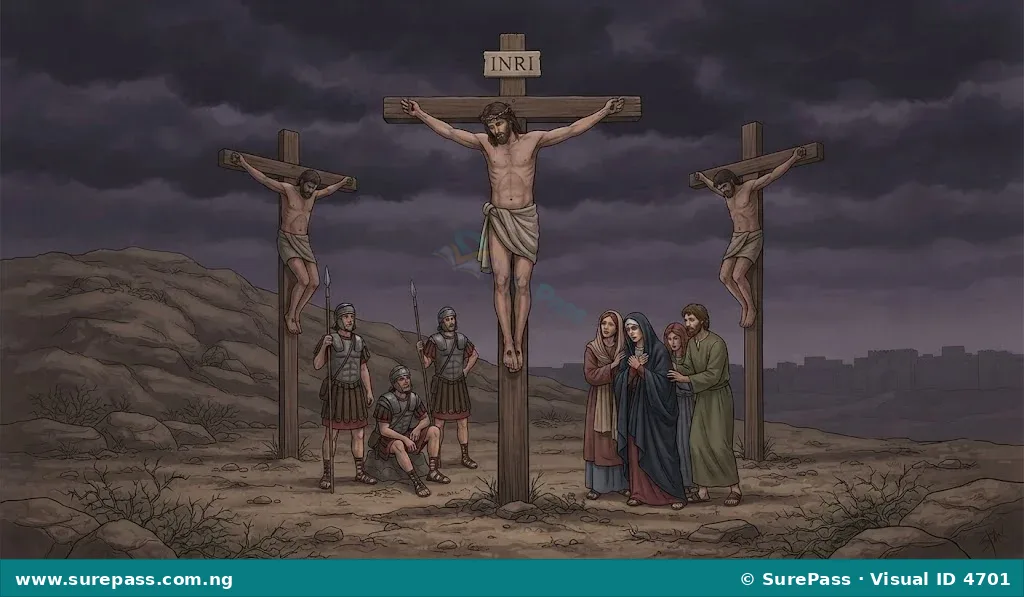
Jesus was forced to carry His own cross to a place called Golgotha, which means “The Place of the Skull.” The cross was very heavy, and Jesus was weak from the beatings and suffering. A man named Simon of Cyrene was made to help Jesus carry the cross.
At Golgotha, Jesus was nailed to the cross between two criminals. This was a very painful and shameful way to die. Even while on the cross, Jesus prayed, “Father, forgive them, for they do not know what they are doing.”
Darkness covered the land from noon until three in the afternoon. Around three o’clock, Jesus cried out with a loud voice and then said, “Father, into your hands I commit my spirit!” After saying this, He breathed His last and died. When Jesus died, the curtain in the temple tore into two from top to bottom, and the earth shook.
The Resurrection of Jesus
After Jesus died, His body was taken down from the cross and buried in a new tomb that belonged to a rich man named Joseph of Arimathea. A large stone was rolled in front of the entrance to the tomb, and Roman guards were placed there to make sure no one stole the body.
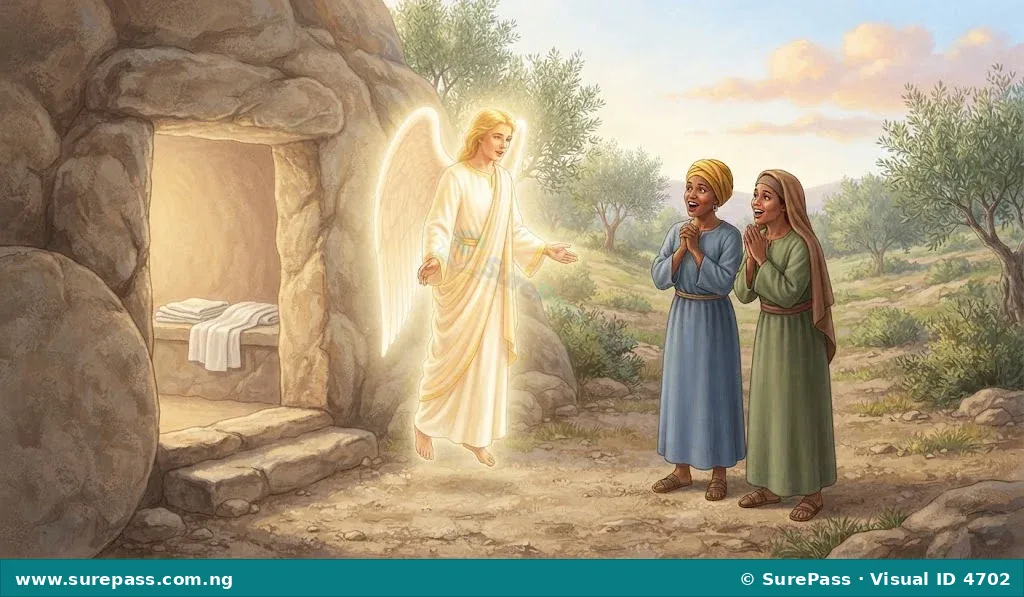
On the first day of the week, very early in the morning, some women went to the tomb to anoint Jesus’ body with spices. When they arrived, they found that the large stone had been rolled away. They looked inside and saw that the tomb was empty!
An angel of the Lord was there, shining brightly. The angel told the women, “Do not be afraid, for I know that you are looking for Jesus, who was crucified. He is not here; He has risen, just as He said. Come and see the place where He lay.” The angel then told them to go and tell Jesus’ disciples that He had risen from the dead.
Reasons Jesus Gave Up His Life for Us
Jesus did not have to die, but He chose to give His life for us. There are very important reasons why He did this:
- God’s Great Love: The most important reason is that God loves us so much. John 3:16 tells us, “For God so loved the world, that he gave his only Son.” Jesus’ death shows how deep God’s love is for every person.
- To Give Us Eternal Life: Because of sin, people were separated from God and faced eternal death. Jesus died to pay the price for our sins. By believing in Him, we can receive forgiveness and have eternal life, which means living forever with God in heaven.
- To Give Us Abundant Life: Jesus said in John 10:10, “I came that they may have life and have it abundantly.” His sacrifice gives us a full and rich life here on earth, filled with God’s blessings, peace, and purpose, and then eternal life in heaven.
- To Save Us from Sin: All people have sinned and fallen short of God’s perfect standard. Sin separates us from God. Jesus’ death on the cross was a sacrifice that took away our sins. He became the perfect sacrifice, so that through Him, we can be made right with God.
Jesus’ sacrifice on the cross was an act of pure love. He gave up His life so that we could be saved, have a relationship with God, and live a life full of meaning and hope.


0 comments
Open the discussion when you need it. Comments stay collapsed until requested so the initial article remains light.